

Kirjailija
Alexander Berkman
Kirjat ja teokset yhdessä paikassa: 50 kirjaa, julkaisuja vuosilta 1999–2026, suosituimpiin kuuluu A. B. C. of Anarchism. Vertaile teosten hintoja ja tarkista saatavuus suomalaisista kirjakaupoista.
50 kirjaa
Kirjojen julkaisuvuodet: 1999–2026.


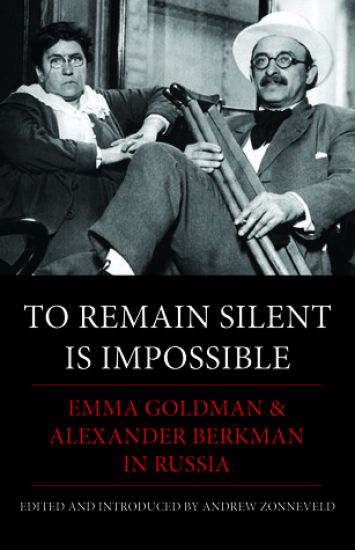
To Remain Silent Is Impossible: Emma Goldman and Alexander Berkman in Russia
Emma Goldman; Alexander Berkman
On Our Own Authority!
2013
nidottu
After being deported from the United States to Russia in 1920, Emma Goldman and Alexander Berkman witnessed first-hand the contradictions of Lenin's so-called "dictatorship of the proletariat," the murder and imprisonment of Russian anarchists, and Trotsky's lethal suppression of the 1921 Kronstadt Uprising. While the two revolutionaries had initially offered critical support to the Bolshevik regime, the tyranny they witnessed in the so-called "worker's state" reaffirmed their belief that true social revolution can never be managed or manipulated by political parties seeking state power. When they escaped Russia in 1922, Goldman and Berkman authored numerous pamphlets and articles about what they had seen, and each published a diary of their experiences. Their work in this period had international impact among anarchists and other revolutionaries who were beginning to view Lenin's Russia more critically. To Remain Silent is Impossible collects many of these anarchists' most important essays, pamphlets, and diary entries related to the Russian Revolution.
In 1892, unrepentant anarchists Alexander Berkman, Henry Bauer, and Carl Nold were sent to the Western Pennsylvania State Penitentiary for the attempted assassination of steel tycoon Henry Clay Frick. Searching for a way to continue their radical politics and to proselytize among their fellow inmates, these men circulated messages of hope and engagement via primitive means and sympathetic prisoners. On odd bits of paper, in German and in English, they shared their thoughts and feelings in a handwritten clandestine magazine called “Prison Blossoms.” This extraordinary series of essays on anarchism and revolutionary deeds, of prison portraits and narratives of homosexuality among inmates, and utopian poems and fables of a new world to come not only exposed the brutal conditions in American prisons, where punishment cells and starvation diets reigned, but expressed a continuing faith in the "beautiful ideal" of communal anarchism. Most of the "Prison Blossoms" were smuggled out of the penitentiary to fellow comrades, including Emma Goldman, as the nucleus of an exposé of prison conditions in America’s Gilded Age. Those that survived relatively unrecognized for a century in an international archive are here transcribed, translated, edited, and published for the first time. Born at a unique historical moment, when European anarchism and American labor unrest converged, as each sought to repel the excesses of monopoly capitalism, these prison blossoms peer into the heart of political radicalism and its fervent hope of freedom from state and religious coercion.

The ABC of Anarchism
Alexander Berkman; Emma Goldman
Dover Publications Inc.
2005
nidottu
Halvin toimitettuna 26,20 €
First published in 1929, this book by one of the most gifted writers for the anarchist movement answers some of the charges made against it and presents the case for communist anarchism clearly and intelligently. Thorough and well stated, it is today regarded as a classic statement of the cause's goals and methods.
In a clear conversation with the reader, Berkman discusses society as it now exists, the need for Anarchism and the methods for bringing it about. Often mentioned in conjunction with his lover Emma Goldman, Berkman was a leading writer and participant in the 20th-Century Anarchist movement. The young, idealistic Berkman practiced "propaganda by the deed," attempting to assassinate Henry Clay Frick during the Homestead Steel Strike of 1892. While imprisoned, he wrote the classic tale of prison life, "Prison Memoirs of an Anarchist." After his release, Berkman edited "The Blast!" and Goldman's "Mother Earth." Deported to Russia in 1919, he saw firsthand the failure of the Bolshevik revolution and dedicated himself to writing this classic primer on Anarchism.
In 1892, Alexander Berkman, Russian migr , anarchist, and lover of Emma Goldman, attempted to assassinate industrialist Henry Clay Frick. The act was intended both as retribution for the massacre of workers in the Homestead strike and as an incitement to revolution. Captured and sentenced to serve a prison term of twenty-two years, Berkman struggled to make sense of the shadowy and brutalized world of the prison--one that hardly conformed to revolutionary expectation.