Kirjojen hintavertailu – 12 859 818 kirjaa ja 27 kauppaa

Kirjailija

Alexander Kluge

Kirjat ja teokset yhdessä paikassa: 72 kirjaa, julkaisuja vuosilta 1986–2026, suosituimpiin kuuluu December. Vertaile teosten hintoja ja tarkista saatavuus suomalaisista kirjakaupoista.

72 kirjaa

Kirjojen julkaisuvuodet: 1986–2026.

September 11

September 11

Klaus Biesenbach; Alexander Kluge

P.S.1 Contemporary Art Center
2011
pokkari
The attacks of September 11, 2001 were among the most pictured disasters in history, yet they remain, a decade later, underrepresented in cultural discourse--particularly within the realm of contemporary art. Responding to these conditions, MoMA PS1 curator Peter Eleey brings together more than 70 works by 41 artists--many made prior to 9/11--to explore the attacks’ enduring resonance. Eschewing both images of the event itself and art made directly in response, the exhibition and its accompanying catalogue provide a subjective framework within which to reflect upon the attacks and their aftermath, and explore the ways that they have altered how we see and experience the world in their wake. Opening on the tenth anniversary of the attacks, September 11 includes works by Diane Arbus, John Chamberlain, Bruce Conner, Christo, Ellsworth Kelly, Mary Lucier, Stephen Vitiello and others.
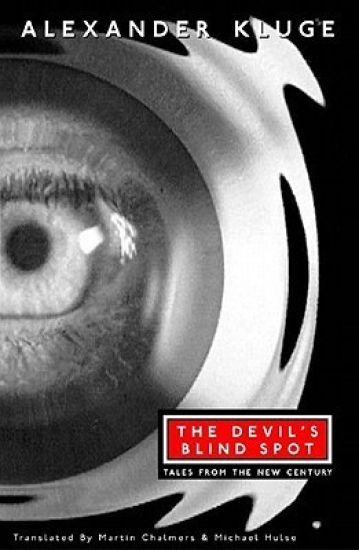
The Devil's Blind Spot: Tales from the New Century

The Devil's Blind Spot: Tales from the New Century

Alexander Kluge

New Directions Publishing Corporation
2007
nidottu
The 173 stories collected in Alexander Kluge’s The Devil’s Blind Spot range from a dozen pages to just half a page in length: these tales are like novels in pill form. The whole is arranged in five chapters. The first group illustrates the little-known virtues of the Devil; the second explores love (from Kant to the opera); the third (entitled “Sarajevo Is Everywhere”) addresses power; the fourth considers the cosmos; and the fifth ranges all our “knowledge” against our feelings. Stories such as “Origin of Iraq as a Case for the Files” and “The Devil in the White House” display Alexander Kluge’s special genius for making found material his own. From the wreck of the Kursk to failed love affairs to Chernobyl, Kluge alights on precise details, marching us step by step through a black comedy of the exact stages of thinking that lead to disaster. These semi-documentary stories radiate what W. G. Sebald termed “Kluge’s intellectual steadfastness” as he undertakes his “archaeological excavation of the slag-heaps of our collective existence.”
Cinema Stories

Cinema Stories

Alexander Kluge

New Directions Publishing Corporation
2007
nidottu
Each of the thirty-nine tales of Alexander Kluge's Cinema Stories combines fact and fiction, and they revolve around movie-making. The book compresses a lifetime of feeling, thought, and practice: Kluge—considered the father of New German Cinema—is an inventive wellspring of narrative notions. "The power of his pros," as Small Press noted, "exudes the sort of pregnant richness one might find in the brief scenarios of unknown films." Cinema Stories is a treasure trove of strikingly original writing and cinematic lore.
The Devil's Blind Spot: Tales from the New Century

The Devil's Blind Spot: Tales from the New Century

Martin Chalmers; Michael Hulse; Alexander Kluge

New Directions Publishing Corporation
2004
sidottu
Scathingly clever short stories. Includes "The Devil in the White House" and "The Development of Iraq as a Case for the Files." At once a genuine story-teller and a literary documentarian, Alexander Kluge's genius lies in the very special way he makes found material his own. Each of the miniatures collected here touches on "facts" and is only several pages long. In just a paragraph he can etch a whole world: he is as great a master of compression as Kafka or Kawabata. Arranged in five chapters, the dozens of stories of The Devil's Blind Spot are condensed, like novels in pill form. The first group of stories illustrates the little-known virtues of the Devil. The second explores love from Kant and opera through the Grand Guignol. The third is entitled "Sarajevo Is Everywhere" and tests how convincing power is. The fourth group concerns the cosmos, and the fifth ranges all our "knowledge" against our feelings. In each piece, Kluge alights on precise particulars: on board the atomic submarine Kursk, for instance, we are marched precisely step by step through a black comedy of the exact, disastrous stages of thinking that lead to catastrophe. Sample titles include "The Devil in the White House," "The Development of Iraq as a Case for the Files," "Intelligence of the Second Degree," and "Love's Mouth Also Kisses the Dog."
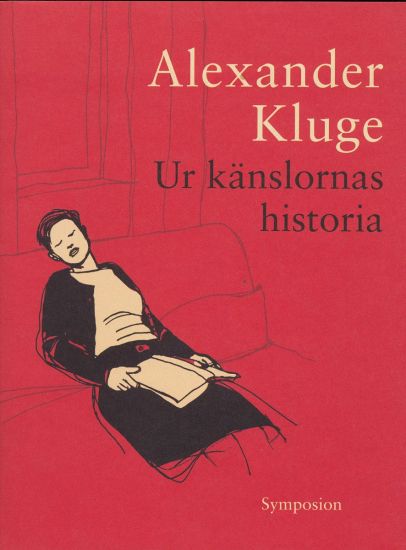
Ur känslornas historia

Ur känslornas historia

Alexander Kluge

Brutus Östlings bokf Symposion
2003
sidottu
Vad är känslornas 18:e brumarie? Vad är kärlekens bonapartist? Vem tillhör våra känslor? Det är några av de frågor som Alexander Kluge ställer och ibland åtminstone indirekt besvarar i den CHRONIK DER GEFÜHLE som markerar hans återkomst till litteraturen efter ett par decenniers lika produktiv verksamhet som filmare och excentrisk TV-producent.
Vom Nutzen ungelöster Probleme

Vom Nutzen ungelöster Probleme

Dirk Baecker; Alexander Kluge

Merve Verlag GmbH
2003
nidottu
Das Thema der Gespräche zwischen Dirk Baecker und Alexander Kluge ist die Frage, mit welchen theoretischen Mitteln man sich der Bewältigung eines alltäglichen Lebens nähern kann, das seine Fortsetzung aus der Summe kleineren und größeren Scheiterns gewinnt. Jede Intelligenz kompensiert einen Zusammenbruch. Ein Konzern, eine Ehe, eine Schlacht oder eine Wahrnehmung sind nur möglich, weil sie immer wieder von neuem versuchen, Probleme zu lösen, die nicht zu lösen sind. Eine alte Therapeuten-Weisheit fordert also auch, die Probleme eher zu pflegen denn zu lösen, dann wisse man wenigstens, woran man sei. Diese Weisheit wird in diesen Gesprächen befolgt, um vom Konzern-Management über die Ehe bis zur Schlacht und zur Wahrnehmung eines Bewusstseins Phänomene unter dem Gesichtspunkt ihrer unwahrscheinlichen und nur so erfolgreichen Reproduktion zu erkunden. Gedanken von Heinz v. Foerster, Niklas Luhmann, Gregory Bateson, George Spencer-Brown, John v. Neumann, Jean-Luc Godard und anderen werden aufgegriffen, um herauszufinden, mit welchen Theoriefiguren dieses Denken zu entwickeln ist.
Learning Processes with a Deadly Outcome

Learning Processes with a Deadly Outcome

Alexander Kluge

Duke University Press
1996
sidottu
Fiction writer, internationally known filmmaker, critical theorist, Alexander Kluge is perhaps postwar Germany’s most prolific and diverse intellectual. With this translation of Learning Processes with a Deadly Outcome, a novella first published in German in 1973, one of Kluge’s most important literary works becomes available to an English-speaking audience for the first time. Written in a quasi-documentary style, this fascinating hybrid work combines science fiction with modernist forms of montage and reportage to describe a future in which Earth has been almost totally destroyed following the catastrophic Black War. The planet’s remaining inhabitants have been driven underground or into space where the struggle to establish a new society rages on. Whether describing the scene in China where the devastated landscape is reconstructed according to old paintings, or in the galactic realm of the Starway where giant, turf-battling, corporate colonizing forces exploit the universe’s resources, Kluge tells his tale by inventing various forms of “evidence” that satirize the discourses of administrative bureaucracy, the law, military security, and the media. He gives us some of his most bizarre and hilarious characters in this peculiar world in which the remains of the past are mixed with the most advanced elements of the future. The cast includes highly specialized women workers who have adapted to the massive gravitational field of their heavy-metal planets, a commander with lethal foot-fungus, and ex-Nazi space pioneers who, in their lonely exile from the conflagrations on earth, spend their time carving enormous facsimiles of operatic sheet music in the forests of uninhabited planets. With parody, and humor, Kluge shows how the survivors of Armageddon attempt to learn the art of civilization, and, despite the disaster they have suffered, how they set out to reproduce at new sites a caricature of a classic and fascistic feudal capitalism.

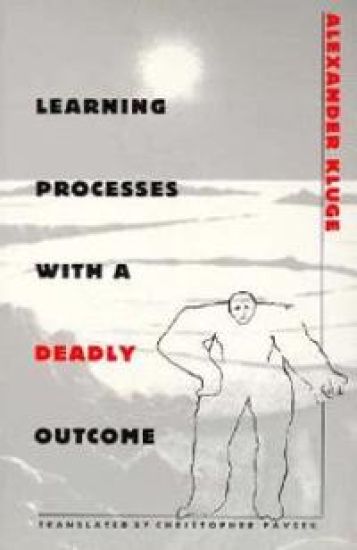
Learning Processes with a Deadly Outcome

Learning Processes with a Deadly Outcome

Alexander Kluge

Duke University Press
1996
pokkari
Fiction writer, internationally known filmmaker, critical theorist, Alexander Kluge is perhaps postwar Germany’s most prolific and diverse intellectual. With this translation of Learning Processes with a Deadly Outcome, a novella first published in German in 1973, one of Kluge’s most important literary works becomes available to an English-speaking audience for the first time. Written in a quasi-documentary style, this fascinating hybrid work combines science fiction with modernist forms of montage and reportage to describe a future in which Earth has been almost totally destroyed following the catastrophic Black War. The planet’s remaining inhabitants have been driven underground or into space where the struggle to establish a new society rages on. Whether describing the scene in China where the devastated landscape is reconstructed according to old paintings, or in the galactic realm of the Starway where giant, turf-battling, corporate colonizing forces exploit the universe’s resources, Kluge tells his tale by inventing various forms of “evidence” that satirize the discourses of administrative bureaucracy, the law, military security, and the media. He gives us some of his most bizarre and hilarious characters in this peculiar world in which the remains of the past are mixed with the most advanced elements of the future. The cast includes highly specialized women workers who have adapted to the massive gravitational field of their heavy-metal planets, a commander with lethal foot-fungus, and ex-Nazi space pioneers who, in their lonely exile from the conflagrations on earth, spend their time carving enormous facsimiles of operatic sheet music in the forests of uninhabited planets. With parody, and humor, Kluge shows how the survivors of Armageddon attempt to learn the art of civilization, and, despite the disaster they have suffered, how they set out to reproduce at new sites a caricature of a classic and fascistic feudal capitalism.