Kirjojen hintavertailu – 12 859 819 kirjaa ja 27 kauppaa

Kirjailija

Alexander Nehamas

Kirjat ja teokset yhdessä paikassa: 8 kirjaa, julkaisuja vuosilta 1998–2025, suosituimpiin kuuluu On Friendship. Vertaile teosten hintoja ja tarkista saatavuus suomalaisista kirjakaupoista.

8 kirjaa

Kirjojen julkaisuvuodet: 1998–2025.

Art, Interpretation, and the Rest of Life: Essays in Aesthetics
Arguing that modern aesthetics has divorced art from beauty and therefore from life itself, a renowned philosopher seeks to reintegrate art and everyday experience. Supposedly there is a distinction between art and life, such that one can at best imitate the other. Alexander Nehamas, one of most respected philosophers of his age, makes clear just how far we have been led astray by this false dichotomy. He argues that art can only diverge from life when we scorn beauty, which connects and adorns the two. Art, Interpretation, and the Rest of Life takes as a starting point Plato's attacks on poetry and drama. Subsequent generations reinforced his contempt, and during the eighteenth century institutionalized it in an asserted distinction between high and low art. It was this elitist move, establishing a realm of cultivated sensibility accessible only to the educated, that resolutely severed art from experience. Instead art was imagined independent of everyday interests and popular concerns, so that aesthetic pleasure was alienated from the hopes and disappointments of life as we generally know it. Central to the conceit of modern aesthetics--and conceit it was, for the trifles of one age are often fine art in the next--was the divorce of art from beauty: beauty provokes the desire and discontents that have no place in an intellectualized order of high art. Attending to the likes of Goya, Proust, Duchamp, Mann, and Nabokov, crime novels and TV shows, Nehamas reintroduces art to beauty so that we may find art everywhere and see it for what it is: not an esoteric stimulation for the few but an integral and multifaceted component of all people's lives.

Die Geburt der Tragödie

Die Geburt der Tragödie

Friedrich Wilhelm Nietzsche; Alexander Nehamas

Hansebooks
2016
pokkari
Die Geburt der Trag die - aus dem Geiste der Musik ist ein unver nderter, hochwertiger Nachdruck der Originalausgabe aus dem Jahr 1872. Hansebooks ist Herausgeber von Literatur zu unterschiedlichen Themengebieten wie Forschung und Wissenschaft, Reisen und Expeditionen, Kochen und Ern hrung, Medizin und weiteren Genres. Der Schwerpunkt des Verlages liegt auf dem Erhalt historischer Literatur. Viele Werke historischer Schriftsteller und Wissenschaftler sind heute nur noch als Antiquit ten erh ltlich. Hansebooks verlegt diese B cher neu und tr gt damit zum Erhalt selten gewordener Literatur und historischem Wissen auch f r die Zukunft bei.
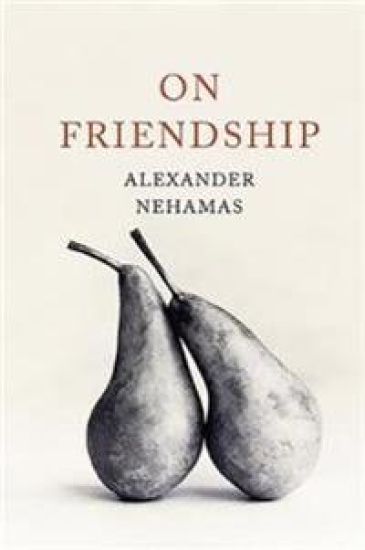
On Friendship

On Friendship

Alexander Nehamas

Basic Books
2016
sidottu
Friends are a constant feature of our lives, yet friendship itself is difficult to define. Even Michel de Montaigne, author of the seminal essay Of Friendship," found it nearly impossible to account for the great friendship of his life. Why is something so commonplace and universal so hard to grasp? What is it about the nature of friendship that proves so elusive? In On Friendship , the acclaimed philosopher Alexander Nehamas launches an original and far-ranging investigation of friendship. Exploring the long history of philosophical thinking on the subject, from Aristotle to Emerson and beyond, and drawing on examples from literature, art, drama, and his own life, Nehamas shows that for centuries, friendship was as much a public relationship as it was a private one- inseparable from politics and commerce, favours and perks. Now that it is more firmly in the private realm, Nehamas holds, close friendship is central to the good life. Profound and affecting, On Friendship sheds light on why we love our friends- and how they determine who we are, and who we might become.
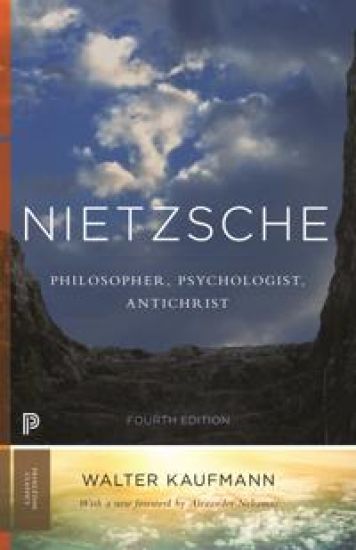
Nietzsche

Nietzsche

Walter A. Kaufmann; Alexander Nehamas

Princeton University Press
2013
pokkari

Halvin toimitettuna 26,60 €

This classic is the benchmark against which all modern books about Nietzsche are measured. When Walter Kaufmann wrote it in the immediate aftermath of World War II, most scholars outside Germany viewed Nietzsche as part madman, part proto-Nazi, and almost wholly unphilosophical. Kaufmann rehabilitated Nietzsche nearly single-handedly, presenting his works as one of the great achievements of Western philosophy. Responding to the powerful myths and countermyths that had sprung up around Nietzsche, Kaufmann offered a patient, evenhanded account of his life and works, and of the uses and abuses to which subsequent generations had put his ideas. Without ignoring or downplaying the ugliness of many of Nietzsche's proclamations, he set them in the context of his work as a whole and of the counterexamples yielded by a responsible reading of his books. More positively, he presented Nietzsche's ideas about power as one of the great accomplishments of modern philosophy, arguing that his conception of the "will to power" was not a crude apology for ruthless self-assertion but must be linked to Nietzsche's equally profound ideas about sublimation. He also presented Nietzsche as a pioneer of modern psychology and argued that a key to understanding his overall philosophy is to see it as a reaction against Christianity. Many scholars in the past half century have taken issue with some of Kaufmann's interpretations, but the book ranks as one of the most influential accounts ever written of any major Western thinker. Featuring a new foreword by Alexander Nehamas, this Princeton Classics edition of Nietzsche introduces a new generation of readers to one the most influential accounts ever written of any major Western thinker.
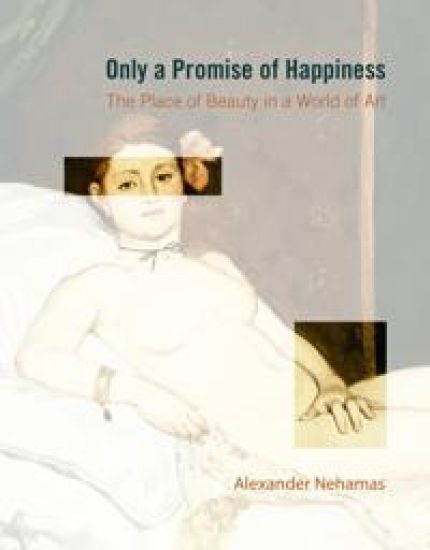
Only a Promise of Happiness

Only a Promise of Happiness

Alexander Nehamas

Princeton University Press
2010
pokkari
Neither art nor philosophy was kind to beauty during the twentieth century. Much modern art disdains beauty, and many philosophers deeply suspect that beauty merely paints over or distracts us from horrors. Intellectuals consigned the passions of beauty to the margins, replacing them with the anemic and rarefied alternative, "aesthetic pleasure." In Only a Promise of Happiness, Alexander Nehamas reclaims beauty from its critics. He seeks to restore its place in art, to reestablish the connections among art, beauty, and desire, and to show that the values of art, independently of their moral worth, are equally crucial to the rest of life. Nehamas makes his case with characteristic grace, sensitivity, and philosophical depth, supporting his arguments with searching studies of art and literature, high and low, from Thomas Mann's Death in Venice and Manet's Olympia to television. Throughout, the discussion of artworks is generously illustrated. Beauty, Nehamas concludes, may depend on appearance, but this does not make it superficial. The perception of beauty manifests a hope that life would be better if the object of beauty were part of it. This hope can shape and direct our lives for better or worse. We may discover misery in pursuit of beauty, or find that beauty offers no more than a tantalizing promise of happiness. But if beauty is always dangerous, it is also a pressing human concern that we must seek to understand, and not suppress.
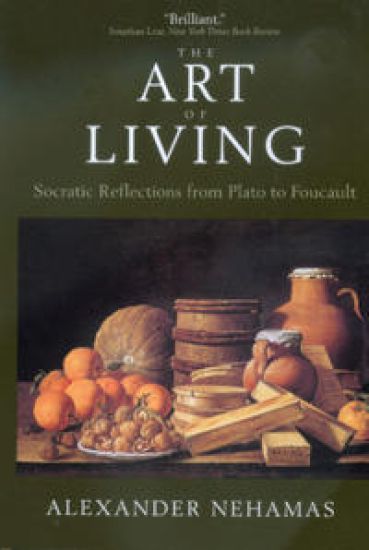
The Art of Living

The Art of Living

Alexander Nehamas

University of California Press
2000
pokkari

Halvin toimitettuna 42,20 €

For much of its history, philosophy was not merely a theoretical discipline but a way of life, an 'art of living'. This practical aspect of philosophy has been much less dominant in modernity than it was in ancient Greece and Rome, when philosophers of all stripes kept returning to Socrates as a model for living. The idea of philosophy as an art of living has survived in the works of such major modern authors as Montaigne, Nietzsche, and Foucault. Each of these writers has used philosophical discussion as a means of establishing what a person is and how a worthwhile life is to be lived. In this wide-ranging, brilliantly written account, Alexander Nehamas provides an incisive reevaluation of Socrates' place in the Western philosophical tradition and shows the importance of Socrates for Montaigne, Nietzsche, and Foucault. Why does each of these philosophers - each fundamentally concerned with his own originality - return to Socrates as a model? The answer lies in the irony that characterizes the Socrates we know from the Platonic dialogues. Socratic irony creates a mask that prevents a view of what lies behind. How Socrates led the life he did, what enabled or inspired him, is never made evident. No tenets are proposed. Socrates remains a silent and ambiguous character, forcing readers to come to their own conclusions about the art of life. This, Nehamas shows, is what allowed Montaigne, Nietzsche, and Foucault to return to Socrates as a model without thereby compelling them to imitate him. This highly readable, erudite study argues for the importance of the tradition within Western philosophy that is best described as 'the art of living' and casts Montaigne, Nietzsche, and Foucault as the three major modern representatives of this tradition. Full of original ideas and challenging associations, this work will offer new ways of thinking about the philosophers Nehamas discusses and about the discipline of philosophy itself.
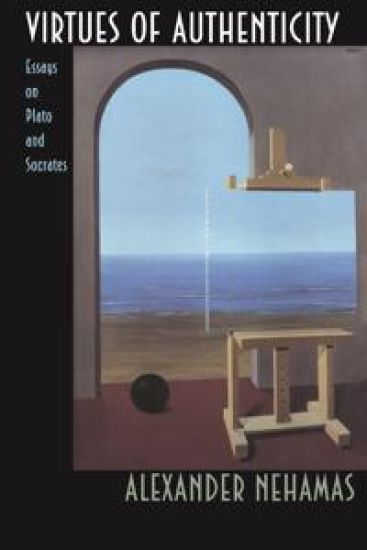
Virtues of Authenticity

Virtues of Authenticity

Alexander Nehamas

Princeton University Press
1998
pokkari
The eminent philosopher and classical scholar Alexander Nehamas presents here a collection of his most important essays on Plato and Socrates. The papers are unified in theme by the idea that Plato's central philosophical concern in metaphysics, ethics, and aesthetics was to distinguish the authentic from the fake, the original from its imitations. In approach, the collection displays Nehamas's characteristic combination of analytical rigor and sensitivity to the literary form and dramatic effect of Plato's work. Together, the papers represent Nehamas's distinct and original contributions to scholarship on Plato and Socrates and serve as a comprehensive introduction to the thought of these two philosophers. In the book's opening section, Nehamas discusses Plato's representation of Socrates as a model of authentic human goodness, showing that Plato's Socrates is a more skeptical, troubling, and individualistic thinker than is usually supposed. The papers in the second section form a sustained defense of a new and important understanding of Plato's theory of the forms and the evolution of that theory in Plato's later writings. The third section examines Plato's contention that popular entertainment--by which he meant Greek epic and tragic poetry--misleads its audience into a debased life, an argument Nehamas relates to modern anxieties about television and other forms of popular culture. The collection also includes a discussion of Plato's use of the dialogue form in his representation of Socrates and carefully examines the combination of literary and philosophical elements in his work. Nehamas argues in the book that Plato's specific judgments of what is authentic are often flawed, but that his idea of authenticity as the mark of truth, beauty, and goodness is stronger than many modern scholars have assumed. In drawing together Nehamas's many influential ideas about Plato and Socrates, Virtues of Authenticity is a major contribution to the study of ancient Greek philosophy.