Kirjojen hintavertailu – 12 903 725 kirjaa ja 27 kauppaa
Kirjailija
Alexander Nützenadel
Kirjat ja teokset yhdessä paikassa: 5 kirjaa, julkaisuja vuosilta 1997–2026, suosituimpiin kuuluu Deutsche Bank: The Global Hausbank, 1870 – 2020. Vertaile teosten hintoja ja tarkista saatavuus suomalaisista kirjakaupoista.
Nimi esiintyy myös muodoissa: Alexander Nutzenadel
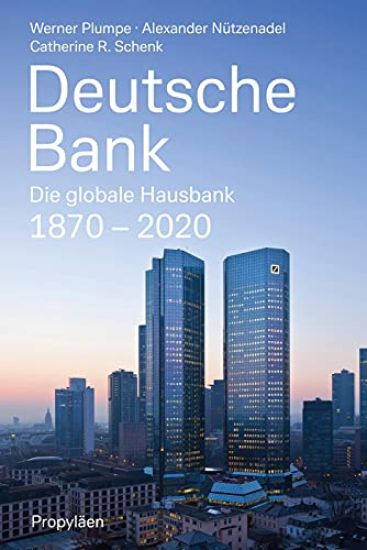
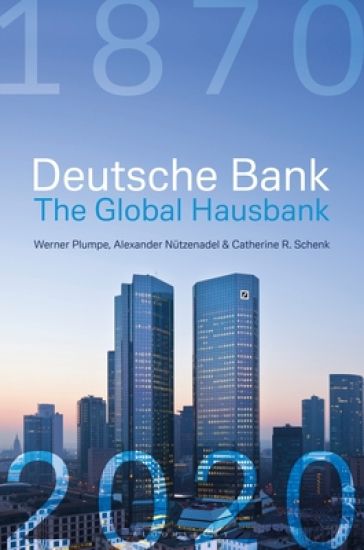
A comprehensive history of one of the major players in the world of international finance. Over the course of its 150-year history, Deutsche Bank has established itself as a major player in the world of international finance, but has also been confronted by numerous challenges that have changed the face of Europe – from two world wars, to the rise and subsequent fall of communism. In this major work on the bank's history, Werner Plumpe, Alexander Nützenadel and Catherine R. Schenk deliver a vibrant account of the measures the bank undertook in order to address the profound upheavals of the period, as well as the diverse and unusual demands it had to face. These included the First World War, which brought the world’s first period of globalization to a sudden and dramatic end, but also the development of the predominantly national framework within which the bank had to operate from 1914 until the fall of the Berlin Wall in 1989. More recently, the focus has shifted back to European and global activities, with Deutsche Bank forging new paths into the Anglo-American capital markets business – so opening another extraordinary chapter for the bank.
An empirical analysis and new theoretical framework for understanding economic expectations and decision making in different historical settings. Expectations play a crucial role in shaping economic behavior. But how are expectations actually formed, and how has this changed over time? The financial crisis of 2007–2008 cast doubt on traditional theories of expectation formation, particularly the rational expectations framework. In Contingent Expectations, Alexander Nützenadel and Jochen Streb examine the ways that past experiences influence the economic expectations and decision making of households, investors, and policymakers through history, and offer an alternative perspective. Combining a comprehensive empirical analysis of expectation formation from the eighteenth century to the present day with an assessment of the relevant economic theory, Nützenadel and Streb present a new theoretical framework, contingent expectations, for understanding economic expectation. Nützenadel and Streb show how economic actors developed new forecasting methods in response to rising uncertainty brought on by the Industrial Revolution, the expansion of global trade, financial market integration, and environmental crises. Tracing the evolution of economic theories on expectations, they find that when growing market volatility made forecasting more complex, economic agents often adapted with remarkable flexibility to changing circumstances. Challenging prevailing concepts of expectations, including rational choice and adaptive expectations, Nützenadel and Streb emphasize the heterogeneity of economic agents’ cognitive practices—in particular, the need to consider variation in information costs and historical experience. Expectation formation, they argue, is contingent on each individual’s current decision making situation. Their account of the history of economic expectations has significant implications for current debates in economics.
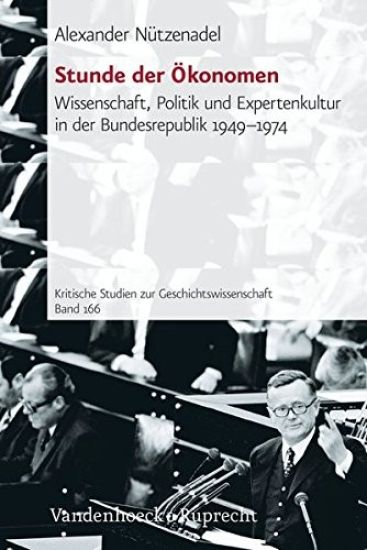
English summary: This book analyzes the role of the economists in West Germany between 1949 and the oil crises of 1974. In this period, the development of exact statistical methods of sophisticated forecasts helped to establish economic sciences a special role in the rapidly growing policy counseling. Moreover, it explains, why this discipline gained such a tremendous prestige in the post-war era. German description: Der wirtschaftliche Aufstieg nach dem Zweiten Weltkrieg hat das politische Selbstverstandnis Westdeutschlands in hohem Maae gepragt. Wachstum und Stabilitat avancierten zu Leitbegriffen, die wissenschaftliche Theorien, gesellschaftliche Diskussionen und politisches Handeln bestimmten. Zugleich gewann okonomisches Wissen an Bedeutung. Politiker und Wirtschaftsfuhrer griffen immer haufiger auf die Expertise der Okonomen zuruck; in den Medien expandierte die Wirtschaftsberichterstattung. Alexander Nutzenadel verfolgt die Entwicklung der westdeutschen Nationalokonomie nach 1945, die Entstehung der modernen Politikberatung und die Verwissenschaftlichung der Politik bis in ihre Krise seit Ende der sechziger Jahre, als die Steuerungsfahigkeit wirtschaftlicher Prozesse an ihre Grenzen stiea.
This is the first comprehensive exploration of agricultural policy in Fascist Italy. Drawing on a wealth of sources, it describes the major agricultural campaigns of the Fascists and situates them in the economic and social context of the times. A further central focus is on the ideological notions fueling Fascist 'ruralism' and the question of the exercise of power in rural areas. It transpires that the policy of autarchy was in itself largely successful, whereas the regime's objectives in the field of social and settlement policy came to nothing. After initially effective mobilization drives, the mid thirties saw an increasing loss of identification with Fascism among the rural population.