Kirjojen hintavertailu – 12 903 725 kirjaa ja 27 kauppaa

Kirjailija

Alexander Pushkin

Kirjat ja teokset yhdessä paikassa: 143 kirjaa, julkaisuja vuosilta 1978–2026, suosituimpiin kuuluu Marie. Vertaile teosten hintoja ja tarkista saatavuus suomalaisista kirjakaupoista.

143 kirjaa

Kirjojen julkaisuvuodet: 1978–2026.

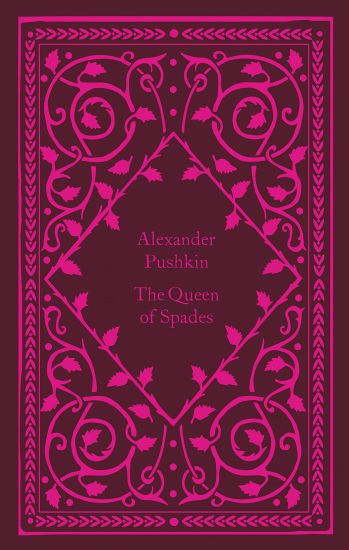
The Queen Of Spades

The Queen Of Spades

Alexander Pushkin

PENGUIN BOOKS LTD
2022
sidottu

Halvin toimitettuna 16,20 €

Introducing Little Clothbound Classics: irresistible, mini editions of short stories, novellas and essays from the world's greatest writers, designed by the award-winning Coralie Bickford-Smith. Celebrating the range and diversity of Penguin Classics, they take us from snowy Japan to springtime Vienna, from haunted New England to a sun-drenched Mediterranean island, and from a game of chess on the ocean to a love story on the moon. Beautifully designed and printed, these collectible editions are bound in colourful, tactile cloth and stamped with foil. A countess with a card trick; love letters filled with deception; a desperate man with a pistol.'The Queen of Spades', one of Pushkin's most popular and chilling stories, is accompanied here by the thrilling 'Dubrovsky' and unforgettable 'Tales of Belkin'.'He is the lasting wonder of Russian literature' - Guardian
Eugene Onegin

Eugene Onegin

Alexander Pushkin

University of California Press
2022
pokkari
Eugene Onegin, a narrative poem by Alexander Pushkin, is often regarded as his greatest work and a landmark of Russian literature. Written intermittently from 1823 to 1831, the poem is considered a masterpiece for its insightful portrayal of Russian society and its timeless depiction of love, regret, and the clash of characters and ideals. Pushkin’s creation of Tatyana, the heroine, is especially notable, as she is viewed as the precursor to many of the compelling Russian women that would later appear in works by writers such as Turgenev, Dostoyevsky, and Tolstoy. This enduring legacy has made Eugene Onegin an essential text for students of Russian literature. The current translation draws heavily on Professor Patrick’s meticulous prose version, which was carefully reviewed for accuracy. While earlier English translations have existed, such as Lieutenant-Colonel Spalding’s 1881 edition, this translation aims to preserve the natural flow and grace of Pushkin's original. Pushkin’s rhyme scheme, which follows a distinctive fourteen-line stanza with a specific rhyme pattern, has been adapted here to fit English while maintaining its musicality. The diction is intentionally informal to match Pushkin’s ease of expression, with slight adjustments made for cultural nuances, especially in the portrayal of Tatyana’s courageous declarations of love. This version also integrates Pushkin’s original notes and helpful commentary to ensure readers can fully appreciate the depth of the poem. This title is part of UC Press's Voices Revived program, which commemorates University of California Press’s mission to seek out and cultivate the brightest minds and give them voice, reach, and impact. Drawing on a backlist dating to 1893, Voices Revived makes high-quality, peer-reviewed scholarship accessible once again using print-on-demand technology. This title was originally published in 1937.
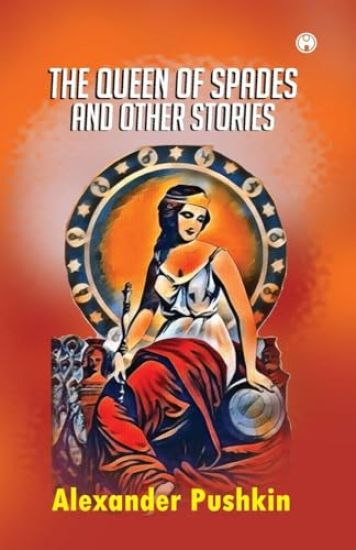
The Queen of Spades and other stories

The Queen of Spades and other stories

Alexander Pushkin

INDOEUROPEANPUBLISHING.COM
2022
sidottu
Alexander Sergeyevich Pushkin (6 June O. S. 26 May] 1799 - 10 February O. S. 29 January] 1837) was a Russian poet, playwright, and novelist of the Romantic era. He is considered by many to be the greatest Russian poet and the founder of modern Russian literature. Pushkin was born into the Russian nobility in Moscow. His father, Sergey Lvovich Pushkin, belonged to an old noble family. His maternal great-grandfather was Major-General Abram Petrovich Gannibal, a nobleman of Sub-Saharan African origin who was adopted and raised in the Emperor's court household as his godson. He published his first poem at the age of 15, and was widely recognized by the literary establishment by the time of his graduation from the Tsarskoye Selo Lyceum. Upon graduation from the Lyc e, Pushkin recited his controversial poem "Ode to Liberty", one of several that led to his exile by Tsar Alexander I. While under the strict surveillance of the Tsar's political police and unable to publish, Pushkin wrote his most famous play, the drama Boris Godunov. His novel in verse, Eugene Onegin, was serialized between 1825 and 1832. Pushkin was fatally wounded in a duel with his wife's alleged lover and her sister's husband Georges-Charles de Heeckeren d'Anth s, also known as Dantes-Gekkern, a French officer serving with the Chevalier Guard Regiment. Pushkin is usually credited with developing Russian literature. He is seen as having originated the highly nuanced level of language which characterizes Russian literature after him, and he is also credited with substantially augmenting the Russian lexicon. Whenever he found gaps in the Russian vocabulary, he devised calques. His rich vocabulary and highly-sensitive style are the foundation for modern Russian literature. His accomplishments set new records for development of the Russian language and culture. He became the father of Russian literature in the 19th century, marking the highest achievements of the 18th century and the beginning of literary process of the 19th century. He introduced Russia to all the European literary genres as well as a great number of West European writers. He brought natural speech and foreign influences to create modern poetic Russian. Though his life was brief, he left examples of nearly every literary genre of his day: lyric poetry, narrative poetry, the novel, the short story, the drama, the critical essay and even the personal letter. (wikipedia.org)

The Queen of Spades and other stories

The Queen of Spades and other stories

Alexander Pushkin

INDOEUROPEANPUBLISHING.COM
2022
pokkari
Alexander Sergeyevich Pushkin (6 June O. S. 26 May] 1799 - 10 February O. S. 29 January] 1837) was a Russian poet, playwright, and novelist of the Romantic era. He is considered by many to be the greatest Russian poet and the founder of modern Russian literature. Pushkin was born into the Russian nobility in Moscow. His father, Sergey Lvovich Pushkin, belonged to an old noble family. His maternal great-grandfather was Major-General Abram Petrovich Gannibal, a nobleman of Sub-Saharan African origin who was adopted and raised in the Emperor's court household as his godson. He published his first poem at the age of 15, and was widely recognized by the literary establishment by the time of his graduation from the Tsarskoye Selo Lyceum. Upon graduation from the Lyc e, Pushkin recited his controversial poem "Ode to Liberty", one of several that led to his exile by Tsar Alexander I. While under the strict surveillance of the Tsar's political police and unable to publish, Pushkin wrote his most famous play, the drama Boris Godunov. His novel in verse, Eugene Onegin, was serialized between 1825 and 1832. Pushkin was fatally wounded in a duel with his wife's alleged lover and her sister's husband Georges-Charles de Heeckeren d'Anth s, also known as Dantes-Gekkern, a French officer serving with the Chevalier Guard Regiment. Pushkin is usually credited with developing Russian literature. He is seen as having originated the highly nuanced level of language which characterizes Russian literature after him, and he is also credited with substantially augmenting the Russian lexicon. Whenever he found gaps in the Russian vocabulary, he devised calques. His rich vocabulary and highly-sensitive style are the foundation for modern Russian literature. His accomplishments set new records for development of the Russian language and culture. He became the father of Russian literature in the 19th century, marking the highest achievements of the 18th century and the beginning of literary process of the 19th century. He introduced Russia to all the European literary genres as well as a great number of West European writers. He brought natural speech and foreign influences to create modern poetic Russian. Though his life was brief, he left examples of nearly every literary genre of his day: lyric poetry, narrative poetry, the novel, the short story, the drama, the critical essay and even the personal letter. (wikipedia.org)
The Captain's Daughter

The Captain's Daughter

Alexander Pushkin

INDOEUROPEANPUBLISHING.COM
2022
sidottu
The Captain's Daughter is a historical novel by the Russian writer Alexander Pushkin. It was first published in 1836 in the fourth issue of the literary journal Sovremennik. The novel is a romanticized account of Pugachev's Rebellion in 1773-1774. The title "The Captain's Daughter" has also been used to refer to a collection of stories, one of which was the actual novel. (wikipedia.org)
Marie

Marie

Alexander Pushkin

INDOEUROPEANPUBLISHING.COM
2022
sidottu
Alexander Sergeyevich Pushkin (6 June O. S. 26 May] 1799 - 10 February O. S. 29 January] 1837) was a Russian poet, playwright, and novelist of the Romantic era. He is considered by many to be the greatest Russian poet and the founder of modern Russian literature. Pushkin was born into the Russian nobility in Moscow. His father, Sergey Lvovich Pushkin, belonged to an old noble family. His maternal great-grandfather was Major-General Abram Petrovich Gannibal, a nobleman of Sub-Saharan African origin who was adopted and raised in the Emperor's court household as his godson. He published his first poem at the age of 15, and was widely recognized by the literary establishment by the time of his graduation from the Tsarskoye Selo Lyceum. Upon graduation from the Lyc e, Pushkin recited his controversial poem "Ode to Liberty", one of several that led to his exile by Tsar Alexander I. While under the strict surveillance of the Tsar's political police and unable to publish, Pushkin wrote his most famous play, the drama Boris Godunov. His novel in verse, Eugene Onegin, was serialized between 1825 and 1832. Pushkin was fatally wounded in a duel with his wife's alleged lover and her sister's husband Georges-Charles de Heeckeren d'Anth s, also known as Dantes-Gekkern, a French officer serving with the Chevalier Guard Regiment. Pushkin is usually credited with developing Russian literature. He is seen as having originated the highly nuanced level of language which characterizes Russian literature after him, and he is also credited with substantially augmenting the Russian lexicon. Whenever he found gaps in the Russian vocabulary, he devised calques. His rich vocabulary and highly-sensitive style are the foundation for modern Russian literature. His accomplishments set new records for development of the Russian language and culture. He became the father of Russian literature in the 19th century, marking the highest achievements of the 18th century and the beginning of literary process of the 19th century. He introduced Russia to all the European literary genres as well as a great number of West European writers. He brought natural speech and foreign influences to create modern poetic Russian. Though his life was brief, he left examples of nearly every literary genre of his day: lyric poetry, narrative poetry, the novel, the short story, the drama, the critical essay and even the personal letter. (wikipedia.org)
The Captain's Daughter

The Captain's Daughter

Alexander Pushkin

INDOEUROPEANPUBLISHING.COM
2022
pokkari
The Captain's Daughter is a historical novel by the Russian writer Alexander Pushkin. It was first published in 1836 in the fourth issue of the literary journal Sovremennik. The novel is a romanticized account of Pugachev's Rebellion in 1773-1774. The title "The Captain's Daughter" has also been used to refer to a collection of stories, one of which was the actual novel. (wikipedia.org)
Marie

Marie

Alexander Pushkin

INDOEUROPEANPUBLISHING.COM
2022
pokkari
Alexander Sergeyevich Pushkin (6 June O. S. 26 May] 1799 - 10 February O. S. 29 January] 1837) was a Russian poet, playwright, and novelist of the Romantic era. He is considered by many to be the greatest Russian poet and the founder of modern Russian literature. Pushkin was born into the Russian nobility in Moscow. His father, Sergey Lvovich Pushkin, belonged to an old noble family. His maternal great-grandfather was Major-General Abram Petrovich Gannibal, a nobleman of Sub-Saharan African origin who was adopted and raised in the Emperor's court household as his godson. He published his first poem at the age of 15, and was widely recognized by the literary establishment by the time of his graduation from the Tsarskoye Selo Lyceum. Upon graduation from the Lyc e, Pushkin recited his controversial poem "Ode to Liberty", one of several that led to his exile by Tsar Alexander I. While under the strict surveillance of the Tsar's political police and unable to publish, Pushkin wrote his most famous play, the drama Boris Godunov. His novel in verse, Eugene Onegin, was serialized between 1825 and 1832. Pushkin was fatally wounded in a duel with his wife's alleged lover and her sister's husband Georges-Charles de Heeckeren d'Anth s, also known as Dantes-Gekkern, a French officer serving with the Chevalier Guard Regiment. Pushkin is usually credited with developing Russian literature. He is seen as having originated the highly nuanced level of language which characterizes Russian literature after him, and he is also credited with substantially augmenting the Russian lexicon. Whenever he found gaps in the Russian vocabulary, he devised calques. His rich vocabulary and highly-sensitive style are the foundation for modern Russian literature. His accomplishments set new records for development of the Russian language and culture. He became the father of Russian literature in the 19th century, marking the highest achievements of the 18th century and the beginning of literary process of the 19th century. He introduced Russia to all the European literary genres as well as a great number of West European writers. He brought natural speech and foreign influences to create modern poetic Russian. Though his life was brief, he left examples of nearly every literary genre of his day: lyric poetry, narrative poetry, the novel, the short story, the drama, the critical essay and even the personal letter. (wikipedia.org)
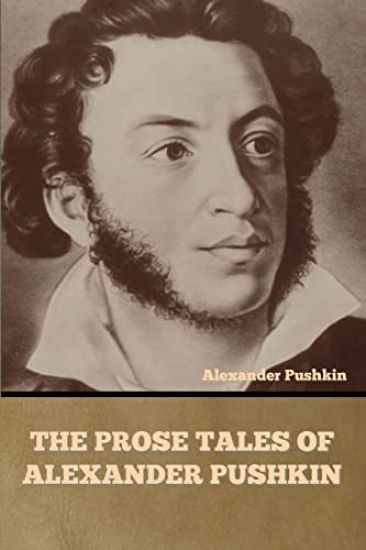
The Prose Tales of Alexander Pushkin

The Prose Tales of Alexander Pushkin

Alexander Pushkin

INDOEUROPEANPUBLISHING.COM
2022
sidottu
Alexander Sergeyevich Pushkin (6 June O. S. 26 May] 1799 - 10 February O. S. 29 January] 1837) was a Russian poet, playwright, and novelist of the Romantic era. He is considered by many to be the greatest Russian poet and the founder of modern Russian literature. Pushkin was born into the Russian nobility in Moscow. His father, Sergey Lvovich Pushkin, belonged to an old noble family. His maternal great-grandfather was Major-General Abram Petrovich Gannibal, a nobleman of Sub-Saharan African origin who was adopted and raised in the Emperor's court household as his godson. He published his first poem at the age of 15, and was widely recognized by the literary establishment by the time of his graduation from the Tsarskoye Selo Lyceum. Upon graduation from the Lyc e, Pushkin recited his controversial poem "Ode to Liberty", one of several that led to his exile by Tsar Alexander I. While under the strict surveillance of the Tsar's political police and unable to publish, Pushkin wrote his most famous play, the drama Boris Godunov. His novel in verse, Eugene Onegin, was serialized between 1825 and 1832. Pushkin was fatally wounded in a duel with his wife's alleged lover and her sister's husband Georges-Charles de Heeckeren d'Anth s, also known as Dantes-Gekkern, a French officer serving with the Chevalier Guard Regiment. Pushkin is usually credited with developing Russian literature. He is seen as having originated the highly nuanced level of language which characterizes Russian literature after him, and he is also credited with substantially augmenting the Russian lexicon. Whenever he found gaps in the Russian vocabulary, he devised calques. His rich vocabulary and highly-sensitive style are the foundation for modern Russian literature. His accomplishments set new records for development of the Russian language and culture. He became the father of Russian literature in the 19th century, marking the highest achievements of the 18th century and the beginning of literary process of the 19th century. He introduced Russia to all the European literary genres as well as a great number of West European writers. He brought natural speech and foreign influences to create modern poetic Russian. Though his life was brief, he left examples of nearly every literary genre of his day: lyric poetry, narrative poetry, the novel, the short story, the drama, the critical essay and even the personal letter. (wikipedia.org)
The Prose Tales of Alexander Pushkin

The Prose Tales of Alexander Pushkin

Alexander Pushkin

INDOEUROPEANPUBLISHING.COM
2022
pokkari
Alexander Sergeyevich Pushkin (6 June O. S. 26 May] 1799 - 10 February O. S. 29 January] 1837) was a Russian poet, playwright, and novelist of the Romantic era. He is considered by many to be the greatest Russian poet and the founder of modern Russian literature. Pushkin was born into the Russian nobility in Moscow. His father, Sergey Lvovich Pushkin, belonged to an old noble family. His maternal great-grandfather was Major-General Abram Petrovich Gannibal, a nobleman of Sub-Saharan African origin who was adopted and raised in the Emperor's court household as his godson. He published his first poem at the age of 15, and was widely recognized by the literary establishment by the time of his graduation from the Tsarskoye Selo Lyceum. Upon graduation from the Lyc e, Pushkin recited his controversial poem "Ode to Liberty", one of several that led to his exile by Tsar Alexander I. While under the strict surveillance of the Tsar's political police and unable to publish, Pushkin wrote his most famous play, the drama Boris Godunov. His novel in verse, Eugene Onegin, was serialized between 1825 and 1832. Pushkin was fatally wounded in a duel with his wife's alleged lover and her sister's husband Georges-Charles de Heeckeren d'Anth s, also known as Dantes-Gekkern, a French officer serving with the Chevalier Guard Regiment. Pushkin is usually credited with developing Russian literature. He is seen as having originated the highly nuanced level of language which characterizes Russian literature after him, and he is also credited with substantially augmenting the Russian lexicon. Whenever he found gaps in the Russian vocabulary, he devised calques. His rich vocabulary and highly-sensitive style are the foundation for modern Russian literature. His accomplishments set new records for development of the Russian language and culture. He became the father of Russian literature in the 19th century, marking the highest achievements of the 18th century and the beginning of literary process of the 19th century. He introduced Russia to all the European literary genres as well as a great number of West European writers. He brought natural speech and foreign influences to create modern poetic Russian. Though his life was brief, he left examples of nearly every literary genre of his day: lyric poetry, narrative poetry, the novel, the short story, the drama, the critical essay and even the personal letter. (wikipedia.org)
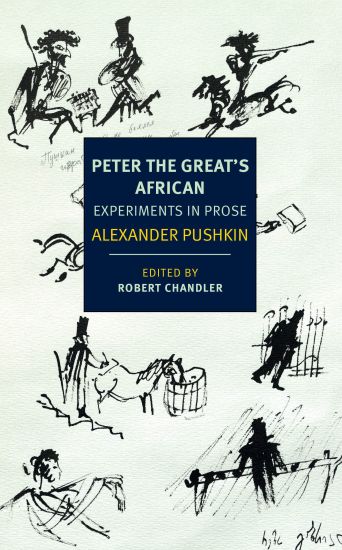
Peter the Great's African

Peter the Great's African

Alexander Pushkin; Robert Chandler

New York Review Books
2022
nidottu
Newly translated, unfinished works about power, class conflict, and artistic inspiration by Russia's greatest poet. This volume presents Alexander Pushkin at his most questioning and experimental. "Peter the Great's African" is his first attempt at representing the man he saw as the most important of all Russian tsars. Here Pushkin presents him from the perspective of Pushkin's maternal great-grandfather, a former African slave whom Peter the Great educated and made into one of his closest confidants. Pushkin's central concern in this story is the success or failure of Peter's attempt to refashion his vast, archaic empire and turn it into an integral part of Europe. "The History of the Village of Goriukhino"--one of Pushkin's wittiest works--shows him grappling, through parody and self-parody, with the question of what it means to write history. It points the way toward the serious, archivally based historical works to which Pushkin dedicated several of his last years. "Dubrovsky" is both a gripping adventure story and a vivid picture of provincial Russia in the late eighteenth century, with its simmering class conflicts ready to explode in violence. And "The Egyptian Nights" is an examination, in both prose and poetry, of questions of the deepest importance to Pushkin: from the nature of artistic inspiration to the problem of the poet's place in a rapidly changing and ever more commercialized society. These unfinished works are as remarkable as Pushkin's one completed novel, The Captain's Daughter--of interest both in their own right and for the insight they allow us into the poet's creative laboratory.
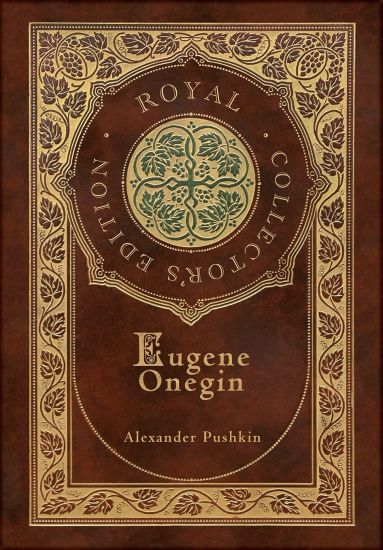
Eugene Onegin (Royal Collector's Edition) (Annotated) (Case Laminate Hardcover with Jacket)
Eugene Onegin is a bored St. Petersburg dandy, whose life consists of balls, concerts, parties, and nothing more. When he inherits a substantial fortune and a landed estate, he moves to the country where he strikes up a friendship with his neighbor, a young poet named Vladimir Lensky. Onegin is introduced to Lensky's fiancee, Olga, and her sister, Tatyana, who becomes intensely drawn to Onegin. After rejecting Tatyana's advances, Onegin attempts to seduce Olga, simply to spite Lensky. Eugene Onegin is considered a classic of Russian literature, and its protagonist has served as the model for a number of Russian literary heroes. Almost the entire work is made up of 389 fourteen-line stanzas of iambic tetrameter with the unusual rhyme scheme "AbAbCCddEffEgg", where the uppercase letters represent feminine rhymes while the lowercase letters represent masculine rhymes. The innovative rhyme scheme, the natural tone and diction, and the economical transparency of presentation all demonstrate the virtuosity which has been instrumental in proclaiming Pushkin as the undisputed master of Russian poetry. This case laminate collector's edition includes a Victorian inspired dust-jacket.
The Bakchesarian Fountain and Other Poems

The Bakchesarian Fountain and Other Poems

Alexander Pushkin

Alpha Edition
2021
pokkari
This book has been considered important throughout the human history, and so that this work is never forgotten we have made efforts in its preservation by republishing this book in a modern format for present and future generations. This whole book has been reformatted, retyped and designed. These books are not made of scanned copies of their original work and hence the text is clear and readable.
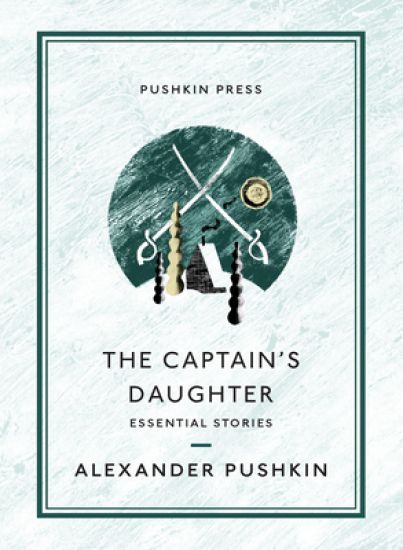
The Captain's Daughter

The Captain's Daughter

Alexander Pushkin

Pushkin Press
2021
nidottu
As complex as they are gripping, Pushkin's stories are some of the greatest and most influential ever written. Foundational to the development of Russian prose, they retain stunning freshness and clarity, more than ever in Anthony Briggs's finely nuanced translations. These are stories that upend expectations at every turn: in The Captain's Daughter, Pushkin's masterful novella of love and rebellion set during the reign of Catherine the Great, a mysterious encounter proves fatally significant during a brutal uprising, while in 'The Queen of Spades' a man obsessively pursues an elderly woman's secret for success at cards, with bizarre results.
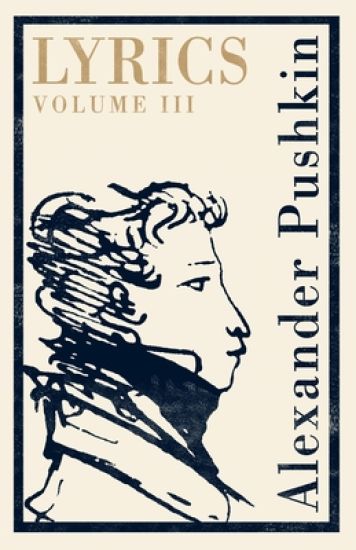
Lyrics: Volume 3 (1824-29)

Lyrics: Volume 3 (1824-29)

Alexander Pushkin

Alma Classics
2020
nidottu
The pioneer of modern Russian literature, Alexander Pushkin has exerted - through his novel in verse Eugene Onegin, his plays, his short stories and his narrative poetry - a lasting influence well beyond the borders of his motherland. A slightly lesser-known, but by no means less important aspect of his writing is his vast production of shorter verse, a genre at which he excelled and arguably still remains unsurpassed. This volume, part of Alma's series of the complete poetic works of Alexander Pushkin, collects the poems Pushkin wrote in his mid-to-late twenties, during his exile in Mikhaylovskoye and his subsequent return to metropolitan life. It includes some of his lyrical masterpieces, such as 'To Anna Kern' and 'I Loved You...' - arguably the two most famous love poems in the Russian language - 'To the Sea', 'Andre Chenier', 'The Prophet', 'Stanzas Addressed to Nicholas I', 'Deep in Siberian Mines', 'Arion', 'An Angel', 'The Talisman', 'Remembrance', 'A Flower' and 'Anchar, Tree of Poison', each presented in a verse translation opposite the original Russian text. Enriched with notes, pictures and an appendix on Pushkin's life and works, this will be essential reading for anyone wishing to explore the Russian bard's genius.
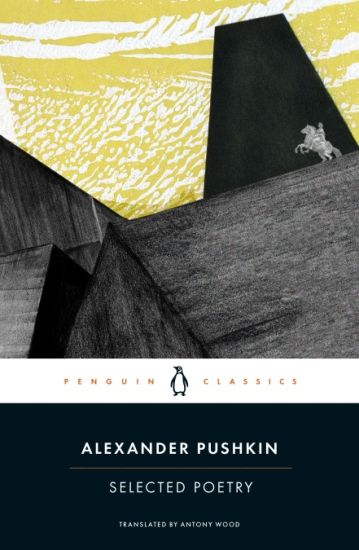
Selected Poetry

Selected Poetry

Alexander Pushkin

Penguin Classics
2020
pokkari

Halvin toimitettuna 18,70 €

WINNER OF THE READ RUSSIA PRIZE 2020Alexander Pushkin established what we know as Russian literature. This collection includes his strongly personal lyric verse, which springs spontaneously from his everyday life - his numerous loves, his exile, his hectic life in St Petersburg - while the narrative poems here, from exotic Southern tales to comic parodies and fairy tales of enchanted tsars, display his endless ability to surprise. His landmark work The Bronze Horseman, with its ghostly central figure of Peter the Great, holds the meaning of all Russian history. Antony Wood's translations reveal the variety, inventiveness and perfection of Pushkin's verse.