Kirjojen hintavertailu – 12 903 725 kirjaa ja 27 kauppaa

Kirjailija

Alexander Rodriguez

Kirjat ja teokset yhdessä paikassa: 493 kirjaa, julkaisuja vuosilta 2014–2019, suosituimpiin kuuluu Puzzles for Brain Tents - 200 Medium Puzzles 10x10 vol. 6. Vertaile teosten hintoja ja tarkista saatavuus suomalaisista kirjakaupoista.

493 kirjaa

Kirjojen julkaisuvuodet: 2014–2019.

Puzzles for Brain - Suguru 400 Easy Puzzles 6x6 vol. 25

Puzzles for Brain - Suguru 400 Easy Puzzles 6x6 vol. 25

Alexander Rodriguez

Createspace Independent Publishing Platform
2018
nidottu
Suguru, also known as Tectonics or Number Blocks, is a Japanese puzzle invented by Naoki Inaba. The goal is to fill a given rectangular grid with numbers, so that every designated area contains a sequence of non-repeating, consecutive numbers, starting from 1 and going up. Also, adjacent (touching) cells should not contain the same number, even diagonally.
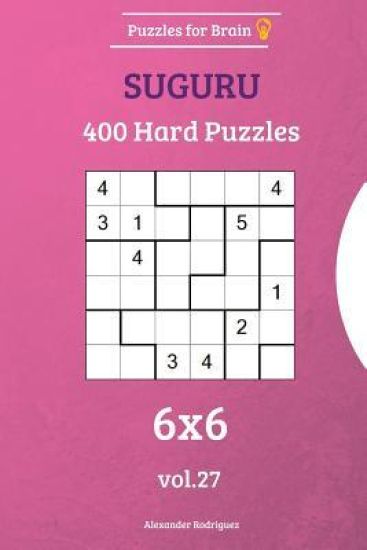
Puzzles for Brain - Suguru 400 Hard Puzzles 6x6 vol. 27

Puzzles for Brain - Suguru 400 Hard Puzzles 6x6 vol. 27

Alexander Rodriguez

Createspace Independent Publishing Platform
2018
nidottu
Suguru, also known as Tectonics or Number Blocks, is a Japanese puzzle invented by Naoki Inaba. The goal is to fill a given rectangular grid with numbers, so that every designated area contains a sequence of non-repeating, consecutive numbers, starting from 1 and going up. Also, adjacent (touching) cells should not contain the same number, even diagonally.
Puzzles for Brain - Suguru 400 Expert Puzzles 6x6 vol. 28

Puzzles for Brain - Suguru 400 Expert Puzzles 6x6 vol. 28

Alexander Rodriguez

Createspace Independent Publishing Platform
2018
nidottu
Suguru, also known as Tectonics or Number Blocks, is a Japanese puzzle invented by Naoki Inaba. The goal is to fill a given rectangular grid with numbers, so that every designated area contains a sequence of non-repeating, consecutive numbers, starting from 1 and going up. Also, adjacent (touching) cells should not contain the same number, even diagonally.
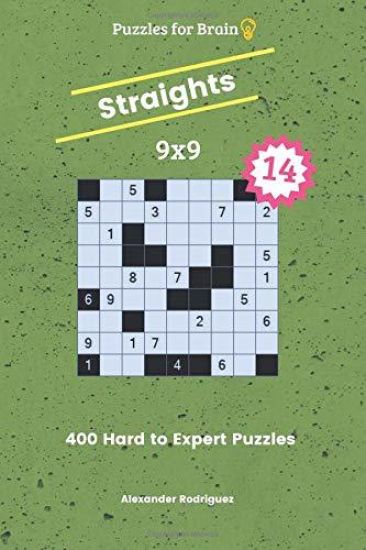
Puzzles for Brain Straights - 400 Hard to Expert 9x9 vol. 14

Puzzles for Brain Straights - 400 Hard to Expert 9x9 vol. 14

Alexander Rodriguez

Createspace Independent Publishing Platform
2018
pokkari
The solver is given a 9x9 grid, partially divided by black cells into compartments. Each compartment, vertically or horizontally, must contain a straight - a set of consecutive numbers, but in any order. For example: 7, 6, 4, 5 is valid, but 1, 3, 8, 7 is not. Like sudoku, the solver must fill the remaining white cells with numbers 1 to 9 (or 1 to n in puzzles with N cells per side) such that each row and column contains unique digits. Whereas Sudoku has the additional constraint of 3x3 boxes, in Str8ts rows and columns are divided by blacks cells. Additional clues are set in some of the black cells - these numbers remove that digit as an option in the row and column. Such digits do not form part of any straight.
Puzzles for Brain Straights - 200 Hard to Expert 9x9 vol. 11

Puzzles for Brain Straights - 200 Hard to Expert 9x9 vol. 11

Alexander Rodriguez

Createspace Independent Publishing Platform
2018
pokkari
The solver is given a 9x9 grid, partially divided by black cells into compartments. Each compartment, vertically or horizontally, must contain a straight - a set of consecutive numbers, but in any order. For example: 7, 6, 4, 5 is valid, but 1, 3, 8, 7 is not. Like sudoku, the solver must fill the remaining white cells with numbers 1 to 9 (or 1 to n in puzzles with N cells per side) such that each row and column contains unique digits. Whereas Sudoku has the additional constraint of 3x3 boxes, in Str8ts rows and columns are divided by blacks cells. Additional clues are set in some of the black cells - these numbers remove that digit as an option in the row and column. Such digits do not form part of any straight.
Puzzles for Brain Straights - 200 Medium to Hard 9x9 vol. 10

Puzzles for Brain Straights - 200 Medium to Hard 9x9 vol. 10

Alexander Rodriguez

Createspace Independent Publishing Platform
2018
pokkari
The solver is given a 9x9 grid, partially divided by black cells into compartments. Each compartment, vertically or horizontally, must contain a straight - a set of consecutive numbers, but in any order. For example: 7, 6, 4, 5 is valid, but 1, 3, 8, 7 is not. Like sudoku, the solver must fill the remaining white cells with numbers 1 to 9 (or 1 to n in puzzles with N cells per side) such that each row and column contains unique digits. Whereas Sudoku has the additional constraint of 3x3 boxes, in Str8ts rows and columns are divided by blacks cells. Additional clues are set in some of the black cells - these numbers remove that digit as an option in the row and column. Such digits do not form part of any straight.
Puzzles for Brain Tents - 200 Medium Puzzles 10x10 vol. 6

Puzzles for Brain Tents - 200 Medium Puzzles 10x10 vol. 6

Alexander Rodriguez

Createspace Independent Publishing Platform
2018
nidottu
Tents ("Tents and Trees") is a logic puzzle. The playing board is divided into squares. In some of them there are trees. The goal is to place tents in the free blocks by following several conditions: The number of tents and trees are equal. Tent must be located next (horizontaly and verticaly) to at least one tree. There can not be tents near to other tents (horizontally, verticaly and diagonaly). The number of tents in each row, and in each column, matches the numbers given round the sides of the grid.
Puzzles for Brain - Ripple Effect 200 Medium Puzzles 10x10 vol. 6

Puzzles for Brain - Ripple Effect 200 Medium Puzzles 10x10 vol. 6

Alexander Rodriguez

Createspace Independent Publishing Platform
2018
nidottu
Ripple Effect (also known as "Hakyuu", "Hakyuu Kouka", "Hakyukoka", "Seismic") is played on a rectangular grid divided into polyominoes. The solver must place one positive integer into each cell of the grid - some of which may be given in advance - according to these rules: Every polyomino must contain the consecutive integers from 1 to the quantity of cells in that polyomino inclusive. If two identical numbers appear in the same row or column, at least that many cells with other numbers must separate them. For example, two cells both containing '1' may not be orthogonally adjacent, but must have at least one cell between them with a different number. Two cells marked '3' in the same row or column must have at least three cells with other numbers between them in that row or column, and so on.
Puzzles for Brain Tents - 200 Hard Puzzles 10x10 vol. 7

Puzzles for Brain Tents - 200 Hard Puzzles 10x10 vol. 7

Alexander Rodriguez

Createspace Independent Publishing Platform
2018
nidottu
Tents ("Tents and Trees") is a logic puzzle. The playing board is divided into squares. In some of them there are trees. The goal is to place tents in the free blocks by following several conditions: The number of tents and trees are equal. Tent must be located next (horizontaly and verticaly) to at least one tree. There can not be tents near to other tents (horizontally, verticaly and diagonaly). The number of tents in each row, and in each column, matches the numbers given round the sides of the grid.
Puzzles for Brain - Ripple Effect 200 Hard Puzzles 9x9 vol. 3

Puzzles for Brain - Ripple Effect 200 Hard Puzzles 9x9 vol. 3

Alexander Rodriguez

Createspace Independent Publishing Platform
2018
nidottu
Ripple Effect (also known as "Hakyuu", "Hakyuu Kouka", "Hakyukoka", "Seismic") is played on a rectangular grid divided into polyominoes. The solver must place one positive integer into each cell of the grid - some of which may be given in advance - according to these rules: Every polyomino must contain the consecutive integers from 1 to the quantity of cells in that polyomino inclusive. If two identical numbers appear in the same row or column, at least that many cells with other numbers must separate them. For example, two cells both containing '1' may not be orthogonally adjacent, but must have at least one cell between them with a different number. Two cells marked '3' in the same row or column must have at least three cells with other numbers between them in that row or column, and so on.
Puzzles for Brain Numbricks - 200 Easy to Medium Puzzles 10x10 vol. 15

Puzzles for Brain Numbricks - 200 Easy to Medium Puzzles 10x10 vol. 15

Alexander Rodriguez

Createspace Independent Publishing Platform
2018
nidottu
Numbricks puzzles are similar to Hidato. The most important difference is that it is only possible to move 1 node left, right, up, or down. It is played on a rectangular grid of squares. Some of the cells have numbers in them. The object is to fill in the missing numbers, in sequential order, going horizontally and vertically only. Diagonal paths are not allowed.
Puzzles for Brain - Ripple Effect 200 Hard Puzzles 10x10 vol. 7

Puzzles for Brain - Ripple Effect 200 Hard Puzzles 10x10 vol. 7

Alexander Rodriguez

Createspace Independent Publishing Platform
2018
nidottu
Ripple Effect (also known as "Hakyuu", "Hakyuu Kouka", "Hakyukoka", "Seismic") is played on a rectangular grid divided into polyominoes. The solver must place one positive integer into each cell of the grid - some of which may be given in advance - according to these rules: Every polyomino must contain the consecutive integers from 1 to the quantity of cells in that polyomino inclusive. If two identical numbers appear in the same row or column, at least that many cells with other numbers must separate them. For example, two cells both containing '1' may not be orthogonally adjacent, but must have at least one cell between them with a different number. Two cells marked '3' in the same row or column must have at least three cells with other numbers between them in that row or column, and so on.
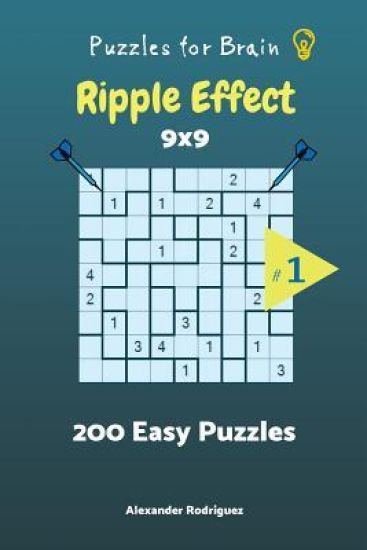
Puzzles for Brain - Ripple Effect 200 Easy Puzzles 9x9 vol. 1

Puzzles for Brain - Ripple Effect 200 Easy Puzzles 9x9 vol. 1

Alexander Rodriguez

Createspace Independent Publishing Platform
2018
nidottu
Ripple Effect (also known as "Hakyuu", "Hakyuu Kouka", "Hakyukoka", "Seismic") is played on a rectangular grid divided into polyominoes. The solver must place one positive integer into each cell of the grid - some of which may be given in advance - according to these rules: Every polyomino must contain the consecutive integers from 1 to the quantity of cells in that polyomino inclusive. If two identical numbers appear in the same row or column, at least that many cells with other numbers must separate them. For example, two cells both containing '1' may not be orthogonally adjacent, but must have at least one cell between them with a different number. Two cells marked '3' in the same row or column must have at least three cells with other numbers between them in that row or column, and so on.
Puzzles fo Brain - Suguru 200 Hard to Expert Puzzles 7x7 vol. 20

Puzzles fo Brain - Suguru 200 Hard to Expert Puzzles 7x7 vol. 20

Alexander Rodriguez

Createspace Independent Publishing Platform
2018
nidottu
Suguru, also known as Tectonics or Number Blocks, is a Japanese puzzle invented by Naoki Inaba. The goal is to fill a given rectangular grid with numbers, so that every designated area contains a sequence of non-repeating, consecutive numbers, starting from 1 and going up. Also, adjacent (touching) cells should not contain the same number, even diagonally.
Puzzles for Brain Straights - 200 Easy to Expert 9x9 vol. 12

Puzzles for Brain Straights - 200 Easy to Expert 9x9 vol. 12

Alexander Rodriguez

Createspace Independent Publishing Platform
2018
nidottu
The solver is given a 9x9 grid, partially divided by black cells into compartments. Each compartment, vertically or horizontally, must contain a straight - a set of consecutive numbers, but in any order. For example: 7, 6, 4, 5 is valid, but 1, 3, 8, 7 is not. Like sudoku, the solver must fill the remaining white cells with numbers 1 to 9 (or 1 to n in puzzles with N cells per side) such that each row and column contains unique digits. Whereas Sudoku has the additional constraint of 3x3 boxes, in Str8ts rows and columns are divided by blacks cells. Additional clues are set in some of the black cells - these numbers remove that digit as an option in the row and column. Such digits do not form part of any straight.
Puzzles for Brain Numbricks - 200 Hard to Expert Puzzles 10x10 vol. 16

Puzzles for Brain Numbricks - 200 Hard to Expert Puzzles 10x10 vol. 16

Alexander Rodriguez

Createspace Independent Publishing Platform
2018
nidottu
Numbricks puzzles are similar to Hidato. The most important difference is that it is only possible to move 1 node left, right, up, or down. It is played on a rectangular grid of squares. Some of the cells have numbers in them. The object is to fill in the missing numbers, in sequential order, going horizontally and vertically only. Diagonal paths are not allowed.