Kirjojen hintavertailu – 12 903 724 kirjaa ja 27 kauppaa

Kirjailija

Alexander Smith

Kirjat ja teokset yhdessä paikassa: 86 kirjaa, julkaisuja vuosilta 1835–2026, suosituimpiin kuuluu Dreamthorp. Vertaile teosten hintoja ja tarkista saatavuus suomalaisista kirjakaupoista.

86 kirjaa

Kirjojen julkaisuvuodet: 1835–2026.

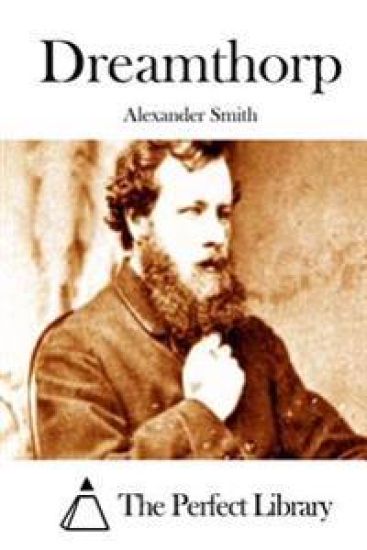
Dreamthorp

Dreamthorp

Alexander Smith

Hansebooks
2017
pokkari
Dreamthorp - a book of essays written in the country is an unchanged, high-quality reprint of the original edition of 1863. Hansebooks is editor of the literature on different topic areas such as research and science, travel and expeditions, cooking and nutrition, medicine, and other genres. As a publisher we focus on the preservation of historical literature. Many works of historical writers and scientists are available today as antiques only. Hansebooks newly publishes these books and contributes to the preservation of literature which has become rare and historical knowledge for the future.
Last Leaves

Last Leaves

Alexander Smith; Patrick Proctor Alexander

Hansebooks
2017
pokkari
Last Leaves - Sketches and criticisms is an unchanged, high-quality reprint of the original edition of 1868. Hansebooks is editor of the literature on different topic areas such as research and science, travel and expeditions, cooking and nutrition, medicine, and other genres. As a publisher we focus on the preservation of historical literature. Many works of historical writers and scientists are available today as antiques only. Hansebooks newly publishes these books and contributes to the preservation of literature which has become rare and historical knowledge for the future.
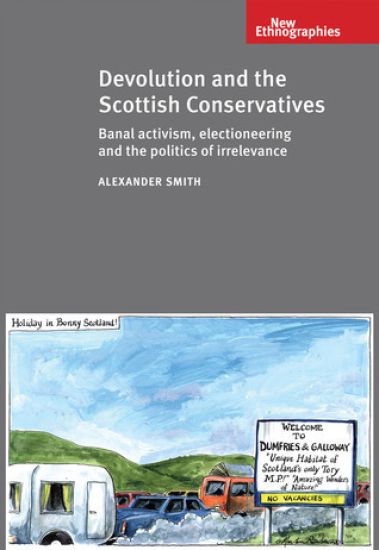
Devolution and the Scottish Conservatives

Devolution and the Scottish Conservatives

Alexander Smith

Manchester University Press
2014
nidottu
This highly readable book, is a unique, ethnographic study of devolution and Scottish politics as well as party political activism more generally. Available in paperback for the first time, it explores how Conservative Party activists who had opposed devolution and the movement for a Scottish Parliament during the 1990s attempted to mobilise politically following their annihilation at the 1997 General Election. It draws on fieldwork conducted in Dumfries and Galloway – a former stronghold for the Scottish Tories – to describe how senior Conservatives worked from the assumption that they had endured their own ‘crisis’ in representation. The material consequences of this crisis included losses of financial and other resources, legitimacy and local knowledge for the Scottish Conservatives. This book ethnographically describes the processes, practices and relationships that Tory Party activists sought to enact during the 2003 Scottish and local government elections. Its central argument is that, having asserted that the difficulties they faced constituted problems of knowledge, Conservative activists cast to the geographical and institutional margins of Scotland became ‘banal’ activists. Believing themselves to be lacking in the data and information necessary for successful mobilisation during Parliamentary elections, local Tory Party strategists attempted to address their knowledge ‘crisis’ by burying themselves in paperwork and petty bureaucracy.

Devolution and the Scottish Conservatives

Devolution and the Scottish Conservatives

Alexander Smith

Manchester University Press
2011
sidottu
This highly readable book is a unique, ethnographic study of devolution and Scottish politics as well as Party political activism more generally. It explores how Conservative Party activists who had opposed devolution and the movement for a Scottish Parliament during the 1990s attempted to mobilise politically following their annihilation at the 1997 General Election. It draws on fieldwork conducted in Dumfries and Galloway - a former stronghold for the Scottish Tories - to describe how senior Conservatives worked from the assumption that they had endured their own ‘crisis’ in representation. The material consequences of this crisis included losses of financial and other resources, legitimacy and local knowledge for the Scottish Conservatives. This book ethnographically describes the processes, practices and relationships that Tory Party activists sought to enact during the 2003 Scottish and local Government elections. Its central argument is that, having asserted that the difficulties they faced constituted problems of knowledge, Conservative activists cast to the geographical and institutional margins of Scotland became ‘banal’ activists. Believing themselves to be lacking in the data and information necessary for successful mobilisation during Parliamentary elections, local Tory Party strategists attempted to address their knowledge ‘crisis’ by burying themselves in paperwork and petty bureaucracy. Such practices have often escaped scholarly attention because they appear everyday and mundane and are therefore less noticeable.