Kirjojen hintavertailu – 12 903 725 kirjaa ja 27 kauppaa

Kirjailija

Alfred Arteaga

Kirjat ja teokset yhdessä paikassa: 5 kirjaa, julkaisuja vuosilta 1997–2021, suosituimpiin kuuluu Frozen Accident. Vertaile teosten hintoja ja tarkista saatavuus suomalaisista kirjakaupoista.

5 kirjaa

Kirjojen julkaisuvuodet: 1997–2021.

Xicancuicatl

Xicancuicatl

Alfred Arteaga; Cherrîe Moraga

Wesleyan University Press
2021
sidottu
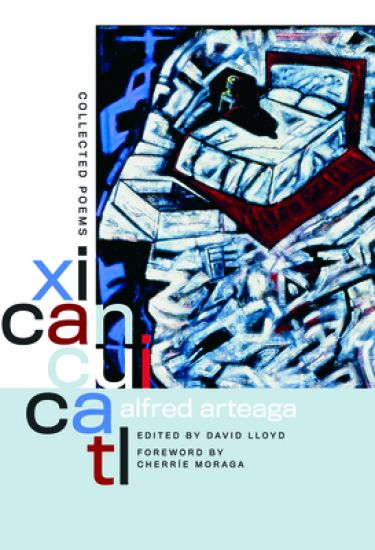
CAMINO IMAGINADO Blue leaves, hojas rotas in the shape of stars. Ni un "no" en tu vocabulario but for others; blue in place of green in the shape of Spain. Ojos the color of dirt, chocolate, coffee, time, azules las horas, hojas de horas van y se van, ni una palabra, ni una queja, nor broken bit a tu lado beside me andamos walking, sí walking caminamos caminos like these, such streets, what city. 7/15/95 Paris Xicancuicatl collects the poetry of leading avant-garde Chicanx poet Alfred Arteaga (1950–2008), whom French philosopher Gilles Deleuze regarded as "among those rare poets who are able to raise or shape a new language within their language." In his five published collections, Arteaga made crucial breakthroughs in the language of poetry, basing his linguistic experiments on the multilingual Xicanx culture of the US Southwest. His formal resources and finely tuned ear for sound patterns and language play remain astonishing. His poetical work, presented as a whole here for the first time, speaks more than ever to a moment in which border-crossing, cultural diversity, language-mixing and a multi-cultural vision of America are critical issues.
Xicancuicatl

Xicancuicatl

Alfred Arteaga; Cherrîe Moraga

Wesleyan University Press
2021
nidottu
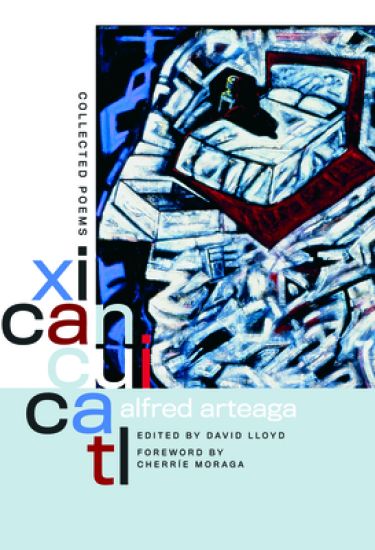
CAMINO IMAGINADO Blue leaves, hojas rotas in the shape of stars. Ni un "no" en tu vocabulario but for others; blue in place of green in the shape of Spain. Ojos the color of dirt, chocolate, coffee, time, azules las horas, hojas de horas van y se van, ni una palabra, ni una queja, nor broken bit a tu lado beside me andamos walking, sí walking caminamos caminos like these, such streets, what city. 7/15/95 Paris Xicancuicatl collects the poetry of leading avant-garde Chicanx poet Alfred Arteaga (1950–2008), whom French philosopher Gilles Deleuze regarded as "among those rare poets who are able to raise or shape a new language within their language." In his five published collections, Arteaga made crucial breakthroughs in the language of poetry, basing his linguistic experiments on the multilingual Xicanx culture of the US Southwest. His formal resources and finely tuned ear for sound patterns and language play remain astonishing. His poetical work, presented as a whole here for the first time, speaks more than ever to a moment in which border-crossing, cultural diversity, language-mixing and a multi-cultural vision of America are critical issues.
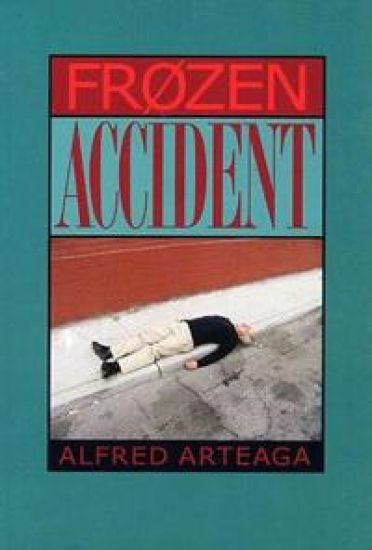
Frozen Accident

Frozen Accident

Alfred Arteaga

Tia Chucha Press
2006
nidottu
Frozen Accident is a long poem and, echoing Dante, its primary section ""Nezahualcoyotl in Mictlan"" narrates a trip to hell. Yet, Mictlan is not quite the Inferno. For Alfred Arteaga, the place of the dead is California, the last stop for Western culture, the final limit of its reach. The West's poets and philosophers have long declared history over, god dead, and that what remains is merely the house of language. In other words, all is but frozen accident. If the endpoint is California, the poem's point of departure is an assassination that radically shaped history. A young man witnessed his father's murder in a power play that unintentionally enabled the Aztecs to establish an empire. The young man, Nezahualcoyotl, became the philosopher king of Texcoco and wrote the most famous poem of pre-conquest Americas, ""Song of Flight."" What did it mean to be and then to cease to be? Were we all, after all, perhaps but texts of god, existing only in the breath, and red and black inks of divine poetry?
Chicano Poetics

Chicano Poetics

Alfred Arteaga

Cambridge University Press
1997
pokkari
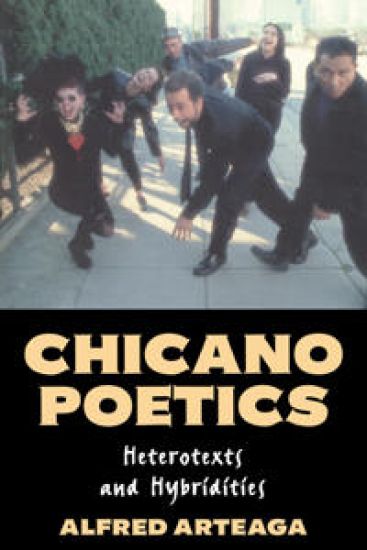
Chicano Poetics: Heterotexts and Hybridities examines the crossing of literary and social forces – be they linguistic, political, poetic - that forms the context for being Chicano. It reveals how a poetry of the cross can influence identity, in readings ranging from the poetry of gender and race by Sor Juana Inés de la Cruz to that of the fragmentary, postmodern subject of Juan Felipe Herrara. How the text of Spanish and Indian miscegenation and the story of Aztlán propagate identity is demonstrated in texts from Bernal Diaz del Castillo to Gloria Anzaldúa. The international space and the interlingual language of the borderlands are read as factors of nationalism and postcoloniality in discussion ranging from cowboy lingo to the essential Mexicanism of Octavio Paz. Heterotextuality is the medium in which xicanismo is articulated and comes to be a hybrid subject of textual difference.
Chicano Poetics

Chicano Poetics

Alfred Arteaga

Cambridge University Press
1997
sidottu
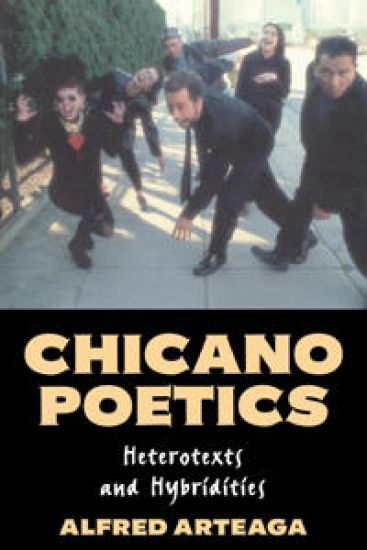
Chicano Poetics: Heterotexts and Hybridities examines the crossing of literary and social forces – be they linguistic, political, poetic - that forms the context for being Chicano. It reveals how a poetry of the cross can influence identity, in readings ranging from the poetry of gender and race by Sor Juana Inés de la Cruz to that of the fragmentary, postmodern subject of Juan Felipe Herrara. How the text of Spanish and Indian miscegenation and the story of Aztlán propagate identity is demonstrated in texts from Bernal Diaz del Castillo to Gloria Anzaldúa. The international space and the interlingual language of the borderlands are read as factors of nationalism and postcoloniality in discussion ranging from cowboy lingo to the essential Mexicanism of Octavio Paz. Heterotextuality is the medium in which xicanismo is articulated and comes to be a hybrid subject of textual difference.