Kirjailija
Alfred J Church
Kirjat ja teokset yhdessä paikassa: 126 kirjaa, julkaisuja vuosilta 1888–2026, suosituimpiin kuuluu The Burning of Rome (Yesterday's Classics). Vertaile teosten hintoja ja tarkista saatavuus suomalaisista kirjakaupoista.
Nimi esiintyy myös muodoissa: Alfred J. Church
126 kirjaa
Kirjojen julkaisuvuodet: 1888–2026.





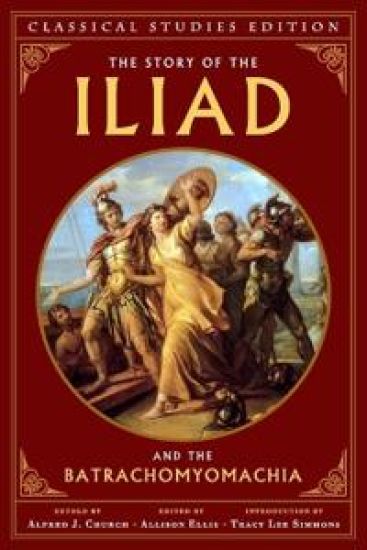
The Story of the Iliad and the Batrachomyomachia (Annotated)
Alfred J. Church
Mount Titano Media
2025
Nidottu
Etsitkö jännitystä, uusia näkökulmia tai rentouttavaa lukuelämystä? Tutustu kirjakategorioihimme ja löydä seuraava suosikkikirjasi.

The poetical works of George MacDonald — Volume 2 (Edition2)
Alfred J Church
Alpha Editions
2025
nidottu

The Poetical Works of Elizabeth Barrett Browning, Volume 4 (Edition2)
Alfred J Church
Alpha Editions
2025
nidottu
The poetical works of George MacDonald — Volume 1 (Edition2)
Alfred J Church
Alpha Editions
2025
nidottu

The Poetical Works of Henry Kirk White With a Memoir by Sir Harris Nicolas (Edition2)
Alfred J Church
Alpha Editions
2025
nidottu

A masterful retelling in modern English of thirteen of the best-known classical Greek tragedies from the genre's most famous authors: Euripides, Aeschylus, and Sophocles. From the inspiring love story of Alcestis to the fiery vengeance of Medea, from the trials of Hercules to the death of Agamemnon, the vengeance of Electra to the Battle of Salamis, this book provides all the content and flavor of the original works in an accessible format for the contemporary reader. Greek tragedy is one of the oldest forms of theater in the world, and its stories are so timeless that many of its themes provided inspiration for Shakespeare. It reached its height in fifth century Athens, drawn upon myths from the oral traditions of archaic epics. Aeschylus (c. 525-456 BC) established the basic rules of tragic drama and is credited with inventing the trilogy, a series of three tragedies that tell one long story. Sophocles (c. 497-406 BC) was the first to introduce large numbers of actors onto the stage and he created the series-of-scenes format which the present-day theater still uses. Euripides (c. 480-406 BC) introduced the plot formats which have shaped theater to the present-day, particularly in the presentation of heroes as ordinary people in extraordinary circumstances. This is a vital work which will help round off any classical European education.
Color edition. Herodotus, the "father of history," is possibly the most famous historian of all-and perhaps the most maligned, despite his clear warning at the start of his book that he was merely recording, not vouchsafing, those things that he had not seen himself. As a result, his accounts are often dismissed, but as Alfred Church's masterful retelling shows, this is an unjust assumption. Starting with the reign of King Croesus of Lydia (ca. 560 BC), his wars with the Persians, and the rise of Cyrus the Great of Persia, Herodotus's story line moves through the late Egyptian dynasties, and deals with their downfall and submission to the Persians. The stories of Cyrus's successor, Cambyses, and the renowned King Darius are related, along with a fascinating-if brutal-account of the habits of many of the peoples, Indo-European and otherwise, who shaped the destiny of the Ancient Middle East. The author is as careful as Herodotus in his relation of the ascertained facts, and writes in his preface: "I should be sorry that readers who are not acquainted with the work of the 'Father of History' should carry away from this book the impression that he is nothing more than a credulous and gossiping teller of stories. That he was often deceived, and that he writes with a simplicity which is quite remote from our ways of thinking, is manifest; but those who know him best are aware that he was nevertheless a shrewd and painstaking observer, whose credit has been distinctly increased by the discoveries of modern times." This edition has been completely reset, and contains all the original text and color illustrations.
Color edition. A masterful retelling in modern English of thirteen of the best-known classical Greek tragedies from the genre's most famous authors: Euripides, Aeschylus, and Sophocles. From the inspiring love story of Alcestis to the fiery vengeance of Medea, from the trials of Hercules to the death of Agamemnon, the vengeance of Electra to the Battle of Salamis, this book provides all the content and flavor of the original works in an accessible format for the contemporary reader. Greek tragedy is one of the oldest forms of theater in the world, and its stories are so timeless that many of its themes provided inspiration for Shakespeare. It reached its height in fifth century Athens, drawn upon myths from the oral traditions of archaic epics. Aeschylus (c. 525-456 BC) established the basic rules of tragic drama and is credited with inventing the trilogy, a series of three tragedies that tell one long story. Sophocles (c. 497-406 BC) was the first to introduce large numbers of actors onto the stage and he created the series-of-scenes format which the present-day theater still uses. Euripides (c. 480-406 BC) introduced the plot formats which have shaped theater to the present-day, particularly in the presentation of heroes as ordinary people in extraordinary circumstances. This is a vital work which will help round off any classical European education.
The comedy of Classical Greece set the standard by which all of European-and ultimately world-comedic theater is judged. Here in this volume, the very best of Greek comedic works by the most famous authors is presented in easy-to-read English. While these works will grant the reader an insight into just how advanced Classical Grecian culture was, they also reveal otherwise hidden aspects of Greek society and provide details on the workings of political institutions, legal systems, religious practices, education, and warfare in the Hellenic world. Greek comedy was divided into three specific eras: Old Comedy, Middle Comedy, and New Comedy. All three represent specific periods of history. Old Comedy was the first and oldest genre, Middle Comedy that of the time period leading up to the collapse of Classical Greece and the emergence of Macedonian dominance, while New Comedy lasted until the end of the Alexandrian Empire. Sadly, nothing but tiny fragments remain of the Middle Comedy. Old Comedy was exemplified by the writer Aristophanes (c. 446-386 BC), and nine of his works appear in this book. A master of political satire, Aristophanes mocked leading persons and institutions of his day, including Socrates in The Clouds, and the Athenian government in The Parliament of Women. New Comedy's best known writers were Philemon (c. 362-262 BC), Diphilus (c. 350-290 BC), Menander (c. 341-290 BC), and Apollodorus (c. 300-260 BC). Examples from all of these writers are presented in this volume. Menander's style was noted for its unusual combination of escapism and realism, while Philemon dealt with philosophical issues. Diphilus's works, on the other hand, were noted for their broad comedy and farcical violence. Apollodorus is possibly the best known and most successful of all the New Comedy writers, and was known for his focus on women as subject matter.