Kirjojen hintavertailu – 12 859 829 kirjaa ja 27 kauppaa
Kirjailija
Alfredo Cramerotti
Kirjat ja teokset yhdessä paikassa: 5 kirjaa, julkaisuja vuosilta 2009–2026, suosituimpiin kuuluu Hyper-imaging. Vertaile teosten hintoja ja tarkista saatavuus suomalaisista kirjakaupoista.
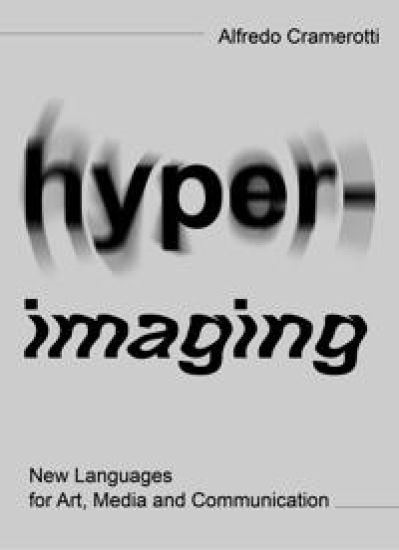
Hyper-imaging: New Languages for Art, Media and Communication describes a condition in which images are processes and no longer end points; relays of action instead of representations. In turn, this redefines curating as a form of active mediation between human attention and the invisible systems shaping it. Throughout the book, Dr. Cramerotti weaves theoretical perspectives with case studies drawn from his curatorial experience and deep engagements with artists and thinkers whose work interrogates these shifting dynamics. It offers a compelling argument that images are shifting from static representations to active practices, using the author’s curatorial experience to illustrate this transformation with clarity and depth. Thoroughly supported by scholarship and professional insight, the book shows how images circulate, shape our responses, and position artists and curators as key figures in evolving media theory. This is a book about how images function: how they move, mutate, and co-author meaning with machines, publics, and institutions. The goal is to equip curators, artists, scholars, and readers to better navigate this terrain: to engage critically, act creatively, and think infrastructurally. In the age of hyper-imaging, what is seeing is not the point; it is the system of seeing that must be curated.
Hyper-imaging: New Languages for Art, Media and Communication describes a condition in which images are processes and no longer end points; relays of action instead of representations. In turn, this redefines curating as a form of active mediation between human attention and the invisible systems shaping it. Throughout the book, Dr. Cramerotti weaves theoretical perspectives with case studies drawn from his curatorial experience and deep engagements with artists and thinkers whose work interrogates these shifting dynamics. It offers a compelling argument that images are shifting from static representations to active practices, using the author’s curatorial experience to illustrate this transformation with clarity and depth. Thoroughly supported by scholarship and professional insight, the book shows how images circulate, shape our responses, and position artists and curators as key figures in evolving media theory. This is a book about how images function: how they move, mutate, and co-author meaning with machines, publics, and institutions. The goal is to equip curators, artists, scholars, and readers to better navigate this terrain: to engage critically, act creatively, and think infrastructurally. In the age of hyper-imaging, what is seeing is not the point; it is the system of seeing that must be curated.
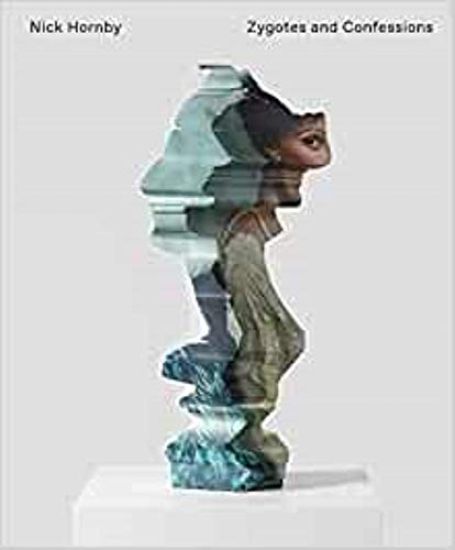
Zygotes and Confessions is a publication devoted to the work of London-based artist Nick Hornby, and has been produced to accompany his first solo exhibition in a public gallery. The exhibition, which shares its title with the publication, is presented at MOSTYN, Wales, UK, from November 2020 to April 2021. Hornby is known for his monumental site-specific works that combine digital software with traditional materials such as bronze, steel, granite and marble. In this publication he presents a substantial new body of smaller, more intimate work comprising three discrete yet interrelated series of works inspired by the history of sculptural busts, modernist abstractions and mantelpiece ceramic dogs. United by glossy photographic surfaces created by means of an industrial process in which his marble and resin composite sculptures are dipped into liquid photographs, these new works explore themes of portraiture, the body, identity, sexuality and intimacy in the digital era. A number of the works have been made in collaboration with fashion photographer Louie Banks. Along with a foreword by Helen Boyd, Head of Marketing and Publisher Relations at the Casemate Group, the publication features a text by MOSTYN director Alfredo Cramerotti and an essay by London-based publisher, editor and writer Matt Price. Price writes: "With one eye on the sculpture of the past and the other on that of tomorrow, technology is at the heart of London-based Nick Hornby’s practice and is central to the production of his often imposing, mind-bending and futuristic-looking sculptures. Using materials such as bronze and marble, his work points back towards the Renaissance or the nineteenth century, yet his use of resin and digital technology positions him very much in the present, exploring languages both figurative and abstract, often simultaneously." The texts are presented in both English and Welsh. Newly commissioned studio photography of the works by Ben Westoby, along with installation views of the exhibition commissioned by MOSTYN from Mark Blower, illustrate the publication, which has been designed by Joe Gilmore / Qubik. The publication is co-published by MOSTYN, Wales, UK, and Anomie Publishing, London, and distributed internationally by Casemate Art, a division of the Casemate Group. Nick Hornby (b.1980) is a British artist living and working in London. Hornby studied at the Slade School of Art and Chelsea College of Art. His work has been exhibited at Tate Britain, Southbank Centre London, Leighton House London, CASS Sculpture Foundation, Glyndebourne, Fitzwilliam Museum Cambridge, Museum of Arts and Design New York, and Poznan Biennale, Poland. Residencies include Outset (Israel) and Eyebeam (USA), and awards include the UAL Sculpture Prize. His work has been reviewed in the New York Times, frieze, Artforum, The Art Newspaper, The FT, and featured in Architectural Digest and Sculpture Magazine.
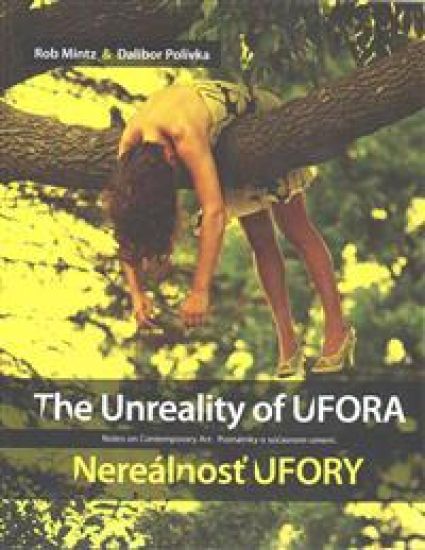
Encouraged by the successes of their co-curated exhibitions Inexpressible (2009), After Hours/ Individual Stories (2010), and You First (2011), artists Dalibor Pol vka and Rob Mintz (co-founders of UFORA, the Universal Festival of Relational Art) decided to create an art book depicting how "relational aesthetics" had rocked their world. In this handsomely designed volume, their essays compliment seminal texts by the influential French curator Nicolas Bourriaud (who coined the term "relational aesthetics") and Mostyn gallery director Alfredo Cramerotti. Nicolas Bourriaud's essay "Instable Connections" sets the record straight on the history of the term. Alfredo Cramerotti's piece, "Three Ways of Curating," presents new approaches to creative survival in an ever-shifting, curatorial culture. Delving into "exhibition as medium" and "institutional critique," The Unreality of UFORA presents the work of a cadre of contemporary artists participating in an experimental exhibition. Full of incisive quotations from a variety of experts about the impact of "relational aesthetics," its controversial acceptance, and its place in art history, The Unreality of UFORA should be on the radar of artists, collectors, curators, and art students seeking a high-octane jolt of insight into the relational turn.
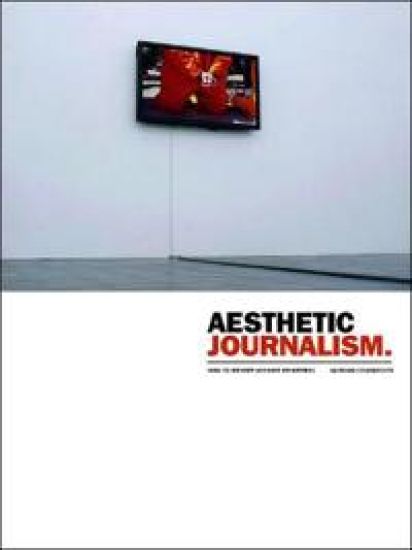
As the art world eagerly embraces a journalistic approach, Aesthetic Journalism explores why contemporary art exhibitions often consist of interviews, documentaries and reportage. This new mode of journalism is grasping more and more space in modern culture and Cramerotti probes the current merge of art with the sphere of investigative journalism. The attempt to map this field, here defined as ‘Aesthetic Journalism’, challenges, with clear language, the definitions of both art and journalism, and addresses a new mode of information from the point of view of the reader and viewer. The book explores how the production of truth has shifted from the domain of the news media to that of art and aestheticism. With examples and theories from within the contemporary art and journalistic-scape, the book questions the very foundations of journalism. Aesthethic Journalism suggests future developments of this new relationship between art and documentary journalism, offering itself as a useful tool to audiences, scholars, producers and critics alike.