
Kirjailija
Algar Thorold
Kirjat ja teokset yhdessä paikassa: 18 kirjaa, julkaisuja vuosilta 1907–2025, suosituimpiin kuuluu The Warden. Vertaile teosten hintoja ja tarkista saatavuus suomalaisista kirjakaupoista.
18 kirjaa
Kirjojen julkaisuvuodet: 1907–2025.

Studies in the Psychology of the Mystics
Joseph Maréchal; Algar Thorold
Hassell Street Press
2023
sidottu
This groundbreaking work of psychology explores the inner world of the mystics, examining the ways in which religious experience shapes the human psyche. Joseph Maréchal's insights into the nature of consciousness and the mystical experience continue to fascinate readers and scholars today. This work has been selected by scholars as being culturally important, and is part of the knowledge base of civilization as we know it. This work is in the "public domain in the United States of America, and possibly other nations. Within the United States, you may freely copy and distribute this work, as no entity (individual or corporate) has a copyright on the body of the work. Scholars believe, and we concur, that this work is important enough to be preserved, reproduced, and made generally available to the public. We appreciate your support of the preservation process, and thank you for being an important part of keeping this knowledge alive and relevant.

Studies in the Psychology of the Mystics
Joseph Maréchal; Algar Thorold
Hassell Street Press
2021
nidottu
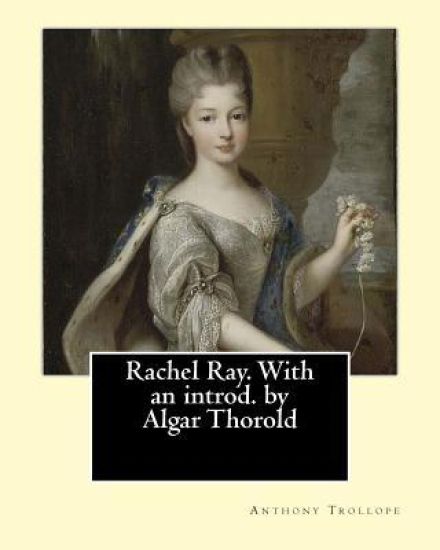
Rachel Ray. With an introd. by Algar Thorold. By: Anthony Trollope: Rachel Ray is an 1863 novel by Anthony Trollope.
Algar Thorold; Anthony Trollope
Createspace Independent Publishing Platform
2017
nidottu
Algar Labouchere Thorold Writer Born: 1866 Died: 1936 Rachel Ray is an 1863 novel by Anthony Trollope. It recounts the story of a young woman who is forced to give up her fianc because of baseless suspicions directed toward him by the members of her community, including her sister and the pastors of the two churches attended by her sister and mother. The novel was originally commissioned for Good Words, a popular magazine directed at pious Protestant readers. However, the magazine's editor, upon reading the galley proofs, concluded that the negative portrayals of the Low church and Evangelical characters would anger and alienate much of his readership. The novel was never published in serial form. Plot: Rachel Ray is the younger daughter of a lawyer's widow. She lives with her mother and her widowed sister, Dorothea Prime, in a cottage near Exeter in Devon. Mrs. Ray is amiable but weak, unable to make decisions on her own and ruled by her older daughter. Mrs. Prime is a strict and gloomy Evangelical, persuaded that all worldly joys are impediments to salvation. Rachel is courted by Luke Rowan, a young man from London who has inherited an interest in the profitable local brewery. Mrs. Prime suspects his morals and motives, and communicates these suspicions to her mother. Mrs. Ray consults her pastor, the Low Churchman Charles Comfort; and upon his vouching for Rowan, allows Rachel to accept his offer of marriage. Soon after this, Rowan falls into a dispute with the senior proprietor of the brewery, and returns to London to seek legal advice. Rumours circulate about his conduct in Devon; Comfort believes the rumours, and advises Mrs. Ray to end the engagement between Rachel and Rowan. Rachel obeys her mother's instructions to write Rowan and release him from the engagement. When he fails to respond, she grows increasingly depressed. Rowan returns to Devon, and the dispute over the brewery is settled to his satisfaction. This accomplished, he calls upon the Rays and assures Rachel that his love for her is still strong. She assents to his renewed proposals. Marital bliss ensues. A subplot involves the abortive courtship of Mrs. Prime by her pastor, Samuel Prong. Prong is a zealous but intolerant Evangelical. His religious beliefs are in agreement with hers, but the two have incompatible notions of marriage: Prong insists on a husband's authority over his wife, and in particular over the income from her first husband's estate; Mrs. Prime wants to retain control of her money, and is otherwise unwilling to submit to a husband's rule.... Anthony Trollope ( 24 April 1815 - 6 December 1882) was an English novelist of the Victorian era. Among his best-known works is a series of novels collectively known as the Chronicles of Barsetshire, which revolves around the imaginary county of Barsetshire. He also wrote novels on political, social, and gender issues, and other topical matters. Trollope's literary reputation dipped somewhat during the last years of his life, but he had regained the esteem of critics by the mid-20th century.
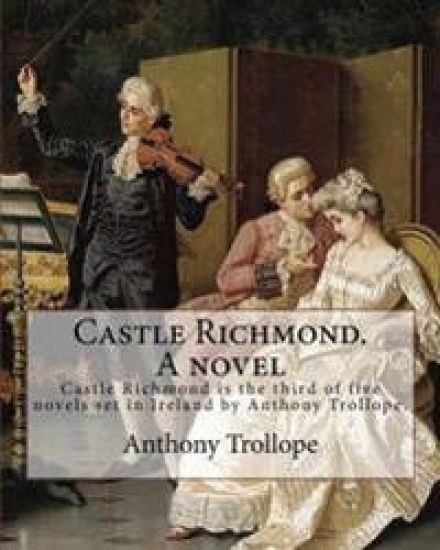
Castle Richmond. A novel. By: Anthony Trollope, introduction By: Algar (Labouchere) Thorold (Born: 1866. Died: 1936).: Castle Richmond is the third
Algar Thorold; Anthony Trollope
Createspace Independent Publishing Platform
2017
nidottu
Castle Richmond is the third of five novels set in Ireland by Anthony Trollope. Castle Richmond was written between 4 August 1859 and 31 March 1860, and was published in three volumes on 10 May 1860. It was his tenth novel. Trollope signed the contract for the novel on 2 August 1859. He received 600, 200 more than the payment for his previous novel, The Bertrams, reflecting his growing popular success. Castle Richmond is set in southwestern Ireland at beginning of the Irish famine. Castle Richmond is situated on the banks of the Blackwater River in County Cork. Trollope's work in Ireland from 1841 to 1859 had given him an extensive knowledge of the island, and Richard Mullen has written that "All the principal strands of his life were formed in Ireland." The unusually (for Trollope) complicated plot features the competition of two Protestant cousins of English origin, Owen Fitzgerald and Herbert Fitzgerald, for the hand of Clara Desmond, the noble but impoverished daughter of the widowed Countess of Desmond, providing the novel's principal dramatic interest. Castle Richmond was the first of several novels by Trollope in which bigamy played an important role. The Irish famine and efforts by authorities to mitigate its effects are the subject of many scenes and the object of abundant commentary throughout. The famine also occasions more explicit religious commentary than is typical in novels by Trollope. The critical reception to the novel was limited but generally favourable. However, Castle Richmond did not sell particularly well.... Anthony Trollope ( 24 April 1815 - 6 December 1882) was an English novelist of the Victorian era. Among his best-known works is a series of novels collectively known as the Chronicles of Barsetshire, which revolves around the imaginary county of Barsetshire. He also wrote novels on political, social, and gender issues, and other topical matters. Trollope's literary reputation dipped somewhat during the last years of his life, but he had regained the esteem of critics by the mid-20th century.... Algar Labouchere Thorold Writer Born: 1866 Died: 1936
Rachel Ray (1863), By Anthony Trollope and With an introd.by Algar Thorold: (Thorold, Algar Labouchere, 1866-1936)
Algar Thorold; Anthony Trollope
Createspace Independent Publishing Platform
2016
nidottu
Rachel Ray is an 1863 novel by Anthony Trollope. It recounts the story of a young woman who is forced to give up her fianc because of baseless suspicions directed toward him by the members of her community, including her sister and the pastors of the two churches attended by her sister and mother. The novel was originally commissioned for Good Words, a popular magazine directed at pious Protestant readers. However, the magazine's editor, upon reading the galley proofs, concluded that the negative portrayals of the Low church and Evangelical characters would anger and alienate much of his readership. The novel was never published in serial form. Rachel Ray is the younger daughter of a lawyer's widow. She lives with her mother and her widowed sister, Dorothea Prime, in a cottage near Exeter in Devon. Mrs. Ray is amiable but weak, unable to make decisions on her own and ruled by her older daughter. Mrs. Prime is a strict and gloomy Evangelical, persuaded that all worldly joys are impediments to salvation. Rachel is courted by Luke Rowan, a young man from London who has inherited an interest in the profitable local brewery. Mrs. Prime suspects his morals and motives, and communicates these suspicions to her mother. Mrs. Ray consults her pastor, the Low Churchman Charles Comfort; and upon his vouching for Rowan, allows Rachel to accept his offer of marriage. Soon after this, Rowan falls into a dispute with the senior proprietor of the brewery, and returns to London to seek legal advice. Rumours circulate about his conduct in Devon; Comfort believes the rumours, and advises Mrs. Ray to end the engagement between Rachel and Rowan. Rachel obeys her mother's instructions to write Rowan and release him from the engagement. When he fails to respond, she grows increasingly depressed. Rowan returns to Devon, and the dispute over the brewery is settled to his satisfaction. This accomplished, he calls upon the Rays and assures Rachel that his love for her is still strong. She assents to his renewed proposals. Marital bliss ensues. A subplot involves the abortive courtship of Mrs. Prime by her pastor, Samuel Prong. Prong is a zealous but intolerant Evangelical. His religious beliefs are in agreement with hers, but the two have incompatible notions of marriage: Prong insists on a husband's authority over his wife, and in particular over the income from her first husband's estate; Mrs. Prime wants to retain control of her money, and is otherwise unwilling to submit to a husband's rule. James Pope-Hennessy described Rachel Ray as "Trollope's tirade against the West Country evangelical clergy". Like his mother, Frances Trollope, who had caricatured them in her Vicar of Wrexhill, Anthony Trollope had no fondness for Evangelicals. In the novel, Samuel Prong, like Obadiah Slope of Barchester Towers, has an ill-favored appearance, pursues marriage for money rather than love, and is "not a gentleman". Mrs. Prime is morose and motivated by a love of power;her Dorcas Society lieutenant, Miss Pucker, is a sour gossip-mongering spinster with a disfiguring squint. Rachel's happiness is threatened by the machinations of the Evangelical characters, and the intervention of two of her non-Evangelical neighbours is critical in salvaging it... Anthony Trollope ( 24 April 1815 - 6 December 1882) was one of the most successful, prolific and respected English novelists of the Victorian era. Among his best-loved works is a series of novels collectively known as the Chronicles of Barsetshire, which revolves around the imaginary county of Barsetshire. He also wrote perceptive novels on political, social, and gender issues, and on other topical matters. Trollope's literary reputation dipped somewhat during the last years of his life, but he regained the esteem of critics by the mid-twentieth century. Henry Woods RA (22 April 1846 - 27 October 1921) was an English painter and illustrator, and one of the leading Neo-Venetian school artists.
Castle Richmond. A novel, By Anthony Trollope: witn an introduction by Algar Labouchere Thorold (1866-1936)
Algar Thorold; Anthony Trollope
Createspace Independent Publishing Platform
2016
nidottu
Barchester towers is the second novel in Anthony Trollope's,: edited by Algar Thorold(1866-1936), Anthony Wilson Thorold (13 June 1825 - 25 July 1895)
Algar Thorold; Anthony Trollope
Createspace Independent Publishing Platform
2016
nidottu
Barchester Towers, published in 1857, is the second novel in Anthony Trollope's series known as the "Chronicles of Barsetshire". Among other things it satirises the then raging antipathy in the Church of England between High Church and Evangelical adherents. Trollope began writing this book in 1855. He wrote constantly, and made himself a writing-desk so he could continue writing while travelling by train. "Pray know that when a man begins writing a book he never gives over," he wrote in a letter during this period. "The evil with which he is beset is as inveterate as drinking - as exciting as gambling." And, years later in his autobiography, he observed "In the writing of Barchester Towers I took great delight. The bishop and Mrs. Proudie were very real to me, as were also the troubles of the archdeacon and the loves of Mr. Slope." But when he submitted his finished work, his publisher, William Longman, initially turned it down, finding much of it to be full of "vulgarity and exaggeration"More recent critics offer a more sanguine opinion. "Barchester Towers is many readers' favourite Trollope", wrote The Guardian, which included it in its list of "1000 novels everyone must read" Barchester Towers concerns the leading clergy of the cathedral city of Barchester. The much loved bishop having died, all expectations are that his son, Archdeacon Grantly, will succeed him. Instead, owing to the passage of the power of patronage to a new Prime Minister, a newcomer, the far more Evangelical Bishop Proudie, gains the see. His wife, Mrs Proudie, exercises an undue influence over the new bishop, making herself as well as the bishop unpopular with most of the clergy of the diocese. Her interference to veto the reappointment of the universally popular Mr Septimus Harding (protagonist of Trollope's earlier novel, The Warden) as warden of Hiram's Hospital is not well received, even though she gives the position to a needy clergyman, Mr Quiverful, with 14 children to support. Even less popular than Mrs Proudie is the bishop's newly appointed chaplain, the hypocritical and sycophantic Mr Obadiah Slope, who decides it would be expedient to marry Harding's wealthy widowed daughter, Eleanor Bold, and hopes to win her favour by interfering in the controversy over the wardenship. The Bishop, or rather Mr Slope under the orders of Mrs Proudie, also orders the return of the prebendary Dr Vesey Stanhope from Italy. Dr Stanhope has been there, recovering from a sore throat, for 12 years and has spent his time catching butterflies. With him to the Cathedral Close come his wife and his three adult children. The younger of Dr Stanhope's two daughters causes consternation in the Palace and threatens the plans of Mr Slope: Signora Madeline Vesey Neroni is a crippled serial flirt with a young daughter and a mysterious Italian husband whom she has left. Mrs Proudie is appalled by her and considers her an unsafe influence on her daughters, her servants and Mr Slope. Mr Slope is drawn like a moth to a flame and cannot keep away. Dr Stanhope's son Bertie is skilled at spending money but not at making it: his two sisters think marriage to rich Eleanor Bold will provide financial security for him.... Anthony Wilson Thorold (13 June 1825 - 25 July 1895) was an Anglican Bishop of Winchester ... They had three children: Algar Labouchere Thorold (1866-1936), Dorothy, and Sybil.
An Essay in Aid of the Better Understanding of Catholic Mysticism Illustrated from the Writings of Blessed Angela of Foligno
Algar Thorold
Literary Licensing, LLC
2014
nidottu
On Prayer: Spiritual Instructions on the Various States of Prayer According to the Doctrine of Bossuet Bishop of Meaux
Jean Pierre de Caussade; Algar Thorold
Literary Licensing, LLC
2013
nidottu
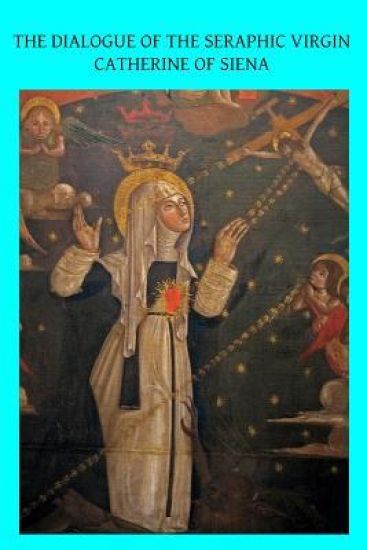
The Dialogue of the Seraphic Virgin Catherine of Siena: Dictated by her, while in a state of ecstasy, to her secretaries, and completed in the year 13
Catherine of Sienna; Algar Thorold
Createspace Independent Publishing Platform
2013
nidottu
On Prayer: Spiritual Instructions on the Various States of Prayer According to the Doctrine of Bossuet Bishop of Meaux
Jean Pierre de Caussade; Algar Thorold
Literary Licensing, LLC
2013
sidottu
On Prayer: Spiritual Instructions On The Various States Of Prayer According To The Doctrine Of Bossuet Bishop Of Meaux is a book written by Jean Pierre de Caussade. The book is a comprehensive guide to prayer and the different states of prayer according to the teachings of Bossuet, the Bishop of Meaux. It offers spiritual instructions and advice on how to deepen one's prayer life and connect with God on a deeper level. The book emphasizes the importance of surrendering oneself to God's will and trusting in His plan. It also explores the different types of prayer, including vocal prayer, meditation, and contemplation. Overall, On Prayer is a valuable resource for anyone seeking to enhance their prayer life and deepen their relationship with God. This is a new release of the original 1931 edition. This scarce antiquarian book is a facsimile reprint of the old original and may contain some imperfections such as library marks and notations. Because we believe this work is culturally important, we have made it available as part of our commitment for protecting, preserving, and promoting the world's literature in affordable, high quality, modern editions, that are true to their original work.
An Essay In Aid Of The Better Appreciation Of Catholic Mysticism
Algar Thorold
Createspace Independent Publishing Platform
2011
nidottu
An Essay in Aid of the Better Understanding of Catholic Mysticism Illustrated from the Writings of Blessed Angela of Foligno
Algar Thorold
Kessinger Pub
2006
pokkari
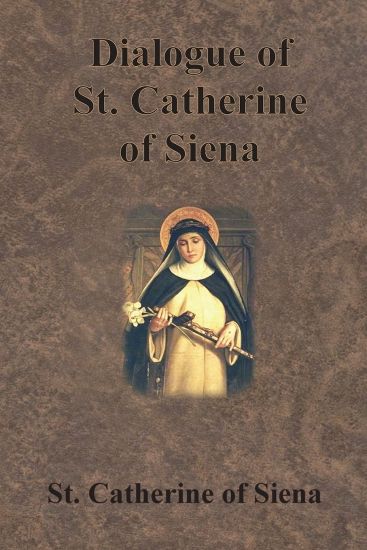
Complete edition of Dialogue of St. Catherine of Siena by Saint Catherine of Siena and translated by Algar Thorold. Catherine discusses Jesus as the bridge to our own perfection, by and through only him." Man is placed above all creatures, and not beneath them, and he cannot be satisfied or content except in something greater than himself." Finished in 1370, this complete 1907 edition is abridged from the 1896 Edition. The 1907 edition generally excluded additional writings about Ministers, Sins, and repeated topics. All students of thought should get this historic book. This 1907 edition is provided in a slim volume with full text at an affordable price.