Kirjojen hintavertailu – 12 859 819 kirjaa ja 27 kauppaa
Kirjailija
Algernon Charles Swinburne
Kirjat ja teokset yhdessä paikassa: 395 kirjaa, julkaisuja vuosilta 1959–2026, suosituimpiin kuuluu Rosamund Queen Of The Lombards. Vertaile teosten hintoja ja tarkista saatavuus suomalaisista kirjakaupoista.
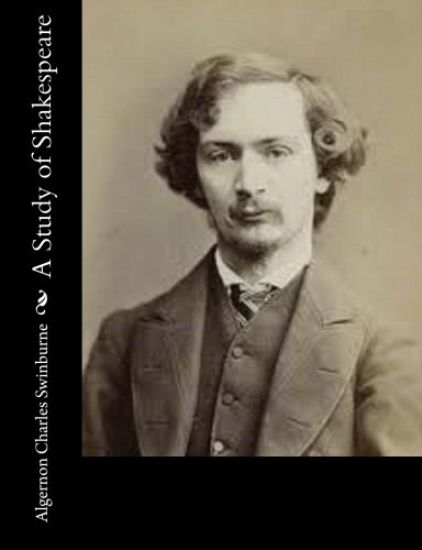
Algernon Charles Swinburne was born on April 5th, 1837, in London, into a wealthy Northumbrian family. He was educated at Eton and at Balliol College, Oxford, but did not complete a degree. In 1860 Swinburne published two verse dramas but achieved his first literary success in 1865 with Atalanta in Calydon, written in the form of classical Greek tragedy. The following year "Poems and Ballads" brought him instant notoriety. He was now identified with "indecent" themes and the precept of art for art's sake. Although he produced much after this success in general his popularity and critical reputation declined. The most important qualities of Swinburne's work are an intense lyricism, his intricately extended and evocative imagery, metrical virtuosity, rich use of assonance and alliteration, and bold, complex rhythms. Swinburne's physical appearance was small, frail, and plagued by several other oddities of physique and temperament. Throughout the 1860s and 1870s he drank excessively and was prone to accidents that often left him bruised, bloody, or unconscious. Until his forties he suffered intermittent physical collapses that necessitated removal to his parents' home while he recovered. Throughout his career Swinburne also published literary criticism of great worth. His deep knowledge of world literatures contributed to a critical style rich in quotation, allusion, and comparison. He is particularly noted for discerning studies of Elizabethan dramatists and of many English and French poets and novelists. As well he was a noted essayist and wrote two novels. In 1879, Swinburne's friend and literary agent, Theodore Watts-Dunton, intervened during a time when Swinburne was dangerously ill. Watts-Dunton isolated Swinburne at a suburban home in Putney and gradually weaned him from alcohol, former companions and many other habits as well. Much of his poetry in this period may be inferior but some individual poems are exceptional; "By the North Sea," "Evening on the Broads," "A Nympholept," "The Lake of Gaube," and "Neap-Tide." Swinburne lived another thirty years with Watts-Dunton. He denied Swinburne's friends access to him, controlled the poet's money, and restricted his activities. It is often quoted that 'he saved the man but killed the poet'. Algernon Charles Swinburne died on April 10th, 1909 at the age of seventy-two.
The Queen-Mother, and Rosamond is an unchanged, high-quality reprint of the original edition of 1866. Hansebooks is editor of the literature on different topic areas such as research and science, travel and expeditions, cooking and nutrition, medicine, and other genres. As a publisher we focus on the preservation of historical literature. Many works of historical writers and scientists are available today as antiques only. Hansebooks newly publishes these books and contributes to the preservation of literature which has become rare and historical knowledge for the future.
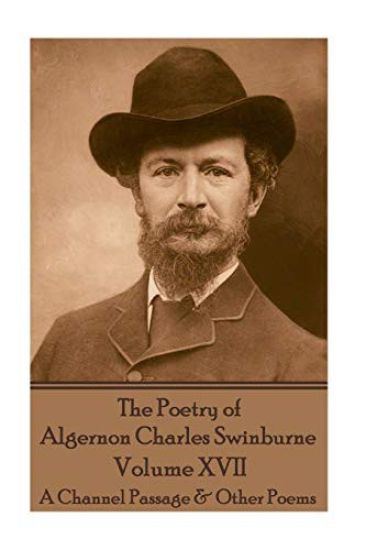
This is a simple collection of 64 poems by Algernon Charles Swinburne, who was born in 1837 in London, and died in 1909 at 72. He was a career writer and critic. He wrote about many topics that were rather taboo in his time, and are still often controversial. He was a proponent of three literary movements called Decadence, Pre-Raphaelite, and Aestheticism. He was exceptional at rhyme and meter. This is the first of a 2 volume set. Edited by Caiyros Arlen Strang. Published by AmunCine.
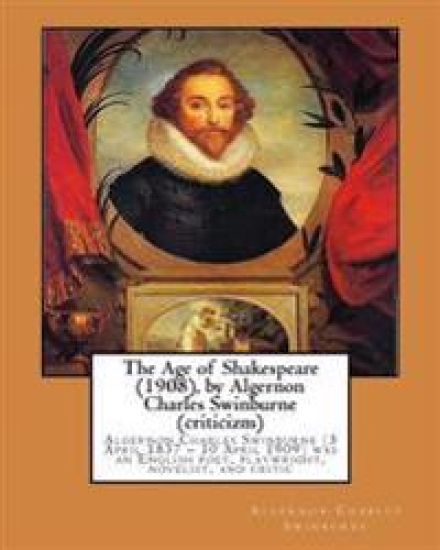
Algernon Charles Swinburne is often thought to be one of the most talented poets in English history. Recognized at the age of thirty as England's premier poet during the Victorian era, in a very real sense he succeeded Lord Tennyson. He published several books of poetry, many of which were considered somewhat controversial at the time, as well as a few notable essays including The Age of Shakespeare. In this piece, Swinburne shines as a poet writing about other poets, such as Christopher Marlowe, George Chapman, and John Marston, all of whom lived during the same time as William Shakespeare. He endeavors to identify what sets them apart from other writers and show how the brilliance of their works borders on the prominence of Shakespeare. He demonstrates that there were more great minds at work during this period than are often recognized. With its flowing language and insightful opinions, The Age of Shakespeare is a stimulating and profound look into a century of poetic knowledge. Algernon Charles Swinburne (5 April 1837 - 10 April 1909) was an English poet, playwright, novelist, and critic. He wrote several novels and collections of poetry such as Poems and Ballads, and contributed to the famous Eleventh Edition of the Encyclop dia Britannica. A controversial figure at the time, Swinburne was a sado-masochist and alcoholic and was obsessed with the Middle Ages and lesbianism. Swinburne wrote about many taboo topics, such as lesbianism, cannibalism, sado-masochism, and anti-theism. His poems have many common motifs, such as the Ocean, Time, and Death. Several historical people are featured in his poems, such as Sappho ("Sapphics"), Anactoria ("Anactoria"), Jesus ("Hymn to Proserpine": Galilaee, La. "Galilean") and Catullus ("To Catullus"). Swinburne was born at 7 Chester Street, Grosvenor Place, London, on 5 April 1837. He was the eldest of six children born to Captain (later Admiral) Charles Henry Swinburne (1797-1877) and Lady Jane Henrietta, daughter of the 3rd Earl of Ashburnham. He grew up at East Dene in Bonchurch on the Isle of Wight. He grew up in a wealthy Northumbrian family. As a child, Swinburne was "nervous" and "frail," but "was also fired with nervous energy and fearlessness to the point of being reckless." He attended Eton College (1849-53), where he first started writing poetry. At Eton, he won first prizes in French and Italian. He then attended Balliol College, Oxford (1856-60) with a brief hiatus when he was rusticated 5] from the university in 1859 for having publicly supported the attempted assassination of Napoleon III by Felice Orsini. He returned in May 1860, though he never received a degree. He spent summer holidays at Capheaton Hall in Northumberland, the house of his grandfather, Sir John Swinburne, 6th Baronet (1762-1860), who had a famous library and was President of the Literary and Philosophical Society in Newcastle upon Tyne. Swinburne considered Northumberland to be his native county, an emotion reflected in poems like the intensely patriotic 'Northumberland', 'Grace Darling' and others. He enjoyed riding his pony across the moors (he was a daring horseman) 'through honeyed leagues of the northland border', as he called the Scottish border in his Recollections.
Algernon Charles Swinburne (5 April 1837 - 10 April 1909) was an English poet, playwright, novelist, and critic. He wrote several novels and collections of poetry such as Poems and Ballads, and contributed to the famous Eleventh Edition of the Encyclop dia Britannica. A controversial figure at the time, Swinburne was a sado-masochist and alcoholic, and was obsessed with the Middle Ages and lesbianism