Kirjojen hintavertailu – 12 903 725 kirjaa ja 27 kauppaa

Kirjailija

Algozzine Bob

Kirjat ja teokset yhdessä paikassa: 29 kirjaa, julkaisuja vuosilta 2006–2010, suosituimpiin kuuluu The Fundamentals of Special Education. Vertaile teosten hintoja ja tarkista saatavuus suomalaisista kirjakaupoista.

29 kirjaa

Kirjojen julkaisuvuodet: 2006–2010.

Responsible Classroom Management, Grades 6–12

Responsible Classroom Management, Grades 6–12

Queen J. Allen; Algozzine Bob

SAGE Publications Inc
2010
nidottu
Allen Queen and Bob Algozzine's Responsible Classroom Management, Grades 6-12 provides headteachers and teachers with a nationally tested schoolwide discipline plan that emphasizes a team approach to discipline and management and teaches students to solve problems, self-correct behaviour, and develop an internal locus of control. Rooted in humanist and cognitive psychology, the authors' practical model for Responsible Classroom Management (RCMPlan™) for middle and high school levels is specifically designed for adolescents at various stages of development. The RCMPlan uses three key principles to demonstrate how schools can use behavior support systems to promote good citizenship and develop responsible students who can live productively in a democratic and multicultural society: - responsibility is taught and incorporated instructionally within a warm and inviting classroom - standards, guidelines and expected behaviors replace rigid school and classroom rule - consequences are used to teach students to self-correct inappropriate behaviors and assume responsibility for their actions.
Responsible Classroom Management, Grades K–5

Responsible Classroom Management, Grades K–5

Queen J. Allen; Algozzine Bob

SAGE Publications Inc
2010
nidottu
Allen Queen and Bob Algozzine's Responsible Classroom Management, Grades 6-12 provides head teachers and teachers with a nationally tested schoolwide discipline plan that emphasizes a team approach to discipline and management and teaches students to solve problems, self-correct behaviour, and develop an internal locus of control. Rooted in humanist and cognitive psychology, the authors' practical model for Responsible Classroom Management (RCMPlan) for secondary levels is specifically designed for adolescents at various stages of development. The RCMPlan uses three key principles to demonstrate how schools can use behaviour support systems to promote good citizenship and develop responsible students who can live productively in a democratic and multicultural society: - Responsibility is taught and incorporated instructionally within a warm and inviting classroom - Standards, guidelines and expected behaviours replace rigid school and classroom rule - Consequences are used to teach students to self-correct inappropriate behaviors and assume responsibility for their actions.
Preventing Problem Behaviors

Preventing Problem Behaviors

Algozzine Bob; Ann P Daunic; Smith Stephen W.

SAGE Publications Inc
2010
nidottu
In today's increasingly diverse classrooms, problem behaviours can often interrupt instructional time and disrupt learning. Designed for 21st-century school leaders, administrators, behaviour specialists, and classroom teachers, this research-based guide offers specific strategies and plans for preventing problem behaviour at both the classroom and school level. Based on the premise that early response to problems can lead to better outcomes for students, the book's content is framed around four essential areas: foundations, intervention, collaboration, and evaluation. Within these areas, this accessible guide features: - The latest information on the science and practice of prevention - Reasons why conflict resolution, peer mediation, and bully-proofing are essential to prevention - Effective practices for teaching social skills to young children - Proven techniques for implementing schoolwide positive behaviour support - Tools for using individual behaviour plans to prevent problems - Ideas for home-school and community partnerships and culturally responsible teaching - Critical strategies for monitoring student progress and evaluating prevention practices - New, updated chapters, including information on preschool behaviour support and RTI This valuable resource provides all the tools and strategies school leaders and teachers need to keep children focused on learning.
63 Tactics for Teaching Diverse Learners, K-6

63 Tactics for Teaching Diverse Learners, K-6

Algozzine Bob; Campbell Pamela; Wang Jianjun Adam

SAGE Publications Inc
2008
sidottu
Evidence-based practices to help you meet students' diverse learning needs in your classroom! This collection presents teacher-tested instructional strategies and tactics that have proven highly successful for primary students with or without disabilities and across content and grade levels. The authors provide a practical, research-based teaching model that focuses on planning, managing, delivering, and evaluating instruction. Readers will find: descriptions of how to teach students with diverse learning styles and needs feedback from teachers on each of the tactics indexes for finding practices relevant to a specific subject, grade, or learning difficulty a listing by disability for locating the instructional approach best suited to individual students' special needs.
63 Tactics for Teaching Diverse Learners, K-6

63 Tactics for Teaching Diverse Learners, K-6

Algozzine Bob; Campbell Pamela; Wang Jianjun Adam

SAGE Publications Inc
2008
nidottu
Evidence-based practices to help you meet students' diverse learning needs in your classroom! This collection presents teacher-tested instructional strategies and tactics that have proven highly successful for primary students with or without disabilities and across content and grade levels. The authors provide a practical, research-based teaching model that focuses on planning, managing, delivering, and evaluating instruction. Readers will find: descriptions of how to teach students with diverse learning styles and needs feedback from teachers on each of the tactics indexes for finding practices relevant to a specific subject, grade, or learning difficulty a listing by disability for locating the instructional approach best suited to individual students' special needs.
Teaching Students With Sensory Disabilities

Teaching Students With Sensory Disabilities

Algozzine Bob; Ysseldyke James E.

SAGE Publications Inc
2006
nidottu
With the right modifications, students with sensory disabilities that affect how well they see and/or hear can participate fully in general education classes alongside their peers. Teaching Students With Sensory Disabilities discusses the defining characteristics and specific needs of students who are deaf, blind, or deaf-and-blind. Offering numerous practical classroom management tips and surprisingly easy instruction adjustments, this valuable resource shows teachers how they can teach in a highly effective manner that will foster the independence of students with visual and hearing impairments in the general education classroom. Including a pre-test, post-test, and key vocabulary terms, this highly informative guide discusses everything educators need to know about students with sensory disabilities, including: o Cognitive characteristics and issues o Academic characteristics and issues o Physical characteristics and issues o Behavioural characteristics and issues o Communication characteristics and issues
Teaching Students With Medical, Physical, and Multiple Disabilities

Teaching Students With Medical, Physical, and Multiple Disabilities

Algozzine Bob; Ysseldyke James E.

SAGE Publications Inc
2006
nidottu
If not properly addressed, a medical or physical disability that results in limited strength, mobility, vitality, and/or alertness can have as much of an adverse affect on a student's educational performance as a learning disability. Including a pre-test, post-test, and key vocabulary terms, this highly informative guide discusses the issues teachers and school nurses need to be aware of in order to effectively support students with medical, physical, and multiple disabilities in the special or mainstream education classroom. Highlights include o Cognitive, academic, physical, behavioural, and communication characteristics of numerous medical and physical conditions o Helpful ideas for adjusting the classroom and school environments to suit the needs of students with medical and physical disabilities o Strategies for adapting activities and materials for students with physical disabilities o Assistive technologies designed to enhance communication or mobility o Identification issues associated with multiple disabilities
Teaching Students With Mental Retardation

Teaching Students With Mental Retardation

Algozzine Bob; Ysseldyke James E.

SAGE Publications Inc
2006
sidottu
Students with mental retardation often struggle tremendously to complete the same tasks that many of their peers do without any difficulty - but with special assistance their struggles to learn can be highly successful. In Teaching Students With Mental Retardation, special and mainstream teachers will find highly effective strategies for enhancing the academic and social skills of students with mental retardation in their classrooms. Offering a pre-test, post-test, and key vocabulary terms, this exceptional resource also discusses: o Common causes of mental retardation such as genetic conditions, problems during pregnancy and birth, and health problems o Diagnosing mental retardation o Cognitive, academic, physical, behavioural, and communication characteristics of mental retardation o Methods for improving the functional academic, social, self-care, and work skills of students with mental retardation o Instructional approaches for students with severe disabilities o Influential trends and issues such as prevention of mental retardation and transitioning from school to work
Effective Assessment for Students With Special Needs

Effective Assessment for Students With Special Needs

Ysseldyke James E.; Algozzine Bob

SAGE Publications Inc
2006
nidottu
When determining whether or not a student should receive special education services, what the specific nature of the student's instruction should be, or the extent to which a student is making educational progress, it is critical to know not only what sort of assessment method is most appropriate, but how, when, and where it should be administered. Including a pre-test, post-test, and key vocabulary terms, Effective Assessment for Students With Special Needs helps educators make these weighty decisions with highly practical information such as: o Formal and informal methods of data collection o When to use various assessment practices and what they can show an evaluator o Standards for conducting assessments to ensure accuracy o Using data to make decisions about the education of students with disabilities and those who are gifted and talented
Teaching Students With Learning Disabilities

Teaching Students With Learning Disabilities

Ysseldyke James E.; Algozzine Bob

SAGE Publications Inc
2006
nidottu
What is to be done to help a student who does not have an obvious special education condition, but whose expected achievement on certain academic tasks falls short of his or her actual achievement, despite evidence-based teaching? Teaching Students with Learning Disabilities can help - it describes the characteristics associated with learning disabilities, and offers practical teaching strategies proven to increase the success rate of these students both in and outside the classroom. Highlights include o A pre-test and post-test to help readers assess their understanding of the nature of learning disabilities and how they are best addressed o Cognitive, academic, communicational, physical, and behavioural characteristics that are associated with learning disabilities o Strategies to improve the work habits and study skills of students with learning disabilities and/or ADHD o Highly effective methods for improving the performance of students with learning disabilities in reading, writing, and mathematics o Key vocabulary terms
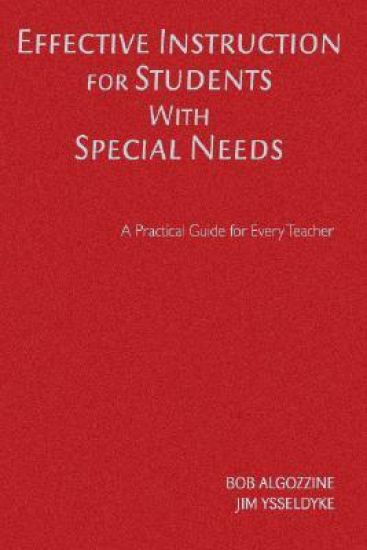
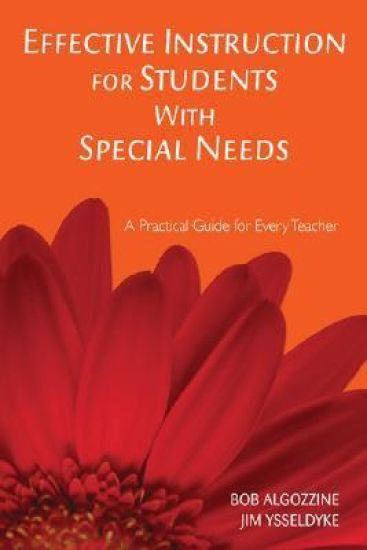
Effective Instruction for Students With Special Needs

Effective Instruction for Students With Special Needs

Algozzine Bob; Ysseldyke James E.

SAGE Publications Inc
2006
sidottu
Teaching is most effective when certain general principles are followed; however, not all students are alike, and not all teaching methods are equally effective. Including a pre-test, post-test, and key vocabulary terms, Effective Instruction for Students With Special Needs presents the key components of highly effective instruction and the accommodations and modifications that should be made for special-needs students when: o Planning Instruction: deciding what and how to teach while communicating realistic expectations o Managing Instruction: preparing for instruction, using time productively, and creating a positive environment o Delivering Instruction: presenting content, monitoring student learning, and adjusting instruction o Evaluating Instruction: monitoring student understanding and engaged time, recording student progress, using data to make decisions, and making judgments about student performance For cases in which more than slight adaptations may be necessary, this helpful guide also highlights special instructional aids and specific teaching methods proven to enhance the success of students with special needs.
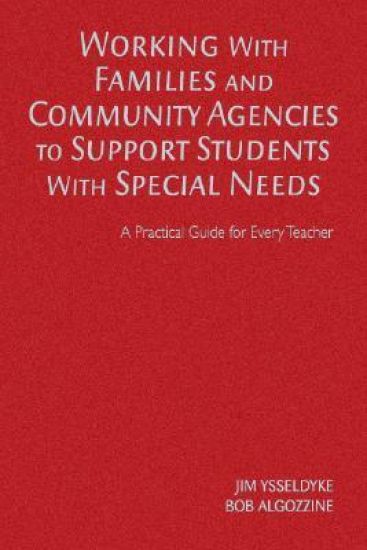
Working With Families and Community Agencies to Support Students With Special Needs
Working With Families and Community Agencies to Support Students With Special Needs addresses two of the most exciting facets of working with students with disabilities: "life-stage" issues (early intervention and effective transition) and collaboration (working with families and professionals). Ysseldyke and Algozzine explore the larger context of students' lives outside school, and how life-stage issues and collaboration interact with and influence teaching. Including a pre-test, post-test, and key vocabulary terms, this informative resource offers valuable answers to the following questions: o What types of transition services exist and when are they necessary? o What should educators know about early-childhood intervention? o What issues should be considered when working with families? o How can schools involve community agencies and businesses? o What options are available to students with special needs after high school? o What key elements are critical to a student's success in the classroom and beyond?
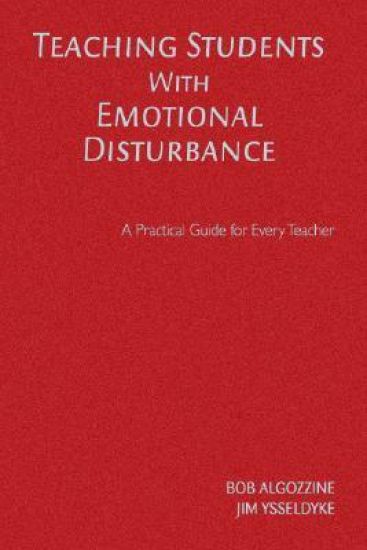
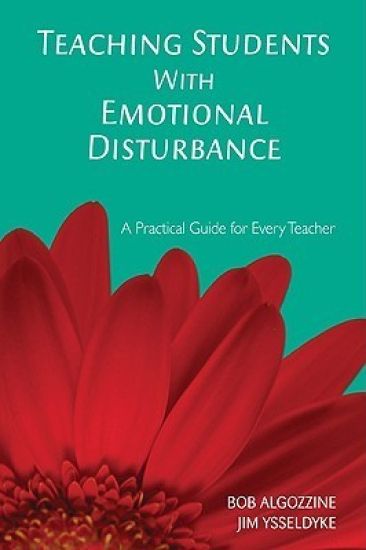
Teaching Students With Emotional Disturbance

Teaching Students With Emotional Disturbance

Algozzine Bob; Ysseldyke James E.

SAGE Publications Inc
2006
sidottu
When a student is inattentive, extremely anxious, or has an outright tantrum in the classroom, ascertaining the exact cause may be difficult, but it is a critical step in reaching and teaching the students who exhibit these behaviours. In Teaching Students With Emotional Disturbance, Ysseldyke and Algozzine show readers how to recognize the cognitive, academic, physical, communicational, and behavioural characteristics of several forms of emotional disturbance and offer specific strategies for responding to anxiety issues, opposition and non-compliance, tantrums, disruptiveness, inattention, task avoidance, and more. Highlights include o A pre-test and post-test to help readers assess their understanding about the origins of social and emotional difficulties and how they are best addressed o Effective interventions and instructional adaptations for students who have emotional problems o Trends and issues currently influencing how students with social and emotional problems are taught o Key vocabulary terms
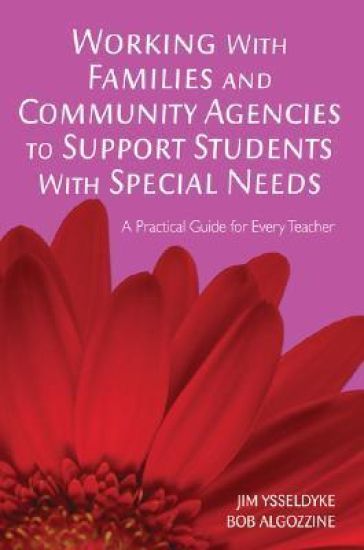
Working With Families and Community Agencies to Support Students With Special Needs
Working With Families and Community Agencies to Support Students With Special Needs addresses two of the most exciting facets of working with students with disabilities: "life-stage" issues (early intervention and effective transition) and collaboration (working with families and professionals). Ysseldyke and Algozzine explore the larger context of students' lives outside school, and how life-stage issues and collaboration interact with and influence teaching. Including a pre-test, post-test, and key vocabulary terms, this informative resource offers valuable answers to the following questions: o What types of transition services exist and when are they necessary? o What should educators know about early-childhood intervention? o What issues should be considered when working with families? o How can schools involve community agencies and businesses? o What options are available to students with special needs after high school? o What key elements are critical to a student's success in the classroom and beyond?
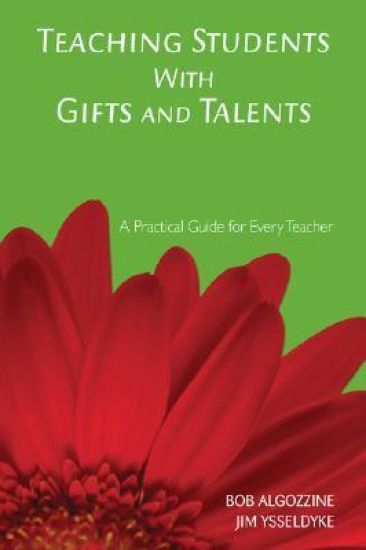
Teaching Students With Gifts and Talents

Teaching Students With Gifts and Talents

Algozzine Bob; Ysseldyke James E.

SAGE Publications Inc
2006
nidottu
Students who are gifted and/or talented are known more for their contributions and potential contributions than any other group of students. Meeting the educational needs of these students, however, can be a tremendous challenge for those who teach them. In Teaching Students With Gifts and Talents, Bob Algozzine and Jim Ysseldyke offer educators helpful information for identifying gifted and talented students, and present effective approaches - enrichment and acceleration - to ensure that these exceptional students are constantly challenged and engaged. Highlights include: o A pre-test and post-test to help readers assess their understanding of giftedness and how the needs of gifted and talented students are best addressed o Cognitive, academic, communicational, physical, and behavioural characteristics that are associated with high-ability learners o Effective approaches and activities to keep gifted and talented students motivated and reaching ever-higher levels of achievement o Key vocabulary terms
Effective Instruction for Students With Special Needs

Effective Instruction for Students With Special Needs

Algozzine Bob; Ysseldyke James E.

SAGE Publications Inc
2006
nidottu
Teaching is most effective when certain general principles are followed; however, not all students are alike, and not all teaching methods are equally effective. Including a pre-test, post-test, and key vocabulary terms, Effective Instruction for Students With Special Needs presents the key components of highly effective instruction and the accommodations and modifications that should be made for special-needs students when: o Planning Instruction: deciding what and how to teach while communicating realistic expectations o Managing Instruction: preparing for instruction, using time productively, and creating a positive environment o Delivering Instruction: presenting content, monitoring student learning, and adjusting instruction o Evaluating Instruction: monitoring student understanding and engaged time, recording student progress, using data to make decisions, and making judgments about student performance For cases in which more than slight adaptations may be necessary, this helpful guide also highlights special instructional aids and specific teaching methods proven to enhance the success of students with special needs.
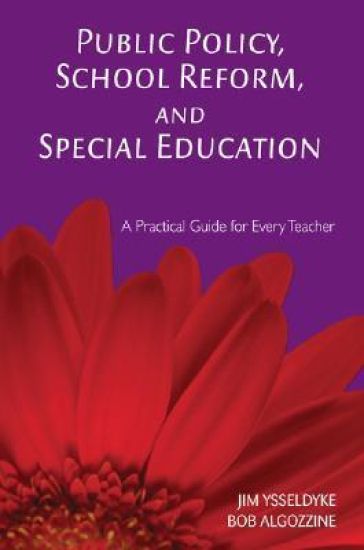
Public Policy, School Reform, and Special Education

Public Policy, School Reform, and Special Education

Ysseldyke James E.; Algozzine Bob

SAGE Publications Inc
2006
nidottu
Education is driven by excellence and equity for all students. There is a tenuous balance, however, between society's desire to provide special education services and its ability to pay for them. Authors Jim Ysseldyke and Bob Algozzine examine the current educational landscape, focusing on the delivery of cost-effective, quality services to exceptional students. Public Policy, School Reform, and Special Education demonstrates how and why special education services are driven more by social, political, and economic factors than by actual changes in education, and the ways in which society's values and beliefs affect the distribution of limited resources. Special features include: o Key vocabulary terms o Case studies illustrating how social, political and economic factors work together to affect special education practices o A pre-test and post-test to help readers assess their understanding of school reform and restructuring o Helpful books, articles, and organizations for further research and support
Teaching Students With Emotional Disturbance

Teaching Students With Emotional Disturbance

Algozzine Bob; Ysseldyke James E.

SAGE Publications Inc
2006
nidottu
When a student is inattentive, extremely anxious, or has an outright tantrum in the classroom, ascertaining the exact cause may be difficult, but it is a critical step in reaching and teaching the students who exhibit these behaviours. In Teaching Students With Emotional Disturbance, Ysseldyke and Algozzine show readers how to recognize the cognitive, academic, physical, communicational, and behavioural characteristics of several forms of emotional disturbance and offer specific strategies for responding to anxiety issues, opposition and non-compliance, tantrums, disruptiveness, inattention, task avoidance, and more. Highlights include o A pre-test and post-test to help readers assess their understanding about the origins of social and emotional difficulties and how they are best addressed o Effective interventions and instructional adaptations for students who have emotional problems o Trends and issues currently influencing how students with social and emotional problems are taught o Key vocabulary terms
Teaching Students With Mental Retardation

Teaching Students With Mental Retardation

Algozzine Bob; Ysseldyke James E.

SAGE Publications Inc
2006
nidottu
Students with mental retardation often struggle tremendously to complete the same tasks that many of their peers do without any difficulty - but with special assistance their struggles to learn can be highly successful. In Teaching Students With Mental Retardation, special and mainstream teachers will find highly effective strategies for enhancing the academic and social skills of students with mental retardation in their classrooms. Offering a pre-test, post-test, and key vocabulary terms, this exceptional resource also discusses: o Common causes of mental retardation such as genetic conditions, problems during pregnancy and birth, and health problems o Diagnosing mental retardation o Cognitive, academic, physical, behavioural, and communication characteristics of mental retardation o Methods for improving the functional academic, social, self-care, and work skills of students with mental retardation o Instructional approaches for students with severe disabilities o Influential trends and issues such as prevention of mental retardation and transitioning from school to work