Kirjojen hintavertailu – 12 859 828 kirjaa ja 27 kauppaa
Kirjailija
Ali A. Mazrui
Kirjat ja teokset yhdessä paikassa: 14 kirjaa, julkaisuja vuosilta 1986–2020, suosituimpiin kuuluu Nkrumah's Legacy and Africa's Triple Heritage Between Globallization and Counter Terrorism. Vertaile teosten hintoja ja tarkista saatavuus suomalaisista kirjakaupoista.
This book approaches the study of Africa's international relations with a consciousness not only of past events but also of future prospects. It focuses on the black peoples everywhere, not merely those of the African continent, to understand the dynamics of black diplomacy.
The author presents a journey through African and Western history, culture and politics. By essaying Africa's international relations, Mazrui returns to an important truth: the power of race and culture in Africa's relations with the West. Discussing African political formation, his overriding theme, not unpredictably, is assimilation - of the enti
Achieving security and development in the post-conflict era is a challenge with which stakeholders have to grapple. While stakeholders are quick to claim success when physical hostilities cease between the belligerents, ensuring sustainable peace has been a daunting task. In some countries in Africa, the post-conflict era is characterized by organizing elections to ensure greater political participation. It is believed that elections will begin a process of openness and trust in the governing system. A supplement to electoral democracy has been power sharing arrangements used to resolve post-election violence, and ensure stability within the state. However, what underlie most conflicts in Africa is the marginalization and lack of an enabling environment to achieve individual life objectives. Policies and strategies to achieve security and enhance development post conflict have, at best, been an extremely slow process and sometimes elusive. In Sierra Leone, for instance, though the official declaration of the end of war and the successful general elections held in 2002, 2007, and 2012 have led to some domestic stability, developmental targets in the post-conflict era have proceeded at a snail’s pace. The country continues to rank at the bottom of most UNDP human development indicators since 2002. Human Security and Sierra Leone’s Post-Conflict Development analyzes the extent to which human security issues have been addressed and subsequently implemented in the post-conflict reconstruction process. While Sierra Leone has made tremendous efforts at implementing reforms in the areas of political sensitization, promotion of civil rights and civil liberties, as well as personal security, the lack on the part of the government to effectively address the unemployment problem has negatively affected security and developmental targets. Thus, the post-conflict management strategies in Sierra Leone fail to secure and promote some aspects of human security, leading to fragile peace and slow progress in achieving sustainable security and development. Human security is an all-encompassing phenomenon and must be addressed to achieve overall wellbeing of the people, especially in post-conflict environments.
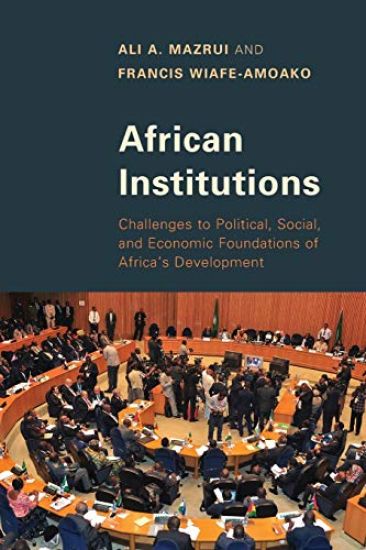
Every political system, either developed or adopted, has an impact on the structure of society and the level of development. This book analyzes the evolution and nature of political institutions and their effect on Africa’s development. The challenges Africa face in developing viable institutions are not limited to the adoption of foreign institutions, but are also rooted in domestic norms that define society itself. Sometimes, these challenges have to do with the incompatibility between foreign and domestic institutions. The fundamental issue then is to understand the African societies, cultures, and other dynamics that have ensured stability in the past and that need to be recognized when adopting contemporary foreign institutions. This comprehensive text examines three key issue areas in Africa: politics, society, and economy. It demonstrates how the lack of consideration for domestic norms and societal realities explain the weaker institutions and lack of development on the African continent. The chapters examine critical issues such as gender, ethnicity and constitution development, legitimacy and the state, the correlation between abundant resources and instability, the dilemmas of political dynasties, international economic regimes and Africa’s economy, and more. Featuring many case studies, including Kenya, South Africa, Senegal, Ghana, Nigeria, Tanzania, Morocco, Togo, DRC, Ethiopia, Rwanda, the book provides some explanation of underdevelopment in Africa, linking the historical and colonial realities that hinder democratic consolidation to contemporary African politics, society and economy.
Every political system, either developed or adopted, has an impact on the structure of society and the level of development. This book analyzes the evolution and nature of political institutions and their effect on Africa’s development. The challenges Africa face in developing viable institutions are not limited to the adoption of foreign institutions, but are also rooted in domestic norms that define society itself. Sometimes, these challenges have to do with the incompatibility between foreign and domestic institutions. The fundamental issue then is to understand the African societies, cultures, and other dynamics that have ensured stability in the past and that need to be recognized when adopting contemporary foreign institutions. This comprehensive text examines three key issue areas in Africa: politics, society, and economy. It demonstrates how the lack of consideration for domestic norms and societal realities explain the weaker institutions and lack of development on the African continent. The chapters examine critical issues such as gender, ethnicity and constitution development, legitimacy and the state, the correlation between abundant resources and instability, the dilemmas of political dynasties, international economic regimes and Africa’s economy, and more. Featuring many case studies, including Kenya, South Africa, Senegal, Ghana, Nigeria, Tanzania, Morocco, Togo, DRC, Ethiopia, Rwanda, the book provides some explanation of underdevelopment in Africa, linking the historical and colonial realities that hinder democratic consolidation to contemporary African politics, society and economy.
Achieving security and development in the post-conflict era is a challenge with which stakeholders have to grapple. While stakeholders are quick to claim success when physical hostilities cease between the belligerents, ensuring sustainable peace has been a daunting task. In some countries in Africa, the post-conflict era is characterized by organizing elections to ensure greater political participation. It is believed that elections will begin a process of openness and trust in the governing system. A supplement to electoral democracy has been power sharing arrangements used to resolve post-election violence, and ensure stability within the state. However, what underlie most conflicts in Africa is the marginalization and lack of an enabling environment to achieve individual life objectives. Policies and strategies to achieve security and enhance development post conflict have, at best, been an extremely slow process and sometimes elusive. In Sierra Leone, for instance, though the official declaration of the end of war and the successful general elections held in 2002, 2007, and 2012 have led to some domestic stability, developmental targets in the post-conflict era have proceeded at a snail’s pace. The country continues to rank at the bottom of most UNDP human development indicators since 2002. Human Security and Sierra Leone’s Post-Conflict Development analyzes the extent to which human security issues have been addressed and subsequently implemented in the post-conflict reconstruction process. While Sierra Leone has made tremendous efforts at implementing reforms in the areas of political sensitization, promotion of civil rights and civil liberties, as well as personal security, the lack on the part of the government to effectively address the unemployment problem has negatively affected security and developmental targets. Thus, the post-conflict management strategies in Sierra Leone fail to secure and promote some aspects of human security, leading to fragile peace and slow progress in achieving sustainable security and development. Human security is an all-encompassing phenomenon and must be addressed to achieve overall wellbeing of the people, especially in post-conflict environments.
The Politics of Gender and the Culture of Sexuality outlines theories of gender within the intellectual paradigm of the triple heritage: Islam, Africanity, and the West. This book describes the impact of individual contexts and politics on meanings attributed to the human body. The Politics of Gender and the Culture of Sexuality explores how men and women relate to each other in monogamous and polygamous marriage, race rivalries, slavery, miscegenation, cultures of procreation, family planning, and the Islamic view of women’s dignity vis-à-vis the Western view of women’s liberty. In doing so, the author and editor present a multifaceted and dynamic theoretical discourse of gender.
Is there a new scramble for Africa involving China, Japan, and India in competition with each other and with the Western world? In the second half of the twentieth century, Mao’s China and Jawaharlal Nehru’s India were political players in Africa, while Japan limited itself to trade and investment in Africa. Africa and Asia have historically been allies against Western exploitation and have also been rivals as producers of raw materials. India and West Asia have led the way in the soft power of culture and religion in Africa while Japan and China have engaged in the harder disciplines of the economy and the construction of infrastructure. This book explores the historical and unfolding dynamic interactions among China, India, Japan, and Africa and their ramifications.
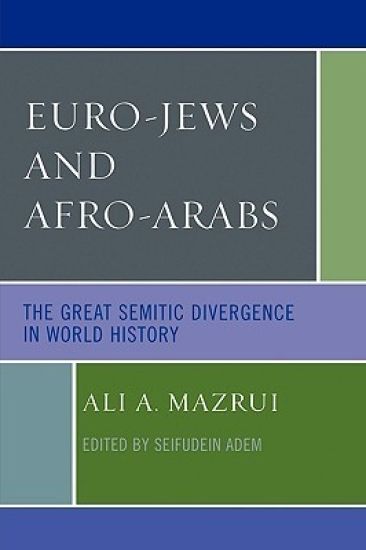
The impact of European and Semitic peoples upon world civilization and African history is addressed in this scholarly study. The Jewish wing of the Semitic people converged with the Western world; the Arab wing of the Semites converged with Africa. The three Abrahamic religions of Judaism, Christianity, and Islam have confronted the racial divide between Caucasian people and people of color. This book explores the geographical regions of Africa, the Middle East, and the Western world in the context of fragile structures and resilient cultures.
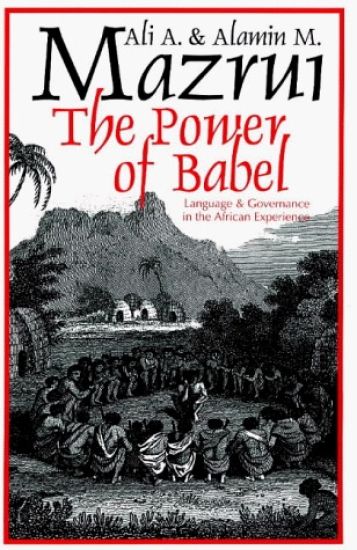
Ali Mazrui address the great language debate in Africa. Tackling the contentious question of African languages versus European languages, this study argues that the dominance of the incoming languages is due to two factors: originally the societies were not expansionist enough, and later the peoples of Africa failed to be nationalist enough. ALI A. MAZRUI was Director of the Institute of Global Cultural Studies at the State University of New York at Binghamton and Senior Scholar in African Studies atCornell University North America: Chicago U Press; Uganda: Fountain Publishers; Kenya: EAEP
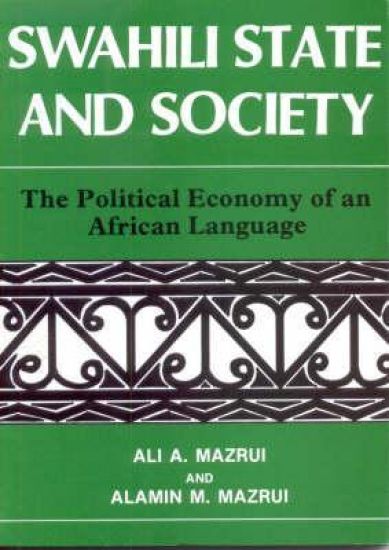
This text examines the social and political impact of the Swahili language. The authors consider the spread of the Swahili language in Eastern and Central Africa against a background of interaction between church and state, and between economics and politics. North America: Africa World Press;Kenya: EAEP
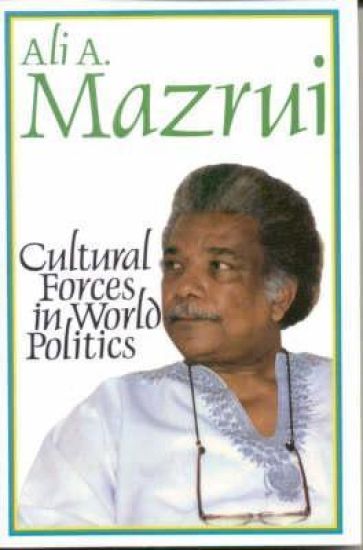
Professor Mazrui, Reith Lecturer and presenter of BBC1's series The Africans, makes us reconsider the realities of power in world politics. Ali Mazrui argues that the emphasis in world politics continues to be on arms, on resources and on strategic calculations and that the importance of culture has been grossly underestimated. Professor Mazrui's own mind is a cultural cross-roads; he can give Islamic insights to Western audiences about The Satanic Verses; he relates the Beijing Spring to the Palestinian Intifada; he compares the effects of Zionism and Apartheid; he puts together Muhammad, Marx and market forces; and he tells the Americans that their attitude to the Third World is a dialogue of the deaf. ALI A. MAZRUI was Director of the Institute of Global Cultural Studies at the State University ofNew York at Binghamton and Senior Scholar in African Studies at Cornell University Kenya: EAEP
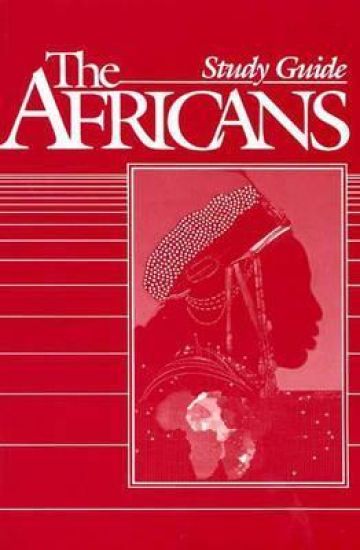
Contemporary Africa is the product of three major influences--an indigenous heritage, Western culture, and Islamic culture. The Africans looks at these legacies, how they co-exist, and their impact on the continent and the people who are called African. This reader, a supplement to the telecourse, provides an introduction to a variety of historical and contemporary writings on Africa.