Kirjojen hintavertailu – 12 903 725 kirjaa ja 27 kauppaa

Kirjailija

Ali Cheshmehzangi

Kirjat ja teokset yhdessä paikassa: 48 kirjaa, julkaisuja vuosilta 2018–2026, suosituimpiin kuuluu Harnessing Urban Innovation to Unlock the Sustainable Development Goals. Vertaile teosten hintoja ja tarkista saatavuus suomalaisista kirjakaupoista.

48 kirjaa

Kirjojen julkaisuvuodet: 2018–2026.

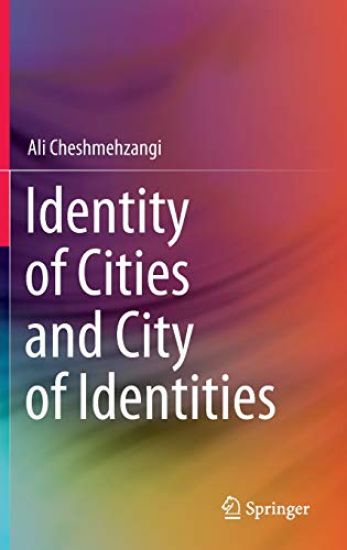
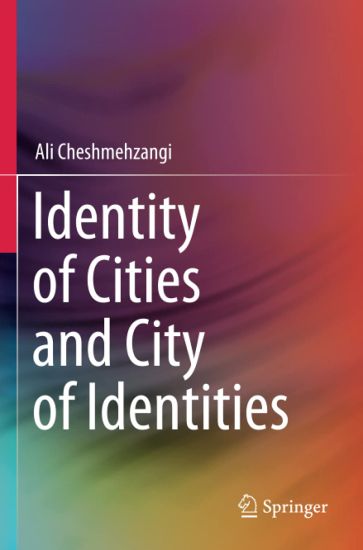
Identity of Cities and City of Identities

Identity of Cities and City of Identities

Ali Cheshmehzangi

Springer Verlag, Singapore
2021
nidottu
This book explores the hybridity of urban identities in multiple dimensions and at multiple scales, how they form as catalysts and mechanisms for urban transitions, and how they develop as city branding strategies and urban regeneration methods. Due to rapid globalisation, the notion of identity has become scarcer, more fragile, and inarguably more important. Given the significance of place and displacement for contemporary everyday life, and the continuous advancement of technologies, identifying relations and values that define humans and their environments in various ways has become crucial. Divided into seven chapters, this book provides extensive coverage of ‘urban identity’, an often-overlooked topic in the fields of urbanism, urban geography, and urban design. It approaches the topic from a novel dual perspective, by exploring cities with tangible commonalities and shared strategies for refining their identities, and by highlighting cities and urban environments characterised by multiple identities. Based on a decade of research in this field, the book provides a multi-disciplinary perspective on urban identity. In addition to comprehensive information for students, it offers a key reference guide for urbanists, urban designers and geographers, architectural and urban practitioners, decision-makers, and governing bodies involved in urban development strategies.
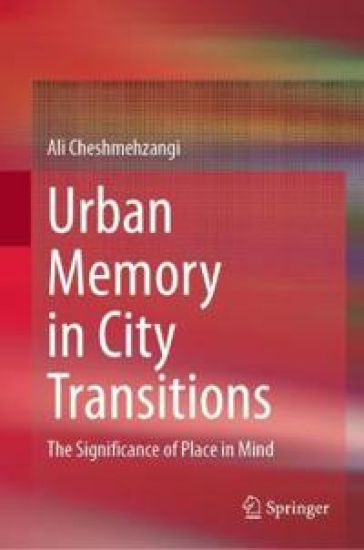
Urban Memory in City Transitions

Urban Memory in City Transitions

Ali Cheshmehzangi

Springer Verlag, Singapore
2021
sidottu
As a continuation of ‘Identity of Cities and City of Identities’, this book covers the arguments around the memory-experience-cognition nexus concerning palimpsests and urban places. As cities experience transitional phases of growth, development, decline, and decay, the author urges considering the notion of urban memory in place-making strategies and design decision-making processes. These explorations would add value to primary fields of architecture, architectural history, cognitive science, human geography, and urbanism. Divided into eight chapters, this book puts together a comprehensive knowledge of urban memory in city transitions. By studying urban memory, the author delves into conceptions of mental mapping, knowledge of environments, cognition of places, and the perceptual dimension of urbanism. Undoubtedly, urban memory plays a significant part in the future movements of humanistic urbanism. Given the significances of scale, pace, and mode of city transitions globally, we should remember who are the ultimate users of those living environments. Therefore, in this book, the author debates two contradictions of ‘memory of place vs. place of memory’, and ‘significance of place vs. place of significance’. Each of these is believed to be a paradox of its own, indicating places are significant through the systematic networks of cities, memories are meaningful through the neural information processing, and place memories are the essence of urban identities. The book's ultimate goal is to demonstrate the effectiveness of the space-time frame of place in making memorable places. Through the comprehensive explorations of many global examples, we can evaluate the significance of place in mind more carefully. This is narrated based on the recognition of nostalgia in cities, socio-temporal qualities in places, and the network of processes in our minds. In return, the aim is to provide new knowledge to make memorable cities, enhance social experiences, and capture and value the significance of place in mind.
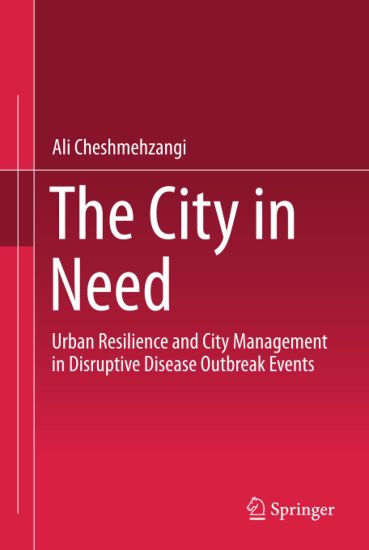
The City in Need

The City in Need

Ali Cheshmehzangi

Springer Verlag, Singapore
2020
sidottu
This book fills a major gap in academic research, by exploring ‘urban resilience measures’ and ‘city management issues’ during disruptive disease outbreak events. Based on the overarching concept of ‘resilience thinking’, it addresses critical issues of preparedness, responsiveness and reflectiveness in the event of outbreak, focusing on cities and how they should prepare to combat a variety of adversities and uncertainties caused by outbreaks. This comprehensive book is an essential guide for decision-makers, city authorities, planners, healthcare and public health authorities, and those communities and businesses that face disease outbreak events. It also offers a set of practical measures to support the development of tailor-made strategies in the form of an action plan. These strategies should address outbreak control and containment measures, institutional rearrangements, management of urban systems, and healthiness of the society. Divided into sixchapters, this book explores important topics of ‘urban resilience’ and ‘city management’ for preparedness action plans and responsiveness planning. Further, it presents a comprehensive urban resilience approach used to support city management in the recent outbreaks in Chinese cities, which can be applied in cities around the globe to strengthen their resilience and maximise the practicality of urban resilience and minimise urban vulnerabilities during disease outbreaks. Highlighting topics such as maintaining societal well-being, community engagement, and multi-sectoral city management enhancement, this book offers a unique combination of research, practices and lessons learned to aid cities in need.
Identity of Cities and City of Identities

Identity of Cities and City of Identities

Ali Cheshmehzangi

Springer Verlag, Singapore
2020
sidottu
This book explores the hybridity of urban identities in multiple dimensions and at multiple scales, how they form as catalysts and mechanisms for urban transitions, and how they develop as city branding strategies and urban regeneration methods. Due to rapid globalisation, the notion of identity has become scarcer, more fragile, and inarguably more important. Given the significance of place and displacement for contemporary everyday life, and the continuous advancement of technologies, identifying relations and values that define humans and their environments in various ways has become crucial. Divided into seven chapters, this book provides extensive coverage of ‘urban identity’, an often-overlooked topic in the fields of urbanism, urban geography, and urban design. It approaches the topic from a novel dual perspective, by exploring cities with tangible commonalities and shared strategies for refining their identities, and by highlighting cities and urban environments characterised by multiple identities. Based on a decade of research in this field, the book provides a multi-disciplinary perspective on urban identity. In addition to comprehensive information for students, it offers a key reference guide for urbanists, urban designers and geographers, architectural and urban practitioners, decision-makers, and governing bodies involved in urban development strategies.
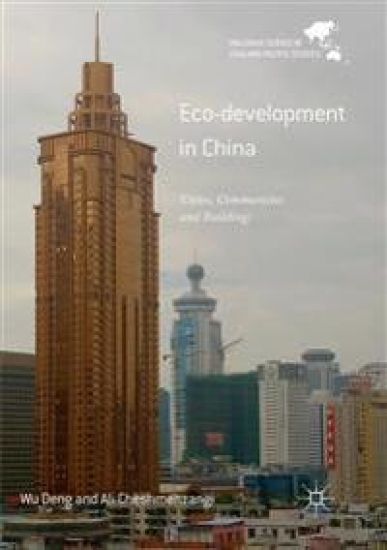
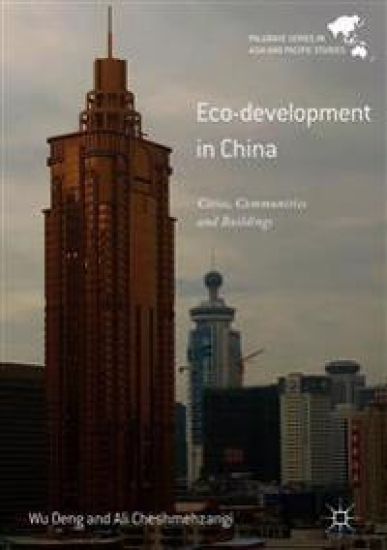
Eco-development in China

Eco-development in China

Wu Deng; Ali Cheshmehzangi

Springer Verlag, Singapore
2019
nidottu
This book explores China’s eco-development strategies and practices from a multi-scalar perspective, discussing the importance of interplay between multi spatial levels of the built environment, as well as the stakeholders who are key players for China’s eco-development. Based on a selection of eco-development Chinese case studies - eco-city, eco-community and eco-building - it highlights how specific eco initiatives and green features are applied and practiced, offering a guide to China’s strategy directions and design and planning trends. The book identifies gaps and strategies and solutions for future eco-development expected to take place in China in the coming decades, as well as useful references for eco-development in other countries, and provides a useful resource for studies in the fields of urbanism, sustainable development and eco-design.
Sustainable Urban Development in the Age of Climate Change

Sustainable Urban Development in the Age of Climate Change

Ali Cheshmehzangi; Ayotunde Dawodu

Springer Verlag, Singapore
2018
nidottu
This book considers the impact of climate change on cities, advocating that people are the panaceas and antidote to mitigating climate change, by enhancing their involvement in achieving sustainable development Goals (SDGs). This leads to the development of an SDG best practice participation template, which is supported by an extensive checklist of the ‘whats’ and ‘hows’ in participatory processes. Using case studies, extensive literature reviews and meta-analysis to make a case for a people-centric and integrated approach to sustainable urban development, it examines the role of governance in climate change, focusing on decision making processes, policies and regulations, as well as focusing on the significance of a people-oriented approach on climate change and cities. Through an extensive global outlook, this book highlights bottom-up methods of implementing and achieving sustainable urban development in the age of climate change. These highlights should help to develop new mindsets, new strategies, new directions and new policies, through which we can see a more sustainable approach to urbanisation and urban development globally, which can start ‘equipping future generations with the tools for them to help their future generations’.
Sustainable Urban Development in the Age of Climate Change

Sustainable Urban Development in the Age of Climate Change

Ali Cheshmehzangi; Ayotunde Dawodu

Springer Verlag, Singapore
2018
sidottu
This book considers the impact of climate change on cities, advocating that people are the panaceas and antidote to mitigating climate change, by enhancing their involvement in achieving sustainable development Goals (SDGs). This leads to the development of an SDG best practice participation template, which is supported by an extensive checklist of the ‘whats’ and ‘hows’ in participatory processes. Using case studies, extensive literature reviews and meta-analysis to make a case for a people-centric and integrated approach to sustainable urban development, it examines the role of governance in climate change, focusing on decision making processes, policies and regulations, as well as focusing on the significance of a people-oriented approach on climate change and cities. Through an extensive global outlook, this book highlights bottom-up methods of implementing and achieving sustainable urban development in the age of climate change. These highlights should help to develop new mindsets, new strategies, new directions and new policies, through which we can see a more sustainable approach to urbanisation and urban development globally, which can start ‘equipping future generations with the tools for them to help their future generations’.
Eco-development in China

Eco-development in China

Wu Deng; Ali Cheshmehzangi

Springer Verlag, Singapore
2018
sidottu
This book explores China’s eco-development strategies and practices from a multi-scalar perspective, discussing the importance of interplay between multi spatial levels of the built environment, as well as the stakeholders who are key players for China’s eco-development. Based on a selection of eco-development Chinese case studies - eco-city, eco-community and eco-building - it highlights how specific eco initiatives and green features are applied and practiced, offering a guide to China’s strategy directions and design and planning trends. The book identifies gaps and strategies and solutions for future eco-development expected to take place in China in the coming decades, as well as useful references for eco-development in other countries, and provides a useful resource for studies in the fields of urbanism, sustainable development and eco-design.