
Kirjailija
Ali Gheissari
Kirjat ja teokset yhdessä paikassa: 6 kirjaa, julkaisuja vuosilta 1997–2026, suosituimpiin kuuluu Iranian Studies: Selected Writings. Vertaile teosten hintoja ja tarkista saatavuus suomalaisista kirjakaupoista.
6 kirjaa
Kirjojen julkaisuvuodet: 1997–2026.
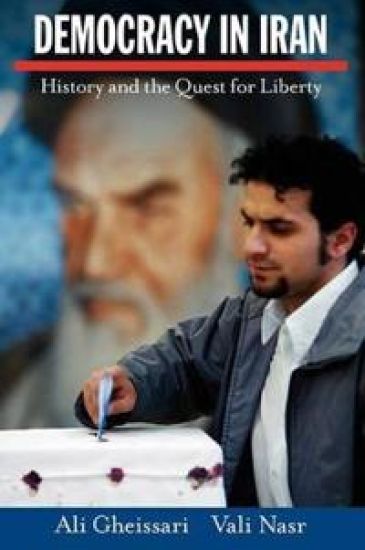
Today Iran is once again in the headlines. Reputed to be developing nuclear weapons, the future of Iraq's next-door neighbor is a matter of grave concern both for the stability of the region and for the safety of the global community. President George W. Bush labeled it part of the "Axis of Evil," and rails against the country's authoritarian leadership. Yet as Bush trumpets the spread of democracy throughout the Middle East, few note that Iran has one of the longest-running experiences with democracy in the region. In this book, Ali Gheissari and Vali Nasr look at the political history of Iran in the modern era, and offer an in-depth analysis of the prospects for democracy to flourish there. After having produced the only successful Islamist challenge to the state, a revolution, and an Islamic Republic, Iran is now poised to produce a genuine and indigenous democratic movement in the Muslim world. Democracy in Iran is neither a sudden development nor a western import, Gheissari and Nasr argue. The concept of democracy in Iran today may appear to be a reaction to authoritarianism, but it is an old idea with a complex history, one that is tightly interwoven with the main forces that have shaped Iranian society and politics, institutions, identities, and interests. Indeed, the demand for democracy first surfaced in Iran a century ago at the end of the Qajar period, and helped produce Iran's surprisingly liberal first constitution in 1906. Gheissari and Nasr seek to understand why democracy failed to grow roots and lost ground to an autocratic Iranian state. Why was democracy absent from the ideological debates of the 1960s and 1970s? Most important, why has it now become a powerful social, political, and intellectual force? How have modernization, social change, economic growth, and the experience of the revolution converged to make this possible?
Iran's geographical location, its oil, its nuclear program, its volatile political landscape, its espousal of militant Islam, all combine to make it a key player in some of the most crucial issues of our time. But because of its relative isolation, there is a shortage of hard information about today's Iran. In this volume, an imposing roster of both internationally renowned Iranian scholars and rising young Iranian academics offer essays - many based on recent fieldwork - on the nature and evolution of Iran's economy, significant aspects of Iran's changing society, and the dynamics of its domestic and international politics since the 1979 revolution, focusing particularly on the post-Khomeini period. The book will be of great interest not only to Iran specialists, but also to scholars of comparative politics, democratization, social change, politics in the Muslims world, and Middle Eastern studies.
Iran's geographical location, its oil, its nuclear program, its volatile political landscape, its espousal of militant Islam, all combine to make it a key player in some of the most crucial issues of our time. But because of its relative isolation, there is a shortage of hard information about today's Iran. In this volume, an imposing roster of both internationally renowned Iranian scholars and rising young Iranian academics offer essays - many based on recent fieldwork - on the nature and evolution of Iran's economy, significant aspects of Iran's changing society, and the dynamics of its domestic and international politics since the 1979 revolution, focusing particularly on the post-Khomeini period. The book will be of great interest not only to Iran specialists, but also to scholars of comparative politics, democratization, social change, politics in the Muslims world, and Middle Eastern studies.
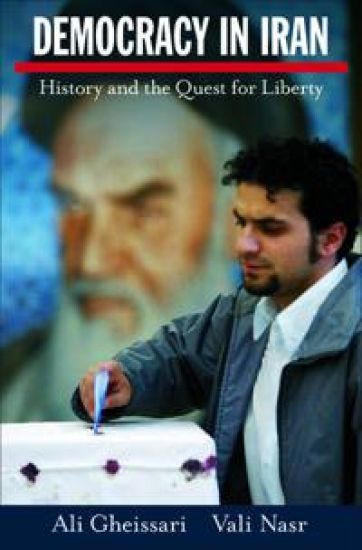
Today Iran is once again in the headlines. Part of President George W. Bush's "Axis of Evil" and next-door neighbor to tumultuous Iraq, Iran's future is a matter of grave concern both for the stability of the region and for the safety of the global community. In this book, Ali Gheissari and Vali Nasr look at the political history of Iran in the modern era, and offer an optimistic assessment of the prospects for democracy to flourish there. After having produced the only successful Islamist challenge to the state, a revolution and an Islamic Republic, Iran is now poised to produce the first genuine indigenous democracy in the Muslim world. Democracy in Iran is neither a sudden development nor a western import, Gheissari and Nasr argue. The concept of democracy in Iran today may appear to be a reaction to totalitarianism, but it is an old idea with a complex history, one that is tightly interwoven with the main forces that have shaped Iranian society and politics, institutions, identities, and interests. Indeed, the demand for democracy first surfaced in Iran a century ago at the end of the Qajar period, and helped produce Iran's surprisingly liberal first constitution in 1906. Gheissari and Nasr seek to understand why democracy failed to grow roots and lost ground to an autocratic Iranian state. Why was democracy absent from the ideological debates of the 1960s and 1970s? Most important, why has it now become a powerful social, political, and intellectual force? How have modernization, social change, economic growth, and the experience of the revolution converged to make this possible? Gheissari and Nasr trace the fortunes of the democratic ideal from the inchoate demands for rule of law and constitutionalism of a century ago to today's calls for individual rights and civil liberties. In the process they provide not just a fresh look at Iran's politics but a new understanding of the way in which democracy as an idea can develop in a Muslim country.
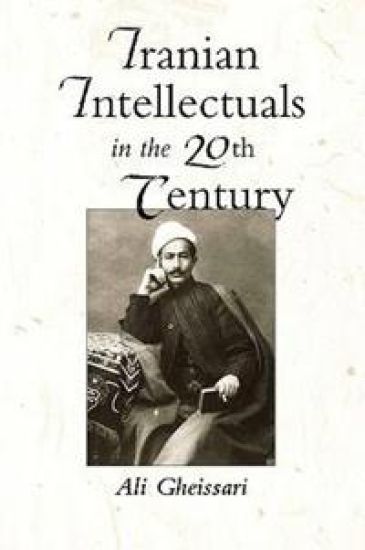
Since the middle of the nineteenth century, Iranian intellectuals have been preoccupied by issues of political and social reform, Iran's relation with the modern West, and autocracy, or arbitrary rule. Drawing from a close reading of a broad array of primary sources, this book offers a thematic account of the Iranian intelligentsia from the Constitutional movement of 1905 to the post-1979 revolution. Ali Gheissari shows how in Iran, as in many other countries, intellectuals have been the prime mediators between the forces of tradition and modernity and have contributed significantly to the formation of the modern Iranian self image. His analysis of intellectuals' response to a number of fundamental questions, such as nationalism, identity, and the relation between Islam and modern politics, sheds new light on the factors that led to the Iranian Revolution-the twentieth century's first major departure from Western political ideals-and helps explain the complexities surrounding the reception of Western ideologies in the Middle East.