Kirjojen hintavertailu – 12 859 818 kirjaa ja 27 kauppaa

Kirjailija

Ali M. Ansari

Kirjat ja teokset yhdessä paikassa: 11 kirjaa, julkaisuja vuosilta 2008–2026, suosituimpiin kuuluu Empires of Faith. Vertaile teosten hintoja ja tarkista saatavuus suomalaisista kirjakaupoista.

11 kirjaa

Kirjojen julkaisuvuodet: 2008–2026.

Empires of Faith

Empires of Faith

Raina Abouzeid; Jon B. Alterman; Ali M. Ansari; James Barr; Ali Fathollah-Nejad; Peter Frankopan; Chaim Gans; Amber Gartrell; Kim Ghattas; Andrew S. Gilmour; Martin Goodman; Sir John Jenkins; Halil M. Karaveli; Elisabeth Kendall; Hugh Kennedy; Stephen Kotkin; Nelly Lahoud; Göran Larsson; Gabriel Martinez-Gros; General Sir Simon Mayall; Yossef Rapoport; Mark Ronan; Stefanie Rudolf; Peter Sarris; Nathan Shachar; Brendan Simms; Selena Wisnom

Bokförlaget Stolpe
2026
sidottu
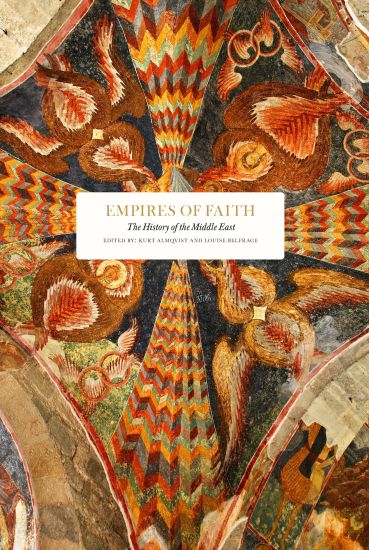
Mellanöstern har alltid varit en central plats för handel och erövringar. Läget har medfört enorma rikedomar, kulturellt utbyte och intellektuell vitalitet – men också konflikter, instabilitet och ihållande geopolitiska spänningar. Att förstå regionens förflutna är avgörande för att förstå dess nutid. Antologin Empires of Faith utforskar Mellanösterns långa historia – från Mesopotamien, de persiska kungarikena och Alexander den store till kristendomens och islams uppkomst, det bysantinska och ottomanska riket, och 1900-talets dramatiska omvandling av regionen. Hur har religion, civilisation och imperialistiska ambitioner format regionen? Vilka arv lämnade de stora imperierna efter sig och hur påverkade de lagstiftning, kultur, styre och undersåtarnas vardagsliv? Och i vilken utsträckning är historiens efterverkningar fortfarande synliga i dagens politiska och religiösa landskap? Boken utkommer även på svenska våren 2027.
Iran

Iran

Ali M. Ansari

JOHN WILEY AND SONS LTD
2024
nidottu

Halvin toimitettuna 26,70 €

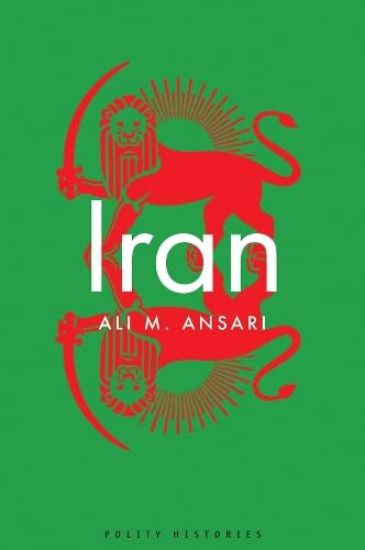
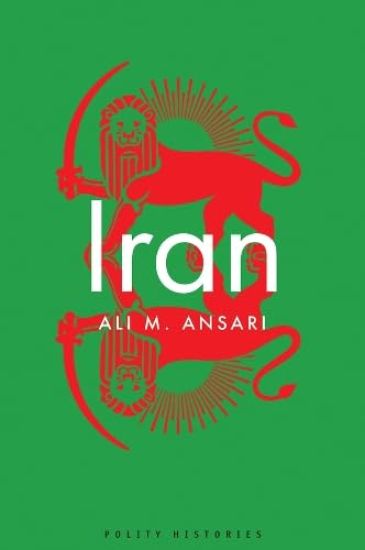
Both revolutionary and reactionary, the Islamic Republic of Iran has long been a conundrum for Western observers. A theocracy that aspires to a popular mandate; an anti-colonial state with imperial pretensions of its own: modern Iran is in many ways a reflection of its struggle to reconcile its traditions with the challenges of modernity. In this book, Ali Ansari takes readers on a journey through Iran’s turbulent history. Beginning with the country’s fall from grace as a Great Power in the nineteenth century, he explores its repeated attempts to modernize in a series of revolutionary movements from the Constitutional Revolution of 1906 to the Islamic Revolution of 1979 and the civil unrest that is breaking out today. In so doing, he reveals how the experience of history and Iran’s encounter with ‘modernity’ have come to define it – and set it on an authoritarian path in confrontation with the West and, often, its own people.
Iran

Iran

Ali M. Ansari

JOHN WILEY AND SONS LTD
2024
sidottu
Both revolutionary and reactionary, the Islamic Republic of Iran has long been a conundrum for Western observers. A theocracy that aspires to a popular mandate; an anti-colonial state with imperial pretensions of its own: modern Iran is in many ways a reflection of its struggle to reconcile its traditions with the challenges of modernity. In this book, Ali Ansari takes readers on a journey through Iran’s turbulent history. Beginning with the country’s fall from grace as a Great Power in the nineteenth century, he explores its repeated attempts to modernize in a series of revolutionary movements from the Constitutional Revolution of 1906 to the Islamic Revolution of 1979 and the civil unrest that is breaking out today. In so doing, he reveals how the experience of history and Iran’s encounter with ‘modernity’ have come to define it – and set it on an authoritarian path in confrontation with the West and, often, its own people.
Fruit of Knowledge, Wheel of Learning (Cased Edition)

Fruit of Knowledge, Wheel of Learning (Cased Edition)

Melanie Gibson; Ali M. Ansari

Gingko Library
2022
sidottu
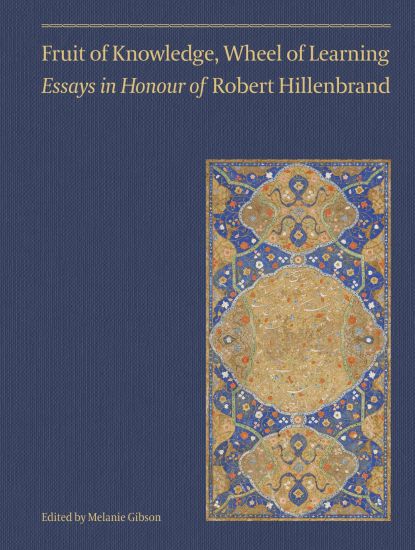
Collected essays honoring the work of British professors Carole and Robert Hillenbrand. Carole and Robert Hillenbrand are legendary British professors, both of whom have made immense contributions to the fields of Islamic history and art history, and they are highly respected and beloved by the academic community. For these two volumes, editors Melanie Gibson and Ali Ansari have gathered an eclectic mix of scholarly contributions by colleagues and by some of their most recent students who now occupy positions in universities worldwide. The eleven articles in the volume dedicated to Carole Hillenbrand include research on a range of topics, including the elusive Fatimid caliph al-Zafir, a crusader raid on Mecca, and the Persian bureaucrat Mirza Saleh Shirazi's history of England. In Robert Hillenbrand's volume, the thirteen articles include studies of a rare eighth-century metal dish with Nilotic scenes, Chinese Qur'ans, the process of image-making in both theory and practice, and a shrine in Mosul destroyed by ISIS.
Fruit of Knowledge, Wheel of Learning (Vol II) - Essays in Honour of Professor Robert Hillenbrand
Collected essays honoring the work of British professors Carole and Robert Hillenbrand. Carole and Robert Hillenbrand are legendary British professors, both of whom have made immense contributions to the fields of Islamic history and art history, and they are highly respected and beloved by the academic community. For these two volumes, editors Melanie Gibson and Ali Ansari have gathered an eclectic mix of scholarly contributions by colleagues and by some of their most recent students who now occupy positions in universities worldwide. The eleven articles in the volume dedicated to Carole Hillenbrand include research on a range of topics, including the elusive Fatimid caliph al-Zafir, a crusader raid on Mecca, and the Persian bureaucrat Mirza Saleh Shirazi's history of England. In Robert Hillenbrand's volume, the thirteen articles include studies of a rare eighth-century metal dish with Nilotic scenes, Chinese Qur'ans, the process of image-making in both theory and practice, and a shrine in Mosul destroyed by ISIS.
Iran, Islam and Democracy

Iran, Islam and Democracy

Ali M. Ansari

Gingko Library
2018
sidottu
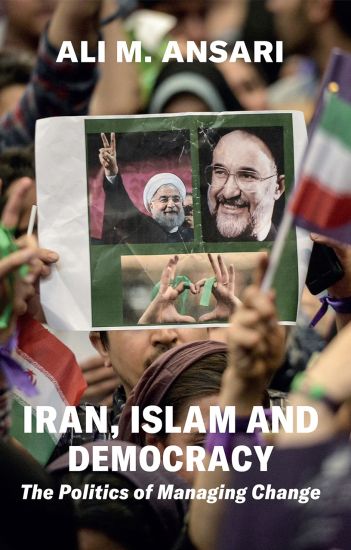
Current developments in Iran are forcing a fundamentalreassessment of the relationship between Islam and democracyand the processes of democratization in the Muslim world. While some scholars have argued that 'Islam' and 'democracy'are essentially incompatible, others have sought to portraythe advent of political Islam as a transitional phenomenonto be overcome before democratization can take root. Ansari,in tracing the historical roots of political development inIran, argues that what is in fact taking place is an intellectualsynthesis of ideas drawing from both Western and traditionalIranian norms. The author analyzes the origins and dynamicof this development, and discusses the possible consequencesfor Iran and the region, as well as Iran's relationship with thewider world. This new edition includes political developmentsin Iran since 2016. It looks at the increasing polarity of viewsand the changing nature of 'reformism' in light of successivesetbacks and growing international tensions.
These Islands

These Islands

Ali M. Ansari

Haus Publishing
2018
pokkari
Visiting Italy in the months preceding the Scottish referendum of 2014, Ali Ansari was struck by the admiration of Italian colleagues for the liberalism of a state that would allow, and even encourage, one of its constituent parts to resolve the question of their own independence. Such a development, they noted, would be inconceivable in Europe. In this fascinating contribution to the Haus Curiosities series, Ansari considers the idea of Britain as a political entity. Invented to integrate conflicting nationalisms in an `ever more perfect union' it has succumbed to particular resurgent nationalisms in a curious reversal of fortune. The idea of Britain sits awkwardly in the margins of this discussion, which considers some nationalists suppressed minorities, in need of attention, and others to be bigoted throwbacks to a more divisive age. Arguing the case for `Great Britain' from the perspective of the political mythology of the British state - with an emphasis on culture, ideas and narrative constructions - Ansari makes the claim that Britain's strength lies in its ability of shape the popular imagination, both at home and abroad, and that an `excess of enthusiasm' may yet do untold damage to the fabric of a state and society that has been carefully constructed and will not be easily repaired.
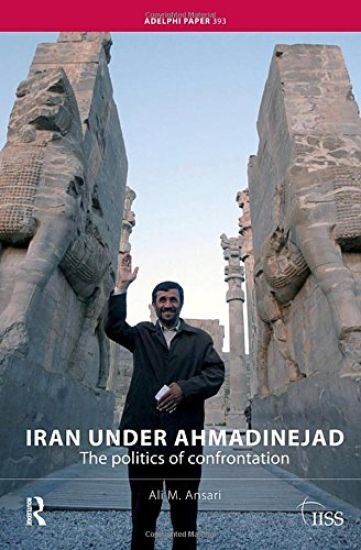
Iran Under Ahmadinejad

Iran Under Ahmadinejad

Ali M. Ansari

Routledge
2017
sidottu
The election of Mahmoud Ahmadinejad to the presidency of the Islamic Republic of Iran in the summer of 2005 thrust Iran into the international limelight in a way that few would have predicted. Robust, confrontational and given to bombastic rhetoric, Ahmadinejad has drawn condemnation from the West and praise from the Middle Eastern street in almost equal measure. This Paper looks at the details of his political rise and assesses his presidency to date within the context of the dynamics of Iranian politics. Examining the key themes of his presidency, it assesses the effectiveness of his policies and analyzes his populist approach, in particular his use of nationalism and the cult of the Twelfth Imam. The author argues that Ahmadinejad, far from retrenching the conservative values of the early revolution, is very much a product of the social and political changes which have occurred since the end of the Iran Iraq War; that his populism in both politics and economics, along with the maintenance of a confrontational posture abroad, represents an ad hoc, and somewhat incoherent, attempt to disguise the growing contradictions which afflict the Islamic Republic, and the conservative vision of an unaccountable Islamic autocracy in the face of growing dissatisfaction, especially among key sections of thete.
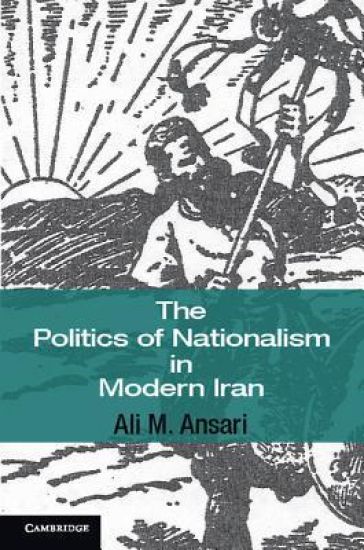
The Politics of Nationalism in Modern Iran

The Politics of Nationalism in Modern Iran

Ali M. Ansari

Cambridge University Press
2012
sidottu
The first full-length study of Iranian nationalism in nearly five decades, this sophisticated and challenging book by the distinguished historian Ali M. Ansari explores the idea of nationalism in the creation of modern Iran. It does so by considering the broader developments in national ideologies that took place following the emergence of the European Enlightenment and showing how these ideas were adopted by a non-European state. Ansari charts a course through twentieth-century Iran, analysing the growth of nationalistic ideas and their impact on the state and demonstrating the connections between historiographical and political developments. In so doing, he shows how Iran's different regimes manipulated ideologies of nationalism and collective historical memory to suit their own ends. Drawing on hitherto untapped sources, the book concludes that it was the revolutionary developments and changes that occurred during the first half of the twentieth century that paved the way for later radicalisation.
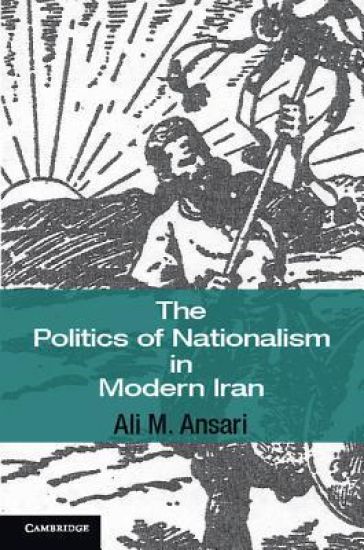
The Politics of Nationalism in Modern Iran

The Politics of Nationalism in Modern Iran

Ali M. Ansari

Cambridge University Press
2012
pokkari
The first full-length study of Iranian nationalism in nearly five decades, this sophisticated and challenging book by the distinguished historian Ali M. Ansari explores the idea of nationalism in the creation of modern Iran. It does so by considering the broader developments in national ideologies that took place following the emergence of the European Enlightenment and showing how these ideas were adopted by a non-European state. Ansari charts a course through twentieth-century Iran, analysing the growth of nationalistic ideas and their impact on the state and demonstrating the connections between historiographical and political developments. In so doing, he shows how Iran's different regimes manipulated ideologies of nationalism and collective historical memory to suit their own ends. Drawing on hitherto untapped sources, the book concludes that it was the revolutionary developments and changes that occurred during the first half of the twentieth century that paved the way for later radicalisation.
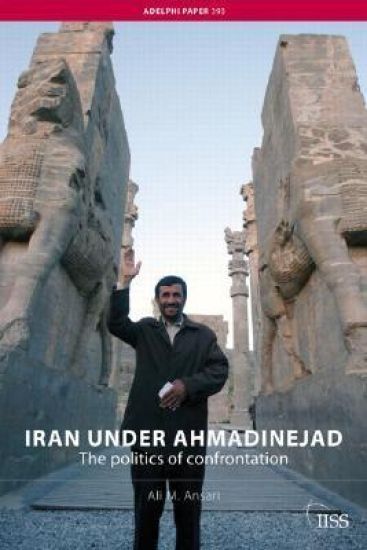
Iran under Ahmadinejad

Iran under Ahmadinejad

Ali M. Ansari

Routledge
2008
nidottu
The election of Mahmoud Ahmadinejad to the presidency of the Islamic Republic of Iran in the summer of 2005 thrust Iran into the international limelight in a way that few would have predicted. Robust, confrontational and given to bombastic rhetoric, Ahmadinejad has drawn condemnation from the West and praise from the Middle Eastern street in almost equal measure. This Paper looks at the details of his political rise and assesses his presidency to date within the context of the dynamics of Iranian politics. Examining the key themes of his presidency, it assesses the effectiveness of his policies and analyzes his populist approach, in particular his use of nationalism and the cult of the Twelfth Imam. The author argues that Ahmadinejad, far from retrenching the conservative values of the early revolution, is very much a product of the social and political changes which have occurred since the end of the Iran–Iraq War; that his populism in both politics and economics, along with the maintenance of a confrontational posture abroad, represents an ad hoc, and somewhat incoherent, attempt to disguise the growing contradictions which afflict the Islamic Republic, and the conservative vision of an unaccountable Islamic autocracy in the face of growing dissatisfaction, especially among key sections of the élite.