Kirjojen hintavertailu – 12 859 818 kirjaa ja 27 kauppaa
Kirjailija
Ali Madanipour
Kirjat ja teokset yhdessä paikassa: 15 kirjaa, julkaisuja vuosilta 2001–2025, suosituimpiin kuuluu Rethinking Public Space. Vertaile teosten hintoja ja tarkista saatavuus suomalaisista kirjakaupoista.
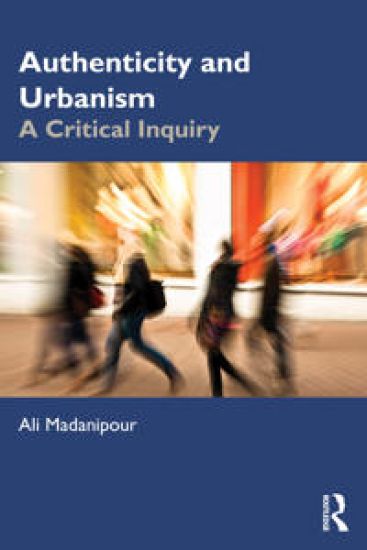
This book investigates authenticity, an important but controversial cultural concept, and its relevance for urban socio-spatial processes. Defining authenticity as an evaluative relationship with an origin, it unpacks a range of origins from a critical, non-essentialist perspective: self, author, substance, event, time, place and society. Authenticity is a key concept in contemporary culture. It was selected as the word of the year 2023 by Merriam-Webster, it is significant for UNESCO in designating the world heritage, a philosophical battleground, and reflecting concerns about truth and trust in the digital age. This book offers a clear understanding of the concept and discusses its implications for urbanism, understood as both material and relational, both physical and social. It critically examines whether authentic urbanism may be possible through seeking a solid ground in the self, in the act of making, in the substance of objects, in transformative events, in particular times and places, and in society and culture. Analysing the complexities, nuances, and controversies of the concept of authenticity, and their implications for urban space and society, this book explores the promises and pitfalls of authenticity, looking for ways of avoiding its dangers and searching for its creative potential. Students and scholars in urban studies, geography, urban design, planning, and architecture, as well as in sociology and cultural studies, would find this interface between ideas and practices informative and insightful.
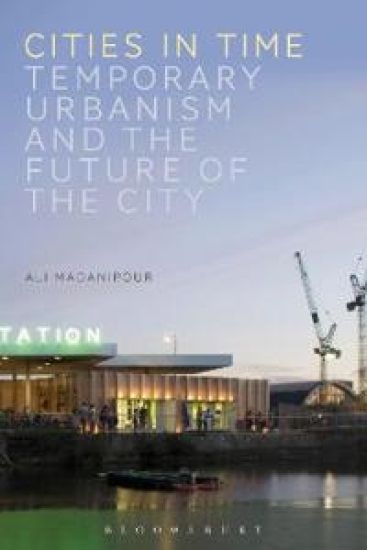
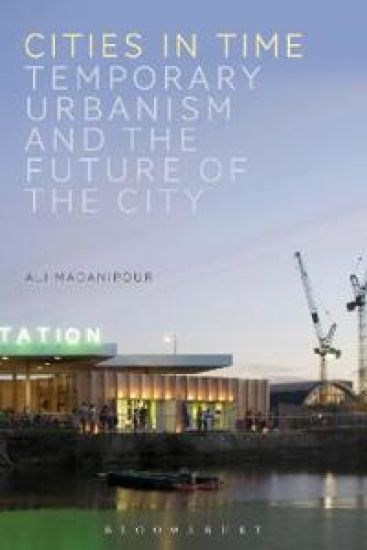
From street-markets and pop-up shops to art installations and Olympic parks, the temporary use of urban space is a growing international trend in architecture and urban design. Partly a response to economic and ecological crisis, it also claims to offer a critique of the status quo and an innovative way forward for the urban future. Cities in Time aims to explore and understand the phenomenon, offering a first critical and theoretical evaluation of temporary urbanism and its implications for the present and future of our cities. The book argues that temporary urbanism needs to be understood within the broader context of how different concepts of time are embedded in the city. In any urban place, multiple, discordant and diverse timeframes are at play – and the chapters here explore these different conceptions of temporality, their causes and their effects. Themes explored include how institutionalised time regulates everyday urban life, how technological and economic changes have accelerated the city’s rhythms, our existential and personal senses of time, concepts of memory and identity, virtual spaces, ephemerality and permanence.
Views on spatial planning and its role have changed significantly over the past few years and the issues it deals with have become increasingly more complex. There are more players involved in the development of a particular area or place than ever before and there is also a greater interest in urban design issues. There are also new ways of conceiving of place, space and society relations. It is therefore necessary that all those involved in the production, consumption and valuing of places and territories develop and (re)learn new ways of analyzing and managing space. This volume provides a platform for such a re-examination. It first discusses how spaces and places are understood and conceptualized, and offers a dialogue between different approaches to the understanding of space, emphasizing the need for a dynamic perspective. The book then goes on to examine the changing governance processes through various case studies, which illustrate a range of innovative spatial planning projects from across Europe and the United States. By bringing together an examination of both space and the process through which the space is created and managed, this volume offers a unique multi-dimensional understanding of spatial planning and suggests new ways of negotiating how society should shape and influence the transformation of places.
Placing the practice of urban design in its political, economic and cultural context, this book sets out a clear and positive vision of the potential of urban design, and in particular its capacity to bring imagined futures into being for the benefit of the many. Urban Design, Space and Society shows how urban design is concerned not only with the aesthetics and practicalities of designing urban spaces, but also with the pursuit of social inclusiveness, participatory democracy, cultural meaning and ecological sustainability. It covers a broad range of interrelated themes and demostrates how social and political theories shed light on an understanding of urban design. Drawing on these theories, as well as the author's own research, the book guides the reader through the complex challenges that design practitioners must navigate in meeting the diverse needs of urban society in the twenty-first century. Providing a clear guide to the role and potential of urban design, this is an invaluable text for students and professionals for urban design as well as those from related disciplines such as planning, architecture and geography.
This book explores the relationship between space and economy, the spatial expressions of the knowledge economy. The capitalist industrial economy produced its own space, which differed radically from its predecessor agrarian and mercantile economies. If a new knowledge-based economy is emerging, it is similarly expected to produce its own space to suit the new circumstances of production and consumption. If these spatial expressions do exist, even if in incomplete and partial forms, they are likely to be the model for the future of cities.
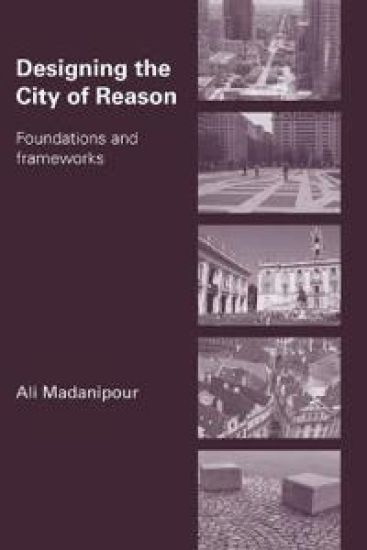
With a practical approach to theory, Designing the City of Reason offers new perspectives on how differing belief systems and philosophical approaches impact on city design and development, exploring how this has changed before, during and after the impact of modernism in all its rationalism. Looking at the connections between abstract ideas and material realities, this book provides a social and historical account of ideas which have emerged out of the particular concerns and cultural contexts and which inform the ways we live. By considering the changing foundations for belief and action, and their impact on urban form, it follows the history and development of city design in close conjunction with the growth of rationalist philosophy. Building on these foundations, it goes on to focus on the implications of this for urban development, exploring how public infrastructures of meaning are constructed and articulated through the dimensions of time, space, meaning, value and action. With its wide-ranging subject matter and distinctive blend of theory and practice, this book furthers the scope and range of urban design by asking new questions about the cities we live in and the values and symbols which we assign to them.
The relationship between public and private spheres is one of the key concerns of the modern society. This book investigates this relationship, especially as manifested in the urban space with its social and psychological significance. Through theoretical and historical examination, it explores how and why the space of human socities is subdivided into public and private sections. It starts with the private, interior space of the mind and moves step by step, through the body, home, neighborhood and the city, outwards to the most public, impersonal spaces, exploring the nature of each realm and their complex, interdependent realtionships. A stimulating and thought provoking book for any architect, architectural historian, urban planner or designer.
Views on spatial planning and its role have changed significantly over the past few years and the issues it deals with have become increasingly more complex. There are more players involved in the development of a particular area or place than ever before and there is also a greater interest in urban design issues. There are also new ways of conceiving of place, space and society relations. It is therefore necessary that all those involved in the production, consumption and valuing of places and territories develop and (re)learn new ways of analyzing and managing space. This volume provides a platform for such a re-examination. It first discusses how spaces and places are understood and conceptualized, and offers a dialogue between different approaches to the understanding of space, emphasizing the need for a dynamic perspective. The book then goes on to examine the changing governance processes through various case studies, which illustrate a range of innovative spatial planning projects from across Europe and the United States. By bringing together an examination of both space and the process through which the space is created and managed, this volume offers a unique multi-dimensional understanding of spatial planning and suggests new ways of negotiating how society should shape and influence the transformation of places.