

Kirjailija
Alice McDermott
Kirjat ja teokset yhdessä paikassa: 32 kirjaa, julkaisuja vuosilta 2000–2027, suosituimpiin kuuluu Herself, of Course. Vertaile teosten hintoja ja tarkista saatavuus suomalaisista kirjakaupoista.
32 kirjaa
Kirjojen julkaisuvuodet: 2000–2027.
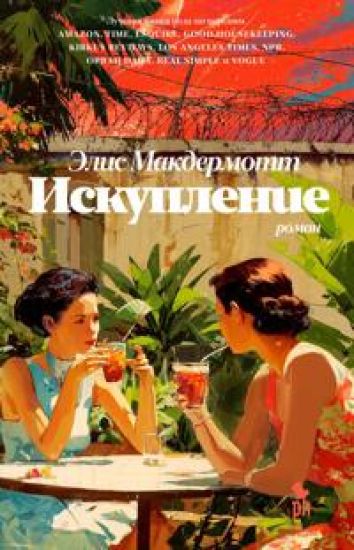
Luchshaja kniga goda po versijam Amazon, TIME, Esquire, Good Housekeeping, Kirkus Reviews, Los Angeles Times, NPR, Oprah Daily, Real Simple i Vogue Zakhvatyvajuschij rasskaz o zhizni zhenschin na obochine vetnamskoj vojny. Amerikanki, zhizn kotorykh okazalas svjazana s Vetnamom, pust i na nedolgij srok, vsegda byli personazhami vtorogo plana, massovkoj v literature o vojne vo Vetname, no v romane Elis Makdermott oni v tsentre. Eto istorija o zhenschinakh, stavshikh nevolnymi svidetelnitsami ogromnykh i tragicheskikh sobytij. Trisha - zastenchivaja novobrachnaja, kotoraja vyshla zamuzh za podajuschego nadezhdy inzhenera, rabotajuschego v voenno-morskoj razvedke. Sharlin - opytnaja "korporativnaja" supruga i mat troikh detej. V Sajgone eti dve zhenschiny obrazujut ostorozhnyj sojuz, obe - domokhozjajki i pomoschnitsy svoikh muzhej, no obeikh volnuet sudba Vetnama, i oni gotovy "tvorit dobro" dlja vetnamtsev. Shestdesjat let spustja doch Sharlin, vdokhnovlennaja vstrechej so starejuschim veteranom Vetnama, svjazyvaetsja s Trishej. Vmeste oni ogljadyvajutsja na to vremja v Sajgone, ironichno otsenivaja povorotnyj 1963 god i mesto zhenschin v te dni - na periferii politiki, istorii, vojny, ubezhdenij ikh muzhej. Virtuoznyj roman Elis Makdermott, odnoj iz samykh nabljudatelnykh i samykh gumanistichnykh pisatelnits, - o gluposti i blagodati, ob objazatelstvakh i zhertvakh, ob iskuplenii viny v slomannom mire. Perevod: Svetlana Arestova



AN INSTANT NEW YORK TIMES BESTSELLER Named a Best Book of the Year by Time, Esquire, Good Housekeeping, Kirkus Reviews, Los Angeles Times, NPR, Oprah Daily, Real Simple, and Vogue A riveting account of women's lives on the margins of the Vietnam War, from the renowned winner of the National Book Award. American women--American wives--have been mostly minor characters in the literature of the Vietnam War, but in Absolution they take center stage. Tricia is a shy newlywed, married to a rising attorney on loan to navy intelligence. Charlene is a practiced corporate spouse and mother of three, a beauty and a bully. In Saigon in 1963, the two women form a wary alliance as they balance the era's mandate to be "helpmeets" to their ambitious husbands with their own inchoate impulse to "do good" for the people of Vietnam. Sixty years later, Charlene's daughter, spurred by an encounter with an aging Vietnam vet, reaches out to Tricia. Together, they look back at their time in Saigon, taking wry account of that pivotal year and of Charlene's altruistic machinations, and discovering how their own lives as women on the periphery--of politics, of history, of war, of their husbands' convictions--have been shaped and burdened by the same sort of unintended consequences that followed America's tragic interference in Southeast Asia. A virtuosic new novel from Alice McDermott, one of our most observant, most affecting writers, about folly and grace, obligation, sacrifice, and, finally, the quest for absolution in a broken world.
* THE TOP 10 NEW YORK TIMES BESTSELLER *'One of the finest contemporary novels I've read ... A moral masterpiece' ANN PATCHETT'Her writing has a luminous kind of clarity, a grace and scope that fills me with wonder' RACHEL JOYCE'Damning and dazzling ... The story of a Vietnam we never got in history class' OPRAH DAILY-----------------You have no idea what it was like. For us. The women, I mean. The wives. 1963. Saigon. Tricia is a shy newlywed, married to a rising attorney working for US Navy intelligence. Charlene is a practiced corporate spouse and mother of three, a beauty and a bully. The two women form a wary alliance as they struggle to balance the pressure to be respectable wives for their ambitious husbands, with their own dubious impulses to “do good” for the people of Vietnam. Sixty years later, Charlene’s daughter, spurred by an encounter with an aging Vietnam veteran, reaches out to Tricia. Together, they look back at their time in Saigon, discovering how their lives as women on the periphery — of politics, of history, of war, of their husbands’ convictions — have been shaped and burdened by the unintended consequences of America’s tragic interference in Southeast Asia. Exploring the disaster of the Vietnam War through the lives built by American wives in 1960s Saigon, this is a virtuosic novel about folly and grace, obligation, sacrifice and the quest for absolution in a broken world.

AN INSTANT NEW YORK TIMES BESTSELLER Named a Best Book of the Year by Time, Esquire, Good Housekeeping, Kirkus Reviews, Los Angeles Times, NPR, Oprah Daily, Real Simple, and Vogue A riveting account of women's lives on the margins of the Vietnam War, from the renowned winner of the National Book Award. American women--American wives--have been mostly minor characters in the literature of the Vietnam War, but in Absolution they take center stage. Tricia is a shy newlywed, married to a rising attorney on loan to navy intelligence. Charlene is a practiced corporate spouse and mother of three, a beauty and a bully. In Saigon in 1963, the two women form a wary alliance as they balance the era's mandate to be "helpmeets" to their ambitious husbands with their own inchoate impulse to "do good" for the people of Vietnam. Sixty years later, Charlene's daughter, spurred by an encounter with an aging Vietnam vet, reaches out to Tricia. Together, they look back at their time in Saigon, taking wry account of that pivotal year and of Charlene's altruistic machinations, and discovering how their own lives as women on the periphery--of politics, of history, of war, of their husbands' convictions--have been shaped and burdened by the same sort of unintended consequences that followed America's tragic interference in Southeast Asia. A virtuosic new novel from Alice McDermott, one of our most observant, most affecting writers, about folly and grace, obligation, sacrifice, and, finally, the quest for absolution in a broken world.
A riveting account of women's lives on the margins of the Vietnam War, from the renowned winner of the National Book Award. You have no idea what it was like. For us. The women, I mean. The wives. American women--American wives--have been mostly minor characters in the literature of the Vietnam War, but in Absolution they take center stage. Tricia is a shy newlywed, married to a rising attorney on loan to navy intelligence. Charlene is a practiced corporate spouse and mother of three, a beauty and a bully. In Saigon in 1963, the two women form a wary alliance as they balance the era's mandate to be "helpmeets" to their ambitious husbands with their own, inchoate impulse to "do good" for the people of Vietnam. Sixty years later, Charlene's daughter, spurred by an encounter with an aging Vietnam vet, reaches out to Tricia. Together, they look back at their time in Saigon, taking wry account of that pivotal year and of Charlene's altruistic machinations, and discovering as they do how their own lives as women on the periphery--of politics, of history, of war, of their husbands' convictions--have been shaped and burdened by the same sort of unintended consequences that followed America's tragic interference in Southeast Asia. A virtuosic new novel from Alice McDermott, one of our most observant, most affecting writers--about folly and grace, obligation, sacrifice, and, finally, the quest for absolution in a broken world. A Macmillan Audio production from Farrar, Straus and Giroux.

AN INSTANT NEW YORK TIMES BESTSELLER Named a Best Book of the Year by Time, Esquire, Good Housekeeping, Kirkus Reviews, Los Angeles Times, NPR, Oprah Daily, Real Simple, and Vogue A riveting account of women's lives on the margins of the Vietnam War, from the renowned winner of the National Book Award. You have no idea what it was like. For us. The women, I mean. The wives. American women--American wives--have been mostly minor characters in the literature of the Vietnam War, but in Absolution they take center stage. Tricia is a shy newlywed, married to a rising attorney on loan to navy intelligence. Charlene is a practiced corporate spouse and mother of three, a beauty and a bully. In Saigon in 1963, the two women form a wary alliance as they balance the era's mandate to be "helpmeets" to their ambitious husbands with their own inchoate impulse to "do good" for the people of Vietnam. Sixty years later, Charlene's daughter, spurred by an encounter with an aging Vietnam vet, reaches out to Tricia. Together, they look back at their time in Saigon, taking wry account of that pivotal year and of Charlene's altruistic machinations, and discovering how their own lives as women on the periphery--of politics, of history, of war, of their husbands' convictions--have been shaped and burdened by the same sort of unintended consequences that followed America's tragic interference in Southeast Asia. A virtuosic new novel from Alice McDermott, one of our most observant, most affecting writers, about folly and grace, obligation, sacrifice, and, finally, the quest for absolution in a broken world.
From the National Book Award winner and Pulitzer Prize finalist Alice McDermott, The Ninth Hour is the critically acclaimed "haunting and vivid portrait of an Irish Catholic clan in early twentieth century America" (The Associated Press). One of Time Magazine's Top Ten Novels of the YearA 2017 Kirkus Prize FinalistA New York Times Book Review Notable Book On a dim winter afternoon, a young Irish immigrant opens a gas tap in his Brooklyn tenement. He is determined to prove--to the subway bosses who have recently fired him, to his pregnant wife--that "the hours of his life . . . belonged to himself alone." In the aftermath of the fire that follows, Sister St. Saviour, an aging nun, a Little Nursing Sister of the Sick Poor, appears, unbidden, to direct the way forward for his widow and his unborn child. In Catholic Brooklyn in the early part of the twentieth century, decorum, superstition, and shame collude to erase the man's brief existence, and yet his suicide, though never spoken of, reverberates through many lives--testing the limits and the demands of love and sacrifice, of forgiveness and forgetfulness, even through multiple generations. Rendered with remarkable delicacy, heart, and intelligence, Alice McDermott's The Ninth Hour is a crowning achievement of one of the finest American writers at work today.
An ordinary life--its sharp pains and unexpected joys, its bursts of clarity and moments of confusion--lived by an ordinary, but unforgettable woman: This is the subject of Someone, Alice McDermott's extraordinary New York Times bestselling novel. We first glimpse Marie Commeford as a child: a girl in thick glasses observing her pre-Depression world from a Brooklyn stoop. Through her first heartbreak and eventual marriage; her delicate brother's brief stint as a Catholic priest and his emotional breakdown; her career as a funeral director's "consoling angel"; the deaths of her parents and the births of her children--we follow Marie through the changing world of the twentieth century and her Irish-American enclave. Rendered with remarkable empathy and insight, Someone is a novel that speaks of life as it is daily lived, with passion and heartbreak, a crowning achievement of one of the finest American writers at work today.
The beautiful child of older parents, raised on the eastern end of Long Island, Theresa is her town's most sought-after babysitter--cheerful, poised, an effortless storyteller, a wonder with children and animals. Among her charges this fateful summer is Daisy, her younger cousin, who has come to spend a few quiet weeks in this bucolic place. While Theresa copes with the challenges presented by the neighborhood's waiflike children, the tumultuous households of her employers, the attentions of an aging painter, and Daisy's fragility of body and spirit, her precocious, tongue-in-cheek sense of order is tested as she makes the perilous crossing into adulthood. In her deeply etched rendering of all that happened that seemingly idyllic season, Alice McDermott once again peers into the depths of everyday life with inimitable insight and grace. As Margaret Atwood wrote in The New York Review of Books, Child of My Heart is "richly textured and] intricately woven . . . A work not only of, but about, the imagination."
Pulitzer Prize finalist At Weddings and Wakes is "a brilliant, highly complex, extraordinary piece of fiction" (Chicago Tribune)Lucy Dailey leaves suburbia twice a week with her three children in tow, returning to the Brooklyn home where she grew up, and where her stepmother and unmarried sisters still live. The children quietly observe Aunt Veronica, who drowns her sorrows in drink, Aunt Agnes, a caustic career woman, and finally Aunt May, the ex-nun, blossoming with a late and unexpected love, dutifully absorbing the legacy of their less-than-perfect family. Alice McDermott beautifully evokes three generations of an Irish-American family in this "haunting and masterly work of literary art" (The Wall Street Journal).
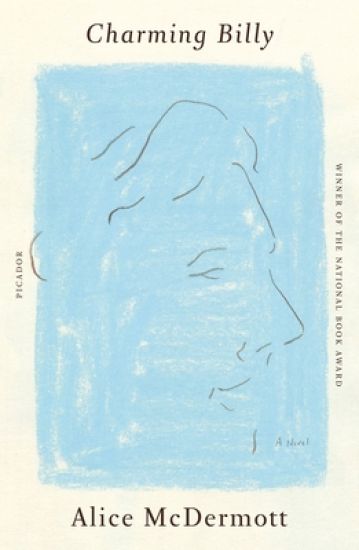
Winner of the National Book Award and a New York Times bestseller, Charming Billy is "Alice McDermott's masterpiece" (NPR). In a small bar somewhere in the Bronx, a funeral party has gathered to honor Billy Lynch. Through the night, his friends and family will weave together the tale of a husband, lover, dreamer, and storyteller, but also that of a hopeless drunk whose immense charm was but a veil over a lifetime of secrets and all-consuming sorrow. As they comfort his widow, the gentle Maeve, they remember as well his first love, Eva, who died of pneumonia, and whose ghost haunted his marriage and drove him to the bottle. Who is truly responsible for Billy's life and death, and what does it mean to mythologize a friend's suffering? Beautifully written and teeming with fine portraits of Irish-American life in New York, Charming Billy is Alice McDermott's masterful and beloved novel about how a community can pin its dreams to one man, and how good intentions can be as destructive as the truth they were meant to hide.
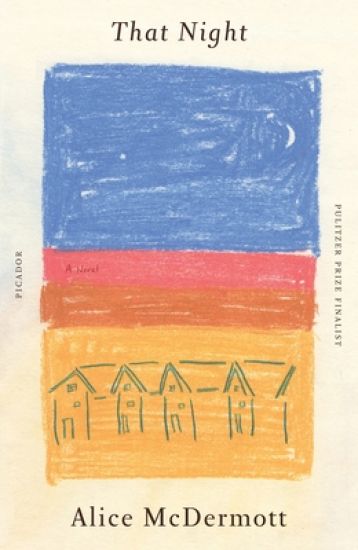
In That Night, New York Times bestselling author Alice McDermott, "has taken a suburban teenage romance and pregnancy and infused it with the power, the ominousness, and the star-crossed romanticism of a contemporary Romeo and Juliet" (Chicago Tribune) A Finalist for the Pulitzer Prize and the National Book Award It is high summer, the early 1960s. Sheryl and Rick, two Long Island teenagers, share an intense, all-consuming love. But Sheryl's widowed mother steps between them, and one moonlit night Rick and a gang of hoodlums descend upon her quiet neighborhood. That night, driven by Rick's determination to reclaim Sheryl, the young men provoke a violent confrontation, and as fathers step forward to protect their turf, notions of innocence belonging to both sides of the brawl are fractured forever. Alice McDermott's That Night "is as carefully constructed as a poem, giving off a lustrous glow, and is poignant in the telling" (People).
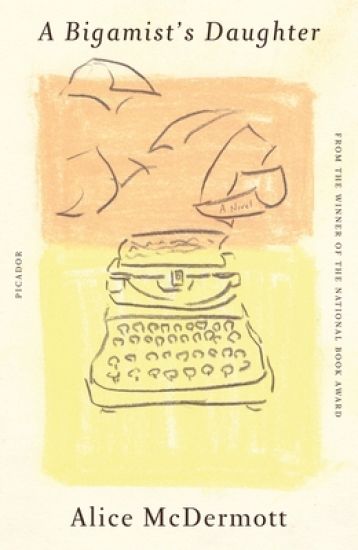
The "beautifully written" (The Washington Post) first novel by Alice McDermott, National Book Award-winning author of Charming Billy and Someone. Elizabeth Connelly, editor at a New York vanity press, sells the dream of publication (admittedly, to writers of questionable talent). Stories of true emotional depth rarely cross her desk. But when a young writer named Tupper Daniels walks in, bearing an unfinished novel, Elizabeth is drawn to both the novelist and his story--a lyrical tale about a man in love with more than one woman at once. Tupper's manuscript unlocks memories of her own secretive father, who himself may have been a bigamist. As Elizabeth and Tupper search for the perfect d nouement, their affair, too, approaches a most unexpected and poignant coda. A brilliant debut from one of our most celebrated authors, A Bigamist's Daughter is "a wise, sad, witty novel about men and women, God, hope, love, illusion, and fiction itself" (Newsweek).
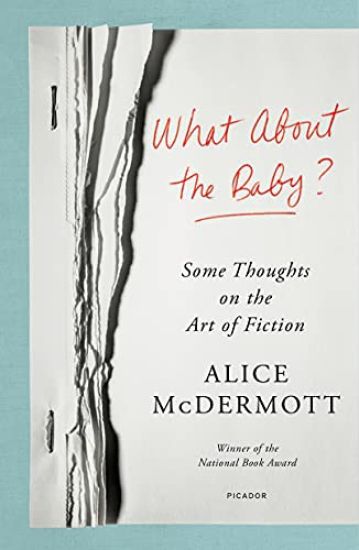
A collection of essays, lectures, and observations on the art of writing fiction from Alice McDermott, winner of the National Book Award and unmatched "virtuoso of language and image" (Rebecca Steinitz, The Boston Globe) What About the Baby? Some Thoughts on the Art of Fiction gathers the bestselling novelist Alice McDermott's pithiest wisdom about her chosen art, acquired over a lifetime as an acclaimed writer and teacher of writing. From technical advice ("check that your verbs aren't burdened by unnecessary hads and woulds") to setting the bar ("I expect the fiction I read to carry with it the conviction that it is written with no other incentive than that it must be written"), from the demands of readers ("they'd been given a story with a baby in it, and they damn well wanted that baby accounted for") to the foibles of public life ("I've never subscribed to the notion that a film adaptation is the final imprimatur for a work of fiction, despite how often I've been told by encouraging friends and strangers, 'Maybe they'll make a movie of your novel, ' as if I'd been aiming for a screenplay all along but somehow missed the mark and wrote a novel by mistake"), McDermott muses trenchantly and delightfully about the craft of fiction. She also serves throughout as the artful conductor of a literary chorus, quoting generously from the work of other great writers (including Tolstoy, Shakespeare, Nabokov, Morrison, and Woolf ), beautifully joining her voice with theirs. These stories of lessons learned and books read, and of the terrors and the joys of what she calls "this mad pursuit," form a rich and valuable sourcebook for readers and writers alike: a deeply charming meditation on the unique gift that is literature.
From National Book Award-winner and Pulitzer Prize Finalist Alice McDermott, The Ninth Hour is the critically-acclaimed "haunting and vivid portrait of an Irish Catholic clan in early twentieth century America" (The Associated Press). One of TIME Magazine's Top Ten Novels of the YearA 2017 Kirkus Prize FinalistA New York Times Book Review Notable Book On a dim winter afternoon, a young Irish immigrant opens a gas tap in his Brooklyn tenement. He is determined to prove--to the subway bosses who have recently fired him, to his pregnant wife--that "the hours of his life . . . belonged to himself alone." In the aftermath of the fire that follows, Sister St. Saviour, an aging nun, a Little Nursing Sister of the Sick Poor, appears, unbidden, to direct the way forward for his widow and his unborn child. In Catholic Brooklyn in the early part of the twentieth century, decorum, superstition, and shame collude to erase the man's brief existence, and yet his suicide, though never spoken of, reverberates through many lives--testing the limits and the demands of love and sacrifice, of forgiveness and forgetfulness, even through multiple generations. Rendered with remarkable delicacy, heart, and intelligence, Alice McDermott's The Ninth Hour is a crowning achievement of one of the finest American writers at work today.
WINNER OF THE PRIX FEMINA ETRANGER 2018SHORTLISTED FOR THE 2017 KIRKUS PRIZEONE OF TIME MAGAZINE'S TOP TEN BOOKS OF 2017____________________From the National Book Award-winning author comes a luminous, deeply humane novel about three generations of an Irish immigrant family in 1940s and 1950s Brooklyn – for those who love Colm Tóibín, Anne Enright and Anne TylerOn a dim winter afternoon in a Brooklyn tenement, a young Irish immigrant unhooks the oven gas, and inhales. In the aftermath of the fire that follows, Sister St. Savior, an ageing nun appears, unbidden, to direct the way forward for his widow and unborn child. This is how Sally comes to grow up in the convent laundry, amidst the crank of the wringer and the hiss of the iron, her universe governed by the strange, kind and mysterious Little Nursing Sisters of the Sick Poor. But although superstition and shame will collude to erase Sally’s father’s brief existence, his suicide will reverberate through many lives and over many decades. And when she comes of age, Sally will commit her own irrevocable deed, sacrificing her grace at the altar of human love.____________________'Beautifully written, heart-wrenching and funny by turns ... deeply vivid and authentic' Sunday Times