Kirjojen hintavertailu – 12 859 829 kirjaa ja 27 kauppaa
Kirjailija
Alison Clark
Kirjat ja teokset yhdessä paikassa: 9 kirjaa, julkaisuja vuosilta 2005–2027, suosituimpiin kuuluu Listening to Young Children, Fourth Edition. Vertaile teosten hintoja ja tarkista saatavuus suomalaisista kirjakaupoista.
This updated and expanded book explains how to use the Mosaic approach, a practice that instils the importance of listening to children's life experiences. Supported by case studies, it shows how to use it in a variety of settings, outlines new applications of the approach in a post-Covid environment and covers working with vulnerable children.
This book explores the relationship with time in early childhood by arguing for the valuing of slow pedagogies and slow knowledge. Alison Clark points to alternative practices in Early Childhood Education and Care that enable a different pace and rhythm, against the backdrop of the acceleration in early childhood and the proliferation of testing and measurement. Diverse approaches are explored to enable an ‘unhurried child’ and less hurried adults. Slow Knowledge and the Unhurried Child is divided in three parts. Part 1, Reasons to be slow, looks at the pressures in Early Childhood Education and Care to speed up and for children to be ‘readied’ for the next stage. The book then explores different relationships with time for young children and educators. Part 2, Slow pedagogies and practices, explore some of the forms slow practices can take including outdoors, in the studio, in everyday routines, through stories, in pedagogical documentation and in ‘slow’ research. Part 3, Moving forward, shows what a ‘timefull’ approach to ECEC can look like, whilst debating the challenges and possibilities that exist. The book serves as a catalyst for urgent discussion about the need to slow down in early childhood education and teacher education and explores case studies of where slow early childhood education are already happening. It will be a key reading for researchers, practitioners and policy-makers about the relationship with time in early childhood and the importance of taking a longer view.
This book explores the relationship with time in early childhood by arguing for the valuing of slow pedagogies and slow knowledge. Alison Clark points to alternative practices in Early Childhood Education and Care that enable a different pace and rhythm, against the backdrop of the acceleration in early childhood and the proliferation of testing and measurement. Diverse approaches are explored to enable an ‘unhurried child’ and less hurried adults. Slow Knowledge and the Unhurried Child is divided in three parts. Part 1, Reasons to be slow, looks at the pressures in Early Childhood Education and Care to speed up and for children to be ‘readied’ for the next stage. The book then explores different relationships with time for young children and educators. Part 2, Slow pedagogies and practices, explore some of the forms slow practices can take including outdoors, in the studio, in everyday routines, through stories, in pedagogical documentation and in ‘slow’ research. Part 3, Moving forward, shows what a ‘timefull’ approach to ECEC can look like, whilst debating the challenges and possibilities that exist. The book serves as a catalyst for urgent discussion about the need to slow down in early childhood education and teacher education and explores case studies of where slow early childhood education are already happening. It will be a key reading for researchers, practitioners and policy-makers about the relationship with time in early childhood and the importance of taking a longer view.
Viewing children as 'experts in their own lives', the Mosaic approach offers a creative framework for understanding young children's perspectives through talking, walking, making and reviewing material with an adult. This book demonstrates how children's views and experiences can stay in focus in early childhood provision. The multi-method approach brings together digital tools with interviewing and observation to enable adults to review current practice and implement change with children. Combining the authors' successful books Listening to Young Children and Spaces to Play into an expanded and fully updated third edition, this book builds on the authors' original ground-breaking work by commenting on the development and adaptation of the Mosaic approach, along with case studies of the Mosaic approach in action in four countries: England, Denmark, Norway and Australia. Alongside guidance on using and adapting the framework with young children, older children and adults, there is new material on the ethical and methodological issues involved.
This book helps students master the key learning skills they need to become successful learners throughout their degree and beyond. It clearly explains the core skills they will need right from the start of the course, such as writing and numeracy skills and how to organise studies. It also introduces more advanced skills that students will need as the course progresses, such as research and evidence based practice. It shows how to use these important skills to succeed both at university and as a registered nurse.
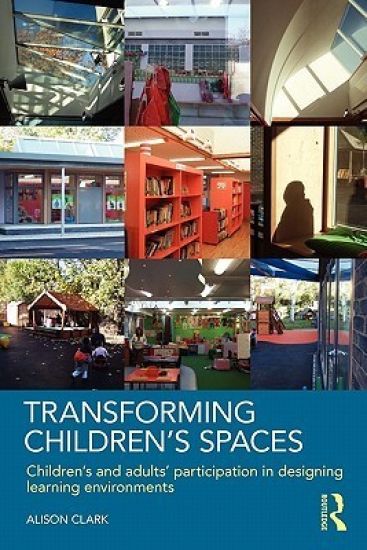
How can young children play an active role in developing the design of learning environments? What methods can be used to bring together children’s and practitioners’ views about their environment? What insights can young children offer into good designs for these children’s spaces? With the expansion of early childhood education and the move to 'extended schools', more young children will spend more time than ever before in institutions. Based on two actual building projects, this book is the first of its kind to demonstrate the possibilities of including young children’s perspectives in the design and review of children’s spaces. Situated at the heart of the debate about the relationship between the built environment and its impact on children’s learning and wellbeing, Transforming Children’s Spaces provides insights into how young children see their environment discusses children’s aspirations for future spaces develops the 'Mosaic approach' , pioneered by the author, as a method for listening to young children and adultsEmphasising the importance of visual and verbal methods of communication, this fascinating book demonstrates how practitioners and young children can articulate their perspectives, and shows how participatory methods can support new relationships between children, practitioners and architects. This book is essential reading for those who work in children's spaces and for those who design them as well as being of general interest to those studying education and childhood studies.
How can young children play an active role in developing the design of learning environments? What methods can be used to bring together children’s and practitioners’ views about their environment? What insights can young children offer into good designs for these children’s spaces? With the expansion of early childhood education and the move to 'extended schools', more young children will spend more time than ever before in institutions. Based on two actual building projects, this book is the first of its kind to demonstrate the possibilities of including young children’s perspectives in the design and review of children’s spaces. Situated at the heart of the debate about the relationship between the built environment and its impact on children’s learning and wellbeing, Transforming Children’s Spaces provides insights into how young children see their environment discusses children’s aspirations for future spaces develops the 'Mosaic approach' , pioneered by the author, as a method for listening to young children and adultsEmphasising the importance of visual and verbal methods of communication, this fascinating book demonstrates how practitioners and young children can articulate their perspectives, and shows how participatory methods can support new relationships between children, practitioners and architects. This book is essential reading for those who work in children's spaces and for those who design them as well as being of general interest to those studying education and childhood studies.
Spaces to Play explains how to use innovative Mosaic approach with young children to ensure their perspectives are the starting point when planning planning outdoor environments in early years provision. An ideal companion to the bestselling introduction, Listening to Young Children: The Mosaic approach, Spaces to Play draws on the findings of a pilot study which used the approach to listen to young children's views and experiences of their outdoor environment, and used the findings to to inform change. It describes how to adapt the Mosaic approach to work in outdoor spaces, demonstrates young children's competencies in expressing their perspectives and explores the links between listening and learning. The book also outlines the challenges and future directions for practitioners and researchers in listening to young children.