Kirjailija
Alison Davies
Kirjat ja teokset yhdessä paikassa: 94 kirjaa, julkaisuja vuosilta 1960–2026, suosituimpiin kuuluu Charms & Symbols. Vertaile teosten hintoja ja tarkista saatavuus suomalaisista kirjakaupoista.
94 kirjaa
Kirjojen julkaisuvuodet: 1960–2026.
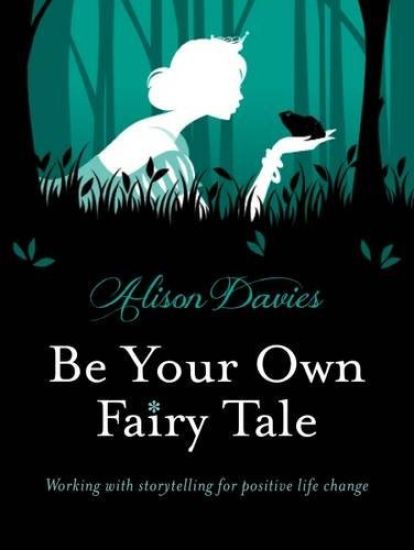
We first engage with fairy tales in childhood and they never leave us. Characters such as the transformational Sleeping Beauty, the 'rescuer' Prince Charming and the scary, shapeshifting wolf in Little Red Riding Hood are embedded deep in our imagination and conjure up feelings that we all can identify with on some level. Through these fabulous stories we can access the latent power that lies within us, and finally gain the confidence and self-understanding we need to break those bad habits, overcome those life-path obstacles and emerge from the chrysalis to make our mark in the world. Working with fairy tales can be as easy as aligning to a character in a tale and then putting a positive spin on it. The simple act of 'making it real', by living out the story in your mind, can change the way you think and behave. Alison Davies offers a whole host of tips and practical exercises for working with the symbols, characters and plotlines in fairy tales. These include storyboarding your own fairy tale to boost your creativity, devising a quest to build energy and confidence, identifying your inner hero to help with problem solving and leaning how to be your own fairy godmothers in order to bring the changes you want into your life!
In Group Music Therapy Alison Davies, Eleanor Richards and Nick Barwick bring together developments in theory and clinical practice in music therapy group work, celebrating the richness of what group analytic thinking and music therapy can offer one another. The book explores the dynamic elements of the processes that take place in both group analytic therapy and group music therapy, exploring both the commonalities and the distinctive characteristics of the two modalities. To music therapists, psychotherapists and other arts therapists Group Music Therapy offers a body of knowledge and enquiry through which to understand the music therapy group process through some of the central proposals of group analysis; to group analysts it offers insight into the possibilities of non-verbal communication through improvised music and, more widely, invites thought in musical terms about the nature of events and exchanges in a therapy group. Links are made with group analytic theory as well as with other associated theoretical traditions, such as attachment theory and theories of early infant development. The book explores the history of group music therapy and the history of group analysis, looking both at core concepts and at more recent developments. Attention is also given to developmental issues, drawing upon theories of infant development and attachment theory and clinical vignettes drawn from music therapy practice with a wide range of patient groups illustrates these ideas. The book concludes with a discussion of the possibilities of co-therapy and other collaborative working and of the value of experiential groups in training. Group Music Therapy will be a key text for clinicians and students seeking to expand their theoretical thinking and enrich their practice, and offers a grounding in group analytic ideas to professionals in other disciplines considering referrals to group work.
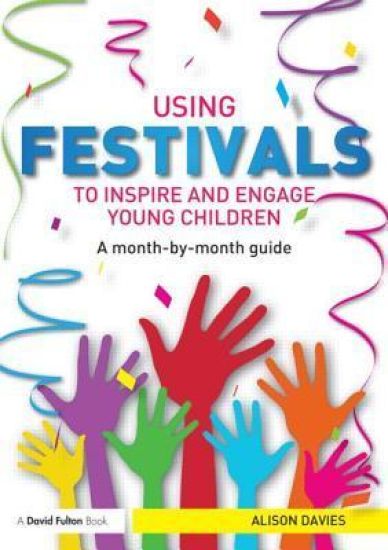
Religious events and cultural celebrations form an important part of societies throughout the world. They are key to social development and understanding, for celebrating diversity, as well as finding common ground. Covering a wide range of festivals from around the world, this book shows practitioners and teachers how they can introduce young children to some of the ideas behind these events and encourage them to have fun, get creative and work together. Aimed at those working with children aged 3 – 7, Using Festivals to Inspire and Engage Young Children covers a range of cultural celebration by each calendar month, explaining the background to these events and provides fun and imaginative activities and stories based around each one. Features include: a basic outline of each festival; a wide range of activities to suit children at different stages in their development; development and learning aims at the end of each chapter; suggestions for working with parents and links with home; top tips for creating your own activities relating to celebrations; story models that can be adapted and used to suit different events. Highly practical with an emphasis on fun and hands on learning, this book is a fantastic resource for Early Years practitioners, Primary School teachers and those that want to inspire young children and celebrate the world we live in.
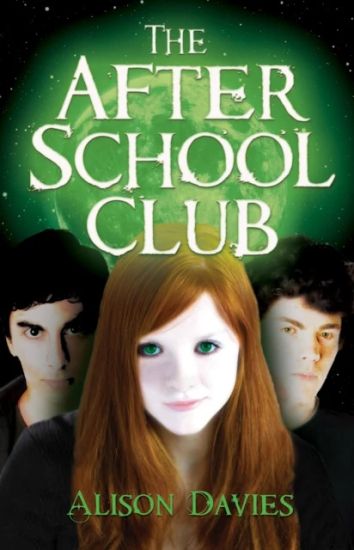
What's up with the weird gang at school? One student's about to find out … A supernatural thriller, edited to a reading age of 6.5. Sam's always been a little scared of gorgeous Lisa's gang, but when she invites him to come and hang out with them he's delighted. But soon he finds out that they have a dark secret …and that he will have to go through some big changes to join them. Particularly suitable for readers aged 11+ with a reading age of 6.5.
Chaetanthera and Oriastrum
Alison Davies
Sudwestdeutscher Verlag Fur Hochschulschriften AG
2010
pokkari
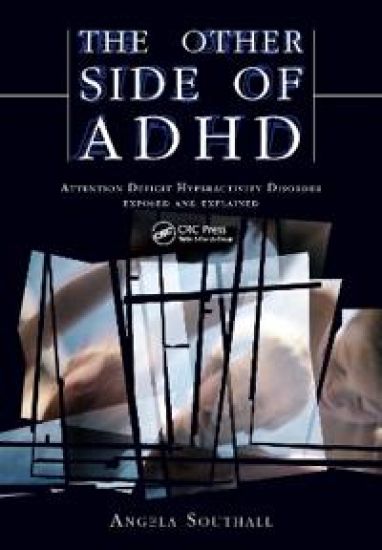
This is not just another book on ADHD. This book tells the side of the story most of us are otherwise unlikely to hear. ADHD has become a clinical phenomenon, a modern-day epidemic of incredible proportions, unlike any we have seen before. It has swept over us like a tidal wave. "The Other Side of ADHD" brings into sharp focus some of the controversial aspects of ADHD that help maintain its status as the most hotly debated subject in children's mental health. The book draws together the many issues that ADHD raises, clinically, socially, philosophically, ethically and politically. The result is a challenge that goes far beyond this diagnostic label, and reaches into just about every aspect of our lives. Everyone who cares about social issues will want to read this book. This passionate and illuminating work is a clarion call for clinical and educational psychologists and other health and social care professionals including counsellors and therapists. It is a life-line to parents with hyperactive children, and teachers, youth and social workers will also find it invaluable. "ADHD has become a clinical phenomenon, a modern-day epidemic of incredible proportions, unlike any we have seen before. It has swept over us like a tidal wave. I have found myself in a position where I have been at odds with the prevailing view about these children's problems. As the situation has unfolded, it has seemed to me that the subject of ADHD touches on other important issues, some of which are pivotal to our thinking about mental health. It seemed to me that there was a need to pull together the different strands of the debate so that parents and clinicians could build up more of a complete picture and make their own informed decisions." - Angela Southall, in the Introduction.
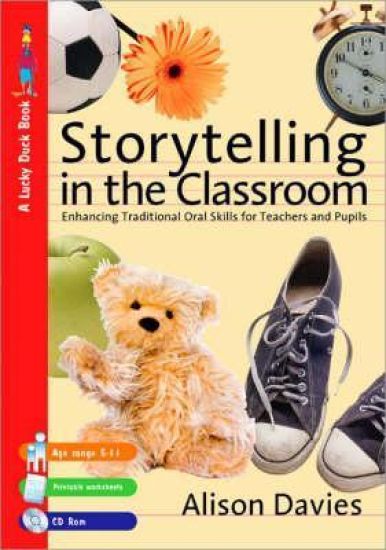
`Too afraid to have a go at oral storytelling in the classroom? This is the book for you!... The book guides you through choosing a tale you really enjoy, knowing your audience and not being afraid to adapt a tried and tested fairy tale' - Literacy Time `This book is ideal for all adults working with children (mainly at primary level) and would be especially useful for those less confident or who are new to their role. It provides a great opportunity to practise an inspirational and creative approach to teaching and learning... I really enjoyed this book and took away much to think about' - Ruth Underwood, primary inclusion co-ordinator `The ability level for this book is aimed at teachers teaching ages 5-11 and I'd say the author has it spot on. As an educational resource I rate this book highly and think it is a valuable read for all primary teachers. It helps you to think of how you can use storytelling as a tool in ways you won't have thought of before. It's a very enjoyable read and if you're pushed for time you can just dip into the parts you want. I definitely recommend it' - TES website Drawing on her experience as a professional storyteller, in this book, Alison Davies show teachers how to develop storytelling skills as part of a new engaging approach to creative teaching and learning. Packed with hands on, practical advice, the book also includes a range of stories for teachers to use in different class situations. The stories are in an easy to learn format, with pointers and tips on how to tell them and how to involve the class. Topics covered include: - bullying - disabilities - computer games - friendship - greed There are also lots of lesson plans with ideas for starters, mains and plenary sessions, and tips on developing creativity and presentation of ideas in an engaging manner to suit any topic or situation across the curriculum. As well as giving the reader the opportunity to practice their new skills and giving them the confidence to develop their own stories, the activities help them to develop these skills in young people. The book is ideal for teachers, teaching assistants, youth club workers-anyone in a primary level setting who has the opportunity to develop storytelling as a creative and inspirational experience. Alison Davies has also edited Shrouded in Darkness: Tales of Terror to raise money for DebRA, a national charity working on behalf of people with the genetic skin blistering condition, Epidermolysis Bullosa (EB). The book features contributions from from Neil Gaiman, Clive Barker, Christopher Fowler, Simon Clark and Graham Masterton. All royalties from this book will go to the charity to help them continue their good work.

Awareness and Influence in Health and Social Care
Rosemary Cook; Alison Davies
Radcliffe Publishing Ltd
2006
nidottu
'This is a book about the skills, habits and behaviours that make people influential. The good news is that influence is not just for 'senior' people or people in specific jobs any more. The old hierarchies are breaking down and 'front line' expertise is valued by policy-makers more than ever before. You can be well-known and influential from anywhere. Anyone can do it - if they are prepared to put some personal effort into it...' This comprehensive, easy-to-read guide covers every kind of influential activity and teaches you how to make the most of every opportunity across all levels. It is the only practical text on the topic, designed specifically for health and social care professionals. The insider information, helpful tips, checklists and developmental exercises throughout aid in application, and top tips from professionals currently influencing different arenas of national policy and practice help give you an edge. This book is ideal for nurses in acute and primary care, including health visitors and midwives. Professionals in social care, allied health and clinical science will also find it invaluable, as will postgraduate health and social care students undertaking development and leadership courses.
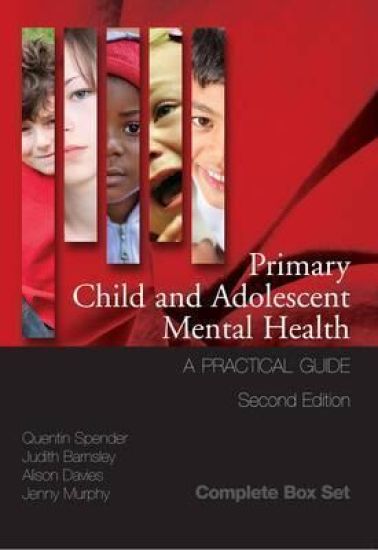
Primary Child and Adolescent Mental Health
Quentin Spender; Judith Barnsley; Alison Davies; Jenny Murphy
Radcliffe Publishing Ltd
1960
nidottu
Rewritten with the new primary care environment in mind, this greatly expanded and updated edition of Child Mental Health in Primary Care extends the structured approach of the first edition to adoelscent mental health. As in the first edition, Primary Child and Adolescent Mental Health covers each problem in a uniform way, offering definitions, assessment outlines, detailed management options and indications for referral. Numerous case examples further illuminate aspects of many conditions. Comprehensive and practical, the forty-eight chapters of Primary Child and Adolescent Mental Health cover the full range of difficulties and disabilities affecting the mental health of children and young people. The book is divided into three volumes, and can either be read from cover to cover or used as a resource to be consulted for guidance on specific problems. This book is vital for all healthcare professionals including general practitioners, health visitors and other staff working in primary care to assess, manage and refer children and adolescents with mental health problems. School medical officers, social workers and educational psychologists, many of whom are in the front line of mental health provision for children and young people, will also find it extremely useful. Reviews of the first edition: 'This very comprehensive and detailed book provides the tools for primary care health professionals not only to assess a child's needs but in many cases also to implement an initial package of care.' JUST FOR NURSES 'I have no reservation in recommending the book to all people working with children and families in any capacity. An important training text for a variety of professions. A very effective text to be used in daily practice for quick reference.' CHILD AND ADOLESCENT MENTAL HEALTH 'This book is well produced and clearly written. A useful book for anyone interested or involved with children.' FAMILY PRACTICE 'I looked through the book again and again but could not find anything missing.' NURSING TIMES
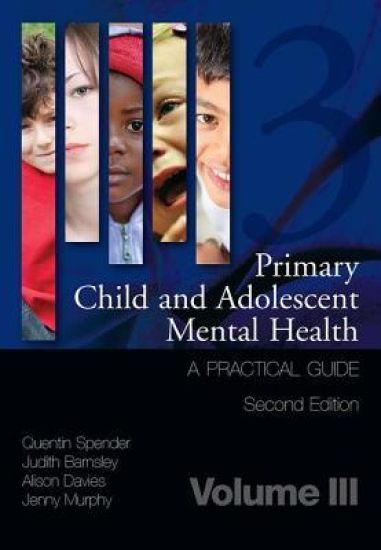
Primary Child and Adolescent Mental Health
Quentin Spender; Judith Barnsley; Alison Davies; Jenny Murphy
Radcliffe Publishing Ltd
1960
nidottu
Rewritten with the new primary care environment in mind, this greatly expanded and updated edition of Child Mental Health in Primary Care extends the structured approach of the first edition to adoelscent mental health. As in the first edition, Primary Child and Adolescent Mental Health covers each problem in a uniform way, offering definitions, assessment outlines, detailed management options and indications for referral. Numerous case examples further illuminate aspects of many conditions. Comprehensive and practical, the forty-eight chapters of Primary Child and Adolescent Mental Health cover the full range of difficulties and disabilities affecting the mental health of children and young people. The book is divided into three volumes, and can either be read from cover to cover or used as a resource to be consulted for guidance on specific problems. This book is vital for all healthcare professionals including general practitioners, health visitors and other staff working in primary care to assess, manage and refer children and adolescents with mental health problems. School medical officers, social workers and educational psychologists, many of whom are in the front line of mental health provision for children and young people, will also find it extremely useful. Reviews of the first edition: 'This very comprehensive and detailed book provides the tools for primary care health professionals not only to assess a child's needs but in many cases also to implement an initial package of care.' JUST FOR NURSES 'I have no reservation in recommending the book to all people working with children and families in any capacity. An important training text for a variety of professions. A very effective text to be used in daily practice for quick reference.' CHILD AND ADOLESCENT MENTAL HEALTH 'This book is well produced and clearly written. A useful book for anyone interested or involved with children.' FAMILY PRACTICE 'I looked through the book again and again but could not find anything missing.' NURSING TIMES
Primary Child and Adolescent Mental Health
Quentin Spender; Judith Barnsley; Alison Davies; Jenny Murphy
Radcliffe Publishing Ltd
1960
nidottu
Rewritten with the new primary care environment in mind, this greatly expanded and updated edition of Child Mental Health in Primary Care extends the structured approach of the first edition to adoelscent mental health. As in the first edition, Primary Child and Adolescent Mental Health covers each problem in a uniform way, offering definitions, assessment outlines, detailed management options and indications for referral. Numerous case examples further illuminate aspects of many conditions. Comprehensive and practical, the forty-four chapters of Primary Child and Adolescent Mental Health cover the full range of difficulties and disabilities affecting the mental health of children and young people. The book is divided into three volumes, and can either be read from cover to cover or used as a resource to be consulted for guidance on specific problems. This book is vital for all healthcare professionals including general practitioners, health visitors and other staff working in primary care to assess, manage and refer children and adolescents with mental health problems. School medical officers, social workers and educational psychologists, many of whom are in the front line of mental health provision for children and young people, will also find it extremely useful. Reviews of the first edition: 'This very comprehensive and detailed book provides the tools for primary care health professionals not only to assess a child's needs but in many cases also to implement an initial package of care.' JUST FOR NURSES 'I have no reservation in recommending the book to all people working with children and families in any capacity. An important training text for a variety of professions. A very effective text to be used in daily practice for quick reference.' CHILD AND ADOLESCENT MENTAL HEALTH 'This book is well produced and clearly written. A useful book for anyone interested or involved with children.' FAMILY PRACTICE 'I looked through the book again and again but could not find anything missing.' NURSING TIMES
Primary Child and Adolescent Mental Health
Quentin Spender; Judith Barnsley; Alison Davies; Jenny Murphy
Radcliffe Publishing Ltd
1960
nidottu
Rewritten with the new primary care environment in mind, this greatly expanded and updated edition of Child Mental Health in Primary Care extends the structured approach of the first edition to adoelscent mental health. As in the first edition, Primary Child and Adolescent Mental Health covers each problem in a uniform way, offering definitions, assessment outlines, detailed management options and indications for referral. Numerous case examples further illuminate aspects of many conditions. Comprehensive and practical, the forty-eight chapters of Primary Child and Adolescent Mental Health cover the full range of difficulties and disabilities affecting the mental health of children and young people. The book is divided into three volumes, and can either be read from cover to cover or used as a resource to be consulted for guidance on specific problems. This book is vital for all healthcare professionals including general practitioners, health visitors and other staff working in primary care to assess, manage and refer children and adolescents with mental health problems. School medical officers, social workers and educational psychologists, many of whom are in the front line of mental health provision for children and young people, will also find it extremely useful. Reviews of the first edition: 'This very comprehensive and detailed book provides the tools for primary care health professionals not only to assess a child's needs but in many cases also to implement an initial package of care.' JUST FOR NURSES 'I have no reservation in recommending the book to all people working with children and families in any capacity. An important training text for a variety of professions. A very effective text to be used in daily practice for quick reference.' CHILD AND ADOLESCENT MENTAL HEALTH 'This book is well produced and clearly written. A useful book for anyone interested or involved with children.' FAMILY PRACTICE 'I looked through the book again and again but could not find anything missing.' NURSING TIMES