Kirjojen hintavertailu – 12 859 818 kirjaa ja 27 kauppaa
Kirjailija
Alison Phipps
Kirjat ja teokset yhdessä paikassa: 14 kirjaa, julkaisuja vuosilta 2004–2026, suosituimpiin kuuluu Folding a River. Vertaile teosten hintoja ja tarkista saatavuus suomalaisista kirjakaupoista.
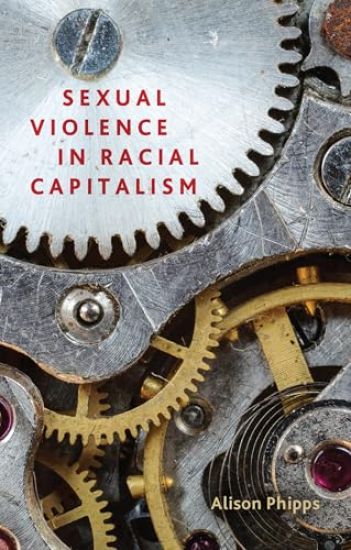
Most texts on sexual violence treat capitalism as backdrop or afterthought. In contrast, political economy is the core of this book. Phipps explores the centrality of sexual violence to racial capitalist processes: the enclosure of bodies, the extraction of labour, the expropriation of land and resources, and the disposal of unwanted populations. Importantly, she argues that both sexual violence and sexual fear create social control and surplus value. Through a framework called the coloniality of sexual violence, Phipps conjoins acts of sexual violence and ideas of sexual threat in an analysis of gendered and raced property relations and the split colonial/modern psyche. She argues that fantasies of sexual danger represent the infolded violence of racial capitalism, which is why fear of revolution is often fear of rape. Revolution, however, is always imminent: violence is necessary because power is incomplete.
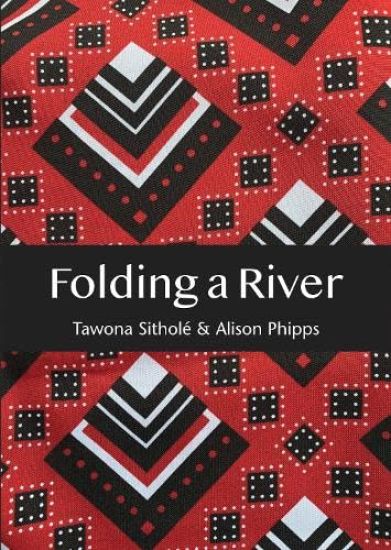
Folding a River is a sweeping poetic testament to migration, memory and the fragile work of hope. In this powerful new collection, Alison Phipps and Tawona Sitholé draw on years of intercultural practice, peace-building and international research to create poems shaped by ceremony, humour, lament and fierce tenderness. Moving across continents and crises, they weave rivers, forests, ancestors and everyday encounters into a shared language of resilience. These poems speak to displacement and belonging, to wounds that demand tending, and to the courage required to remake community. A vital, genre-defying collection for a world in search of liberation and healing.
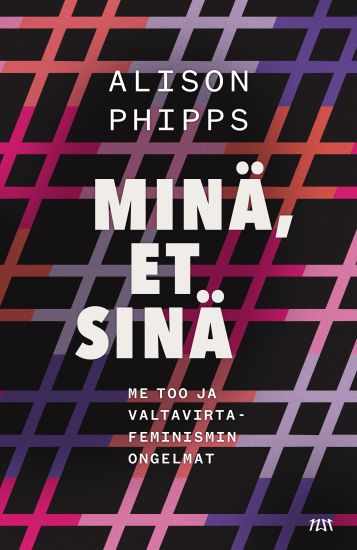
Alison Phippsin Minä, et sinä näyttää, miten seksuaalisen väkivallan vastustaminen päätyy välillä tuottamaan väkivaltaa ja Me too -liikkeen saavutukset uhkaavat typistyä yksittäisten väärintekijöiden kaatamiseen.
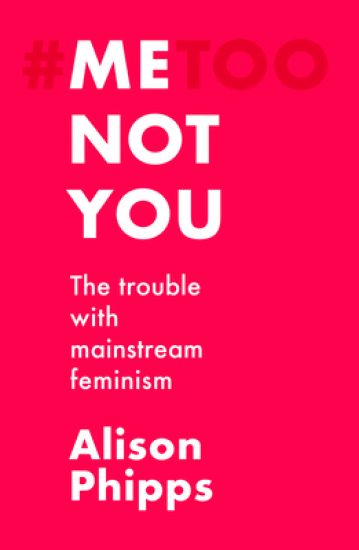
The Me Too movement, started by Black feminist Tarana Burke in 2006, went viral as a hashtag eleven years later after a tweet by white actor Alyssa Milano. Mainstream movements like #MeToo have often built on and co-opted the work of women of colour, while refusing to learn from them or centre their concerns. Far too often, the message is not ‘Me, Too’ but ‘Me, Not You’. Alison Phipps argues that this is not just a lack of solidarity. Privileged white women also sacrifice more marginalised people to achieve their aims, or even define them as enemies when they get in the way. Me, not you argues that the mainstream movement against sexual violence expresses a political whiteness that both reflects its demographics and limits its revolutionary potential. Privileged white women use their traumatic experiences to create media outrage, while relying on state power and bureaucracy to purge ‘bad men’ from elite institutions with little concern for where they might appear next. In their attacks on sex workers and trans people, the more reactionary branches of this feminist movement play into the hands of the resurgent far-right.
What if my own multilingualism is simply that of one who is fluent in way too many colonial languages? If we are going to do this, if we are going to decolonise multilingualism, let’s do it as an attempt at a way of doing it. If we are going to do this, let’s cite with an eye to decolonising. If we are going to do this then let’s improvise and devise. This is how we might learn the arts of decolonising. If we are going to do this then we need different companions. If we are going to do this we will need artists and poetic activists. If we are going to do this, let’s do it in a way which is as local as it is global; which affirms the granulations of the way peoples name their worlds. Finally, if we are going to do this, let’s do it multilingually.
What if my own multilingualism is simply that of one who is fluent in way too many colonial languages? If we are going to do this, if we are going to decolonise multilingualism, let’s do it as an attempt at a way of doing it. If we are going to do this, let’s cite with an eye to decolonising. If we are going to do this then let’s improvise and devise. This is how we might learn the arts of decolonising. If we are going to do this then we need different companions. If we are going to do this we will need artists and poetic activists. If we are going to do this, let’s do it in a way which is as local as it is global; which affirms the granulations of the way peoples name their worlds. Finally, if we are going to do this, let’s do it multilingually.
In September 2015 the world woke up to the fact that people seeking refuge from war and persecution were drowning by their thousands in the Mediterranean. From sub-Saharan Africa and conflicts across the Middle East bodies moved, died or survived. Alison Phipps and Tawona Sitholé were working together in Ghana at the time, which is where this conversation in poetry began. In an echoing call and response they offer words for these times of war; ways of wondering what it means to resist; to suffer with; to bear witness; to seek companionship; to be part of the agony of a family made in love, and parting, separated by land, sea and paperwork. Alison Phipps is UNESCO Chair in Refugee Integration through Languages and the Arts; Professor of Languages and Intercultural Studies at the University of Glasgow; and Co-Convener of Glasgow Refugee, Asylum and Migration Network. Tawona Sitholé is a Zimbabwean writer and musician. He is Poet in Residence with the UNESCO Chair programme of Refugee Integration through Languages and the Arts at the University of Glasgow and is co-founder of Seeds of Thought, which promotes creative writing and performance. This is a confluence of voices inspired by seemingly different, yet very similar, experiences, which forms a wholesome body that flows smoothly, massaging all your five senses. – Chirikure Chirikure, poet, Harare, Zimbabwe A special offering from two gifted lovers of the Word. The Word as a healer’s bittersweet medicine for troubled hearts and minds. The Word as nourishing sounds and voices that take us back to ancestral time. – Kofi Anyidoho, poet and Professor of Literature, University of Ghana Beautiful, heart-warming, poignant. I totally recommend this book. – Amal Azzudin, Glasgow Girl and human rights activist Luminous, beautiful and sore. Poetry that is lyrical and tender, wounded and elegiac, probing and incantatory. And above all else life-affirming. – Karine Polwart, Scottish singer-songwriter
Winner of the 2015 FWSA Book Prize The body is a site of impassioned, fraught and complex debate in the West today. In one political moment, left-wingers, academics and feminists have defended powerful men accused of sex crimes, positioned topless pictures in the tabloids as empowering, and opposed them for sexualizing breasts and undermining their ?natural? function. At the same time they have been criticized by extreme-right groups for ignoring honour killings and other ?culture-based? forms of violence against women. How can we make sense of this varied terrain? In this important and challenging new book, Alison Phipps constructs a political sociology of women?s bodies around key debates: sexual violence, gender and Islam, sex work and motherhood. Her analysis uncovers dubious rhetorics and paradoxical allegiances, and contextualizes these within the powerful coalition of neoliberal and neoconservative frameworks. She explores how ?feminism? can be caricatured and vilified at both ends of the political spectrum, arguing that Western feminisms are now faced with complex problems of positioning in a world where gender often comes second to other political priorities. This book provides a welcome investigation into Western politics around women?s bodies, and will be particularly useful to scholars and upper-level students of sociology, political science, gender studies and cultural studies, as well as to anyone interested in how bodies become politicized.
Winner of the 2015 FWSA Book Prize The body is a site of impassioned, fraught and complex debate in the West today. In one political moment, left-wingers, academics and feminists have defended powerful men accused of sex crimes, positioned topless pictures in the tabloids as empowering, and opposed them for sexualizing breasts and undermining their ?natural? function. At the same time they have been criticized by extreme-right groups for ignoring honour killings and other ?culture-based? forms of violence against women. How can we make sense of this varied terrain? In this important and challenging new book, Alison Phipps constructs a political sociology of women?s bodies around key debates: sexual violence, gender and Islam, sex work and motherhood. Her analysis uncovers dubious rhetorics and paradoxical allegiances, and contextualizes these within the powerful coalition of neoliberal and neoconservative frameworks. She explores how ?feminism? can be caricatured and vilified at both ends of the political spectrum, arguing that Western feminisms are now faced with complex problems of positioning in a world where gender often comes second to other political priorities. This book provides a welcome investigation into Western politics around women?s bodies, and will be particularly useful to scholars and upper-level students of sociology, political science, gender studies and cultural studies, as well as to anyone interested in how bodies become politicized.
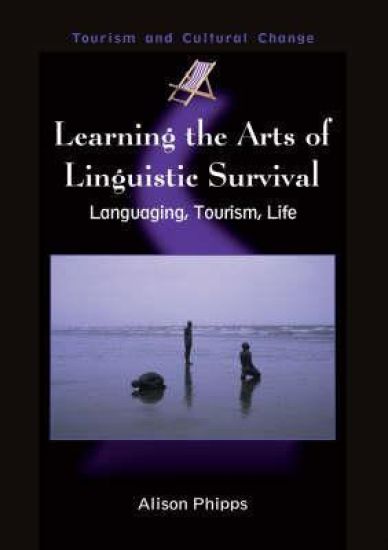
In this ground-breaking contribution to the study of tourism and languages, Alison Phipps examines what happens when tourists learn to speak other languages. From ordering a coffee to following directions she argues for a new perception of the relationship between tourism and languages from one based on the acquisition of basic, functional skills to one which sustains and even strengthens intercultural dialogue. The twelve chapters comprising this book tell stories of the experience of learning and speaking tourist languages. Drawing on a range of disciplines Alison Phipps takes the reader on a journey through risk, way finding, mistakes, laughter, conversations and the imagination. She provides rich descriptions of the world of language learning which has remained invisible to mainstream studies of language education, existing as it does on the margins of educational life. She shows how tourism is shaped by the learning experiences of everyday life. Languages, she argues passionately, fundamentally change the nature of perception, dwelling and relationships to other people and the world. This book will be essential reading for all those interested in tourism studies and in modern languages education. It is a timely study, coming at time of crisis in languages, as English exerts its power as a world language and as a dominant language of tourism. Learning the Arts of Linguistic Survival: Languaging, Tourism, Life will also be of interest to anthropologists, linguists, geographers, sociologists and those studying education.
This book asks the question; why is it that tourism matters? It looks at how it is we do tourism and learn to be tourists when we are on holiday. Tourism is a dynamic way of being that may facilitate or hinder intercultural exchange. The ways in which we do tourism and the places in which we are tourists raise practical, material and emotional questions about tourist life. This book draws on both empirical work and a range of theoretical frameworks, arguing that tourism matters precisely because of the lessons it can teach us about living everyday life with others.
This book asks the question; why is it that tourism matters? It looks at how it is we do tourism and learn to be tourists when we are on holiday. Tourism is a dynamic way of being that may facilitate or hinder intercultural exchange. The ways in which we do tourism and the places in which we are tourists raise practical, material and emotional questions about tourist life. This book draws on both empirical work and a range of theoretical frameworks, arguing that tourism matters precisely because of the lessons it can teach us about living everyday life with others.
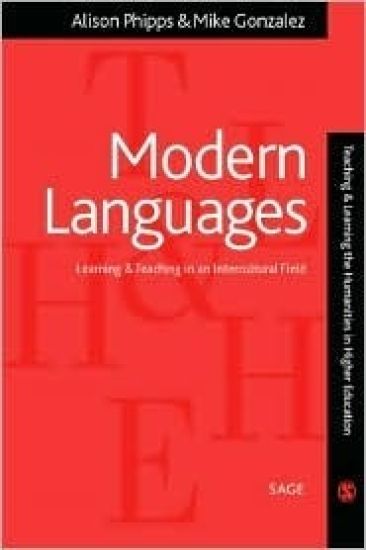
`This is an important book. A very important book. It is important because it both challenges traditional understandings of language teaching and learning in universities, and rejects new understandings which only devalue the potential power of language learning…. This is not, however, merely a critique. The authors offer a compelling alternative, and do so in a language and style which mirror the alternative proposed…. The authors illustrate their ideas through snapshots of classroom practices which help to build up a picture of what is meant. Such illustrations are invaluable' - Teaching in Higher Education 'Every so often a book comes along filled with so much wisdom, critical insight, and sheer humanity that it takes one's breath away. Modern Languages is such a book. Reclaiming language as both a site of struggle and a crucial sphere of politics, Alison Phipps and Mike Gonzalez make it clear that matters of language lie at the heart of any viable pedagogy in which democracy matters. But not a language(s) drained of critical possibilities, passion, power, or imagination, but language as the context and medium in which meaning is produced, affective investments made, and experiences are given legitimacy. Any educator, parent, student, or citizen of the world who cares about democracy, pedagogy, and the crucial role of modern languages creating the conditions for agency, politics, and, yes, hope should read this book' - Professor Henry Giroux, Waterbury Chair, Penn State University, USA 'I expect it will become a much-thumbed handbook for teachers in search of inspiration, and I am sure it will be a catalyst to further debate and exploration. But I suspect it may also become a turning point for thinking about modern languages. This book exudes life and hope. It shows a future where languages can thrive because they are an integral and indispensable part of what it means to be human. It is an exhilarating prospect to help to bring that future closer' - Professor Michael Kelly, Director, Subject Centre for Languages, Linguistics and Area Studies, University of Southampton 'Modern Languages is argumentative in the best sense: it is intellectually ambitious and is making a bold and brave argument of its own. The story is exciting, and offers a radical way of reconceiving teaching and learning in languages. It is written with evident passion and conviction and it seeks to reach out to an audience. The authors come across as committed and even as brilliant teachers. This is a book for its age but yet may have a long shelf-life. It has made me think about modern languages and language teaching and learning in quite new ways' - Professor Ronald Barnett, Institute of Education, University of London 'This book pushes the traditional field of Modern Languages into new challenges and it crosses intradisciplinary borders between different languages and cultures. It is intrinsically about languaging and about being intercultural. The authors argue that languages are "a social justice issue", give voice to language users in general and to language students in particular and engage into powerful, erudite, reflexive and critical insights. This book portrays language and culture education as a passionate, intelligent and committed undertaking. In sum, it is essential and stimulating reading for those Language and Culture educators, teaching in Modern Language Departments from universities all over the world, who dare' - Dr Manuela Guilherme, Researcher, Center for Social Studies, Universidade de Coimbra This accessible book aims to challenge and stimulate all those engaged with teaching modern languages in higher education. It is not a `how to' book; rather it engages with the complex, often paradoxical position of modern languages today, and offers arguments for, and illustrations of the ways in which teachers of modern languages can position themselves critically in that rapidly changing context. It works with the concepts of languaging and being intercultural, which arise from a rigorous examination of research findings, a challenging critique of current models of work within the discipline and a reflection on existing teaching practices. Beginning with an examination of the 'crisis' in modern languages in the U. K. and North America, the authors draw on data and descriptions of learning experiences in the field and position themselves critically within the debates. Key problems for teachers and learners are identified and elaborated through examples of critical incidents which point to generic as well as specific issues and solutions in teaching languages in higher education. The Teaching & Learning in the Humanities series, edited by Ellie Chambers and Jan Parker, is for beginning and experienced lecturers. It deals with all aspects of teaching individual arts and humanities subjects in higher education. Experienced teachers offer authoritative suggestions on how to become critically reflective about discipline-specific practices.
`This is an important book. A very important book. It is important because it both challenges traditional understandings of language teaching and learning in universities, and rejects new understandings which only devalue the potential power of language learning…. This is not, however, merely a critique. The authors offer a compelling alternative, and do so in a language and style which mirror the alternative proposed…. The authors illustrate their ideas through snapshots of classroom practices which help to build up a picture of what is meant. Such illustrations are invaluable' - Teaching in Higher Education 'Every so often a book comes along filled with so much wisdom, critical insight, and sheer humanity that it takes one's breath away. Modern Languages is such a book. Reclaiming language as both a site of struggle and a crucial sphere of politics, Alison Phipps and Mike Gonzalez make it clear that matters of language lie at the heart of any viable pedagogy in which democracy matters. But not a language(s) drained of critical possibilities, passion, power, or imagination, but language as the context and medium in which meaning is produced, affective investments made, and experiences are given legitimacy. Any educator, parent, student, or citizen of the world who cares about democracy, pedagogy, and the crucial role of modern languages creating the conditions for agency, politics, and, yes, hope should read this book' - Professor Henry Giroux, Waterbury Chair, Penn State University, USA 'I expect it will become a much-thumbed handbook for teachers in search of inspiration, and I am sure it will be a catalyst to further debate and exploration. But I suspect it may also become a turning point for thinking about modern languages. This book exudes life and hope. It shows a future where languages can thrive because they are an integral and indispensable part of what it means to be human. It is an exhilarating prospect to help to bring that future closer' - Professor Michael Kelly, Director, Subject Centre for Languages, Linguistics and Area Studies, University of Southampton 'Modern Languages is argumentative in the best sense: it is intellectually ambitious and is making a bold and brave argument of its own. The story is exciting, and offers a radical way of reconceiving teaching and learning in languages. It is written with evident passion and conviction and it seeks to reach out to an audience. The authors come across as committed and even as brilliant teachers. This is a book for its age but yet may have a long shelf-life. It has made me think about modern languages and language teaching and learning in quite new ways' - Professor Ronald Barnett, Institute of Education, University of London 'This book pushes the traditional field of Modern Languages into new challenges and it crosses intradisciplinary borders between different languages and cultures. It is intrinsically about languaging and about being intercultural. The authors argue that languages are "a social justice issue", give voice to language users in general and to language students in particular and engage into powerful, erudite, reflexive and critical insights. This book portrays language and culture education as a passionate, intelligent and committed undertaking. In sum, it is essential and stimulating reading for those Language and Culture educators, teaching in Modern Language Departments from universities all over the world, who dare' - Dr Manuela Guilherme, Researcher, Center for Social Studies, Universidade de Coimbra This accessible book aims to challenge and stimulate all those engaged with teaching modern languages in higher education. It is not a `how to' book; rather it engages with the complex, often paradoxical position of modern languages today, and offers arguments for, and illustrations of the ways in which teachers of modern languages can position themselves critically in that rapidly changing context. It works with the concepts of languaging and being intercultural, which arise from a rigorous examination of research findings, a challenging critique of current models of work within the discipline and a reflection on existing teaching practices. Beginning with an examination of the 'crisis' in modern languages in the U. K. and North America, the authors draw on data and descriptions of learning experiences in the field and position themselves critically within the debates. Key problems for teachers and learners are identified and elaborated through examples of critical incidents which point to generic as well as specific issues and solutions in teaching languages in higher education. The Teaching & Learning in the Humanities series, edited by Ellie Chambers and Jan Parker, is for beginning and experienced lecturers. It deals with all aspects of teaching individual arts and humanities subjects in higher education. Experienced teachers offer authoritative suggestions on how to become critically reflective about discipline-specific practices.