
Kirjojen hintavertailu – 12 859 818 kirjaa ja 27 kauppaa

Kirjailija

Alissa Anderson

Kirjat ja teokset yhdessä paikassa: 2 kirjaa, julkaisuja vuosilta 2017–2021, suosituimpiin kuuluu And Now – Architecture Against a Developer Presidency (Essays on the Occasion of Trump`s Inauguration). Vertaile teosten hintoja ja tarkista saatavuus suomalaisista kirjakaupoista.

2 kirjaa

Kirjojen julkaisuvuodet: 2017–2021.

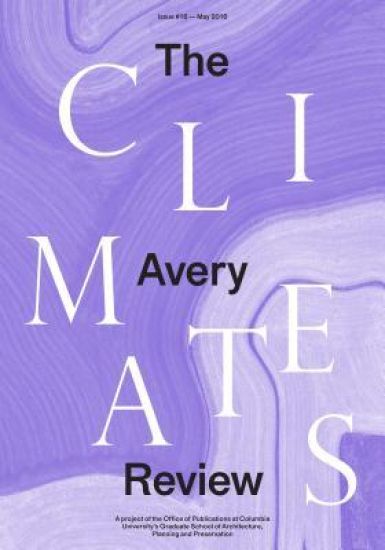
The Avery Review: Climates

The Avery Review: Climates

James Graham; Caitlin Blanchfield; Jacob Moore; Jordan Carver; Alissa Anderson

GSAPP Books
2021
nidottu
The essays in this volume examine what we talk about when we talk about climate, particularly in relation to architecture and its allied fields. How does climate inflect our understanding of human settlement, global migration, spatial violence, and resource extraction? How does climate figure into our conception of what architecture is and does? What are the material and conceptual infrastructures that render climate legible, knowable, and actionable? How do these questions offer new vantage points on the architectural ramifications of climate change, amplifying our understanding of resiliency, sustainability, and ecotechnology? Investigating climatic territories, imaginaries, and visibility, these essays clarify the exigencies of environment through design.
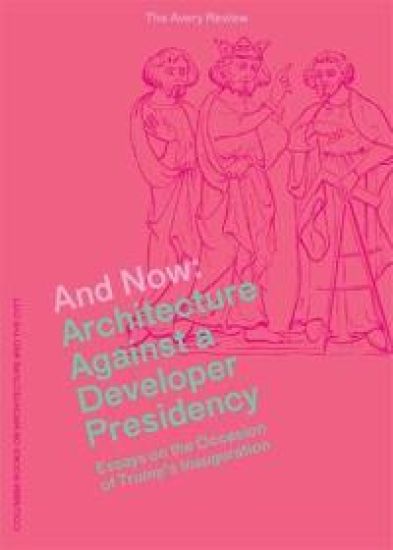
And Now – Architecture Against a Developer Presidency (Essays on the Occasion of Trump`s Inauguration)

And Now – Architecture Against a Developer Presidency (Essays on the Occasion of Trump`s Inauguration)

James Graham; Alissa Anderson; Caitlin Blanchfield; Jordan Carver; Jacob Moore

Columbia Books on Architecture and the City
2017
nidottu
The election and inauguration of Donald J. Trump as the president of the United States of America have provoked an unprecedented intensity of reflection in virtually all academic disciplines. The professions of architecture and planning, faced with the phenomenon of a self-proclaimed "builder-in-chief," have found themselves facing a series of fundamental questions, both old and new. How should we think, teach, and practice under a developer presidency? What sort of walls will we and won't we choose to build? What are our commitments of critical thought, and what obligations should we turn our energies toward? The essays gathered in And Now explore the nature of architecture's many long-standing complicities. Architecture coordinates colossal expenditures (of material, of energy); it scripts forms of labor (in its construction, in its operation, and in the programs it houses); and it is both a repository and generator of capital. Architecture participates, centrally, in defining modes of life, whether for the privileged or the dispossessed-designing and building the boundaries between the "haves" and the "have-nots." This fundamental reality of architectural practice need not inspire either nihilism or defensiveness but should rather be understood, quite simply, as the terrain we navigate. Naming these complicities and the injustices they perpetuate is a first step toward addressing them.