
Kirjailija
Allan Cameron
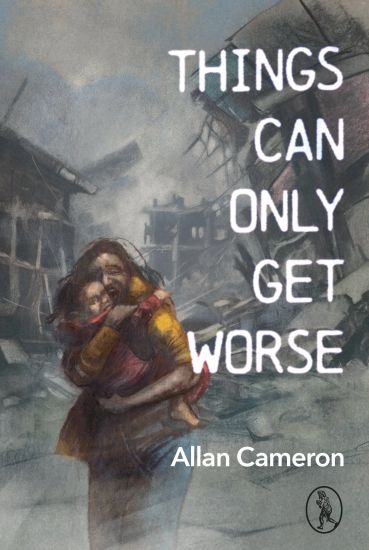
Kirjat ja teokset yhdessä paikassa: 18 kirjaa, julkaisuja vuosilta 2005–2026, suosituimpiin kuuluu Things Can Only Get Worse. Vertaile teosten hintoja ja tarkista saatavuus suomalaisista kirjakaupoista.
18 kirjaa
Kirjojen julkaisuvuodet: 2005–2026.
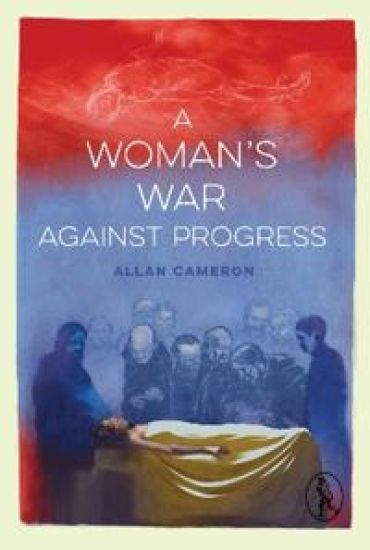
A Woman's War against Progress
Allan Cameron
VAGABOND VOICES
2023
nidottu
Halvin toimitettuna 20,10 €
In 1916 a young woman, Rahvaema, leaves the forest community where she grew up, and sets off for a century-long adventure whose struggles and sufferings she could never have imagined. She becomes a campaigner for her Surelik language and culture, and in doing this she expands her horizons and is paradoxically drawn away from the language she loves and wants to defend. The novel confronts the personal costs of political activism and questions our ability to mould our future rationally and morally, whilst also suggesting that we have no choice but to attempt just that. A fortuitous coincidence of events allows her to establish an autonomous republic for her people, the Surelikud, but power brings no only opportunities but also compromises and betrayals. She lives too long and thus she lives to see her achievements crumble. The novel has has many themes, but the way progress is used or abused in order to worsen the living conditions of humanity is the primary one. Rahvaema is the first-person narrator but her ideas about progress are not necessarily the author's, but would be understandable in someone coming from her background.
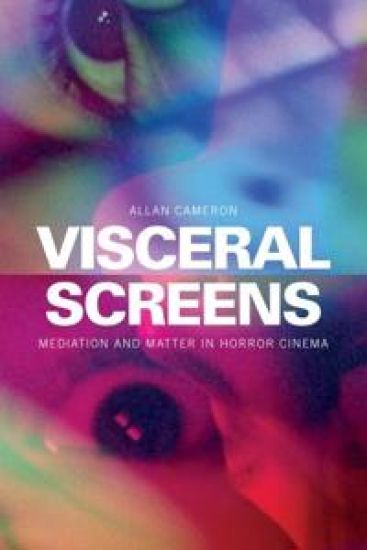
Investigates how horror films have rendered the human body as a media artifact, dramatically dis-figuring it with optical effects and visual fragmentation Demonstrates how a range of different horror subgenres depict bodily mediation, from the vampire's association with optical effects to the use of editing, colour and sound to blur or fragment bodily forms Argues that horror films do not merely reflect 'anxieties' regarding contemporary media technologies, but rather produce distinctive conceptual framings of the body and/as media Covers a wide range of subgenres spanning the history of the genre, addressing classic horror films alongside popular and innovative contemporary works Balances theoretical engagement with readability, and incorporates close readings of specific films Horror cinema grants bodies and images a precarious hold on sense and order: from the zombie's gory disintegration to the shaky visuals of 'found footage' horror, and from the vampire's absent reflection to the spectacle of shattering glass in the Italian giallo. Addressing classic horror movies alongside popular and innovative contemporary works, Visceral Screens investigates how they have rendered the human form as a media artefact, dramatically dis-figuring it with optical effects, chromatic shifts, glitches and audiovisual fragmentation. Conducting their own anatomies of the screen, cutting into the matter of cinema, horror films revel in the breakdown of frames, patterns and figures, undermining subjectivity and meaning.
Horror cinema grants bodies and images a precarious hold on sense and order: from the zombie's gory disintegration to the shaky visuals of 'found footage' horror, and from the vampire's absent reflection to the spectacle of shattering glass in the Italian giallo. Addressing classic horror movies alongside popular and innovative contemporary works, Visceral Screens investigates how they have rendered the human form as a media artefact, dramatically dis-figuring it with optical effects, chromatic shifts, glitches and audiovisual fragmentation. Conducting their own anatomies of the screen, cutting into the matter of cinema, horror films revel in the breakdown of frames, patterns and figures, undermining subjectivity and meaning.
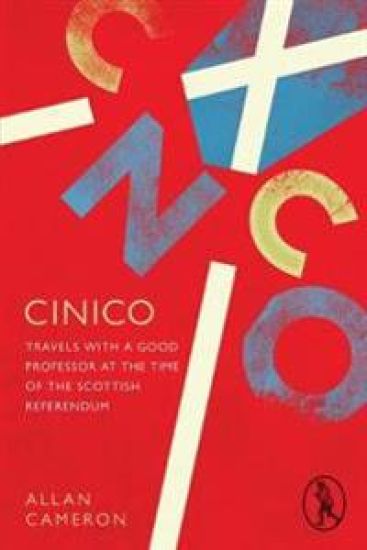
The narrator is an urbane, cynical and egocentric Italian journalist with little interest in the truth, though not as shabby as his companion, a professor of politics. The journalist meets people across the spectrum of ideas, and the book concerns not just political events, but how people interrelate within a social context, Scotland's place in Europe and how Europeans interpret each other. The Italian encounters a range of Europeans: a Ukrainian nationalist, a Russian religious guru, an eccentric Estonian, an Algerian refugee, a Lithuanian, a dying man and many Scots from different walks of life. The narrator falls in love with a Scottish campaigner. Beneath the urbane veneer, he's a complex mix of the old-fashioned and the fashionable, and the relationship soon encounters problems. The Italian, like Voltaire's Candide, starts with a mindset incapable of bringing him either understanding or lasting contentment, and ends the book with some understanding and awareness, insufficient for the elusive happiness we all seek but sufficient for a perfectly acceptable human existence.
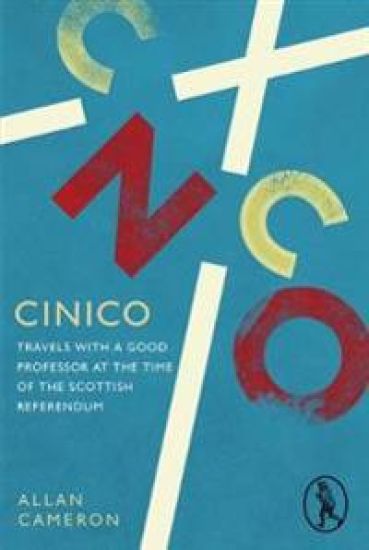
The narrator is an urbane, cynical and egocentric Italian journalist with little interest in the truth, though not as shabby as his companion, a professor of politics. The journalist meets people across the spectrum of ideas, and the book concerns not just political events, but how people interrelate within a social context, Scotland's place in Europe and how Europeans interpret each other. The Italian encounters a range of Europeans: a Ukrainian nationalist, a Russian religious guru, an eccentric Estonian, an Algerian refugee, a Lithuanian, a dying man and many Scots from different walks of life. The narrator falls in love with a Scottish campaigner. Beneath the urbane veneer, he's a complex mix of the old-fashioned and the fashionable, and the relationship soon encounters problems. The Italian, like Voltaire's Candide, starts with a mindset incapable of bringing him either understanding or lasting contentment, and ends the book with some understanding and awareness, insufficient for the elusive happiness we all seek but sufficient for a perfectly acceptable human existence.
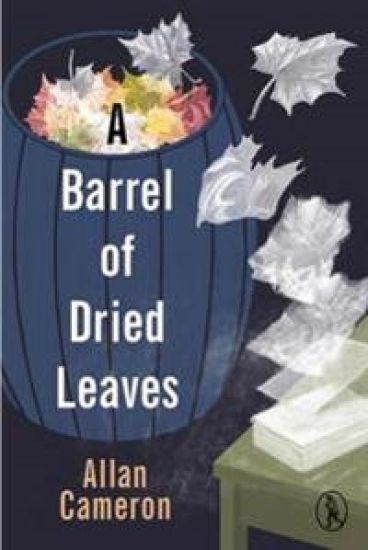
"A barrel not of laughs but of contortions, confusions and the occasional dry chortle - and of metre adorned with irregular, sometimes internal rhymes, assonances, alliterations, awkwardnesses and other such trickery unfashionable to the current academic ear, and not a murmur of the poet's inner angst, failed loves or fortitude." This second collection Cameron's poetry contains a wide variety of subjects, not all of which are commonly associated with poetry: a weak man is interviewed by angelsand devils, an Afghan mystic tell us why he became on e, a riposte to Scott's "Breathes there a man with soul so dead", taking the side of the man with a dead soul, the English language, a lesson on Italian viticulture, and another on Italian anatomy amongst others.
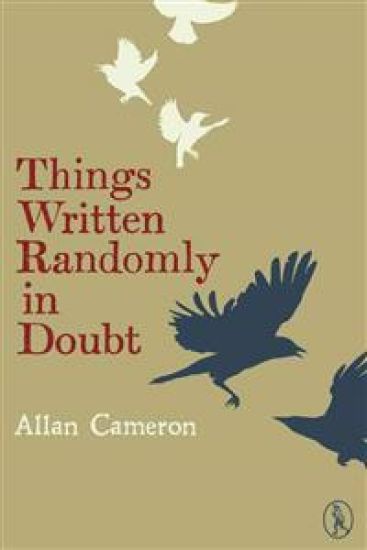
A work in three parts, Things Written starts with aphorisms in "How Not to Be a Ruminant", shifts to essays in "Weights and Counterweights", and concludes with poetry in "By the Metre". Some arguments appear in more than one section, and include nationalism, class, free will, religion, literature and the arts, but the theme of human relationships runs through the entire book, and is most closely examined with reference to the ideas of Martin Buber in a long essay entitled "Cats and Dogs, and Other Things We Cannot Understand". The back cover carries the following: "WARNING: This is a non-genre product and end-users may encounter forms and ideas to which they are allergic. Vagabond Voices Publishing Ltd, its board of directors, shareholders, parent company and/or subsidiaries advise end-users that they read this book entirely at their own risk."
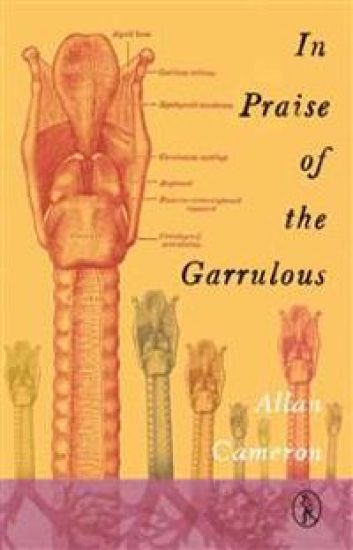
This first and only work of non-fiction by the author of two novels, two collections of short stories and a collection of poetry, has an accessible and conversational tone, which perhaps disguises its enormous ambition. It not only deals with the origins of language to argue its centrality to humanity and the naturalness of bilingualism and multilingualism, but examines how writing and printing built on that centrality to develop the "social mind" - the sum of knowledge within any given society. More recent technological changes have undermined the importance of language in society, and could possibly damage psychological health and society at large. All the arguments are couched in a sceptical approach, and the author principally wants to initiate a debate rather than give a defining analysis of a complex subject. Each chapter is introduced by a short story that illustrates the argument of that chapter.
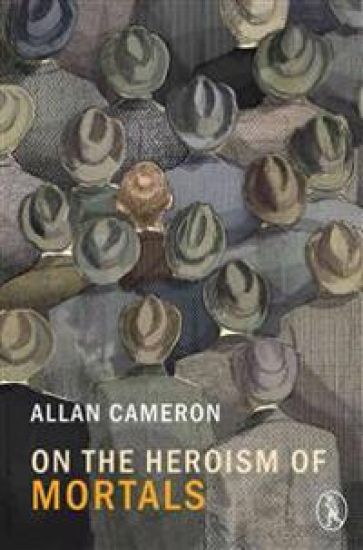
This is a collection of eleven short stories whose common theme is the heroism of our flawed lives. It explores the arduousness of people's lives and covers such diverse subjects as human solidarity, generational change, single parenthood, domestic violence, the tragic complexity of revolution, police brutality, artistic hubris, and the limitations of rationalism. In "The Hat", a polish Jew on the run in Eastern Europe goes down to a town in search for food and, noticing the large number of German soldiers on patrol, hides himself in a funeral procession. But he stands out as the only mourner without a hat. As he walks along, another man places his hat on the fugitive's head: an example of man's humanity to man. In "Living with the Polish Count", the young Soviet Republic struggles to keep foreign and reactionary forces at bay and in so doing loses the morality that initially inspired them. In "The Selfish Geneticist", lunch in a smart restaurant exposes the rift between two academics, both dogmatic and contemptuous of others, but one more strictly rational and the other more influenced by his human emotions.

The Shadwell-Cameron Manuscript
Gilbert Colville Shadwell; Allan Cameron
Literary Licensing, LLC
2011
nidottu
With one exception, these short stories were written for this collection, and they tentatively look at different themes such as compassion, passivity and their opposites, which are not, of course, original themes, as none exist. The stories are told in different keys, and some characters appear in more than one story. The subject matter also shifts from the social to the political, and the tone becomes increasingly pessimistic. An Algerian immigrant worker in Italy invents a novel way to redistribute wealth, a female academic finds the path to success to be less difficult than she expected, a high-flyer in the financial markets perceives the glories of a selfish existence, a dying writer considers how he abandoned relationships to follow his art, a dead man rejects the tediousness of heaven, a thug is haunted by his selfish instincts, an essayist pronounces and an authors kills off his character. The plot in one short story distinguishes it from all the others: A Dream of JusticeA" is the scenario for a one-state solution in Israel-Palestine, and examines how this might play out. This, it is suggested, is not just a least worstA" solution; it is also the only one in which people can go through the process of rediscovering their common humanity, albeit a process that is long and generational. The Middle East also appears in the form of guest workers and the Secret WarA" in Oman. Cameron attempts in some of these stories to question the current conformist role of the writer and intellectual in Western society. Certainly since the Enlightenment and, more particularly in England since the Civil War more correctly called a revolution, the writer has been a dissident in society.
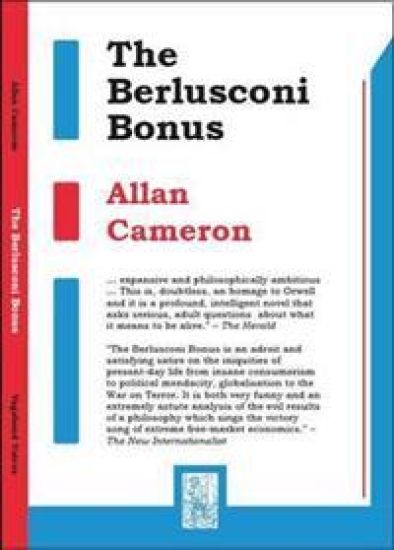
Allan Cameron's intriguing novel is set in a near future where the predictions of the US theorist Francis Fukuyama have been taken to their logical conclusions. Fukuyama declared that, with the collapse of the USSR and the hegemony of neoliberal capitalism, history has come to an end. In Cameron's book, history has indeed been halted by decree and the citizens live in a permanent present of spurious consumer choice and endless material consumption, their bovine lives ruled by the embedding of Rational Consumer Implant Cards in their brains. A cardless underclass exists in the Fukuyama Theme Parks, vast squalid concentration camps on the outskirts of cities. At the pinnacle of this society sit those lucky individuals who, because of their dedicated pursuit of stupendous wealth, are awarded the Plutocratic Social Gratitude Award, popularly nicknamed the Berlusconi Bonus as it effectively puts the recipient beyond the law. The book takes the form of a confession by Adolphus Hibbert, a recent beneficiary of the Berlusconi Bonus, who is recruited by the sinister secret police officer Captain Younce to spy on dissident elements. Adolphus embarks on a dizzying journey among the clandestine opposition, in which he finds love, betrayal and violence; discovering terrifying truths about himself and his society. A" - New Internationalist
"My sight if fades and fading faded forms reveals; ageing looks beyond its age to shrivelled centuries beyond decades." The presbyopic poet cannot focus on "the self as subject", but only on what is distant. This collection of poetry attempts to detach the writer from the obsessions that have dominated poetry for so long: sentiment, love, feelings and the autobiographical in general. To completely dispose of these would be dogmatic, and Cameron argues that some of the greatest poets are both presbyopic and myopic. "And yet he fell apart, and headstrong held to that one truth, while falling and parting for his way, his lonely way of wanting justice for the damned." This poetry is unfashionably but unashamedly political and philosophical. Cameron continues to express in another form the contempt he feels for utilitarianism in general, and in particular its crude and extreme variety, as peddled by neo-conservative politicians and their intellectual bag-carriers. At the same time, he attempts to invent new poetic forms. Inspired by some Italian poets (especially Eugenio Montale), he uses metre and some rhyme, but then breaks it up by introducting enjambement and internal rhymes as well. There are English influences too: most surprisingly Rudyard Kipling's "Mary Gloster" in part inspired "Zarathustra's Last Interview", the longest narrative poem in this collection. "We thank thee Lord for having made us free to rule the world and liberate its inner need to be so much more like us." This poetry is unashamedly anti-imperialist. "That war with wings of death does twist and crush and kill the flimsy leathered bag of flesh and bone and liquid life that spills upon the sands, requires no second telling." This poetry is unashamedly anti-war. "Only this empty moment which I spectate is in my clasp; amongst this fractured stillness, something knowable comes close and just eludes the closing fingers of my mind's grasp" This poetry is for those who have more doubts than certainties.
Every era has invented a different idea of the ‘classical’ to create its own identity. Thus the ‘classical’ does not concern only the past: it is also concerned with the present and a vision of the future. In this elegant new book, Salvatore Settis traces the ways in which we have related to our ‘classical’ past, starting with post-modern American skyscrapers and working his way back through our cultural history to the attitudes of the Greeks and Romans themselves. Settis argues that this obsession with cultural decay, ruins and a ‘classical’ past is specifically European and the product of a collective cultural trauma following the collapse of the Roman Empire. This situation differed from that of the Aztec and Inca empires whose collapse was more sudden and more complete, and from the Chinese Empire which always enjoyed a high degree of continuity. He demonstrates how the idea of the ‘classical’ has changed over the centuries through an unrelenting decay of ‘classicism’ and its equally unrelenting rebirth in an altered form. In the Modern Era this emulation of the ‘ancients’ by the ‘moderns’ was accompanied by new trends: the increasing belief that the former had now been surpassed by the latter, and an increasing preference for the Greek over the Roman. These conflicting interpretations were as much about the future as they were about the past. No civilization can invent itself if it does not have other societies in other times and other places to act as benchmarks. Settis argues that we will be better equipped to mould new generations for the future once we understand that the ‘classical’ is not a dead culture we inherited and for which we can take no credit, but something startling that has to be re-created every day and is a powerful spur to understanding the ‘other’.

Every era has invented a different idea of the ‘classical’ to create its own identity. Thus the ‘classical’ does not concern only the past: it is also concerned with the present and a vision of the future. In this elegant new book, Salvatore Settis traces the ways in which we have related to our ‘classical’ past, starting with post-modern American skyscrapers and working his way back through our cultural history to the attitudes of the Greeks and Romans themselves. Settis argues that this obsession with cultural decay, ruins and a ‘classical’ past is specifically European and the product of a collective cultural trauma following the collapse of the Roman Empire. This situation differed from that of the Aztec and Inca empires whose collapse was more sudden and more complete, and from the Chinese Empire which always enjoyed a high degree of continuity. He demonstrates how the idea of the ‘classical’ has changed over the centuries through an unrelenting decay of ‘classicism’ and its equally unrelenting rebirth in an altered form. In the Modern Era this emulation of the ‘ancients’ by the ‘moderns’ was accompanied by new trends: the increasing belief that the former had now been surpassed by the latter, and an increasing preference for the Greek over the Roman. These conflicting interpretations were as much about the future as they were about the past. No civilization can invent itself if it does not have other societies in other times and other places to act as benchmarks. Settis argues that we will be better equipped to mould new generations for the future once we understand that the ‘classical’ is not a dead culture we inherited and for which we can take no credit, but something startling that has to be re-created every day and is a powerful spur to understanding the ‘other’.

The Wild Red Deer Of Scotland - Notes from an Island Forest on Deer, Deer Stalking, and Deer Forests in the Scottish Highlands
Allan Cameron
READ BOOKS
2005
sidottu

The Wild Red Deer Of Scotland - Notes from an Island Forest on Deer, Deer Stalking, and Deer Forests in the Scottish Highlands
Allan Cameron
Read Books
2005
pokkari