Kirjojen hintavertailu – 12 903 725 kirjaa ja 27 kauppaa
Kirjailija
Allen C. Guelzo
Kirjat ja teokset yhdessä paikassa: 21 kirjaa, julkaisuja vuosilta 2006–2025, suosituimpiin kuuluu The New England Theology. Vertaile teosten hintoja ja tarkista saatavuus suomalaisista kirjakaupoista.
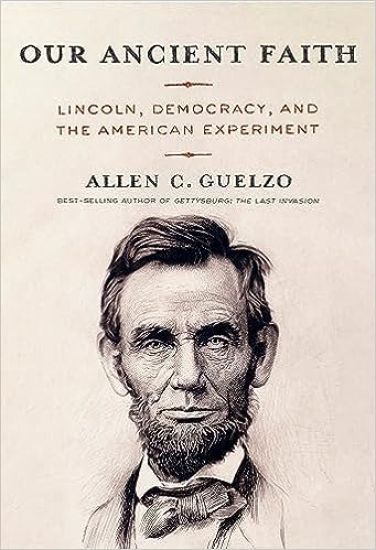
An intimate study of Abraham Lincoln's powerful vision of democracy, which guided him through the Civil War and is still relevant today--by a best-selling historian and three-time winner of the Lincoln Prize *Winner of the 2024 Abraham Lincoln Institute Book Prize**Finalist for the 2025 Gilder Lehrman Lincoln Prize* "It is altogether fitting and proper that, with this meditation on democracy and its most subtle defender, Allen Guelzo again demonstrates that he is today's most profound interpreter of this nation's history and significance." --George F. Will Abraham Lincoln grappled with the greatest crisis of democracy that has ever confronted the United States. While many books have been written about his temperament, judgment, and steady hand in guiding the country through the Civil War, we know less about Lincoln's penetrating ideas and beliefs about democracy, which were every bit as important as his character in sustaining him through the crisis. Allen C. Guelzo, one of America's foremost experts on Lincoln, captures the president's firmly held belief that democracy was the greatest political achievement in human history. He shows how Lincoln's deep commitment to the balance between majority and minority rule enabled him to stand firm against secession while also committing the Union to reconciliation rather than recrimination in the aftermath of war. In bringing his subject to life as a rigorous and visionary thinker, Guelzo assesses Lincoln's actions on civil liberties and his views on race, and explains why his vision for the role of government would have made him a pivotal president even if there had been no Civil War. Our Ancient Faith gives us a deeper understanding of this endlessly fascinating man and shows how his ideas are still sharp and relevant more than 150 years later.
The era known as Reconstruction is one of the unhappiest times in American history. It succeeded in reuniting the nation politically after the Civil War but in little else. Among its chief failures was the inability to chart a progressive course for race relations after the abolition of slavery and rise of Jim Crow. Reconstruction also struggled to successfully manage the Southern resistance towards a Northern, free-labor pattern. But the failures cannot obscure a number of notable accomplishments, with decisive long-term consequences for American life: the 14th and 15th Amendments to the Constitution, the election of the first African American representatives to the US Congress, and the avoidance of any renewed outbreak of civil war. Reconstruction suffered from poor leadership and uncertainty of direction, but it also laid the groundwork for renewed struggles for racial equality during the Civil Rights Movement. This Very Short Introduction delves into the constitutional, political, and social issues behind Reconstruction to provide a lucid and original account of a historical moment that left an indelible mark on American social fabric. Award-winning historian Allen C. Guelzo depicts Reconstruction as a "bourgeois revolution" -- as the attempted extension of the free-labor ideology embodied by Lincoln and the Republican Party to what was perceived as a Southern region gone astray from the Founders' intention in the pursuit of Romantic aristocracy.
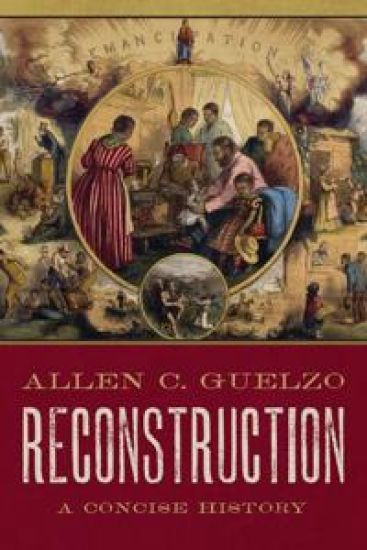
The era known as Reconstruction is one of the unhappiest times in American history. It succeeded in reuniting the nation politically after the Civil War but in little else. Conflict shifted from the battlefield to the Capitol as Congress warred with President Andrew Johnson over just what to do with the South. Johnson's plan of Presidential Reconstruction, which was sympathetic to the former Confederacy and allowed repressive measures such as the "black codes," would ultimately lead to his impeachment and the institution of Radical Reconstruction. While Reconstruction saw the ratification of the 14th and 15th Amendments, expanding the rights and suffrage of African Americans, it largely failed to chart a progressive course for race relations after the abolition of slavery and the rise of Jim Crow. It also struggled to manage the Southern resistance towards a Northern free-labor economy. However, these failures cannot obscure a number of accomplishments with long-term consequences for American life, among them the Civil Rights Act, the election of the first African American representatives to Congress, and the avoidance of renewed civil war. Reconstruction suffered from poor leadership and uncertainty of direction, but it also laid the groundwork for renewed struggles for racial equality during the civil rights movement. In this concise history, award-winning historian Allen C. Guelzo delves into the constitutional, political, and social issues behind Reconstruction to provide a lucid and original account of a historical moment that left an indelible mark on the American social fabric.
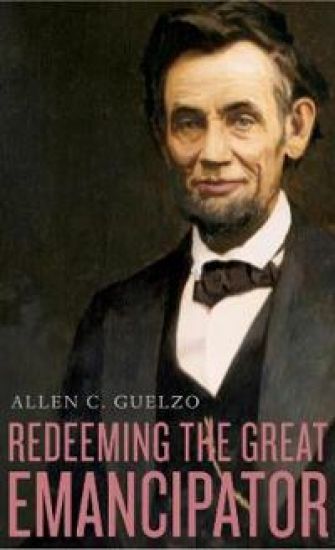
The larger-than-life image Abraham Lincoln projects across the screen of American history owes much to his role as the Great Emancipator during the Civil War. Yet this noble aspect of Lincoln’s identity is precisely the dimension that some historians have cast into doubt. In a vigorous defense of America’s sixteenth president, award-winning historian and Lincoln scholar Allen Guelzo refutes accusations of Lincoln’s racism and political opportunism, while candidly probing the follies of contemporary cynicism and the constraints of today’s unexamined faith in the liberating powers of individual autonomy. Redeeming the Great Emancipator enumerates Lincoln’s anti-slavery credentials, showing that a deeply held belief in the God-given rights of all people steeled the president in his commitment to emancipation and his hope for racial reconciliation. Emancipation did not achieve complete freedom for American slaves, nor was Lincoln entirely above some of the racial prejudices of his time. Nevertheless, his conscience and moral convictions far outweighed political calculations in ultimately securing freedom for black Americans. Guelzo clarifies the historical record concerning what the Emancipation Proclamation did and did not accomplish. As a policy it was imperfect, but it was far from ineffectual, as some accounts of African American self-emancipation imply. To achieve liberation required interdependence across barriers of race and status. If we fail to recognize our debt to the sacrifices and ingenuity of all the brave men and women of the past, Guelzo says, then we deny a precious part of the American and, indeed, the human community.
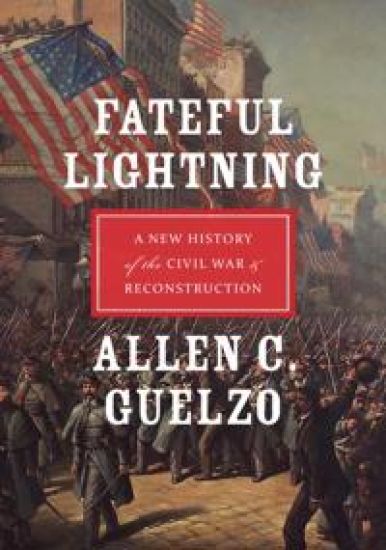
The Civil War is the greatest trauma ever experienced by the American nation, a four-year paroxysm of violence that left in its wake more than 600,000 dead, more than 2 million refugees, and the destruction (in modern dollars) of more than $700 billion in property. The war also sparked some of the most heroic moments in American history and enshrined a galaxy of American heroes. Above all, it permanently ended the practice of slavery and proved, in an age of resurgent monarchies, that a liberal democracy could survive the most frightful of challenges. In Fateful Lightning, two-time Lincoln Prize-winning historian Allen C. Guelzo offers a marvelous portrait of the Civil War and its era, covering not only the major figures and epic battles, but also politics, religion, gender, race, diplomacy, and technology. And unlike other surveys of the Civil War era, it extends the reader's vista to include the postwar Reconstruction period and discusses the modern-day legacy of the Civil War in American literature and popular culture. Guelzo also puts the conflict in a global perspective, underscoring Americans' acute sense of the vulnerability of their republic in a world of monarchies. He examines the strategy, the tactics, and especially the logistics of the Civil War and brings the most recent historical thinking to bear on emancipation, the presidency and the war powers, the blockade and international law, and the role of intellectuals, North and South. Written by a leading authority on our nation's most searing crisis, Fateful Lightning offers a vivid and original account of an event whose echoes continue with Americans to this day.
Beneath the surface of the apparently untutored and deceptively frank Abraham Lincoln ran private tunnels of self-taught study, a restless philosophical curiosity, and a profound grasp of the fundamentals of democracy. Now, in Lincoln: A Very Short Introduction, the award-winning Lincoln authority Allen C. Guelzo offers a penetrating look into the mind of one of our greatest presidents. If Lincoln was famous for reading aloud from joke books, Guelzo shows that he also plunged deeply into the mainstream of nineteenth-century liberal democratic thought. Guelzo takes us on a wide-ranging exploration of seven problems that confronted Lincoln and liberal democracy--equality, opportunity, the rule of law, slavery, freedom, and reconciliation. The book sets these problems and Lincoln's responses against the larger world of American and trans-Atlantic liberal democracy in the 19th century, comparing Lincoln not just to Andrew Jackson or John Calhoun, but to British thinkers such as Richard Cobden, Jeremy Bentham, and John Bright, and to French observers Alexis de Tocqueville and François Guizot. The Lincoln we meet here is an Enlightenment figure who struggled to create a common ground between a people focused on individual rights and a society eager to establish a certain moral, philosophical, and intellectual bedrock. Lincoln insisted that liberal democracy had a higher purpose, which was the realization of a morally right political order. But how to interject that sense of moral order into a system that values personal self-satisfaction--"the pursuit of happiness"--remains a fundamental dilemma even today. Abraham Lincoln was a man who, according to his friend and biographer William Henry Herndon, "lived in the mind." Guelzo paints a marvelous portrait of this Lincoln--Lincoln the man of ideas--providing new insights into one of the giants of American history. ABOUT THE SERIES: The Very Short Introductions series from Oxford University Press contains hundreds of titles in almost every subject area. These pocket-sized books are the perfect way to get ahead in a new subject quickly. Our expert authors combine facts, analysis, perspective, new ideas, and enthusiasm to make interesting and challenging topics highly readable.
From the two-time winner of the prestigious Lincoln Prize, a stirring and surprising account of the debates that made Lincoln a national figure and defined the slavery issue that would bring the country to war. In 1858, Abraham Lincoln was known as a
A compelling, resource-rich history of the modern West—from the Renaissance to the present—designed for students and lifelong learners alike, and grounded in the enduring ideals of liberty, faith, and reason. This is Volume II of a two-part series tracing the story of Western civilization from antiquity to the modern age. The Western Tradition from 1500 to the PresentWith the Renaissance in Europe, the Western world experienced a long series of cataclysmic events that still reverberate in modern society. Written by Allan C. Guelzo, The Golden Thread, Volume II: The Modern and Contemporary West begins in 1500, when the Protestant Reformation brought an end of the Roman Catholic Church's dominance over European states. It then turns to the rise of imperial powers that swiftly circled the globe, and to the explosion of intellectual, economic, and technological advancements sparked by the Enlightenment. These were moments of flourishing in Western civilization, but also moments of uncertainty, as they portended the violent political upheavals that shook continental Europe and the Americas during the American, French and Bolivarian Revolutions as well as the Napoleonic Wars. The Industrial Revolution, the Romantic revolt against the Enlightenment, and a second wave of scientific advancement in the nineteenth century challenged any attempt to restore the classical unity of the West. A radically redrawn world emerged from these developments, one that was ill-prepared for the colossal physical and moral shocks of the First and Second World Wars. In its closing chapters, Guelzo explores how Western civilization has, in our own time, been simultaneously challenged by secular totalitarianism and yet remained remarkably resilient laying the foundations for material prosperity around the globe. Through the paradoxes of the twentieth century, The Golden Thread engages with the most significant questions facing the West today. The Golden Thread is a two-volume history of the Western tradition. Volume I is authored by James Hankins; Volume II, covering the modern and contemporary West, is authored by Allen C. Guelzo. The Golden Thread series features:The Vision of Two AuthorsWritten by two of the most distinguished historians of our time. The Golden Thread speaks in coherent, singular voices. Each volume is authored by an eminent individual writing in narrative form and interpretive tone, and animated by the conviction that knowledge across disciplines is best pursued through stories that are rich in insight, humanity, and meaning. A Cultural InheritanceNearly 1000 curated images—sculptures, paintings, and artifacts—from the vaults of the West’s finest cultural institutions. Readers are not merely told what happened, but shown what was created—page after page alive with the rich architecture, sculpture, music, and painting that gave visible form to the West’s most enduring aspirations. Living Voices from the Distant PastFeatures close to 200 foundational primary source texts drawn from every era. Woven through the chapters are the voices that once commanded nations, composed poems and hymns, and drafted creeds. These are not summaries or paraphrases—they are the words themselves, as they were first spoken, sung, and inscribed. Visual Histories of the WorldEnriched by over 150 bespoke maps, each a visual key to the unfolding story of the West. The Golden Thread does more than locate events—it reconstructs the shifting boundaries of thought, faith, empire, and imagination that defined how men and women once pictured the world and their place within it.
A sweeping, resource-rich history of the ancient world and Christendom—designed for students and lifelong learners alike, and faithful to the enduring legacy of the Western tradition. This is Volume I of a two-part series tracing the story of Western civilization from antiquity to the modern age. The Western Tradition from Antiquity to 1500Where do the threads that form the Western tradition originate, and how were they woven together over the two and a half millennia before 1500? What are the sources of our modern ideas about science, freedom, equality, law, good government, and virtue? These are the questions explored in The Golden Thread, Volume I: The Ancient World and Christendom, written by James Hankins. The story begins with the seminal culture of the classical Greeks and moves through the Hellenization of the east following the conquests of Alexander the Great. Hankins then narrates the rise and dominance of Rome and the fusion of Greco-Roman and Judea-Christian cultures in the Christian empire of the fourth century AD. The volume follows the history of Christendom from the fall of the Western Roman Empire, charts its centuries-long rivalry with the Islamic world, and culminates in the emergence of European civilization in the Middle Age and Renaissance. Volume I Examines how the foundations were laid for the West's political and economic dominance in the modern era, illuminating the deep roots of the ideas, arts, and institutions that continue to shape our world. The Golden Thread is a two-volume history of the Western tradition. Volume I is authored by James Hankins; Volume II, covering the modern and contemporary West, is authored by Allen C. Guelzo. The Golden Thread series features:The Vision of Two AuthorsWritten by two of the most distinguished historians of our time. The Golden Thread speaks in coherent, singular voices. Each volume is authored by an eminent individual writing in narrative form and interpretive tone, and animated by the conviction that knowledge across disciplines is best pursued through stories that are rich in insight, humanity, and meaning. A Cultural InheritanceNearly 1000 curated images—sculptures, paintings, and artifacts—from the vaults of the West’s finest cultural institutions. Readers are not merely told what happened, but shown what was created—page after page alive with the rich architecture, sculpture, music, and painting that gave visible form to the West’s most enduring aspirations. Living Voices from the Distant PastFeatures close to 200 foundational primary source texts drawn from every era. Woven through the chapters are the voices that once commanded nations, composed poems and hymns, and drafted creeds. These are not summaries or paraphrases—they are the words themselves, as they were first spoken, sung, and inscribed. Visual Histories of the WorldEnriched by over 150 bespoke maps, each a visual key to the unfolding story of the West. The Golden Thread does more than locate events—it reconstructs the shifting boundaries of thought, faith, empire, and imagination that defined how men and women once pictured the world and their place within it.
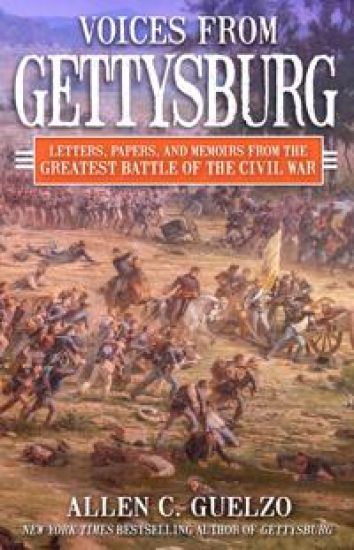
The voices of those who witnessed the Battle of Gettysburg and its aftermath with their own eyes - who saw the bloodshed, heard its din, trembled in its crash, struggled with its aftermath - are collected for the first time by Allen C. Guelzo, America's foremost Civil War scholar, in this moving and sobering oral history. This treasure trove of original documents - many never-before published - creates a uniquely personal, day-by-day eyewitness account of the monumental collision at Gettysburg, in the words of the commanders, soldiers, politicians, and civilians from both the North and the South who experienced firsthand the changing course of the Civil War. Three pivotal days in 1863 - July 1st through July 3rd - marked the beginning of the end of the Civil War. While the audible voices of those who experienced it first-hand in that crossroads town of Gettysburg, Pennsylvania have been lost to history, their words live on in Voices from Gettysburg. Gathering a treasure trove of powerful, rare, and haunting original documents, New York Times bestselling author and award-winning historian Allen C. Guelzo presents a uniquely readable and intimate oral history of the Civil War's turning point. We hear from a Union staff officer, a Confederate amputee, artilleryman, a sympathetic Northern woman, a Union prisoner-of-war, Union colonels and Confederate generals, a drummer boy, a fearful college student, those who orchestrated the Battle of Gettysburg, those who survived it, and those who would perish. With introductions from Guelzo, a detailed order of battle, and comprehensive list of every unit that fought, each of these original maps, personal letters, excerpts from forgotten memoirs, and more never-before-published documents offers an unprecedented narrative of the Great Rebellion and the impetus for Lincoln's Gettysburg Address - in the authentic words of fire, blood, and smoke by those who saw the battle, heard its din, trembled in its crash, and struggled with its aftermath.
A WALL STREET JOURNAL BEST BOOK OF THE YEAR - From the award-winning historian and best-selling author of Gettysburg comes the definitive biography of Robert E. Lee. An intimate look at the Confederate general in all his complexity--his hypocrisy and courage, his inner turmoil and outward calm, his disloyalty and his honor. "An important contribution to reconciling the myths with the facts." --New York Times Book Review Robert E. Lee is one of the most confounding figures in American history. Lee betrayed his nation in order to defend his home state and uphold the slave system he claimed to oppose. He was a traitor to the country he swore to serve as an Army officer, and yet he was admired even by his enemies for his composure and leadership. He considered slavery immoral, but benefited from inherited slaves and fought to defend the institution. And behind his genteel demeanor and perfectionism lurked the insecurities of a man haunted by the legacy of a father who stained the family name by declaring bankruptcy and who disappeared when Robert was just six years old. In Robert E. Lee, the award-winning historian Allen Guelzo has written the definitive biography of the general, following him from his refined upbringing in Virginia high society, to his long career in the U. S. Army, his agonized decision to side with Virginia when it seceded from the Union, and his leadership during the Civil War. Above all, Guelzo captures Robert E. Lee in all his complexity--his hypocrisy and courage, his outward calm and inner turmoil, his honor and his disloyalty.
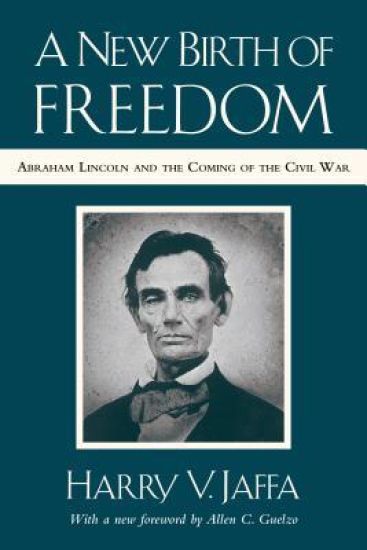
When it originally appeared, A New Birth of Freedom represented a milestone in Lincoln studies, the culmination of over a half a century of study and reflection by one of America's foremost scholars of American politics. Now reissued on the centenary of Jaffa’s birth with a new foreword by the esteemed Lincoln scholar Allen Guelzo, this long-awaited sequel to Jaffa’s earlier classic, Crisis of the House Divided, offers a piercing examination of the political thought of Abraham Lincoln and the themes of self-government, equality, and statesmanship on the eve of the Civil War. “Four decades ago, Harry Jaffa offered powerful insights on the Lincoln-Douglas debates in his Crisis of the House Divided. In this long-awaited sequel, he picks up the threads of that earlier study in this stimulating new interpretation of the showdown conflict between slavery and freedom in the election of 1860 and the secession crisis that followed. Every student of Lincoln needs to read and ponder this book.”— James M. McPherson, Princeton University “A masterful synthesis and analysis of the contending political philosophies on the eve of the Civil War. A magisterial work that arrives after a lifetime of scholarship and reflection—and earns our gratitude as well as our respect.”— Kirkus Reviews “The essence of Jaffa's case—meticulously laid out over nearly 500 pages—is that the Constitution is not, as Lincoln put it, a 'free love arrangement' held together by passing fancy. It is an indissoluble compact in which all men consent to be governed by majority, provided their inalienable rights are preserved.”— Bret Stephens; The Wall Street Journal
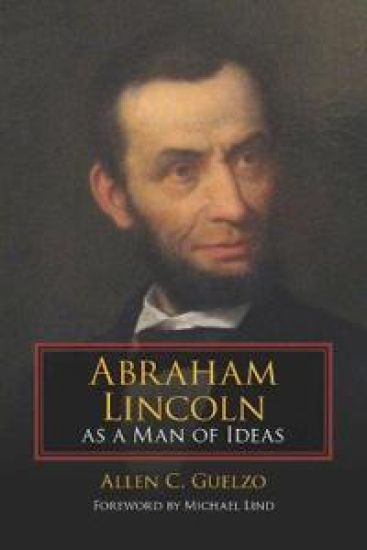
Despite the most meager of formal educations, Lincoln had a tremendous intellectual curiosity that drove him into the circle of Enlightenment philosophy and democratic political ideology. And from these, Lincoln developed a set of political convictions that guided him throughout his life and his presidency. This compilation of ten essays from Lincoln scholar Allen C. Guelzo uncovers the hidden sources of Lincoln’s ideas and examines the beliefs that directed his career and brought an end to slavery and the Civil War.
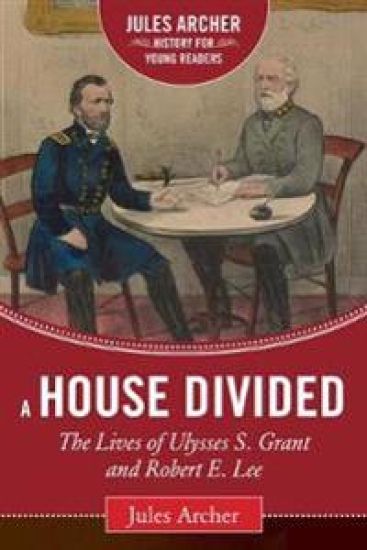
A House Divided is an exciting introduction to two of the most fascinating players in the American Civil War. Ulysses S. Grant was gruff and sloppy, the son of a hardworking but uneducated man opposed to slavery. Robert E. Lee, a slave owner himself, was a polite, aristocratic Virginia gentleman who descended from the Revolutionary War hero ? Light-Horse Harry.” Both men studied at West Point but developed very different tactics? Lee proved to be a careful strategist who made brilliant use of standard military tactics, while Grant was instinctive, spontaneous, and unconventional. Pitted against one another, the two became the most influential players in the bloodiest and most wrenching episode of American history. In alternating chapters, historian Jules Archer begins by exploring their formative years and early careers all the way through their postwar lives. Archer focuses on the men’s roles during the Civil War, detailing down to specific battles and decisions made by each man. Perfect for reluctant young historians as well as history-buffs-to-be. Part of the Jules Archer History for Young Readers series by Sky Pony Press, this book is guaranteed to inspire interest in a crucial piece of American history
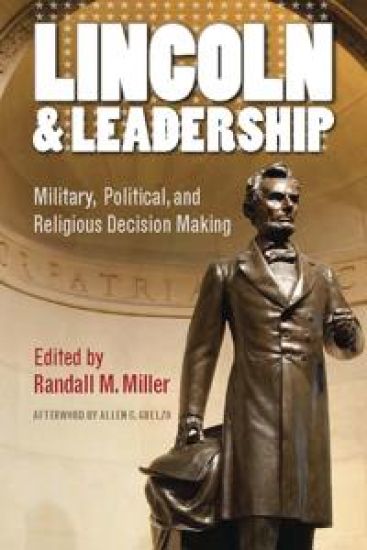
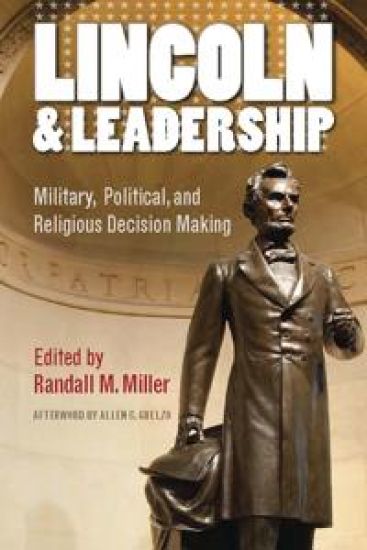
Lincoln and Leadership offers fresh perspectives on the 16th president—making novel contributions to the scholarship of one of the more studied figures of American history. The book explores Lincoln's leadership through essays focused, respectively, on Lincoln as commander-in-chief, deft political operator, and powerful theologian. Taken together, the essays suggest the interplay of military, political, and religious factors informing Lincoln's thought and action and guiding the dynamics of his leadership. The contributors, all respected scholars of the Civil War era, focus on several critical moments in Lincoln's presidency to understand the ways Lincoln understood and dealt with such issues and concerns as emancipation, military strategy, relations with his generals, the use of black troops, party politics and his own re-election, the morality of the war, the place of America in God's design, and the meaning and obligations of sustaining the Union. Overall, they argue that Lincoln was simultaneously consistent regarding his commitments to freedom, democratic government, and Union but flexible, and sometimes contradictory, in the means to preserve and extend them. They further point to the ways that Lincoln's decision making defined the presidency and recast understandings of American "exceptionalism." They emphasize that the "real" Lincoln was an unabashed party man and shrewd politician, a self-taught commander-in-chief, and a deeply religious man who was self-confident in his ability to judge men and to persuade them with words but unsure of what God demanded from America for its collective sins of slavery. Randall Miller's Introduction in particular provides essential weight to the notion that Lincoln's presidential leadership must be seen as a series of interlocking stories. In the end, the contributors collectively remind readers that the Lincoln enshrined as the "Great Emancipator" and "savior of the Union" was in life and practice a work-in-progress. And they insist that "getting right with Lincoln" requires seeing the intersections of his—and America's—military, political, and religious interests and identities.