Kirjojen hintavertailu – 12 903 725 kirjaa ja 27 kauppaa

Kirjailija

Allen P. Davis

Kirjat ja teokset yhdessä paikassa: 3 kirjaa, julkaisuja vuosilta 2005–2022, suosituimpiin kuuluu Stormwater Management for Smart Growth. Vertaile teosten hintoja ja tarkista saatavuus suomalaisista kirjakaupoista.

3 kirjaa

Kirjojen julkaisuvuodet: 2005–2022.

Green Stormwater Infrastructure Fundamentals and Design

Green Stormwater Infrastructure Fundamentals and Design

Allen P. Davis; William F. Hunt; Robert G. Traver

John Wiley Sons Inc
2022
sidottu
Green Stormwater Infrastructure Fundamentals and Design Discover novel stormwater control measures to make for a greener tomorrow! The protection of our aquatic resources is growing in importance as the effects of climate change and continued urbanization are felt throughout the world. While most rain that falls onto vegetated spaces infiltrates the soil, rain that falls onto impervious surfaces will not, increasing downstream flooding and erosion and causing impaired water quality. Impervious surfaces such as road infrastructure, rooftops, and parking areas all increase runoff and mobilize many pollutants that have deposited on these surfaces that are then carried into our waterways. Proper management of this stormwater through green infrastructure is essential to address these challenges and reduce the environmental and ecological impacts brought about by this runoff. This book brings into focus resilient stormwater control measures (SCMs) for the reduction of stormwater flows and associated pollutants that can detrimentally impact our local environmental and ecological systems. These interventions are green infrastructure based, utilizing natural hydrologic and environmental features using soil and vegetation to manage stormwater. These technologies include water harvesting, bioretention and bioinfiltration, vegetated swales and filter strips, permeable pavements, sand filters, green roofs, and stormwater wetlands, among others. The basic science and engineering of these technologies is discussed, including performance information and best maintenance practices. Green Stormwater Infrastructure readers will also find: Research-informed resilient SCM design fundamentalsDiagrams developed by the authors to enhance understandingCase studies to illustrate the points elucidated in the bookEnd-of-chapter problems with a separate solutions manual Green Stormwater Infrastructure is an ideal resource for environmental, civil, and biological engineers and environmental scientists in the consulting field. Landscape architects, managers and engineers of watershed districts, and members of federal, state, and local governmental agencies—especially those in the departments of environmental protection and transportation—will find many uses for this guidebook. It will also be of interest to professors, upper-level undergraduates and graduate students in environmental, civil, and biological engineering programs.
Stormwater Management for Smart Growth

Stormwater Management for Smart Growth

Allen P. Davis; Richard H. McCuen

Springer-Verlag New York Inc.
2010
nidottu
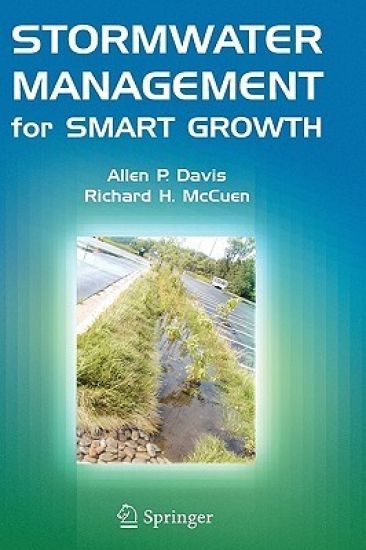
Land development to support population increases and shifts requires changes to the hydrologic cycle. Increased impervious area results in greater volumes of runoff, higher flow velocities, and increased pollutant fluxes to local waterways. As we learn more about the negative impacts of these outcomes, it becomes more important to develop and manage land in a smart manner that reduces these impacts. This text provides the reader with background information on hydrology and water quality issues that are necessary to understand many of the environmental problems associated with land development and growth. The variability of runoff" flows and pollutant concentrations, however, makes the performance of simple technologies erratic and predicting and modeling their performance difficult. Chapters on statistics and modeling are included to provide the proper background and tools. The latter chapters of the text cover many of the different technologies that can be employed to address runoff flows and improve water quality. These chapters take a design approach with specific examples provided for many of the management practices. A number of methods are currently available for addressing the problems associated with stormwater runoff quality from urban areas; more continue to be developed as research is advanced and interest in this subject continues to surge. Traditionally, techniques for the improvement of runoff quality were borrowed applications from water and wastewater treatment, such as large sedimentation ponds Recently, increased interest has been placed on using natural systems to improve water quality.
Stormwater Management for Smart Growth

Stormwater Management for Smart Growth

Allen P. Davis; Richard H. McCuen

Springer-Verlag New York Inc.
2005
sidottu
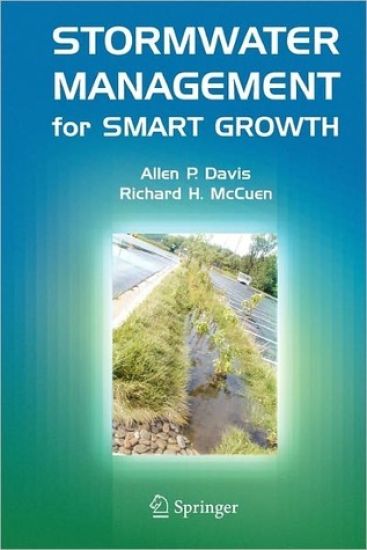
Land development to support population increases and shifts requires changes to the hydrologic cycle. Increased impervious area results in greater volumes of runoff, higher flow velocities, and increased pollutant fluxes to local waterways. As we learn more about the negative impacts of these outcomes, it becomes more important to develop and manage land in a smart manner that reduces these impacts. This text provides the reader with background information on hydrology and water quality issues that are necessary to understand many of the environmental problems associated with land development and growth. The variability of runoff" flows and pollutant concentrations, however, makes the performance of simple technologies erratic and predicting and modeling their performance difficult. Chapters on statistics and modeling are included to provide the proper background and tools. The latter chapters of the text cover many of the different technologies that can be employed to address runoff flows and improve water quality. These chapters take a design approach with specific examples provided for many of the management practices. A number of methods are currently available for addressing the problems associated with stormwater runoff quality from urban areas; more continue to be developed as research is advanced and interest in this subject continues to surge. Traditionally, techniques for the improvement of runoff quality were borrowed applications from water and wastewater treatment, such as large sedimentation ponds Recently, increased interest has been placed on using natural systems to improve water quality.