Kirjojen hintavertailu – 12 859 818 kirjaa ja 27 kauppaa

Kirjailija

Allen W. Wood

Kirjat ja teokset yhdessä paikassa: 16 kirjaa, julkaisuja vuosilta 1990–2020, suosituimpiin kuuluu Unsettling Obligations. Vertaile teosten hintoja ja tarkista saatavuus suomalaisista kirjakaupoista.

16 kirjaa

Kirjojen julkaisuvuodet: 1990–2020.

Kant and Religion

Kant and Religion

Allen W. Wood

Cambridge University Press
2020
sidottu
This masterful work on Kant's Religion within the Boundaries of Mere Reason explores Kant's treatment of the Idea of God, his views concerning evil, and the moral grounds for faith in God. Kant and Religion works to deepen our understanding of religion's place and meaning within the history of human culture, touching on Kant's philosophical stance regarding theoretical, moral, political, and religious matters. Wood's breadth of knowledge of Kant's corpus, philosophical sharpness, and depth of reflection sheds light not only on Kant, but also on the fate of religion and its relation to philosophy in the modern world.
Kant and Religion

Kant and Religion

Allen W. Wood

Cambridge University Press
2020
pokkari
This masterful work on Kant's Religion within the Boundaries of Mere Reason explores Kant's treatment of the Idea of God, his views concerning evil, and the moral grounds for faith in God. Kant and Religion works to deepen our understanding of religion's place and meaning within the history of human culture, touching on Kant's philosophical stance regarding theoretical, moral, political, and religious matters. Wood's breadth of knowledge of Kant's corpus, philosophical sharpness, and depth of reflection sheds light not only on Kant, but also on the fate of religion and its relation to philosophy in the modern world.
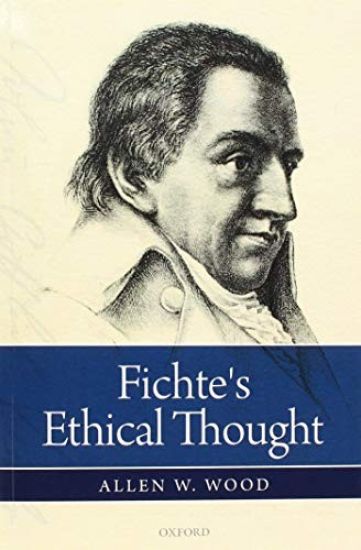
Fichte's Ethical Thought

Fichte's Ethical Thought

Allen W. Wood

Oxford University Press
2018
nidottu
Allen W. Wood presents the first book-length systematic exposition in English of Fichte's most important ethical work, the System of Ethics (1798). He places this work in the context of Fichte's life and career, of his philosophical system as conceived in the later Jena period, and in relation to his philosophy of right or justice and politics. Wood discusses Fichte's defense of freedom of the will, his grounding of the moral principle, theory of moral conscience, transcendental deduction of intersubjectivity, and his conception of free rational communication and the rational society. He develops and emphasizes the social and political radicalism of Fichte's moral and political philosophy, and brings out the philosophical interest of Fichte's positions and arguments for present day philosophy. Fichte's Ethical Thought defends the position that Fichte is a major thinker in the history of ethics, and the most important figure in the history of modern continental philosophy in the past two centuries.
Fichte's Ethical Thought

Fichte's Ethical Thought

Allen W. Wood

Oxford University Press
2016
sidottu
Allen W. Wood presents the first book-length systematic exposition in English of Fichte's most important ethical work, the System of Ethics (1798). He places this work in the context of Fichte's life and career, of his philosophical system as conceived in the later Jena period, and in relation to his philosophy of right or justice and politics. Wood discusses Fichte's defense of freedom of the will, his grounding of the moral principle, theory of moral conscience, transcendental deduction of intersubjectivity, and his conception of free rational communication and the rational society. He develops and emphasizes the social and political radicalism of Fichte's moral and political philosophy, and brings out the philosophical interest of Fichte's positions and arguments for present day philosophy. Fichte's Ethical Thought defends the position that Fichte is a major thinker in the history of ethics, and the most important figure in the history of modern continental philosophy in the past two centuries.
Immanuel Kant’s Groundwork for the Metaphysics of Morals

Immanuel Kant’s Groundwork for the Metaphysics of Morals

Dieter Schönecker; Allen W. Wood

Harvard University Press
2015
sidottu
A defining work of moral philosophy, Kant’s Groundwork for the Metaphysics of Morals has been influential to an extent far beyond what its modest length (roughly 75 pages) might suggest. It is also a famously difficult work, concerned with propounding universal principles rather than answering practical questions. As even professional philosophers will admit, first-time readers are not alone in finding some of its arguments perplexing. Offering an introduction that is accessible to students and relevant to specialized scholars, Dieter Schönecker and Allen Wood make luminously clear the ways the Groundwork for the Metaphysics of Morals forms the basis of our modern moral outlook: that all human beings have equal dignity as ends in themselves; that every rational being is a self-governing agent whose morality freely derives from his or her own will; and that all rational beings constitute an ideal community, bound only by the moral laws they have agreed upon. Schönecker and Wood explain key Kantian concepts of duty, the good will, and moral worth, as well as the propositions Kant uses to derive his conception of the moral law. How the law relates to freedom, and the significance of the free will within Kant’s overall philosophy are rigorously interrogated. Where differing interpretations of Kant’s claims are possible, the authors provide alternative options, giving arguments for each. This critical introduction will help readers of the Groundwork gain an informed understanding of Kant’s challenging but central philosophical work.
The Free Development of Each

The Free Development of Each

Allen W. Wood

Oxford University Press
2014
sidottu
The Free Development of Each collects twelve essays on the history of German philosophy by Allen W. Wood, one of the leading scholars in the field. They explore moral philosophy, politics, society, and history in the works of Kant, Herder, Fichte, Hegel, and Marx, and share the basic theme of freedom, as it appears in morality and in politics. All of the essays have been re-edited and revised for this collection, and five are previously unpublished. They are accompanied by an Introduction which sets out the central, philosophical viewpoint of the volume, and a comprehensive bibliography.
Kant's Moral Religion

Kant's Moral Religion

Allen W. Wood

Cornell University Press
2009
pokkari
In Kant's Moral Religion, Allen W. Wood argues that Kant's doctrine of religious belief if consistent with his best critical thinking and, in fact, that the "moral arguments"—along with the faith they justify—are an integral part of Kant's critical philosophy. Wood shows that Kant's sensitive religious outlook on the world deserves to be counted among the greatest of his philosophical contributions. In setting forth his interpretation of Kant, Wood provides a clear statement of what the philosopher reveals in his reasoning for belief in God and immortality. He reexamines Kant's conception of moral volition and defends his doctrine of the "highest good." He discusses Kant's use of moral faith as a rational criterion for religion in relation to ecclesiastically faith, religious experience, and claims to divine revelation. Finally, he discusses the philosopher's idea of radical evil in man's nature, and develops Kant's theory of divine grace as it is foreshadowed in his 1793 book Religion Within the Limits of Reason Alone. Kant's thoughts about religion, Wood maintains, are a great philosopher's solution to difficult problems that must be confronted by everyone and can serve as a guide in any effort to deal rationally with questions of religion.
Kant's Rational Theology

Kant's Rational Theology

Allen W. Wood

Cornell University Press
2009
pokkari
In Kant's Rational Theology, Allen W. Wood explores Kant's views on the concept of God and on the attempt to demonstrate God's existence. "We cannot have a full or balanced understanding of Kant's thought on religious subjects," he writes, "as long as we fail to take account of his reflections, often exceedingly abstract, obscure, and subtle, concerning the rational origin, content, and status of our concept of a supreme being." The importance of this aspect of Kantian thought, according to Wood, lies in its originality, in its historical influence, and in the insights it affords into the tradition of rational theology in medieval and modern philosophy. He believes that it also provides a means of understanding Kant's work as a whole and of achieving a proper appreciation of the contents of Kant's moral faith. The author focuses on Kant's chapter on the ideal or pure reason from the Critique of Pure Reason and also discusses other Kantian writings (especially the Lectures on Philosophical Theology, the Critique of Judgment, and several of Kant's precritical essays) where the topic of rational theology is prominent. A concise recapitulation and critical assessment of Kant's more speculative theses, this book is a complement to Wood's earlier book, Kant's Moral Religion.

Kantian Ethics

Kantian Ethics

Allen W. Wood

Cambridge University Press
2007
sidottu
In this book, Allen Wood investigates Kant's conception of ethical theory, using it to develop a viable approach to the rights and moral duties of human beings. By remaining closer to Kant's own view of the aims of ethics, Wood's understanding of Kantian ethics differs from the received 'constructivist' interpretation, especially on such matters as the ground and function of ethical principles, the nature of ethical reasoning and autonomy as the ground of ethics. Wood does not hesitate to criticize and modify Kant's conclusions when they seem inconsistent with his basic principles or fail to make the best use of the resources Kantian principles make available. Of special interest are the book's treatment of such topics as freedom of the will, the state's role in securing economic justice, sexual morality, the justification of punishment, and the prohibition on lying.
Kantian Ethics

Kantian Ethics

Allen W. Wood

Cambridge University Press
2007
pokkari
In this book, Allen Wood investigates Kant's conception of ethical theory, using it to develop a viable approach to the rights and moral duties of human beings. By remaining closer to Kant's own view of the aims of ethics, Wood's understanding of Kantian ethics differs from the received 'constructivist' interpretation, especially on such matters as the ground and function of ethical principles, the nature of ethical reasoning and autonomy as the ground of ethics. Wood does not hesitate to criticize and modify Kant's conclusions when they seem inconsistent with his basic principles or fail to make the best use of the resources Kantian principles make available. Of special interest are the book's treatment of such topics as freedom of the will, the state's role in securing economic justice, sexual morality, the justification of punishment, and the prohibition on lying.
Kant

Kant

Allen W. Wood

Blackwell Publishing Ltd
2004
sidottu
This lucid survey takes readers on a thought-provoking tour through the life and work of Immanuel Kant. Offers an excellent introduction to the broad range of Kant’s philosophical thought. Provides an exposition of Kant’s major philosophical works, including the Critique of Pure Reason. Topics covered include Kant’s theory of empirical cognition, his doctrine of transcendental idealism, and his theory of the limits of reason.
Kant

Kant

Allen W. Wood

Blackwell Publishing Ltd
2004
nidottu
This lucid survey takes readers on a thought-provoking tour through the life and work of Immanuel Kant. Offers an excellent introduction to the broad range of Kant’s philosophical thought. Provides an exposition of Kant’s major philosophical works, including the Critique of Pure Reason. Topics covered include Kant’s theory of empirical cognition, his doctrine of transcendental idealism, and his theory of the limits of reason.
Unsettling Obligations

Unsettling Obligations

Allen W. Wood

Centre for the Study of Language Information
2002
nidottu
Should we hold beliefs only insofar as they are rationally supportable? According to Allen W. Wood, we are morally obliged to do so - and yet how does this apply to religious beliefs? "Unsettling Obligations" examines these and related ethical and philosophical issues, taking and defending stances on many of them. Along with the theme of belief and evidence, other topics include an historical perspective of philosophy based on the Enlightenment rationalist tradition and a study of how our practical commitments help define truth and value.
Unsettling Obligations

Unsettling Obligations

Allen W. Wood

Centre for the Study of Language Information
2002
sidottu
Should we hold beliefs only insofar as they are rationally supportable? According to Allen W. Wood, we are morally obliged to do so - and yet how does this apply to religious beliefs? "Unsettling Obligations" examines these and related ethical and philosophical issues, taking and defending stances on many of them. Along with the theme of belief and evidence, other topics include an historical perspective of philosophy based on the Enlightenment rationalist tradition and a study of how our practical commitments help define truth and value.
Kant's Ethical Thought

Kant's Ethical Thought

Allen W. Wood

Cambridge University Press
1999
pokkari
This is a major new study of Kant’s ethics that will transform the way students and scholars approach the subject in future. Allen Wood argues that Kant’s ethical vision is grounded in the idea of the dignity of the rational nature of every human being. Undergoing both natural competitiveness and social antagonism the human species, according to Kant, develops the rational capacity to struggle against its impulses towards a human community in which the ends of all are to harmonize and coincide. The distinctive features of the book are twofold. First, it focuses for the first time on the central role played in Kant’s ethical theory by the value of rational nature as an end itself. Second, it shows the importance of Kant’s systematic theory of human nature and history, and its implications for the structure, formulation, and application of Kant’s moral principles. This comprehensive study will be of critical importance to students of moral philosophy, the history of ideas, political theory, and religious studies.
Hegel's Ethical Thought

Hegel's Ethical Thought

Allen W. Wood

Cambridge University Press
1990
pokkari
This important new study offers a powerful exposition of the ethical theory underlying Hegel’s philosophy of society, politics, and history. Professor Woodshows how Hegel applies his theory to such topics as human rights, the justification of legal punishment, criteria of moral responsibility, and the authority of individual conscience. The book includes a critical discussion of Hegel’s treatment of other moral philosophers (especially Kant, Fichte and Fries), provides an account of the controversial concept of ‘ethical life’, and shows the relation between the theory and Hegel's critical assessment of modern social institutions. The book is nontechnical and should interest anyone concerned with Hegel's ethical and political thought, including philosophers, political scientists, intellectual historians and students of German culture.