Kirjojen hintavertailu – 12 903 724 kirjaa ja 27 kauppaa

Kirjailija

Alun Williams

Kirjat ja teokset yhdessä paikassa: 5 kirjaa, julkaisuja vuosilta 2009–2025, suosituimpiin kuuluu A Cut Above the Rest. Vertaile teosten hintoja ja tarkista saatavuus suomalaisista kirjakaupoista.

5 kirjaa

Kirjojen julkaisuvuodet: 2009–2025.

Narrative, Piety and Polemic in Medieval Spain

Narrative, Piety and Polemic in Medieval Spain

Alun Williams

BLOOMSBURY PUBLISHING PLC
2025
nidottu
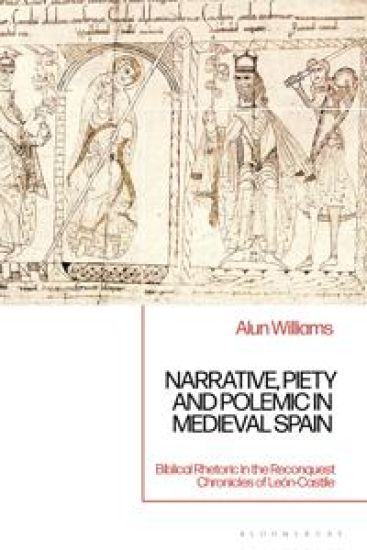
This book presents an original perspective on the variety and intensity of biblical narrative and rhetoric in the evolution of history writing in León-Castile during the twelfth and thirteenth centuries. It focuses on six Hispano-Latin chronicles, two of which make unusually overt and emphatic use of biblical texts. Of particular importance is the part played by the influence of exegesis that became integral to scriptural and liturgical influence, both in and beyond monastic institutions. Alun Williams provides close analysis of the text and comparisons with biblical typology to demonstrate how these historians from the north of Iberia were variously dependent on a growing corpus of patristic and early medieval interpretation to understand and define their world and their sense of place. Narrative, Piety and Polemic in Medieval Spain sees Williams examine this material as part of a comparative exploration of language and religious allusion, showing how the authors used these biblical-liturgical elements to convey historical context, purpose and interpretation.
Narrative, Piety and Polemic in Medieval Spain

Narrative, Piety and Polemic in Medieval Spain

Alun Williams

BLOOMSBURY PUBLISHING PLC
2024
sidottu
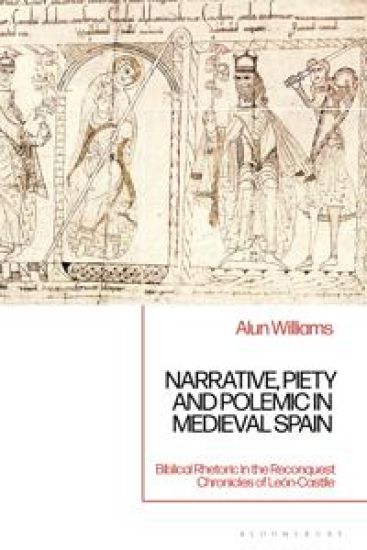
This book presents an original perspective on the variety and intensity of biblical narrative and rhetoric in the evolution of history writing in León-Castile during the twelfth and thirteenth centuries. It focuses on six Hispano-Latin chronicles, two of which make unusually overt and emphatic use of biblical texts. Of particular importance is the part played by the influence of exegesis that became integral to scriptural and liturgical influence, both in and beyond monastic institutions. Alun Williams provides close analysis of the text and comparisons with biblical typology to demonstrate how these historians from the north of Iberia were variously dependent on a growing corpus of patristic and early medieval interpretation to understand and define their world and their sense of place. Narrative, Piety and Polemic in Medieval Spain sees Williams examine this material as part of a comparative exploration of language and religious allusion, showing how the authors used these biblical-liturgical elements to convey historical context, purpose and interpretation.
Ageing and Poverty in Africa

Ageing and Poverty in Africa

Alun Williams

Routledge
2019
nidottu
This title was first published in 2003. The rapid demographic aging of populations worldwide, and most dramatically in developing countries, will result in unprecedented increases in the absolute and relative numbers of the aged in these countries. Whilst developed economies already have the basic infrastructure in place through which to support their ageing populations, developing nations frequently do not, and it should not be assumed that their best course of action is to attempt to duplicate the supportive infrastructures of developed countries. In developing nations these may be culturally inappropriate, geographically inaccessible, economically or politically unsustainable, or all of these. Effective and sustainable support services must be designed with reference to the circumstances of the client group, and it is increasingly evident that knowledge of the lives of the aged in developing countries is currently very limited. This book aims to inform the reader on the livelihoods of elders in developing countries and to stimulate a discussion of appropriate methods of supporting them in maintaining their quality of life during and beyond the coming decades of demographic change. It does so through reporting the lives and livelihoods of the aged population of Kikole (a pseudonym), a highly impoverished village in Uganda. Individual livelihoods are explored from a lifecourse perspective, with present day quality of life being shown often to be the result of earlier enforced changes in circumstances arising in economic, social or cultural marginalization, political or physical insecurity, or macro-economic change, rather than in the physical or mental changes that may accompany advancing age.
Ageing and Poverty in Africa

Ageing and Poverty in Africa

Alun Williams

Routledge
2017
sidottu
This title was first published in 2003. The rapid demographic aging of populations worldwide, and most dramatically in developing countries, will result in unprecedented increases in the absolute and relative numbers of the aged in these countries. Whilst developed economies already have the basic infrastructure in place through which to support their ageing populations, developing nations frequently do not, and it should not be assumed that their best course of action is to attempt to duplicate the supportive infrastructures of developed countries. In developing nations these may be culturally inappropriate, geographically inaccessible, economically or politically unsustainable, or all of these. Effective and sustainable support services must be designed with reference to the circumstances of the client group, and it is increasingly evident that knowledge of the lives of the aged in developing countries is currently very limited. This book aims to inform the reader on the livelihoods of elders in developing countries and to stimulate a discussion of appropriate methods of supporting them in maintaining their quality of life during and beyond the coming decades of demographic change. It does so through reporting the lives and livelihoods of the aged population of Kikole (a pseudonym), a highly impoverished village in Uganda. Individual livelihoods are explored from a lifecourse perspective, with present day quality of life being shown often to be the result of earlier enforced changes in circumstances arising in economic, social or cultural marginalization, political or physical insecurity, or macro-economic change, rather than in the physical or mental changes that may accompany advancing age.
A Cut Above the Rest

A Cut Above the Rest

David Evans; Alun Williams

Amberley Publishing
2009
nidottu
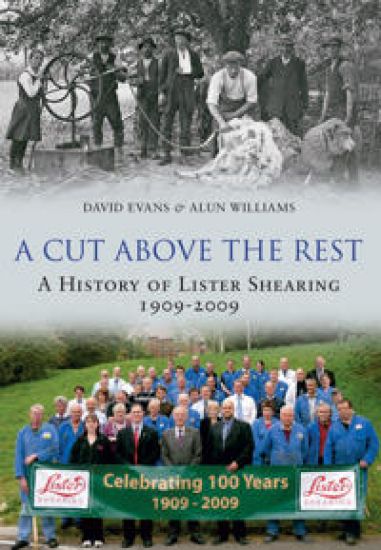
Sheep and their wool have played major roles in Britain's economics as far back as pre-history. Simple sharp-edged tools came into use to shear the sheep, developing into scissor-like cutters known as blades. And there development stopped for many centuries. In the mid-nineteenth century the first mechanical shears were invented in Australia. The idea was taken up by the engineering company R. A. Lister & Co. Ltd, renowned for the quality and diversity of its agricultural products. Thus in 1909, in the small town of Dursley, tucked into the edge of the Cotswold Hills, famed for their breed of sheep, the manufacture of shearing and clipping equipment began. The story is related to the histories of R. A. Lister, its parent firm, and to the town of Dursley; it is connected with many parts of the world, particularly Australia and New Zealand, and most recently it has become associated with the Wahl Clipper Corporation in the USA. Lister Shearing has always been a small industry but its impact on the world has been tremendous. It still is!