Kirjojen hintavertailu – 12 903 725 kirjaa ja 27 kauppaa
Kirjailija
Amanda Kearney
Kirjat ja teokset yhdessä paikassa: 6 kirjaa, julkaisuja vuosilta 2016–2023, suosituimpiin kuuluu Jakarda Wuka (Too Many Stories). Vertaile teosten hintoja ja tarkista saatavuus suomalaisista kirjakaupoista.
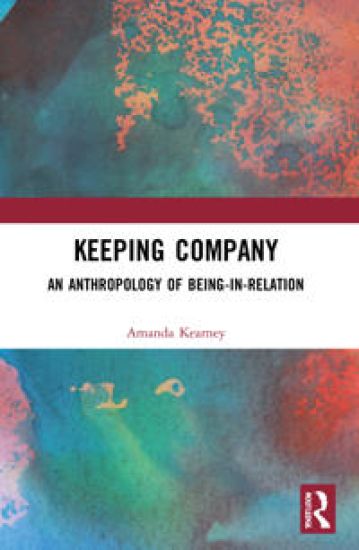
This book offers up a study of relational modalities in a moment of increasingly vexed identity politics. It takes inspiration from the art of keeping company, a relational habit derived on a kincentric ontology and praxis of interconnected life among the Yanyuwa, Indigenous owners of lands and waters in northern Australia. Diving deep into this multidimensional art of relating, the book critically engages with the counter habit of reductive identity politics and the flattening qualities that come with exceptionalism, individuated rights, limited empathic reach and a lack of enchantment in the other. Moving between ethnographic insights, conceptual analysis and personal reflection, Keeping Company offers an accessible engagement with some of the tricky aspects of identity politics as navigated in the present moment across sites of cultural difference. It will interest scholars and students from anthropology, sociology, philosophy and Indigenous studies, and others who are driven to be in better relationship with the world, with their neighbours, with strangers and with themselves.
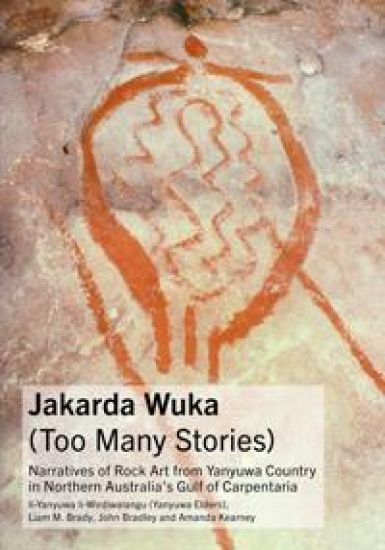
WINNER OF THE CHIEF MINISTER’S NT HISTORY BOOK AWARD 2024 AND THE AUSTRALIAN ARCHAEOLOGICAL ASSOCIATION’S JOHN MULVANEY BOOK AWARD 2023 “…ngabaya painted all this, you know when we were kids we would come here and look and sometimes the paintings would change, they were always changing.” Annie a-Karrakayny Fully illustrated, Jakarda Wuka (Too Many Stories) draws on a combined 70+ years of collaborative research involving Yanyuwa Elders, anthropologists, and an archaeologist to tell a unique story about the rock art from Yanyuwa Country in northern Australia’s southwest Gulf of Carpentaria. Australia’s rock art is recognised globally for its antiquity, abundance, distinctive motifs and the deep and abiding knowledge Indigenous people continue to hold for these powerful symbols. However, books about Australian rock art jointly written by Indigenous communities, anthropologists, and archaeologists are extremely rare. Combining Yanyuwa and western knowledge, the authors embark on a journey to reveal the true meaning of Yanyuwa rock art. At the heart of this book is the understanding that a painting is not just a painting, nor is it an isolated phenomenon or a static representation. What underpins Yanyuwa perceptions of their rock art is kinship, because people are kin to everything and everywhere on Country. Jakarda Wuka highlights the multidimensional nature of Yanyuwa rock art: it is an active social agent in the landscape, capable of changing according to different circumstances and events, connected to the epic travels and songs of Ancestral Beings (Dreamings), and related to various aspects of Yanyuwa life such as ceremony, health and wellbeing, identity, and narratives concerning past and present-day events. In a time where Indigenous communities, archaeologists, and anthropologists are seeking new ways to work together and better engage with Indigenous knowledges to interpret the “archaeological record”, Jakarda Wuka delivers a masterful and profound narrative of Yanyuwa Country and its rock art. This project was supported by the Australian Research Council and the McArthur River Mine Community Benefits Trust.
This Palgrave Pivot strives to recount and understand Indigenous Law, as set within a remote community in northern Australia. It pays close attention to the realpolitik and high-level political functioning of Indigenous Laws, which inspires a discussion of how this Law models the relational, influences governance and emplaces people in an ordered kincentric lifeworld. The book argues that Indigenous Law can be examined for the ways in which it is a deliberate, stabilizing and powerful force to maintain communal order in relation to country, a counter framing to popular and ‘soft law or soft power asset’ visions of such Laws often held in the national and international imaginary. It is the latter which too often renders this knowledge esoteric and relinquishes it to a category of lore or folklore. This is an open access book.
This book offers up a study of relational modalities in a moment of increasingly vexed identity politics. It takes inspiration from the art of keeping company, a relational habit derived on a kincentric ontology and praxis of interconnected life among the Yanyuwa, Indigenous owners of lands and waters in northern Australia. Diving deep into this multidimensional art of relating, the book critically engages with the counter habit of reductive identity politics and the flattening qualities that come with exceptionalism, individuated rights, limited empathic reach and a lack of enchantment in the other. Moving between ethnographic insights, conceptual analysis and personal reflection, Keeping Company offers an accessible engagement with some of the tricky aspects of identity politics as navigated in the present moment across sites of cultural difference. It will interest scholars and students from anthropology, sociology, philosophy and Indigenous studies, and others who are driven to be in better relationship with the world, with their neighbours, with strangers and with themselves.
Human life is intimately woven into place. Through nations and homelands, monuments and sacred sites it becomes the anchorage point for ethnic, cultural and national identities. Yet it is also place that becomes the battlefield, war zone, mass grave, desecrated site and destroyed landscape in the midst or aftermath of cultural wounding. Much attention has been given to the impact of trauma and violence on human lives across generations, but what of the spaces in which it occurs? How does culturally prescribed violence impact upon place? And how do the non- human species with whom we coexist also suffer through episodes of conflict and violence? By identifying violence in place as a crisis of our times, and by encouraging both the witnessing and the diagnosing of harm, this book reveals the greater effects of cultural wounding. It problematises the habit of separating human life out from the ecologies in which it is held. If people and place are bound through kinship, whether through necessity and survival, or choice and abiding love, then wounding is co- terminus. The harms done to one will impact upon the other. Case studies from Australia, North and South America, Europe and the Pacific, illustrate the impact of violence in place, while supporting a campaign for methodologies that reveal the fullness of the relational bond between people and place. The book will appeal to students and practitioners alike, with interests in cultural and human geography, anthropology, environmental humanities and moral ecology.
Human life is intimately woven into place. Through nations and homelands, monuments and sacred sites it becomes the anchorage point for ethnic, cultural and national identities. Yet it is also place that becomes the battlefield, war zone, mass grave, desecrated site and destroyed landscape in the midst or aftermath of cultural wounding. Much attention has been given to the impact of trauma and violence on human lives across generations, but what of the spaces in which it occurs? How does culturally prescribed violence impact upon place? And how do the non- human species with whom we coexist also suffer through episodes of conflict and violence? By identifying violence in place as a crisis of our times, and by encouraging both the witnessing and the diagnosing of harm, this book reveals the greater effects of cultural wounding. It problematises the habit of separating human life out from the ecologies in which it is held. If people and place are bound through kinship, whether through necessity and survival, or choice and abiding love, then wounding is co- terminus. The harms done to one will impact upon the other. Case studies from Australia, North and South America, Europe and the Pacific, illustrate the impact of violence in place, while supporting a campaign for methodologies that reveal the fullness of the relational bond between people and place. The book will appeal to students and practitioners alike, with interests in cultural and human geography, anthropology, environmental humanities and moral ecology.