Kirjojen hintavertailu – 12 859 828 kirjaa ja 27 kauppaa

Kirjailija

Ambar Narayan

Kirjat ja teokset yhdessä paikassa: 3 kirjaa, julkaisuja vuosilta 2014–2018, suosituimpiin kuuluu Fair Progress?. Vertaile teosten hintoja ja tarkista saatavuus suomalaisista kirjakaupoista.

3 kirjaa

Kirjojen julkaisuvuodet: 2014–2018.

Fair Progress?

Fair Progress?

Ambar Narayan; Roy Van der Weide; Alexandru Cojocaru; Christoph Lakner; Silvia Redaelli; Daniel Gerszon Mahler; Rakesh Ramasubbaiah; Stefan Thewissen

World Bank Publications
2018
nidottu
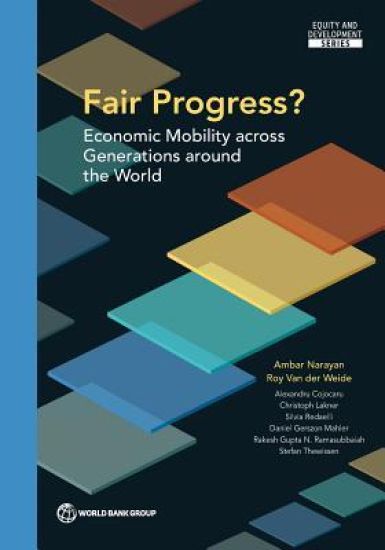
Fair Progress? Economic Mobility across Generations will look at an issue that has gotten much attention in the developed world, but with, for the first time, new data and analysis covering most of the developing world. The analysis looks at whether those born in poverty or in prosperity are destined to remain in the same economic circumstances into which they were born and looks back over a half a century at whether children's lives are better or worse than their parents' in different parts of the world. It suggests local, national, and global actions and policies that can help break the cycle of poverty, paving the way for the next generation to realize their potential and improve their lives.
Do African Children Have an Equal Chance?

Do African Children Have an Equal Chance?

Andrew Dabalen; Ambar Narayan; Jaime Saavedra-Chanduvi; Alejandro Hoyos Suarez

World Bank Publications
2014
nidottu
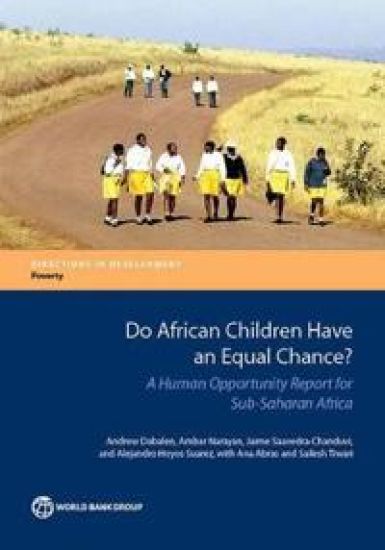
We have long known that a person's chance of success in life is deeply influenced by early access to education, health services, safe water, and nutritious food. This in turn improves the likelihood that a child can live up to his or her human potential and pursue a rewarding life. As Sub-Saharan Africa (SSA) enters its 20th year of unprecedented high economic growth and hopes continue to rise, its citizens increasingly wonder if these more hopeful economic times will translate into a better future for themselves and their families. This book - the first of its kind in SSA - documents and analyses how opportunities have changed over the past decade in 20 countries that are home to at least 7 in 10 African children. It finds that improving children's access to key services appears to be possible even in the poorest countries. And in most cases where progress has been rapid, policy initiatives have made a difference, bringing services to citizens and compensating for the inherent disadvantages they would otherwise have faced. The findings in this book remind us of the significant progress Sub-Saharan African countries have made in the last several decades, as well as the challenges that remain in ending extreme poverty and laying the foundations for shared prosperity.
Simulating Distributional Impacts of Macro-dynamics

Simulating Distributional Impacts of Macro-dynamics

Sergio Olivieri; Sergiy Radyakin; Stanislav Kolenikov; Michael Lokshin; Ambar Narayan; Carolina Sanchez-Paramo

World Bank Publications
2014
nidottu
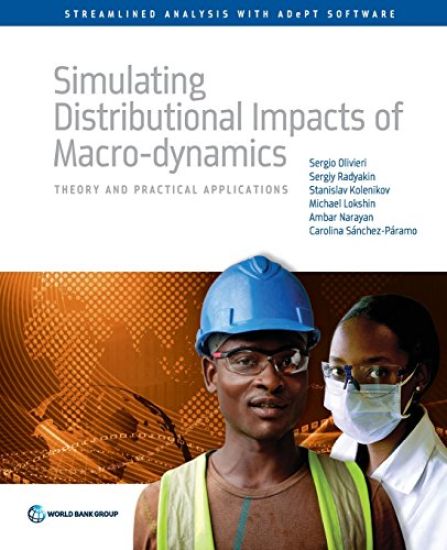
Simulating Distributional Impacts of Macro-dynamics: Theory and Practical Applications is a comprehensive guide for analyzing and understanding the effects of macroeconomic shocks on income and consumption distribution, as well as using the ADePT Simulation Module. Since real-time micro data is rarely available, the Simulation Module (part of the ADePT economic analysis software) takes advantage of historical household surveys to estimate how current or proposed macro changes might impact household and individuals welfare. Using examples from different economic and social contexts, the book explains macro-micro linkages in an easy and intuitive way. After developing a sound theoretical foundation, readers are then shown how to explore their own scenarios using the Simulation Module. Step-by-step instructions illustrate data entry and show how to make adjustments using the Module's options. Exercises present how different sections of the simulation process operate independently. This book will be a valuable reference for analysts needing to evaluate the potential impact of structural reforms and to generate projections for hypothetical scenarios. Results created by the Simulation Module will be helpful in informing governmental policymaking.