Kirjailija
Ambrose Bierce
Kirjat ja teokset yhdessä paikassa: 601 kirjaa, julkaisuja vuosilta 1891–2027, suosituimpiin kuuluu A Son Of The Gods And A Horseman In The Sky. Vertaile teosten hintoja ja tarkista saatavuus suomalaisista kirjakaupoista.
Nimi esiintyy myös muodoissa: Ambrose? Bierce
601 kirjaa
Kirjojen julkaisuvuodet: 1891–2027.
This book is a result of an effort made by us towards making a contribution to the preservation and repair of original classic literature. In an attempt to preserve, improve and recreate the original content, we have worked towards: 1. Type-setting & Reformatting: The complete work has been re-designed via professional layout, formatting and type-setting tools to re-create the same edition with rich typography, graphics, high quality images, and table elements, giving our readers the feel of holding a 'fresh and newly' reprinted and/or revised edition, as opposed to other scanned & printed (Optical Character Recognition - OCR) reproductions. 2. Correction of imperfections: As the work was re-created from the scratch, therefore, it was vetted to rectify certain conventional norms with regard to typographical mistakes, hyphenations, punctuations, blurred images, missing content/pages, and/or other related subject matters, upon our consideration. Every attempt was made to rectify the imperfections related to omitted constructs in the original edition via other references. However, a few of such imperfections which could not be rectified due to intentional\unintentional omission of content in the original edition, were inherited and preserved from the original work to maintain the authenticity and construct, relevant to the work. We believe that this work holds historical, cultural and/or intellectual importance in the literary works community, therefore despite the oddities, we accounted the work for print as a part of our continuing effort towards preservation of literary work and our contribution towards the development of the society as a whole, driven by our beliefs. We are grateful to our readers for putting their faith in us and accepting our imperfections with regard to preservation of the historical content. HAPPY READING

DIPLOMACY, n. The patriotic art of lying for one's country In 1881 Ambrose Bierce, journalist and former soldier for the Union army in the Civil War, began writing satirical definitions for the San Francisco Wasp, and then for William Randolph Hearst's San Francisco Examiner. Bierce was launched on a journalistic career that would see him liked and loathed in equal measure – and earn him the title of ‘the wickedest man in San Francisco’. In his column, Bierce, a contemporary of Mark Twain, brought his biting black humour to bear on spoof definitions of everyday words, writing deliberate mistranslations of the vocabulary of the establishment, the Church and the politics of his day, and shining a sardonic light on hypocrisy and deception. These columns formed the beginnings of a dictionary, first published in 1906 as The Cynic’s Word Book. Over 100 years later, Bierce’s redefinitions still give us pause for thought – REPORTER, n. A writer who guesses his way to the truth and dispels it with a tempest of words; UN-AMERICAN, adj. Wicked, intolerable, heathenish; POLITICS, n. The conduct of public affairs for private advantage – making for a timely new edition of this irreverent and provocative satire.
Ambrose Bierce's classic collection of witty and satirical definitions, arranged alphabetically as a dictionary, is presented here in full. Known as a hero for his actions in the American Civil War, Bierce distinguished himself later in life as a barbed commentator who would turn his ire to all sorts of topics. Today, most of his journalism and opinion pieces are consigned to obscurity. Lasting fame however was gained from the Devil's Dictionary; wherein Bierce redefines popular terms in a deeply sardonic, even bitter, manner. The Devil's Dictionary is, as the title suggests, full of dark and devilish humor. For instance, it describes the Adam's Apple as a ""protuberance on the throat of a man, thoughtfully provided by Nature to keep the rope in place."" and marriage as a ""state of temporary insanity only cured by the passage of time.""
Classic Books Library presents this brand new edition of the short story, "An Occurrence at Owl Creek Bridge" (1890) by Ambrose Bierce. In this text Bierce creatively uses both structure and content to explore the concept of time, from present to past, and reflecting its transitional and illusive qualities. The story is one of Bierce's most popular and acclaimed works, alongside "The Devil's Dictionary" (1911). Bierce (1842-c. 1914) was an American writer, journalist and Civil War veteran associated with the realism literary movement. His writing is noted for its cynical, brooding tones and structural precision.
Regarded as one of the most influential American journalists of the late 19th and early 20th century, Ambrose Bierce was the Civil War veteran who was best known for his stories of the American Civil War and for his satirical witticisms. Written over several decades "The Devil's Dictionary" is the ultimate collection of his lexicon of satirical definitions. Bierce's earliest known definition was first published in 1867. Over the next several decades he would add numerous definitions to his satirical essays, in his weekly columns "The Town Crier" and "Prattle," and in his personal letters. These definitions were first collected in book form in 1906 as "The Cynic's Word Book" and later expanded as "The Devil's Dictionary" in 1911. Not a real dictionary, but rather a lampoon of the English language, "The Devil's Dictionary" provides satirical, witty and often politically pointed representations of the words that it seeks to "define." Regarded by the American Revolution Bicentennial Administration as one of "The 100 Greatest Masterpieces of American Literature," "The Devil's Dictionary" is a unique masterpiece of cynical wit. This edition is printed on premium acid-free paper.
Negligible Tales Ambrose Bierce This carefully crafted ebook: "Negligible Tales (14 Unabridged Tales)" is formatted for your eReader with a functional and detailed table of contents. This ebook is a collection of rather morbid and grotesques tales by Ambrose Bierce. Ambrose Gwinnett Bierce (1842 - 1914?) was an American satirist, critic, poet, editor and journalist. Bierce became a prolific author of short stories often humorous and sometimes bitter or macabre. His dark, sardonic views and vehemence as a critic earned him the nickname, "Bitter Bierce". Content: A Bottomless Grave Jupiter Doke, Brigadier-General The Widower Turmore The city of the Gone Away The Major sTale Curried Cow A Revolt of the Gods The Baptism of Dobsho The Race at Left Bower The Failure of Hope Wandel Perry Chumly s Eclipse A Providential Intimation Mr. Swiddler s Flip-Flap The Little Story We are delighted to publish this classic book as part of our extensive Classic Library collection. Many of the books in our collection have been out of print for decades, and therefore have not been accessible to the general public. The aim of our publishing program is to facilitate rapid access to this vast reservoir of literature, and our view is that this is a significant literary work, which deserves to be brought back into print after many decades. The contents of the vast majority of titles in the Classic Library have been scanned from the original works. To ensure a high quality product, each title has been meticulously hand curated by our staff. Our philosophy has been guided by a desire to provide the reader with a book that is as close as possible to ownership of the original work. We hope that you will enjoy this wonderful classic work, and that for you it becomes an enriching experience.
Can such things be by Ambrose Bierce Ambrose Gwinnett Bierce was an American short story writer, journalist, poet, and Civil War veteran. We are delighted to publish this classic book as part of our extensive Classic Library collection. Many of the books in our collection have been out of print for decades, and therefore have not been accessible to the general public. The aim of our publishing program is to facilitate rapid access to this vast reservoir of literature, and our view is that this is a significant literary work, which deserves to be brought back into print after many decades. The contents of the vast majority of titles in the Classic Library have been scanned from the original works. To ensure a high quality product, each title has been meticulously hand curated by our staff. Our philosophy has been guided by a desire to provide the reader with a book that is as close as possible to ownership of the original work. We hope that you will enjoy this wonderful classic work, and that for you it becomes an enriching experience.
Rare edition with unique illustrations and elegant classic cream paper. Satiric lexicon by Ambrose Bierce, first compiled as The Cynic's Word Book in 1906. The barbed definitions that Bierce began publishing in a weekly journal he edited in San Francisco, brought this 19th-century stock form to a new level of artistry. Employing a terse, aphoristic style, Bierce lampooned social, professional, and religious convention, as in his definitions for bore--"A person who talks when you wish him to listen"; architect--"One who drafts a plan of your house, and plans a draft of your money"; and saint--"A dead sinner revised and edited." Includes unique illustrations.
An Occurrence at Owl Creek Bridge
Ambrose Bierce
Createspace Independent Publishing Platform
2018
nidottu
An Occurrence at Owl Creek Bridge by Ambrose Bierce. "An Occurrence at Owl Creek Bridge" (1890) is a short story by the American writer and Civil War veteran Ambrose Bierce. Peyton Farquhar, a plantation owner in his mid-thirties, is being prepared for execution by hanging from an Alabama railroad bridge during the American Civil War. Six military men and a company of infantrymen are present, guarding the bridge and carrying out the sentence. Farquhar thinks of his wife and children and is then distracted by a noise that, to him, sounds like an unbearably loud clanging; it is actually the ticking of his watch. He considers the possibility of jumping off the bridge and swimming to safety if he can free his tied hands, but the soldiers drop him from the bridge before he can act on the idea.
Over 200 fantastic fables from the bitter pen of Ambrose Bierce fill this little volume to overflowing with a rich feast of his misanthropy. Bierce didn't miss a thing-greedy politicians, thieving doctors, not so pious holy men, aldermen, poets, naturalists, poodles, lions, kangaroos, judges, diplomats, legislators-all fall under close scrutiny in a delicious blend of sarcasm and satire that leaves no institution or pomposity of modern life unscathed. Called the American Swift, Bierce is one of the rare masters of the fable: like Aesop and La Fontaine, often personifying objects, animals, and even abstract concepts to reinforce his satire. We are delighted to publish this classic book as part of our extensive Classic Library collection. Many of the books in our collection have been out of print for decades, and therefore have not been accessible to the general public. The aim of our publishing program is to facilitate rapid access to this vast reservoir of literature, and our view is that this is a significant literary work, which deserves to be brought back into print after many decades. The contents of the vast majority of titles in the Classic Library have been scanned from the original works. To ensure a high quality product, each title has been meticulously hand curated by our staff. Our philosophy has been guided by a desire to provide the reader with a book that is as close as possible to ownership of the original work. We hope that you will enjoy this wonderful classic work, and that for you it becomes an enriching experience.
Over 200 fantastic fables from the bitter pen of Ambrose Bierce fill this little volume to overflowing with a rich feast of his misanthropy. Bierce didn't miss a thing-greedy politicians, thieving doctors, not so pious holy men, aldermen, poets, naturalists, poodles, lions, kangaroos, judges, diplomats, legislators-all fall under close scrutiny in a delicious blend of sarcasm and satire that leaves no institution or pomposity of modern life unscathed. Called the American Swift, Bierce is one of the rare masters of the fable: like Aesop and La Fontaine, often personifying objects, animals, and even abstract concepts to reinforce his satire.
Several hundred of Bierce's pet peeves. Bierce's list includes some distinctions still familiar today-the which-that rule, less vs. fewer, lie and lay - but it also abounds in now-forgotten shibboleths: Ovation, the critics of his time agreed, meant a Roman triumph, not a round of applause. Reliable was an ill-formed coinage, not for the discriminating. Donate was pretentious, jeopardize should be jeopard, demean meant "comport oneself," not "belittle." And Bierce made up a few peeves of his own for good measure. We should say "a coating of paint," he instructed, not "a coat."
A collection of short fables and stories written under Bierce's pseudonym, Dod Grile, and although one of his earliest published books, it still displays the wit and cynicism which colors his writing. The book is divided into three sections: Fables of Zambri, the Parsee, an assortment of over 100 fables; Brief Seasons of Intellectual Dissipation, discussions between a fool and a philosopher, a doctor and a soldier, respectively; and Divers Tales, 28 different stories of an eclectic nature, including The Grateful Bear, Dr. Deadwood, I Presume, Mrs. Dennison's Head, and Jim Beckwourth's Pond.
The atrocities constituting this "cold collation" of diabolisms are taken mainly from various Californian journals. They are cast in the American language, and liberally enriched with unintelligibility. If they shall prove incomprehensible on this side of the Atlantic, the reader can pass to the other side at a moderately extortionate charge. In the pursuit of my design I think I have killed a good many people in one way and another; but the reader will please to observe that they were not people worth the trouble of leaving alive. Besides, I had the interests of my collaborator to consult. In writing, as in compiling, I have been ably assisted by my scholarly friend Mr. Satan; and to this worthy gentleman must be attributed most of the views herein set forth. While the plan of the work is partly my own, its spirit is wholly his; and this illustrates the ascendancy of the creative over the merely imitative mind. Palmam qui meruit ferat-I shall be content with the profit. DOD GRILE.
An Occurrence at Owl Creek Bridge
Ambrose Bierce
Createspace Independent Publishing Platform
2018
nidottu
"An Occurrence at Owl Creek Bridge" (1890) is a short story by the American writer and Civil War veteran Ambrose Bierce. Regarded as "one of the most famous and frequently anthologized stories in American literature". The narrative concerns the final thoughts of a Southern planter as he is being hanged by Union soldiers. In the brief period between the tightening of the noose and the actual breaking of his neck, the man imagines his escape. The condemned man stands on a bridge, his hands bound behind his back. A noose is tied around his neck. In a moment he will meet his fate: DEATH BY HANGING. There is no escape. Or is there? Find out in . . . An Occurrence at Owl Creek Bridge.
A collection of short fables and stories written under Bierce's pseudonym, Dod Grile, and although one of his earliest published books, it still displays the wit and cynicism which colors his writing. The book is divided into three sections: Fables of Zambri, the Parsee, an assortment of over 100 fables; Brief Seasons of Intellectual Dissipation, discussions between a fool and a philosopher, a doctor and a soldier, respectively; and Divers Tales, 28 different stories of an eclectic nature, including The Grateful Bear, Dr. Deadwood, I Presume, Mrs. Dennison's Head, and Jim Beckwourth's Pond.
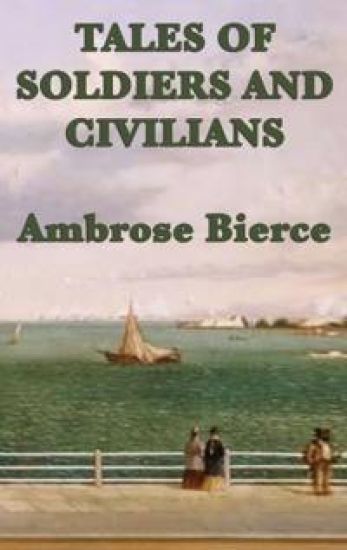
Ambrose Bierce was an American journalist and short story writer. But during his lifetime, Bierce was better known as a journalist than as a fiction writer. His most popular stories were written between 1888 and 1891. His works often highlight the inscrutability of the universe and the absurdity of death and are credited with having pioneered the psychological horror story. Robert Chambers, author of The King in Yellow and the mythology behind the TV show True Detective, has borrowed elements from the work of Bierce. Specifically, the names Carcosa and Hastur from the story "An Inhabitant of Carcosa," one of the stories included in the First Edition of Tales of Soldiers and Civilians. This book contains all the stories of the First Edition of Tales of Soldiers and Civilians (including "An Inhabitant of Carcosa" and the other stories omitted in later editions), plus the additional stories of In the Midst of Life, Volume II of The Collected Works of Ambrose Bierce.