Kirjojen hintavertailu – 12 859 818 kirjaa ja 27 kauppaa

Kirjailija

Ambrose Bierce

Kirjat ja teokset yhdessä paikassa: 601 kirjaa, julkaisuja vuosilta 1891–2027, suosituimpiin kuuluu A Son Of The Gods And A Horseman In The Sky. Vertaile teosten hintoja ja tarkista saatavuus suomalaisista kirjakaupoista.

Nimi esiintyy myös muodoissa: Ambrose? Bierce

601 kirjaa

Kirjojen julkaisuvuodet: 1891–2027.

The Damned Thing Ambrose Bierce

The Damned Thing Ambrose Bierce

Ambrose Bierce

Createspace Independent Publishing Platform
2017
nidottu
By the light of a tallow candle, which had been placed on one end of a rough table, a man was reading something written in a book. It was an old account book, greatly worn; and the writing was not, apparently, very legible, for the man sometimes held the page close to the flame of the candle to get a stronger light upon it. The shadow of the book would then throw into obscurity a half of the room, darkening a number of faces and figures; for besides the reader, eight other men were present. Seven of them sat against the rough log walls, silent and motionless, and, the room being small, not very far from the table. By extending an arm any one of them could have touched the eighth man, who lay on the table, face upward, partly covered by a sheet, his arms at his sides. He was dead.
In the Midst of Life

In the Midst of Life

Ambrose Bierce

Hansebooks
2017
pokkari
In the Midst of Life - tales of soldiers and civilians is an unchanged, high-quality reprint of the original edition of 1892. Hansebooks is editor of the literature on different topic areas such as research and science, travel and expeditions, cooking and nutrition, medicine, and other genres. As a publisher we focus on the preservation of historical literature. Many works of historical writers and scientists are available today as antiques only. Hansebooks newly publishes these books and contributes to the preservation of literature which has become rare and historical knowledge for the future.
The Unabridged Devil's Dictionary

The Unabridged Devil's Dictionary

Ambrose Bierce

University of Georgia Press
2017
sidottu
If we could only put aside our civil pose and say what we really thought, the world would be a lot like the one alluded to in The Unabridged Devil’s Dictionary. There, a bore is "a person who talks when you wish him to listen," and happiness is "an agreeable sensation arising from contemplating the misery of another." This is the most comprehensive, authoritative edition ever of Ambrose Bierce’s satiric masterpiece. It renders obsolete all other versions that have appeared in the book’s ninety-year history. A virtual onslaught of acerbic, confrontational wordplay, The Unabridged Devil’s Dictionary offers some 1,600 wickedly clever definitions to the vocabulary of everyday life. Little is sacred and few are safe, for Bierce targets just about any pursuit, from matrimony to immortality, that allows our willful failings and excesses to shine forth. This new edition is based on David E. Schultz and S. T. Joshi’s exhaustive investigation into the book’s writing and publishing history. All of Bierce’s known satiric definitions are here, including previously uncollected, unpublished, and alternative entries. Definitions dropped from previous editions have been restored while nearly two hundred wrongly attributed to Bierce have been excised. For dedicated Bierce readers, an introduction and notes are also included. Ambrose Bierce’s Devil’s Dictionary is a classic that stands alongside the best work of satirists such as Twain, Mencken, and Thurber. This unabridged edition will be celebrated by humor fans and word lovers everywhere.
What I Saw at Shiloh

What I Saw at Shiloh

Ambrose Bierce

Createspace Independent Publishing Platform
2017
pokkari
Ambrose Bierce wrote realistically of the terrible things he had seen in the war in such stories as "An Occurrence at Owl Creek Bridge", "A Horseman in the Sky", "One of the Missing", "What I Saw at Shiloh" and "Chickamauga". His grimly realistic cycle of 25 war stories has been called "the greatest anti-war document in American literature". At Shiloh, Bierce was a sergeant in C Company of the 9th Indiana in General Buell's army. "What I Saw of Shiloh", written in 1874 and twice revised in the following 35 years, is a recollection of his experience of the battle. Some scholars think "What I Saw of Shiloh" is Bierce's best work.
The Devils Dictionary

The Devils Dictionary

Ambrose Bierce

Createspace Independent Publishing Platform
2017
nidottu
The Devil's Dictionary is a satirical dictionary written by American Civil War soldier, journalist, and short story writer Ambrose Bierce consisting of common words followed by "howlingly funny" 1] definitions. The lexicon was written over three decades as a series of installments for magazines and newspapers. Bierce's witty definitions were imitated and plagiarized for years before he gathered them into books, first as The Cynic's Word Book in 1906 and then in a more complete version as The Devil's Dictionary in 1911. Initial reception of the book versions was mixed. In the decades following, however, the stature increased of The Devil's Dictionary. It has been widely quoted, frequently translated, and often imitated, earning a global reputation. In the 1970s, The Devil's Dictionary was named as one of "The 100 Greatest Masterpieces of American Literature" by the American Revolution Bicentennial Administration. 2] Wall Street Journal columnist Jason Zweig said that The Devil's Dictionary is "probably the most brilliant work of satire written in America. And maybe one of the greatest in all of world literature
Nuggets and Dust: panned out in California by Dod Grile

Nuggets and Dust: panned out in California by Dod Grile

Ambrose Bierce

Createspace Independent Publishing Platform
2017
nidottu
The second book from Ambrose Bierce is a broad collection of cynical wit, anecdote and story-telling. First published under the pseudonym Dod Grile in 1873, Ambrose Bierce was already a successful and well-known writer as a journalist for the San Francisco News Letter and California Advertiser. He went on to write his most famous works "An Occurrence at Owl Creek Bridge" (1890) and "The Devil's Dictionary" (1906), before vanishing mysteriously in Mexico in 1913.
El diccionario del diablo (Spanish Edition)

El diccionario del diablo (Spanish Edition)

Ambrose Bierce

Createspace Independent Publishing Platform
2017
pokkari
La obra m s importante de este genial periodista estadounidense. Nacido en 1842 en Ohio, y desaparecido misteriosamente en M xico hacia 1913, Bierce fue un escritor cido, c nico, desenfadado e inteligente. Nada escap de su original pluma, ni las instituciones de su pa s ni el feminismo. Este diccionario se presenta hoy en una edici n revisada y ampliada con m s de 800 nuevas palabras. Cada una de sus definiciones supone un instante de regocijo para el lector. Un libro para tener siempre a mano y leer cada noche.
Write it Right

Write it Right

Ambrose Bierce

Lulu.com
2016
nidottu
Are You Making These Mistakes In Your Writing? Amusing and thought-provoking, this A-to-Z compendium outlines common oral and written gaffes. Ambrose Bierce, a celebrated literary wit, assembled his informative compilation in 1909 from many years of observations and notes. He advocates precision in language, offering alternatives to grammatical lapses and inaccurate word choices. Times and usages have changed considerably in the past century. Bierce's strict rules remain, however, a timeless source of interest for wordsmiths and lovers of language. Bierce wrote this little book as a guide to improving writing. He states that precision is the key. Choosing the exact word and using it correctly is essential. Colloquialisms and vulgar language have no place is serious writing. A writer must use his values in determining what is appropriate. The lessons Bierce gives in this book are as appropriate today as they were a century ago. Get Your Copy Now
The Devil's Dictionary

The Devil's Dictionary

Ambrose Bierce

Createspace Independent Publishing Platform
2016
nidottu
Classics for Your Collection: goo.gl/U80LCr --------- The Devil's Dictionary is a satirical dictionary written by American Civil War soldier, journalist, and short story writer Ambrose Bierce. Consisting of common words followed by "howlingly funny" definitions, the lexicon was written over three decades as a series of installments for magazines and newspapers. Bierce's witty definitions were imitated and plagiarized for years before he gathered them into books, first as The Cynic's Word Book in 1906 and then in a more complete version as The Devil's Dictionary in 1911. Initial reception of the book versions was mixed. In the decades following, however, the stature of The Devil's Dictionary increased. It has been widely quoted, frequently translated, and often imitated, earning a global reputation. In the 1970s, The Devil's Dictionary was named as one of "The 100 Greatest Masterpieces of American Literature" by the American Revolution Bicentennial Administration. Wall Street Journal columnist Jason Zweig said The Devil's Dictionary is "... probably the most brilliant work of satire written in America. And maybe one of the greatest in all of world literature." Scroll Up and Get Your Copy Timeless Classics for Your BookshelfClassic Books for Your Inspiration and Entertainment Visit Us at: goo.gl/0oisZU
The Devil's Dictionary

The Devil's Dictionary

Ambrose Bierce

Createspace Independent Publishing Platform
2016
nidottu
The Devil's Dictionary is a satirical dictionary written by American Civil War soldier, journalist, and short story writer Ambrose Bierce. Consisting of common words followed by "howlingly funny" definitions, the lexicon was written over three decades as a series of installments for magazines and newspapers. Bierce's witty definitions were imitated and plagiarized for years before he gathered them into books, first as The Cynic's Word Book in 1906 and then in a more complete version as The Devil's Dictionary in 1911.
The Devil's Dictionary

The Devil's Dictionary

Ambrose Bierce

Createspace Independent Publishing Platform
2016
nidottu
Initial reception of the book versions was mixed. In the decades following, however, the stature of The Devil's Dictionary increased. It has been widely quoted, frequently translated, and often imitated, earning a global reputation. In the 1970s, The Devil's Dictionary was named as one of "The 100 Greatest Masterpieces of American Literature" by the American Revolution Bicentennial Administration. Wall Street Journal columnist Jason Zweig said The Devil's Dictionary is "... probably the most brilliant work of satire written in America. And maybe one of the greatest in all of world literature.
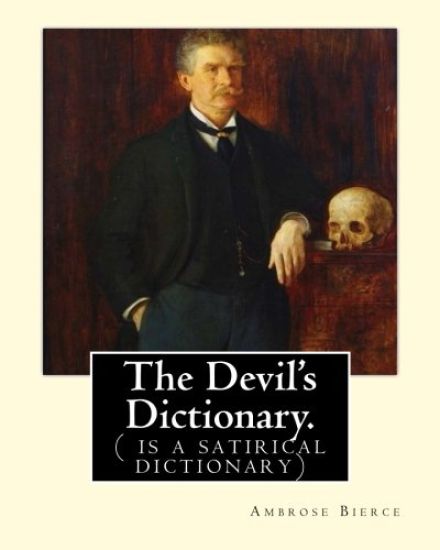
The Devil's Dictionary. By: Ambrose Bierce: ( is a satirical dictionary)

The Devil's Dictionary. By: Ambrose Bierce: ( is a satirical dictionary)

Ambrose Bierce

Createspace Independent Publishing Platform
2016
nidottu
The Devil's Dictionary is a satirical dictionary written by American journalist and author Ambrose Bierce. Originally published in 1906 as The Cynic's Word Book, it features Bierce's witty and often ironic spin on many common English words. Retitled in 1911, it has been followed by numerous "unabridged" versions compiled after Bierce's death, which include definitions absent from earlier editions. The Devil's Dictionary began as a serialized column during Bierce's time as a columnist for the San Francisco News Letter, a small weekly financial magazine founded by Frederick Marriott in the late 1850s. Although a serious magazine aimed at businessmen, the News Letter contained a page of informal satirical content titled "The Town Crier". Bierce, hired as the "Crier"'s editor in December 1868, wrote satire with such irreverence and lack of inhibition he was nicknamed "the laughing devil of San Francisco". Bierce resigned from "The Town Crier" when?] and spent three years in London. Returning to San Francisco in 1875, he made two submissions to the News Letter in hopes of regaining his old position. Both were written under aliases. One, entitled "The Demon's Dictionary", contained Bierce's definitions for 48 words. Later forgotten in his compiling of The Devil's Dictionary, they were added almost a century later to an Enlarged Devil's Dictionary published in 1967. Though Bierce's preface to The Devil's Dictionary dates the earliest work to 1881, its origins can be traced to August 1869. Short of material and recently possessed of a Webster's Unabridged Dictionary, he suggested writing a "comic dictionary" for the "Town Crier". To a quote from Webster's entry for "Vicegerents", "Kings are sometimes called God's vicegerents", he added the italicized rejoinder, "It is to be wished they would always deserve the appellation," then suggested Webster might have used his talent to comic effect. Comic definitions were not a regular feature of Bierce's next column ("Prattle", in the magazine The Argonaut, of which he became an editor in March 1877). Nevertheless, he included comic definitions in his columns dated November 17, 1877 and September 14, 1878. It was in early 1881 that Bierce first used the title, The Devil's Dictionary, while editor-in-chief of another weekly San Francisco magazine, The Wasp. The "dictionary" proved popular, and during his time in this post (1881-86) Bierce included 88 installments, each comprising 15-20 new definitions.n 1887, Bierce became an editor of The San Francisco Examiner and introduced "The Cynic's Dictionary". This was to be the last of his "dictionary" columns until 1904, and it continued irregularly until July 1906. A number of the definitions are accompanied by satiric verses, many of which are signed with comic pseudonyms such as "Salder Bupp", "Orm Pludge", and "Father Gassalasca Jape, S. J.
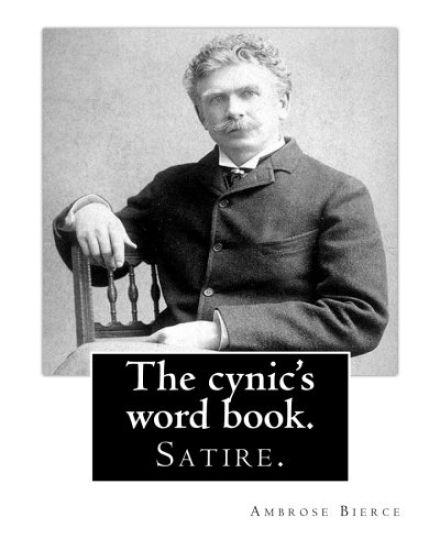
The cynic's word book. By: Ambrose Bierce: Satire.

The cynic's word book. By: Ambrose Bierce: Satire.

Ambrose Bierce

Createspace Independent Publishing Platform
2016
nidottu
Ambrose Gwinnett Bierce (June 24, 1842 - circa 1914) was an American editorialist, journalist, short story writer, fabulist, and satirist. He wrote the short story "An Occurrence at Owl Creek Bridge" and compiled a satirical lexicon, The Devil's Dictionary. His vehemence as a critic, his motto "Nothing matters", and the sardonic view of human nature that informed his work, all earned him the nickname "Bitter Bierce". Despite his reputation as a searing critic, Bierce was known to encourage younger writers, including the poets George Sterling and Herman George Scheffauer and the fiction writer W. C. Morrow. Bierce employed a distinctive style of writing, especially in his stories. His style often embraces an abrupt beginning, dark imagery, vague references to time, limited descriptions, impossible events, and the theme of war. In 1913, Bierce traveled to Mexico to gain first-hand experience of the Mexican Revolution. He was rumored to be traveling with rebel troops, and was not seen again. Bierce was born in a log cabin at Horse Cave Creek in Meigs County, Ohio, on June 24, 1842, to Marcus Aurelius Bierce (1799-1876) and Laura Sherwood Bierce. His mother was a descendant of William Bradford. He was the tenth of thirteen children whose father gave all names beginning with the letter "A": in order of birth, the Bierce siblings were Abigail, Amelia, Ann, Addison, Aurelius, Augustus, Almeda, Andrew, Albert, and Ambrose. His parents were a poor but literary couple who instilled in him a deep love for books and writing. Bierce grew up in Kosciusko County, Indiana, attending high school at the county seat, Warsaw. He left home at 15 to become a "printer's devil" at a small Ohio newspaper.
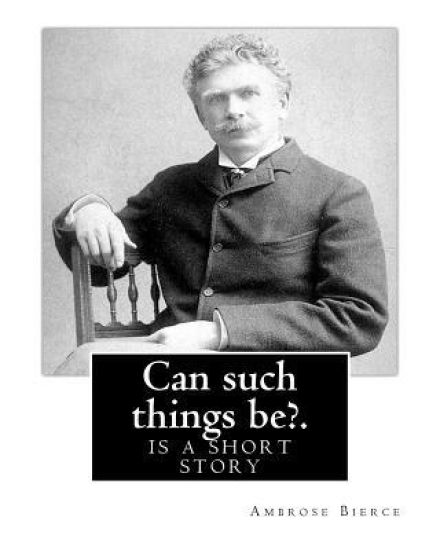
Can such things be?. By: Ambrose Bierce: is a short story

Can such things be?. By: Ambrose Bierce: is a short story

Ambrose Bierce

Createspace Independent Publishing Platform
2016
nidottu
Ambrose Gwinnett Bierce (June 24, 1842 - circa 1914) was an American editorialist, journalist, short story writer, fabulist, and satirist. He wrote the short story "An Occurrence at Owl Creek Bridge" and compiled a satirical lexicon, The Devil's Dictionary. His vehemence as a critic, his motto "Nothing matters", and the sardonic view of human nature that informed his work, all earned him the nickname "Bitter Bierce". Despite his reputation as a searing critic, Bierce was known to encourage younger writers, including the poets George Sterling and Herman George Scheffauer and the fiction writer W. C. Morrow. Bierce employed a distinctive style of writing, especially in his stories. His style often embraces an abrupt beginning, dark imagery, vague references to time, limited descriptions, impossible events, and the theme of war. In 1913, Bierce traveled to Mexico to gain first-hand experience of the Mexican Revolution. He was rumored to be traveling with rebel troops, and was not seen again. Bierce was born in a log cabin at Horse Cave Creek in Meigs County, Ohio, on June 24, 1842, to Marcus Aurelius Bierce (1799-1876) and Laura Sherwood Bierce. His mother was a descendant of William Bradford. He was the tenth of thirteen children whose father gave all names beginning with the letter "A": in order of birth, the Bierce siblings were Abigail, Amelia, Ann, Addison, Aurelius, Augustus, Almeda, Andrew, Albert, and Ambrose. His parents were a poor but literary couple who instilled in him a deep love for books and writing. Bierce grew up in Kosciusko County, Indiana, attending high school at the county seat, Warsaw. He left home at 15 to become a "printer's devil" at a small Ohio newspaper.