Kirjojen hintavertailu – 12 903 725 kirjaa ja 27 kauppaa
Kirjailija
American Academy of Orthopaedic Surgeons (AAOS)
Kirjat ja teokset yhdessä paikassa: 96 kirjaa, julkaisuja vuosilta 2004–2027, suosituimpiin kuuluu Advanced First Aid, CPR, and AED. Vertaile teosten hintoja ja tarkista saatavuus suomalaisista kirjakaupoista.
This textbook is packaged with Navigate 2 Preferred Access which unlocks an interactive eBook, student practice activities and assessments, Test Prep, a full suite of instructor resources, learning analytic reporting tools, and the Fisdap Scheduler and Skills Tracker. Nancy Caroline's Emergency Care in the Streets, Eighth Edition is the next step in the evolution of the premier paramedic education program. This legendary paramedic textbook was first developed by Dr. Nancy Caroline in the early 97 s and transformed paramedic education. Today, lead editors Bob Elling and Barb Aehlert, with the American Academy of Orthopaedic Surgeons, are proud to continue this legacy and set the new gold standard for the paramedics of tomorrow. This fully updated edition covers every competency statement of the National EMS Education Standards for Paramedics with clarity and precision in a concise format that ensures student comprehension and encourages critical thinking. This iconic text emphasizes the ideal that becoming a paramedic is a continual pursuit of growth and excellence throughout an entire career. Concepts of team leadership and professionalism are woven throughout the chapters, challenging students to become more compassionate, conscientious health care professionals as well as superior clinicians. Evidence-Based Recommendations and ProtocolsMedicine is constantly changing and prehospital medicine varies across states and regions. The content of the Eighth Edition reflects the guidance and recommendations of an extremely experienced, geographically diverse group of authors, and its team of Medical Editors from the AAOS. Where possible, content is based on evidence, such as data from the field and studies published in the medical literature. Current, State-of-the-Art Medical ContentThe Eighth Edition meets and exceeds the paramedic National EMS Education Standards and reflects the National Model EMS Clinical Guidelines (NASEMSO), the National Registry Skill Sheets and Psychomotor Competency Portfolio, and Prehospital Trauma Life Support, Eighth Edition, from NAEMT and American College of Surgeons' Committee on Trauma. Where applicable, the authors and editors followed additional authoritative sources, such as national stroke guidelines. Last but not least, the Eighth Edition thoroughly addresses the 2 5 ECC and CPR guidelines published by the American Heart Association. These updates went beyond a compression rate or depth change the text has been completely updated to reflect all of the Guideline changes. Strong Application to Real-World EMSStudents who are studying to become paramedics are focused on helping the sick and injured. They need to know why information is important to learn. Through evolving patient case studies in each chapter, the Eighth Edition gives students a genuine context for the application of knowledge. This approach makes it clear how all of this new information will be used to help patients in the field. Opportunities to apply knowledge equip students to ultimately become better providers. Progressive case studies are followed by a comprehensive summary that answers the critical thinking questions raised throughout the case. The You are the Paramedic cases conclude with a Patient Care Report, showing the student exactly how the presented case would be documented. New to This Edition! Based on feedback from program directors and educators around the country, we added two new chapters to the Eighth Edition:Medical Terminology. Medical Terminology was previously addressed in the Documentation chapter, but educators strongly preferred that we dedicate a standalone chapter to this important topic. Career Development. Recognizing that the U. S. health care system, and the role of the paramedic in it, are rapidly evolving, we've added a chapter on career development. In addition to discussing the changing and expanding career opportunities for paramedics, this chapter presents nontraditional specialties that paramedics may need in the future to fill evolving roles in the healthcare system.
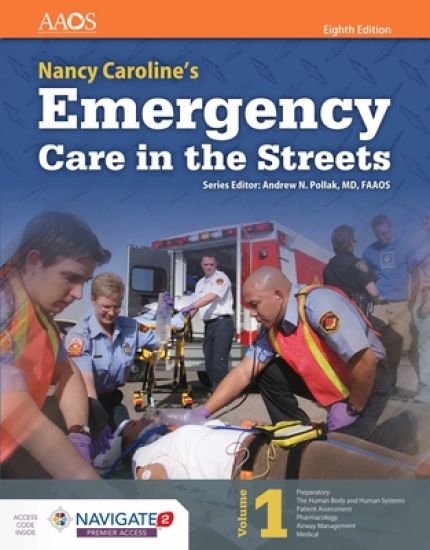
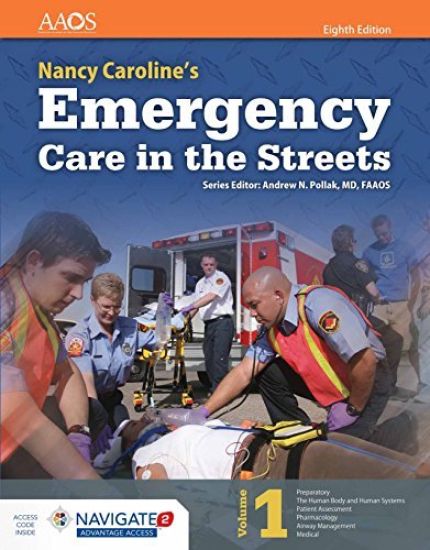
Nancy Caroline’s Emergency Care in the Streets, Eighth Edition is the next step in the evolution of the premier paramedic education program. This legendary paramedic textbook was first developed by Dr. Nancy Caroline in the early 1970s and transformed paramedic education. Today, lead editors Bob Elling and Barb Aehlert, with the American Academy of Orthopaedic Surgeons, are proud to continue this legacy and set the new gold standard for the paramedics of tomorrow. This fully updated edition covers every competency statement of the National EMS Education Standards for Paramedics with clarity and precision in a concise format that ensures student comprehension and encourages critical thinking. This iconic text emphasizes the ideal that becoming a paramedic is a continual pursuit of growth and excellence throughout an entire career. Concepts of team leadership and professionalism are woven throughout the chapters, challenging students to become more compassionate, conscientious health care professionals as well as superior clinicians. Evidence-Based Recommendations and Protocols Medicine is constantly changing and prehospital medicine varies across states and regions. The content of the Eighth Edition reflects the guidance and recommendations of an extremely experienced, geographically diverse group of authors, and its team of Medical Editors from the AAOS. Where possible, content is based on evidence, such as data from the field and studies published in the medical literature. Current, State-of-the-Art Medical Content The Eighth Edition meets and exceeds the paramedic National EMS Education Standards and reflects the National Model EMS Clinical Guidelines (NASEMSO), the National Registry Skill Sheets and Psychomotor Competency Portfolio, and Prehospital Trauma Life Support, Eighth Edition, from NAEMT and American College of Surgeons’ Committee on Trauma. Where applicable, the authors and editors followed additional authoritative sources, such as national stroke guidelines. Last but not least, the Eighth Edition thoroughly addresses the 2015 ECC and CPR guidelines published by the American Heart Association. These updates went beyond a compression rate or depth change; the text has been completely updated to reflect all of the Guideline changes. Strong Application to Real-World EMS Students who are studying to become paramedics are focused on helping the sick and injured. They need to know why information is important to learn. Through evolving patient case studies in each chapter, the Eighth Edition gives students a genuine context for the application of knowledge. This approach makes it clear how all of this new information will be used to help patients in the field. Opportunities to apply knowledge equip students to ultimately become better providers. Progressive case studies are followed by a comprehensive summary that answers the critical thinking questions raised throughout the case. The You are the Paramedic cases conclude with a Patient Care Report, showing the student exactly how the presented case would be documented. New to This Edition! Based on feedback from program directors and educators around the country, we added two new chapters to the Eighth Edition: Medical Terminology. Medical Terminology was previously addressed in the Documentation chapter, but educators strongly preferred that we dedicate a standalone chapter to this important topic. Career Development. Recognizing that the U. S. health care system, and the role of the paramedic in it, are rapidly evolving, we’ve added a chapter on career development. In addition to discussing the changing and expanding career opportunities for paramedics, this chapter presents nontraditional specialties that paramedics may need in the future to fill evolving roles in the healthcare system.
This textbook is packaged with Navigate 2 Preferred Access which unlocks an interactive eBook, student practice activities and assessments, Test Prep, a full suite of instructor resources, learning analytic reporting tools, and the Fisdap Scheduler and Skills Tracker. Nancy Caroline's Emergency Care in the Streets, Eighth Edition is the next step in the evolution of the premier paramedic education program. This legendary paramedic textbook was first developed by Dr. Nancy Caroline in the early 97 s and transformed paramedic education. Today, lead editors Bob Elling and Barb Aehlert, with the American Academy of Orthopaedic Surgeons, are proud to continue this legacy and set the new gold standard for the paramedics of tomorrow. This fully updated edition covers every competency statement of the National EMS Education Standards for Paramedics with clarity and precision in a concise format that ensures student comprehension and encourages critical thinking. This iconic text emphasizes the ideal that becoming a paramedic is a continual pursuit of growth and excellence throughout an entire career. Concepts of team leadership and professionalism are woven throughout the chapters, challenging students to become more compassionate, conscientious health care professionals as well as superior clinicians. Evidence-Based Recommendations and ProtocolsMedicine is constantly changing and prehospital medicine varies across states and regions. The content of the Eighth Edition reflects the guidance and recommendations of an extremely experienced, geographically diverse group of authors, and its team of Medical Editors from the AAOS. Where possible, content is based on evidence, such as data from the field and studies published in the medical literature. Current, State-of-the-Art Medical ContentThe Eighth Edition meets and exceeds the paramedic National EMS Education Standards and reflects the National Model EMS Clinical Guidelines (NASEMSO), the National Registry Skill Sheets and Psychomotor Competency Portfolio, and Prehospital Trauma Life Support, Eighth Edition, from NAEMT and American College of Surgeons' Committee on Trauma. Where applicable, the authors and editors followed additional authoritative sources, such as national stroke guidelines. Last but not least, the Eighth Edition thoroughly addresses the 2 5 ECC and CPR guidelines published by the American Heart Association. These updates went beyond a compression rate or depth change the text has been completely updated to reflect all of the Guideline changes. Strong Application to Real-World EMSStudents who are studying to become paramedics are focused on helping the sick and injured. They need to know why information is important to learn. Through evolving patient case studies in each chapter, the Eighth Edition gives students a genuine context for the application of knowledge. This approach makes it clear how all of this new information will be used to help patients in the field. Opportunities to apply knowledge equip students to ultimately become better providers. Progressive case studies are followed by a comprehensive summary that answers the critical thinking questions raised throughout the case. The You are the Paramedic cases conclude with a Patient Care Report, showing the student exactly how the presented case would be documented. New to This Edition! Based on feedback from program directors and educators around the country, we added two new chapters to the Eighth Edition:Medical Terminology. Medical Terminology was previously addressed in the Documentation chapter, but educators strongly preferred that we dedicate a standalone chapter to this important topic. Career Development. Recognizing that the U. S. health care system, and the role of the paramedic in it, are rapidly evolving, we've added a chapter on career development. In addition to discussing the changing and expanding career opportunities for paramedics, this chapter presents nontraditional specialties that paramedics may need in the future to fill evolving roles in the healthcare system.

Critical Care Transport, Second Edition with Navigate 2 Preferred Access includes a digital access code that unlocks a complete eBook, Study Center, Homework and Assessment Center. and a dashboard that reports actionable data.
Welcome to the gold standard in critical care transport training. Published in conjunction with the American Academy of Orthopaedic Surgeons (AAOS) and the American College of Emergency Physicians (ACEP), and endorsed by the University of Maryland, Baltimore County (UMBC) and the International Association of Flight and Critical Care Providers (IAFCCP), Critical Care Transport, Second Edition, offers cutting-edge content relevant to any health care provider training in critical care transport. Like no other textbook in this market, the Second Edition thoroughly prepares medical professionals to function as competent members of a critical care team by covering the material that everyone—paramedics, nurses, physicians, and specialty crew—needs to know to operate effectively in the prehospital critical care environment. This book meets the curricula of major critical care training programs, including University of Maryland, Baltimore County (UMBC). It covers both ground and flight transport, and meets the 2015 CPR/ECC Guidelines and the objectives of critical care transport certification exams such as the Certified Flight Paramedic (FP-C) exam administered by the Board for Critical Care Transport Paramedic Certification. Content includes information specific to prehospital critical care transport, such as flight physiology, lab analysis, hemodynamic monitoring, and specialized devices such as the intra-aortic balloon pump. Standard topics such as airway management, trauma, and pharmacology are covered in the context of critical care. Chapters have been authored by leading critical care professionals across the country and represent the most current, state-of-the-art information on management of critical care patients. New to the Second Edition: Sample fetal monitoring strips Updated information on transport choreography Enhanced information on capnography and troubleshooting transport ventilators A standalone chapter on patient safety Much more!
When athletes become ill or injured during practice or competition, coaches and athletic trainers need to know how to respond. Whether on the court, on the field, at the pool, or in the gym, coaches and trainers must be prepared to handle the common injuries and illnesses they will likely encounter while coaching their sport. Based on the 2 5 International Consensus Guidelines for Cardiopulmonary Resuscitation (CPR) and Emergency Cardiac Care (ECC), Sports First Aid and Injury Prevention teaches coaches and trainers how to administer basic first aid to sick and injured athletes as well as ways to prevent illnesses and injuries from occurring. This student manual includes: Lists of injuries and illnesses most common to each sport. Key information on sports injury prevention. A sample Emergency Action Plan. Skill drills providing step-by-step explanations and visual summaries of important first aid skills. Caution boxes emphasizing crucial actions that coaches and trainers should or should not take while administering first aid. Flowcharts that reinforce the decision-making process and appropriate procedures.
Navigate 2 Advantage Access unlocks a complete eBook, Study Center, homework and Assessment Center, and a dashboard that reports actionable data. Experience Navigate 2 today at www.jblnavigate.com/2. Since the early 1970s, the American Academy of Orthopaedic Surgeons (AAOS) has been a champion for EMS education and better patient care. Today, the AAOS is expanding this mission by setting the standard for EMS providers transitioning into the emerging field of community paramedicine. Community paramedicine expands the role of EMS professionals to help fill a critical gap in the health care system—responding to the medical needs of underserved communities and ultimately improving the quality of life and health for these populations. From managing chronic disease to preventive care to coordinating health services, the community paramedic collaborates with a dedicated team of health care professionals to address health problems within their communities, reduce hospital readmissions, prevent unnecessary ambulance transports, and keep patients where they want to be: in their homes. Based on nationally recognized and field-tested curricula from across the country, Community Health Paramedicine offers clarity and precision in a concise format that ensures comprehension and encourages critical thinking. This innovative training solution prepares experienced paramedics to expand their role within their existing scope of practice, including: Assisting the primary care physician in providing preventive patient care Establishing a successful therapeutic relationship with the patient Navigating the patient to appropriate social services Coaching the patient to achieve self-management goals Current, State-of-the-Art Medical Content Community Health Paramedicine is based on nationally recognized and field-tested curricula and reflects the collective expertise of its top-flight authors and editors. This groundbreaking text offers evidence-based care protocols supported by the medical literature, thoroughly preparing students for certification and ensuring that new community paramedics are well-equipped for the field. Application to the Field Through patient case studies in each chapter, Community Health Paramedicine gives students real-world context to apply the knowledge gained in the chapter, clarifying how the information is used to care for patients in the field, and pushing students to engage in critical thinking and discussion. Today, the AAOS suite of EMS educational resources, from first aid and CPR to critical care transport, is the gold standard in training programs by offering exceptional content and instructional resources that meet the diverse needs of today’s educators and students.
This bundle contains Emergency Medical Responder: Your First Response in Emergency Care Includes Navigate 2 Essentials Access, Sixth Edition + Emergency Medical Responder: Your First Response in Emergency Care, Sixth Edition Student Workbook
This Student Workbook contains exercises to reinforce what you will learn in both in the textbook and the classroom. The exercises cover the new National EMS Education Standards and are designed to test your general knowledge, encourage critical thinking, and aid comprehension of assessment and treatment skills. Organized by chapter, the Student Workbook provides a variety of exercises to reinforce material learned, including:General Knowledge, Critical Thinking, and Skills ActivitiesFill in the Patient Care ReportAnswer Key provided on perforated pages
Based on the 2015 International Consensus Guidelines for Cardiopulmonary Resuscitation (CPR) and Emergency Cardiac Care (ECC), First Aid and CPR Guide, Seventh Edition is an excellent resource for action at common emergencies. This quick reference gives you the tools necessary to prevent and minimize injury, provide comfort, and maximize care until expert care arrives. This guide is perfect for anybody who wants quick, portable access to vital first aid and basic life support information in place of, or in addition to, taking a formal first aid or CPR course. The First Aid and CPR Guide, Seventh Edition may be used within first aid and CPR refresher training courses offered through the Emergency Care & Safety Institute (ECSI). About Emergency Care & Safety Institute Emergency Care & Safety Institute (ECSI) is an internationally renowned organization that provides training and certifications that meet job-related requirements as defined by regulatory authorities such as OSHA, The Joint Commission, and state offices of EMS, Education, Transportation, and Health. ECSI’s courses are delivered throughout a range of industries and markets worldwide, including colleges and universities, business and industry, government, public safety agencies, hospitals, private training companies, scouting groups, and many more. ECSI offers world-class training solutions in the areas of: Advanced Cardiac Life Support Automated External Defibrillation Babysitter Safety Bloodborne and Airborne Pathogens CPR (Layperson and Health Care levels) Emergency Medical Responder (formerly known as First Responder) First Aid (Standard, Advanced, Pediatric, Wilderness, and other levels) Oxygen Administration A digital certification card is included with this publication.
Based on the 2015 International Consensus Guidelines for Cardiopulmonary Resuscitation (CPR) and Emergency Cardiac Care (ECC), First Aid and CPR Guide, Seventh Edition is an excellent resource for action at common emergencies. This quick reference gives you the tools necessary to prevent and minimize injury, provide comfort, and maximize care until expert care arrives. This guide is perfect for anybody who wants quick, portable access to vital first aid and basic life support information in place of, or in addition to, taking a formal first aid or CPR course. The First Aid and CPR Guide, Seventh Edition may be used within first aid and CPR refresher training courses offered through the Emergency Care & Safety Institute (ECSI). Please note, ECSI digital course completion cards are not included.
This textbook is packaged with Navigate 2 Preferred Access which unlocks a complete eBook, Study Center, homework and Assessment Center, a dashboard that reports actionable data, and Navigate 2 TestPrep. Learn more about Navigate 2 today at www.jblnavigate.com/2. Based on the National EMS Education Standards and endorsed by the American Academy of Orthopaedic Surgeons, Emergency Medical Responder: Your First Response in Emergency Care, Sixth Edition offers complete coverage of every competency statement with clarity and precision in a concise format that ensures student comprehension and encourages critical thinking. The experienced author team and the AAOS medical editors have transformed the Education Standards into a training program that reflects best practices. Using clear, accessible language and proven pedagogical features, the Sixth Edition is the only way to prepare law enforcement personnel, fire fighters, rescue squad personnel, athletic trainers, college students, and laypersons for the challenges they will face in the field. The Sixth Edition delivers: Current State-of-the-Art Medical Content. The Emergency Medical Responder, Sixth Edition incorporates current medical concepts to ensure that students are taught assessment and treatment approaches that will help patients in the field today. Clear Application to Real-World Medical Response. Each chapter in the Sixth Edition includes four independent case studies that offer students a genuine context for the application of knowledge presented in each chapter. This approach clarifies how the information learned in the chapter will be used to help patients in the field. Concept Reinforcement. The Sixth Edition is built on the premise that students need a solid foundation in the basics followed by appropriate reinforcement. For example, the Patient Assessment chapter fully details every step of the patient assessment process. Each medical and trauma chapter then revisits this process and discusses elements of patient assessment that may require extra attention when presented with particular emergencies. Key content updates to the Sixth Edition include: Fully revised to reflect the 2015 ECC/CPR Guidelines New information on heroin overdose and use of nasal Narcan Enhanced information on excited delirium Updated content on bleeding control that emphasizes use of tourniquets Spinal motion stabilization recommendations that reflect current standards New content on post traumatic stress disorder (PTSD) and dealing with autism spectrum disorders
Navigate 2 Premier Access unlocks a complete eBook, Study Center, homework and Assessment Center, a dashboard that reports actionable data,Navigate 2 TestPrep, and Interactive Lectures. Experience Navigate 2 today at www.jblnavigate.com/2. Based on the National EMS Education Standards and endorsed by the American Academy of Orthopaedic Surgeons, Emergency Medical Responder: Your First Response in Emergency Care, Sixth Edition offers complete coverage of every competency statement with clarity and precision in a concise format that ensures student comprehension and encourages critical thinking. The experienced author team and the AAOS medical editors have transformed the Education Standards into a training program that reflects best practices. Using clear, accessible language and proven pedagogical features, the Sixth Edition is the only way to prepare law enforcement personnel, fire fighters, rescue squad personnel, athletic trainers, college students, and laypersons for the challenges they will face in the field. The Sixth Edition delivers: Current State-of-the-Art Medical Content. The Emergency Medical Responder, Sixth Edition incorporates current medical concepts to ensure that students are taught assessment and treatment approaches that will help patients in the field today. Clear Application to Real-World Medical Response. Each chapter in the Sixth Edition includes four independent case studies that offer students a genuine context for the application of knowledge presented in each chapter. This approach clarifies how the information learned in the chapter will be used to help patients in the field. Concept Reinforcement. The Sixth Edition is built on the premise that students need a solid foundation in the basics followed by appropriate reinforcement. For example, the Patient Assessment chapter fully details every step of the patient assessment process. Each medical and trauma chapter then revisits this process and discusses elements of patient assessment that may require extra attention when presented with particular emergencies. Key content updates to the Sixth Edition include: Fully revised to reflect the 2015 ECC/CPR Guidelines New information on heroin overdose and use of nasal Narcan Enhanced information on excited delirium Updated content on bleeding control that emphasizes use of tourniquets Spinal motion stabilization recommendations that reflect current standards New content on post traumatic stress disorder (PTSD) and dealing with autism spectrum disorders
Navigate 2 Essentials Access unlocks a complete audio book, Assessment Center, and dashboard that reports actionable data. Experience Navigate 2 today at www.jblnavigate.com/2. Based on the National EMS Education Standards and endorsed by the American Academy of Orthopaedic Surgeons, Emergency Medical Responder: Your First Response in Emergency Care, Sixth Edition offers complete coverage of every competency statement with clarity and precision in a concise format that ensures student comprehension and encourages critical thinking. The experienced author team and the AAOS medical editors have transformed the Education Standards into a training program that reflects best practices. Using clear, accessible language and proven pedagogical features, the Sixth Edition is the only way to prepare law enforcement personnel, fire fighters, rescue squad personnel, athletic trainers, college students, and laypersons for the challenges they will face in the field. The Sixth Edition delivers: Current State-of-the-Art Medical Content. The Sixth Edition incorporates current medical concepts to ensure that students are taught assessment and treatment approaches that will help patients in the field today. Clear Application to Real-World Medical Response. Each chapter in the Sixth Edition includes four independent case studies that offer students a genuine context for the application of knowledge presented in each chapter. This approach clarifies how the information learned in the chapter will be used to help patients in the field. Concept Reinforcement. The Sixth Edition is built on the premise that students need a solid foundation in the basics followed by appropriate reinforcement. For example, the Patient Assessment chapter fully details every step of the patient assessment process. Each medical and trauma chapter then revisits this process and discusses elements of patient assessment that may require extra attention when presented with particular emergencies. Key content updates to the Sixth Edition include: Fully revised to reflect the 2 5 ECC/CPR Guidelines New information on heroin overdose and use of nasal Narcan Enhanced information on excited delirium Updated content on bleeding control that emphasizes use of tourniquets Spinal motion stabilization recommendations that reflect current standards New content on post traumatic stress disorder (PTSD) and dealing with autism spectrum disorders
Based on the National EMS Education Standards and endorsed by the American Academy of Orthopaedic Surgeons, Emergency Medical Responder: Your First Response in Emergency Care, Sixth Edition offers complete coverage of every competency statement with clarity and precision in a concise format that ensures student comprehension and encourages critical thinking. The experienced author team and the AAOS medical editors have transformed the Education Standards into a training program that reflects best practices. Using clear, accessible language and proven pedagogical features, the Sixth Edition is the only way to prepare law enforcement personnel, fire fighters, rescue squad personnel, athletic trainers, college students, and laypersons for the challenges they will face in the field.