Kirjojen hintavertailu – 12 903 735 kirjaa ja 27 kauppaa

Kirjailija

Amilcar Cabral

Kirjat ja teokset yhdessä paikassa: 13 kirjaa, julkaisuja vuosilta 2016–2025, suosituimpiin kuuluu Think to Better Act Volume 1. Vertaile teosten hintoja ja tarkista saatavuus suomalaisista kirjakaupoista.

Nimi esiintyy myös muodoissa: Amílcar Cabral

13 kirjaa

Kirjojen julkaisuvuodet: 2016–2025.

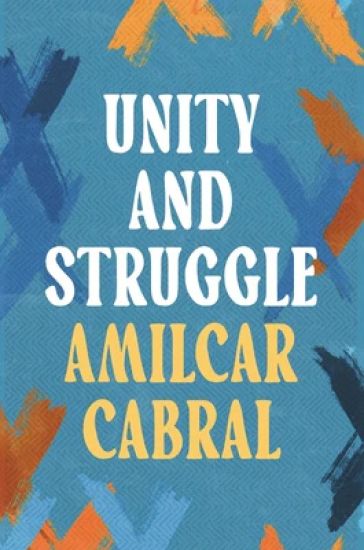
Unity and Struggle

Unity and Struggle

Amílcar Cabral

BLOOMSBURY PUBLISHING PLC
2024
nidottu

Halvin toimitettuna 17,00 €

One of the world's greatest revolutionary leaders, Amílcar Cabral's long and arduous campaign for the liberation of Portuguese-dominated Africa is explored in this vivid compilation of his most influential speeches and writings. Unity and Struggle is the compelling account of Amílcar Cabral’s fight against imperialism, discrimination and injustice, as well as his progressive advocacy for religious toleration and gender equality – all of which combined to make him one of Africa’s foremost political leaders. Introduction by Basil Davidson.'One of the most lucid and brilliant leaders in Africa' Fidel Castro 'Figures like Amílcar Cabral... helped us to imagine the horizons of freedom in far broader terms than were available to us through what we now call "civil rights discourse".' Angela Davis
Unity and Struggle

Unity and Struggle

Amilcar Cabral

BLOOMSBURY PUBLISHING PLC
2023
pokkari
Amílcar Cabral's long and arduous campaign for the liberation of Portuguese-dominated Africa is explored in this compilation of his most influential speeches and writings.
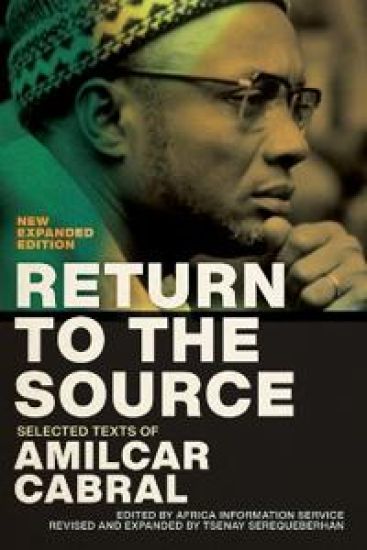
Return to the Source

Return to the Source

Amilcar Cabral

MONTHLY REVIEW PRESS,U.S.
2023
sidottu
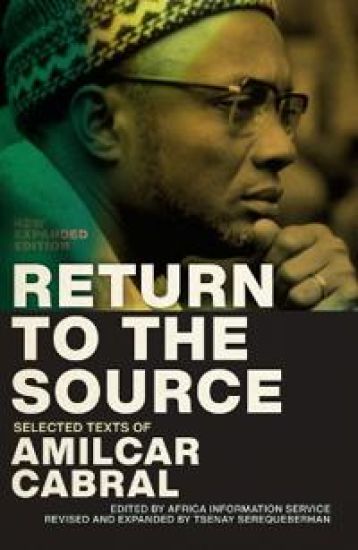
A classic collection of essays calling for decolonization through self-liberation "For us," said Amilcar Cabral, "freedom is an act of culture"--and these were not just words. Guided by the concrete realities of his people, Cabral called for a process of "re-Africanization," a Return to the Source. As a new imperialism has taken hold the world over, many have hearkened back to Return to the Source, but this time, our source of inspiration is Cabral himself. With a system of thought rooted in an African reading of Marx, Cabral was a deep-thinking revolutionary who applied the principles of decolonization as a dialectic task, and in so doing became one of the world's most profoundly influential and effective theoreticians of anti-imperialist struggle. Cabral and his fellow Pan-African movement leaders catalyzed and fortified a militant wave of liberation struggles beginning in Angola, moving through Cabral's homelands of Guinea Bissau and Cape Verde, and culminating in Mozambique and beyond. He translated abstract theories into agile praxis and in under just ten years steered the liberation of three-quarters of the countryside of Guinea Bissau from Portuguese colonial domination. In this new, expanded edition of Return to the Source: Selected Texts of Amilcar Cabral we have access to Cabral's warm and humorous informal address to the Africa Information Service, and we revisit several of the principal speeches Cabral delivered during visits to the United States in the final years before his assassination in 1973, including his last written address to his people on New Year's Eve. Return to the Source is essential reading for all who understand that the erasure of historical continuity between social movements has disrupted our ability to make the revolutionary transformation we all desperately require.
Return to the Source

Return to the Source

Amilcar Cabral

MONTHLY REVIEW PRESS,U.S.
2023
pokkari

Halvin toimitettuna 26,70 €

A classic collection of essays calling for decolonization through self-liberation "For us," said Amilcar Cabral, "freedom is an act of culture"--and these were not just words. Guided by the concrete realities of his people, Cabral called for a process of "re-Africanization," a Return to the Source. As a new imperialism has taken hold the world over, many have hearkened back to Return to the Source, but this time, our source of inspiration is Cabral himself. With a system of thought rooted in an African reading of Marx, Cabral was a deep-thinking revolutionary who applied the principles of decolonization as a dialectic task, and in so doing became one of the world's most profoundly influential and effective theoreticians of anti-imperialist struggle. Cabral and his fellow Pan-African movement leaders catalyzed and fortified a militant wave of liberation struggles beginning in Angola, moving through Cabral's homelands of Guinea Bissau and Cape Verde, and culminating in Mozambique and beyond. He translated abstract theories into agile praxis and in under just ten years steered the liberation of three-quarters of the countryside of Guinea Bissau from Portuguese colonial domination. In this new, expanded edition of Return to the Source: Selected Texts of Amilcar Cabral we have access to Cabral's warm and humorous informal address to the Africa Information Service, and we revisit several of the principal speeches Cabral delivered during visits to the United States in the final years before his assassination in 1973, including his last written address to his people on New Year's Eve. Return to the Source is essential reading for all who understand that the erasure of historical continuity between social movements has disrupted our ability to make the revolutionary transformation we all desperately require.
Tell No Lies, Claim No Easy Victories

Tell No Lies, Claim No Easy Victories

Amilcar Cabral

Inkani Books
2022
pokkari

Halvin toimitettuna 27,50 €

'Hide nothing from the masses of our people. Tell no lies. Expose lies whenever they are told. Mask no difficulties, mistakes, failures. Claim no easy victories...' - Am lcar Cabral Tell No Lies, Claim No Easy Victories showcases the intellectual foundations and practices underpinning the liberation of Guinea Bissau and Cape Verde. From the importance of culture in decolonisation, to biting critiques of Portuguese colonialism, and strategies for guerrilla warfare in tropical forests, this new collection brings together select interviews, official speeches and PAIGC party directives from 1962 to 1973. Tell No Lies, Claim No Easy Victories reveals Cabral to be a skilled diplomat and lively and pragmatic thinker, concerned with national liberation in the context of Pan-Africanism and international struggle. This edition features an exclusive foreword by Grant Farred and introduction by S nia Vaz Borges, bringing Cabral's contributions sharply into focus for today's bids for freedom.
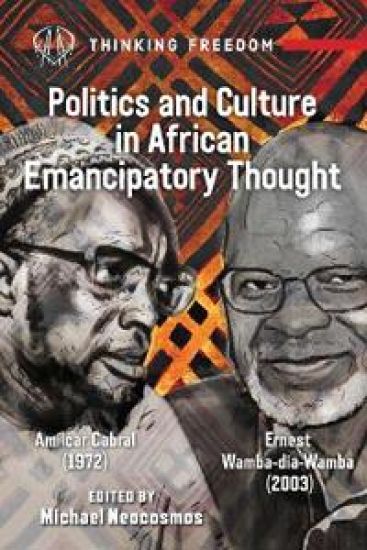
Politics And Culture In African Emancipatory Thought

Politics And Culture In African Emancipatory Thought

Amilcar Cabral; Ernest Wamba-dia-Wamba
Daraja Press
2021
nidottu
The current absence of any emancipatory vision for Africa lies at the heart of our political problems of racial capitalist and colonial oppression. Any attempt to rethink political emancipation on the African continent must be able to locate a universal conception of freedom within singular cultural experiences where people live. Irrespective of the specific manner in which such struggles for freedom were thought within different historical contexts, emancipatory politics always exhibited such a dialectic when it was based within popular traditions. Yet only some militant intellectual leaders understood the importance of this dialectic in thought. The present volume outlines and discusses two particularly important views concerning the role and importance of popular culture in emancipatory politics in Africa. Each is the product of distinct forms of colonial capitalist exploitation: the former saw the light of day within a colonial context while the latter is directly confronted by the neocolonial state. All emancipatory politics are developed in confrontation with state power, and all begin with a process of discussion and debate whereby a collective subject begins to be formed. The formation of such a collective political subject has been fundamentally informed by popular cultures on the African continent. The two authors whose essays are included here understood this and posit popular culture at the centre of their politics. The first, Am lcar Cabral, addresses the central role of popular culture in the independence struggle of Guinea Bissau in the 1970s; the second, Ernest Wamba-dia-Wamba, addresses the centrality of African popular culture in an emancipatory politics for the current Democratic Republic of Congo. Despite the distance in time that separates them, both Cabral and Wamba-dia-Wamba develop a dialectics at the core of their politics which activates the universals of culture in the present. It is this that makes their views of central importance to emancipatory thought today.
No Fist Is Big Enough to Hide the Sky

No Fist Is Big Enough to Hide the Sky

Basil Davidson; Zachariah Mampilly; Amílcar Cabral

Zed Books Ltd
2017
nidottu
No Fist Is Big Enough to Hide the Sky stands as a key text in the history of the eleven-year struggle against Portuguese rule in Guinea-Bissau and Cape Verde. Though perhaps less well known than the struggles in Angola and Mozambique, the liberation war waged by the African Party for the Independence of Guinea and Cape Verde (PAIGC) easily ranks alongside those conflicts as an example of an African independence movement triumphing against overwhelming odds. Basil Davidson, a leading authority on Portuguese Africa who witnessed many of these events first hand, draws on his own extensive experience in the country as well as the PAIGC archives to provide a detailed and rigorous analysis of the conflict. The book also provides one of the earliest accounts of the assassination of the PAIGC’s founder, Amilcar Cabral, and documents the movement’s remarkable success in recovering from the death of its leader and in eventually attaining independence. Featuring a preface by Cape Verde’s first president, Aristides Pereira, and a foreword by Cabral himself, No Fist is Big Enough to Hide the Sky remains an invaluable resource for the study both of the region and of African liberation struggles as a whole.
No Fist Is Big Enough to Hide the Sky

No Fist Is Big Enough to Hide the Sky

Basil Davidson; Zachariah Mampilly; Amílcar Cabral
Zed Books Ltd
2017
sidottu
No Fist Is Big Enough to Hide the Sky stands as a key text in the history of the eleven-year struggle against Portuguese rule in Guinea-Bissau and Cape Verde. Though perhaps less well known than the struggles in Angola and Mozambique, the liberation war waged by the African Party for the Independence of Guinea and Cape Verde (PAIGC) easily ranks alongside those conflicts as an example of an African independence movement triumphing against overwhelming odds. Basil Davidson, a leading authority on Portuguese Africa who witnessed many of these events first hand, draws on his own extensive experience in the country as well as the PAIGC archives to provide a detailed and rigorous analysis of the conflict. The book also provides one of the earliest accounts of the assassination of the PAIGC’s founder, Amilcar Cabral, and documents the movement’s remarkable success in recovering from the death of its leader and in eventually attaining independence. Featuring a preface by Cape Verde’s first president, Aristides Pereira, and a foreword by Cabral himself, No Fist is Big Enough to Hide the Sky remains an invaluable resource for the study both of the region and of African liberation struggles as a whole.
Resistance and Decolonization

Resistance and Decolonization

Amilcar Cabral

Rowman Littlefield International
2016
sidottu
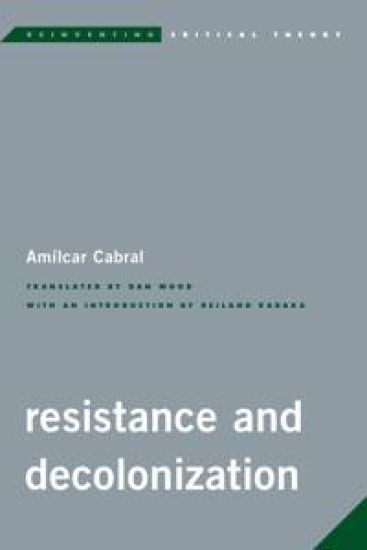
How can a people overthrow 500 years of colonial oppression? What can be done to decolonize mentalities, economic structures, and political institutions? In this book, which includes the first translation of the text ‘Analysis of a Few Types of Resistance’ as well as ‘The Role of Culture in the Struggle for Independence,’ the African revolutionary Amílcar Cabral explores these and other questions. These texts demonstrate his frank and insightful directives to his comrades in Guinea-Bissau and Cape Verde’s party for independence, as well as reflections on culture and combat written the year prior to his assassination by the Portuguese secret police. As one of the most important and profound African revolutionary leaders in the 20th century, and justly compared in importance to Frantz Fanon, Cabral’s thoughts and instructions as articulated here help us to rethink important issues concerning nationalism, culture, vanguardism, revolution, liberation, colonialism, race, and history. The volume also includes two introductory essays: the first introduces Cabral’s work within the context of Africana critical theory, and the second situates these texts in the context their historical-political context and analyzes their relevance for contemporary anti-imperialism.
Resistance and Decolonization

Resistance and Decolonization

Amilcar Cabral

Rowman Littlefield International
2016
nidottu
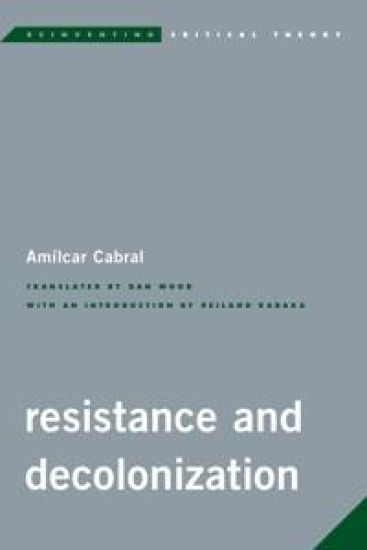
How can a people overthrow 500 years of colonial oppression? What can be done to decolonize mentalities, economic structures, and political institutions? In this book, which includes the first translation of the text ‘Analysis of a Few Types of Resistance’ as well as ‘The Role of Culture in the Struggle for Independence,’ the African revolutionary Amílcar Cabral explores these and other questions. These texts demonstrate his frank and insightful directives to his comrades in Guinea-Bissau and Cape Verde’s party for independence, as well as reflections on culture and combat written the year prior to his assassination by the Portuguese secret police. As one of the most important and profound African revolutionary leaders in the 20th century, and justly compared in importance to Frantz Fanon, Cabral’s thoughts and instructions as articulated here help us to rethink important issues concerning nationalism, culture, vanguardism, revolution, liberation, colonialism, race, and history. The volume also includes two introductory essays: the first introduces Cabral’s work within the context of Africana critical theory, and the second situates these texts in the context their historical-political context and analyzes their relevance for contemporary anti-imperialism.