

Kirjailija
Amin Maalouf
Kirjat ja teokset yhdessä paikassa: 47 kirjaa, julkaisuja vuosilta 1989–2024, suosituimpiin kuuluu Samarkand. Vertaile teosten hintoja ja tarkista saatavuus suomalaisista kirjakaupoista.
47 kirjaa
Kirjojen julkaisuvuodet: 1989–2024.
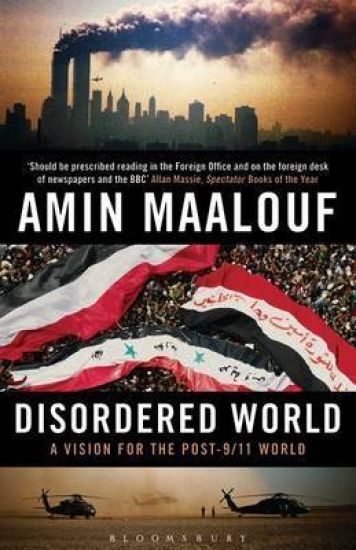
'Should be prescribed reading in the Foreign Office and on the foreign desk of newspapers and the BBC' ALLAN MASSIE'Perfectly placed and wonderfully qualified to shed light on the pervasive sense that there is a cataclysmic battle in progress between civilisations and systems of belief' OBSERVER_________________In this brilliant exploration of the post-9/11 world, leading Lebanese novelist and intellectual Amin Maalouf sets out to understand the urgent challenges the world faces today. Instead of seeing the current disorder of the post-9/11 world as a 'clash of civilisations', Maalouf sees it as the 'exhaustion of two civilisations', a period in which humanity has reached its threshold of 'moral incompetence'. Disordered World is a plea by one of the major writers of our time for intelligence, tolerance and a sense of urgency in order that we develop a mature vision of our patrimony, our beliefs, our differences and the future of the planet which is our common home.
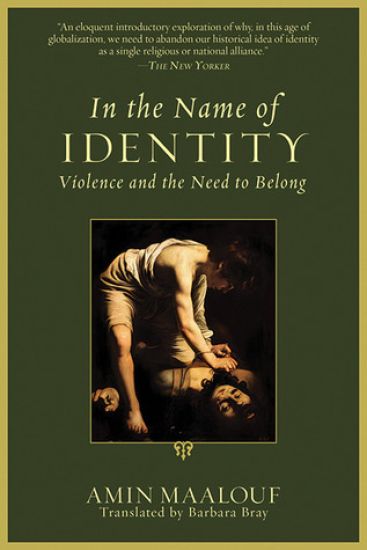
In the Name of Identity: Violence and the Need to Belong
Amin Maalouf
Arcade Publishing
2012
nidottu
Halvin toimitettuna 22,20 €
"Makes for compelling reading in America today."--New York Times Book Review. "I want to try and understand why so many people commit crimes in the name of identity," writes Amin Maalouf. Identity is the crucible out of which we come: our background, our race, our gender, our tribal affiliations, our religion (or lack thereof), all go into making up who we are. All too often, however, the notion of identity--personal, religious, ethnic, or national--has given rise to heated passions and even massive crimes. Moving across the world's history, faiths, and politics, he argues against an oversimplified and hostile interpretation of the concept. He cogently and persuasively examines identity in the context of the modern world, where it can be viewed as both glory and poison. Evident here are the dangers of using identity as a protective--and therefore aggressive--mechanism, the root of racial, geographical, and colonialist subjugation throughout history. Maalouf contends that many of us would reject our inherited conceptions of identity, to which we cling through habit, if only we examined them more closely. The future of society depends on accepting all identities, while recognizing our individualism.
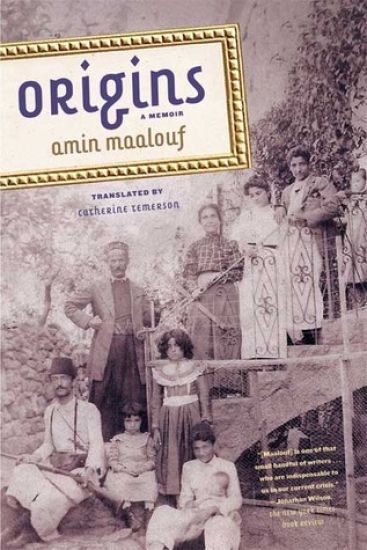
Origins, by the world-renowned writer Amin Maalouf, is a sprawling, hemisphere-spanning intergenerational saga. Set during the last quarter of the nineteenth century and the first quarter of the twentieth, in the mountains of Lebanon and in Havana, Cuba, Origins recounts the family history of the generation of Maalouf's paternal grandfather, Boutros. Why did Boutros, a poet and educator in Lebanon, travel across the globe to rescue his younger brother, Gebrayel, who had settled in Havana? Maalouf is an energetic and amiable narrator, illuminating the more obscure corners of late Ottoman nationalism, the psychology of Lebanese sectarianism, and the dynamics of family quarrels. He moves with great agility across time and space, and across genres of writing. But he never loses track of his story's central thread: his quest to lift the shadow of legend from his family's past. Origins is at once a gripping family chronicle and a timely consideration of Lebanese culture and politics.

Maalouf gir et bilde av den myteomspunne religionsstifteren Mani og hans liv (216-274 e.kr.) i det persiske rikets storhetstid. Mani vokser opp hos en fanatisk kristen sekt, men han vekkes av et annet kall, og samler tilhengere som lytter til hans budskap. På en pilegrimsreise til India blir han venn med sassanidekongens yngste sønn, og blir snart knyttet til kongens hoff som lege og rådgiver. I en tid ser det ut som herskeren og profeten har felles interesser; eksistensen av et stort rike der ulike religioner er likestilte og har full frihet. Men etter hvert oppstår det uenighet.
Dette er historien om den persiske dikteren Omar Khayyam og hans berømte "Samarkandmanuskript", som ble til på 1100-tallet, forsvant på 1200-tallet, dukket opp århundrer senere, og gikk ned i dypet med Titanics forlis - skipets mest dyrebare skatt. Omar Khayyam er den arabiske middelalderens store dikter, vitenskapsmann og filosof. Han er vinens og kjærlighetens poet, tilhenger av tankens frihet, en forsoningens og toleransens filosof - symbolet på alt som undergraver tidens religiøse fanatisme og muslimske imperiebygging. Men slik er likevel Omar Khayyams posisjon, at alle sultaners og vizirers hoff er åpne for ham. Og selv stifteren av Assassinersekten, som sprer mord og terror rundt seg, vil ha ham i tale og som venn.
"Leo Afrikaneren" er en roman om den landflyktige Hassan, senere kalt Leo, en av 1500-tallets myteomspunnede oppdagelsesreisende. I Andalusia i Spania levde jøder, muslimer og kristne fredelig sammen, inntil kong Ferdinand og dronning Isabel i 1492 jaget arabere og jøder bort fra den iberiske halvøya. Hassan var født i Granada, men vokste opp i Marokko. Som handelsmann og diplomat fulgte han de store karavanene gjennom Nord-Afrika. I fire mektige romandeler - Granada, Fez, Kairo og Roma - får vi høre om reisene hans, og om kriger, kjærlighetseventyr og politiske intriger. I Roma fikk han sitt latinske navn Leo Africanus (Afrikas løve), og skrev "Descriptio Africae", som i lang tid var europeernes viktigste kilde til kunnskap om Afrika.
Boken er et essay om identitet, kultur og historie. Forfatteren undersøker identitetens vesen og dens vekslende former. Han går særlig inn i de områdene der vold og identitet er sammenfiltret: Midt-Østen, Algerie, Jugoslavia, Sør-Afrika og Rwanda.
Dette er historien om korstogene sett fra "den andre siden", dvs. fra arabernes. Bokens innhold er basert på vitnesbyrd og nedtegnelser fra samtidige arabiske historikere og kronikører. De vestlige invasjonene starter i år 1006. By etter by faller raskt. Araberne er splittet og har dårlig kampevne og det går 30 år før invasjonsstyrkene får nevneverdig motstand. Gradvis samles den islamske verden, med helteskikkelser som Zengi og Saladin i spissen. Men det går over 200 år før okkupasjonen er over. Har litteraturliste, kart og register.
Amin Maalouf, född i Libanon 1949, har varit bosatt i Paris alltsedan 1976. Efter studier i ekonomi och sociologi arbetade han i många år som utlandskorrespondent med uppdrag i över 60 olika länder. Före detta chefredaktör på två ansedda tidskrifter -- An-nahar International och Jeune Afrique, ägnar han sig idag på heltid åt sitt författarskap. Han fick sitt genombrott som författare med Korstågen enligt araberna. Boken utgavs först 1983 och har redan översatts till ett tjugotal språk. Amin Maaloufs författarskap har sedan dess utökats med fem romaner, för Tanios Klippan (1993) tilldelades han det högsta litterära priset i Frankrike samma år; Goncourtpriset.
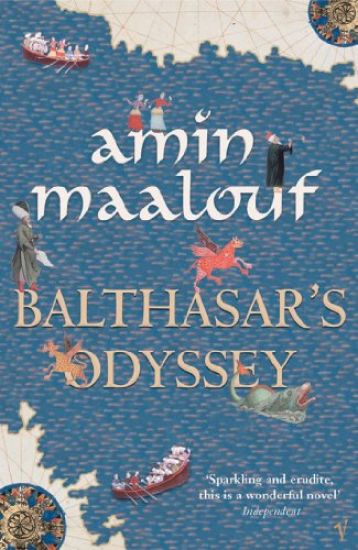
In the Koran there are 99 names for God. Does the 100th exist? Months before the dawn of 1666, the apocalyptic Year of the Beast, Balthasar Embriaco embarks on a quest to find out whether it does. Merely to know this most secret of the names of God will, Balthasar believes, ensure that he is saved.
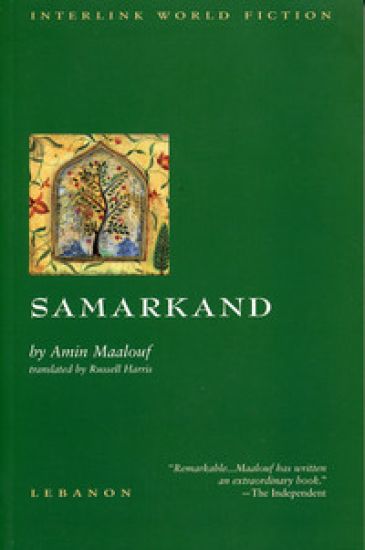
The story of Samarkand is woven around the history of the manuscript of the Rubaiyaat of Omar Khayyam, from its creation by the poet and sage in eleventh-century Persia to its loss when the Titanic sank in 1912. Unwittingly involved in a brawl on the streets of Samarkand, Omar Khayyam is brought before a local judge who recognizes his genius as a poet and gives him a blank book in which to inscribe his verses. Thus the head of a great poet is saved and the Rubaiyaat of Omar Khayyam is born. The threads of his life become interwoven with the designs of the vizier, Nizam al Mulk, and of Hassan Sabbah, the founder of the Order of the Assassins who later hides the precious manuscript in his famous mountain fortress. At the end of the nineteenth century the poems fire the imagination of the West in Edward Fitzgerald's evocative translation. An American scholar learns of the manuscript's survival and recovers it with the help of a Persian princess. Together they take it on the fateful voyage of the Titanic.
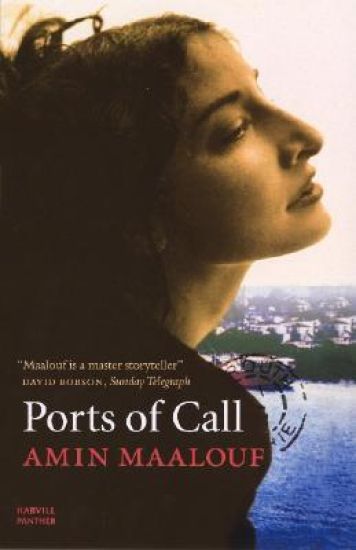
Young Turk Ossyane leaves Beruit to study in Paris during the 1930s, joins the Resistance to fight Nazi occupation, returns home a hero, meets and falls for the Jewish Clara, and settles back in the troubled Middle East. Reprint.
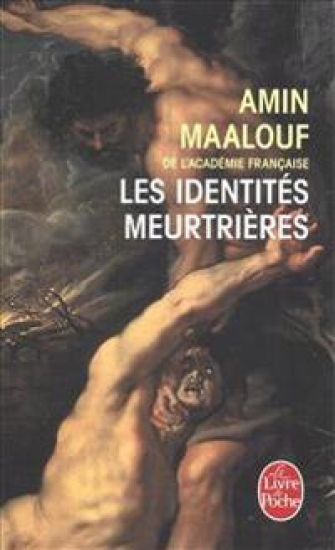
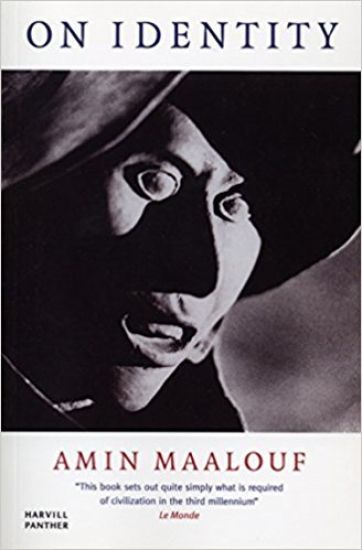
The notion of identity - personal, religious, ethnic or national - is one that has given rise to heated passions and crimes throughout the history of mankind.
The Gardens of Light
Amin Maalouf; Dorothy S. (TRN) Blair; Amin Maalouf
Interlink Books
1998
sidottu