Kirjojen hintavertailu – 12 903 725 kirjaa ja 27 kauppaa

Kirjailija

Amin Saikal

Kirjat ja teokset yhdessä paikassa: 16 kirjaa, julkaisuja vuosilta 2009–2024, suosituimpiin kuuluu Islam beyond Borders. Vertaile teosten hintoja ja tarkista saatavuus suomalaisista kirjakaupoista.

16 kirjaa

Kirjojen julkaisuvuodet: 2009–2024.

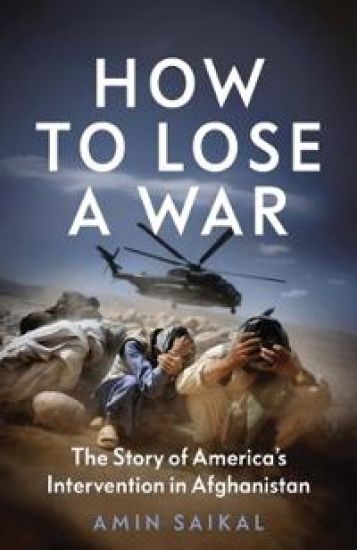
How to Lose a War

How to Lose a War

Amin Saikal

YALE UNIVERSITY PRESS
2024
sidottu
An incisive, authoritative account of the West’s failures in Afghanistan, from 9/11 to the fall of Kabul In 1958, Richard Nixon described Afghanistan as “unconquerable.” On 15 August 2021, he was proven right. After twenty years of intervention, US and NATO forces retreated, enabling the Taliban to return to power. Tens of thousands were killed in the long, unwinnable war, and millions more were displaced—leaving the future of Afghanistan hanging in the balance. Leading expert Amin Saikal traces the full story of America’s intervention, from 9/11 to the present crisis. After an initial swift military strike, the US became embroiled in a drawn-out struggle to change Afghanistan but failed to achieve its aims. Saikal shows how this failure was underlined by protracted attempts to capture Osama bin Laden, an inability to secure a viable government via “democracy promotion” efforts, and lack of wider strategy in the “war on terror.” How to Lose a War offers an insightful account of one of the US’s most significant foreign policy failures—and considers its dire consequences for the people of Afghanistan.
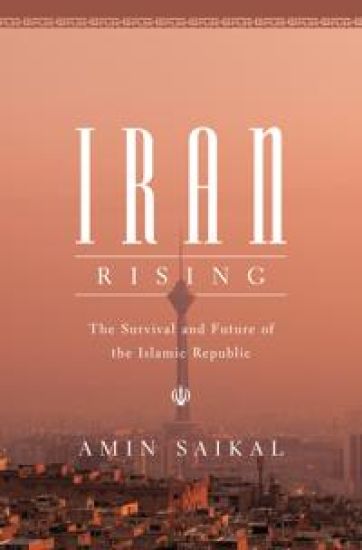
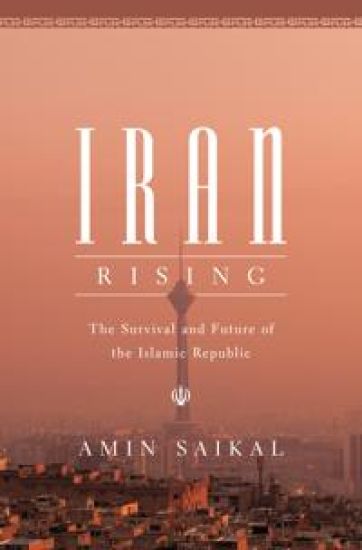
Iran Rising

Iran Rising

Amin Saikal

Princeton University Press
2021
pokkari
An authoritative account of how and why the Islamic Republic has survived to become a critical player in the Middle East and the worldWhen Iranians overthrew their pro-Western monarchy in favor of an Islamic regime in 1979, many observers predicted that revolutionary turmoil would paralyze the country for years to come. Yet in the decades since, Iran has emerged as a key player in the Middle East and the wider world. In Iran Rising, renowned Iran specialist Amin Saikal describes how the Islamic Republic has managed to survive despite ongoing domestic struggles, Western sanctions, and other serious challenges. Amid heightened global anxiety over alliances, terrorism, and nuclear threats, Iran Rising offers essential reading for understanding a country that, more than ever, is a force to watch.
The Spectre of Afghanistan

The Spectre of Afghanistan

Amin Saikal; Kirill Nourzhanov

I.B. Tauris
2021
sidottu
Aiming to connect a number of divergent perspectives on the current state of Afghanistan, this book outlines the country’s past and present instability and how this impacts and is conceptualised by its neighbours as well as by international heavyweights such as Russia, China and the United States. Given Afghanistan’s extensive cross-border ethnic, linguistic, sectarian and cultural ties with its neighbours – whatever transpires in the war-torn country is bound to have regional and global security implications. This study focuses on the current formal and informal defensive policies the states of Central Asia may or may not have in place in the event of the Afghan situation deteriorating further or the Taliban-led insurgency substantially widening their influence. The book also considers the positions and policy responses of three influential actors in the region: Russia, China and the United States. It assesses the convergence of interests between these great powers in stabilising Afghanistan, and their divergence of geopolitical objectives in the region. With President Donald Trump unpredictably upheaving American policy in Afghanistan, an assertive Russia continuing to expand its influence across Central Asia and China seeking to have a wider economic and security role in the region, this book offers a timely assessment of an internationally-important topic.
The Spectre of Afghanistan

The Spectre of Afghanistan

Amin Saikal; Kirill Nourzhanov

I.B. Tauris
2021
nidottu
Connecting a number of divergent perspectives on the current state of Afghanistan, this book outlines the country’s past and present instability and how this impacts and is conceptualised by its neighbours as well as by international heavyweights such as Russia, China and the United States. Given Afghanistan’s extensive cross-border ethnic, linguistic, sectarian and cultural ties with its neighbours – whatever transpires in the war-torn country is bound to have regional and global security implications. This study focuses on the current formal and informal defensive policies the states of Central Asia have in place in the event of the Afghan situation deteriorating further or the Taliban-led insurgency substantially widening their influence. The book also considers the positions and policy responses of three influential actors in the region: Russia, China and the United States. It assesses the convergence of interests between these great powers in stabilising Afghanistan, and their divergence of geopolitical objectives in the region.
The Soviet Union As An Asianpacific Power

The Soviet Union As An Asianpacific Power

Ramesh Thakur; Carlyle A. Thayer; G J Gill; Amin Saikal

Routledge
2020
nidottu
This volume provides a useful analysis of the domestic dimension of Soviet foreign policy in Asia/Pacific. It considers the implications of Gorbachev's 1986 Vladivostok Initiative on Northeast Asia, Southeast Asia, South Asia, and the South Pacific.
Regime Change In Afghanistan

Regime Change In Afghanistan

Amin Saikal; William Maley

Routledge
2020
nidottu
This book is a study of regime change in an underdeveloped country with a weak state and strong autonomous social organizations. Regime change is in many countries a traumatic and disruptive experience, but few countries have paid as high a cost to retain traditionally accepted relationships of authority as has Afghanistan since the communist coup
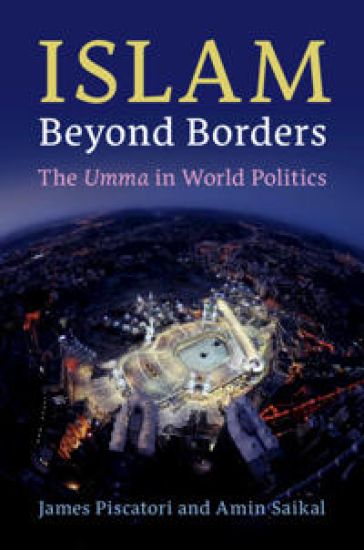
Islam beyond Borders

Islam beyond Borders

James Piscatori; Amin Saikal

Cambridge University Press
2019
pokkari
Assuming a central place in Muslim life, the Qur'an speaks of one community of the faith, the umma. This unity of the faithful is recognised as the default aspiration of the believer, and in the modern era, intellectuals and political leaders have often vied both to define, and to lead it. Based on case studies of actors such as Saudi Arabia, Iran, and ISIS, James Piscatori and Amin Saikal consider how some appeals to pan-Islam prove useful, yet other attempts at cross-border institutionalisation including the Sunni Caliphate or the modern Shi'i-inspired Islamic Revolution, founder on political self-interest and sectarian affiliations. Accompanied by a range of scriptural references to examine different interpretations of the umma, Piscatori and Saikal explore why, despite it meaning such widely different things, and its failure to be realised as a concrete project, neither the umma's popular symbolic appeal nor its influence on a politics of identity has diminished.
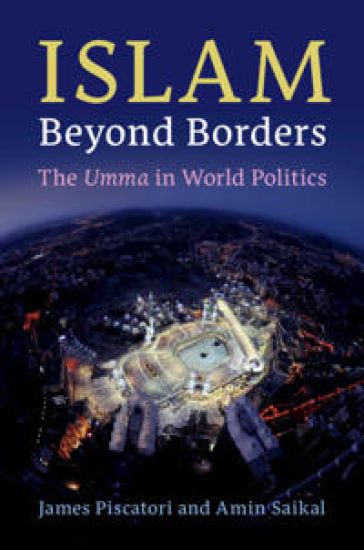
Islam beyond Borders

Islam beyond Borders

James Piscatori; Amin Saikal

Cambridge University Press
2019
sidottu
Assuming a central place in Muslim life, the Qur'an speaks of one community of the faith, the umma. This unity of the faithful is recognised as the default aspiration of the believer, and in the modern era, intellectuals and political leaders have often vied both to define, and to lead it. Based on case studies of actors such as Saudi Arabia, Iran, and ISIS, James Piscatori and Amin Saikal consider how some appeals to pan-Islam prove useful, yet other attempts at cross-border institutionalisation including the Sunni Caliphate or the modern Shi'i-inspired Islamic Revolution, founder on political self-interest and sectarian affiliations. Accompanied by a range of scriptural references to examine different interpretations of the umma, Piscatori and Saikal explore why, despite it meaning such widely different things, and its failure to be realised as a concrete project, neither the umma's popular symbolic appeal nor its influence on a politics of identity has diminished.
Regime Change In Afghanistan

Regime Change In Afghanistan

Amin Saikal; William Maley

Routledge
2019
sidottu
This book is a study of regime change in an underdeveloped country with a weak state and strong autonomous social organizations. Regime change is in many countries a traumatic and disruptive experience, but few countries have paid as high a cost to retain traditionally accepted relationships of authority as has Afghanistan since the communist coup
The Soviet Union As An Asianpacific Power

The Soviet Union As An Asianpacific Power

Ramesh Thakur; Carlyle A. Thayer; G J Gill; Amin Saikal

Routledge
2019
sidottu
This volume provides a useful analysis of the domestic dimension of Soviet foreign policy in Asia/Pacific. It considers the implications of Gorbachev's 1986 Vladivostok Initiative on Northeast Asia, Southeast Asia, South Asia, and the South Pacific.
Iran Rising

Iran Rising

Amin Saikal

Princeton University Press
2019
sidottu
An authoritative account of how and why the Islamic Republic has survived to become a critical player in the Middle East and the worldWhen Iranians overthrew their monarchy, rejecting a pro-Western shah in favor of an Islamic regime, many observers predicted that revolutionary turmoil would paralyze the country for decades to come. Yet forty years after the 1978–79 revolution, Iran has emerged as a critical player in the Middle East and the wider world, as demonstrated in part by the 2015 international nuclear agreement. In Iran Rising, renowned Iran specialist Amin Saikal describes how the country has managed to survive despite ongoing domestic struggles, Western sanctions, and countless other serious challenges. Saikal explores Iran’s recent history, beginning with the revolution, which set in motion a number of developments, including war with Iraq, precarious relations with Arab neighbors, and hostilities with Israel and the United States. He highlights the regime’s agility as it navigated a complex relationship with Afghanistan during the Soviet invasion, survived the Gulf wars, and handled fallout from the Iraqi and Syrian crises. Such success, Saikal maintains, stems from a distinctive political order, comprising both a supreme Islamic leader and an elected president and national assembly, which can fuse religious and nationalist assertiveness with pragmatic policy actions at home and abroad. But Iran’s accomplishments, including its nuclear development and ability to fight ISIS, have cost its people, who are desperately pressuring the ruling clerics for economic and social reforms—changes that might in turn influence the country’s foreign policy. Amid heightened global anxiety over alliances, terrorism, and nuclear threats, Iran Rising offers essential reading for understanding a country that, more than ever, is a force to watch.
Iran Rising: The Survival and Future of the Islamic Republic
On the fortieth anniversary of the 1978-79 Iranian revolution, a definitive political picture of the Islamic RepublicWhen Iranians overthrew their monarchy, rejecting a pro-Western shah in favor of an Islamic regime, many observers predicted that revolutionary turmoil would paralyze the country for decades to come. Yet forty years after the 1978-79 revolution, Iran has emerged as a critical player in the Middle East and the wider world, as demonstrated in part by the 2015 international nuclear agreement. In Iran Rising, renowned Iran specialist Amin Saikal describes how the country has managed to survive despite ongoing domestic struggles, Western sanctions, and countless other serious challenges. Saikal explores Iran's recent history, beginning with the revolution, which set in motion a number of developments, including war with Iraq, precarious relations with Arab neighbors, and hostilities with Israel and the United States. He highlights the regime's agility as it navigated a complex relationship with Afghanistan during the Soviet invasion, survived the Gulf wars, and handled fallout from the Iraqi and Syrian crises. Such success, Saikal maintains, stems from a distinctive political order, comprising both a supreme Islamic leader and an elected president and national assembly, which can fuse religious and nationalist assertiveness with pragmatic policy actions at home and abroad. But Iran's accomplishments, including its nuclear development and ability to fight ISIS, have cost its people, who are desperately pressuring the ruling clerics for economic and social reforms-changes that might in turn influence the country's foreign policy. Amid heightened global anxiety over alliances, terrorism, and nuclear threats, Iran Rising offers essential reading for understanding a country that, more than ever, is a force to watch.
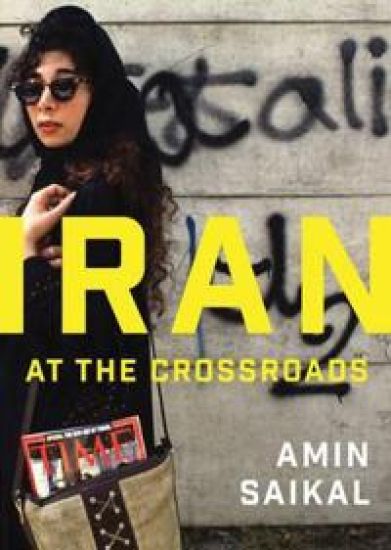
Iran at the Crossroads

Iran at the Crossroads

Amin Saikal

Polity Press
2015
nidottu
Iran stands at a critical juncture in its history. In the era of Presidents Hassan Rouhani and Barack Obama, the Islamic Republic has a unique opportunity to regain its traditional greatness as a cradle of rich civilisation and culture, with a capacity to be a very influential and stabilising regional actor. In this incisive analysis, Amin Saikal, a leading expert on Iranian politics, traces Iran’s transition from pro-Western monarchy to Islamic Republic and explores the choices open to Rouhani’s moderate reformist government. The Islamic Republic has endured a difficult journey throughout its existence. But since Khomeini assumed power in 1979it has been characterised by a degree of exceptionalism, which has seen Iran lock horns with the United States and prove itself an effective and shrewdly calculating player on the international stage. Looking to the future, Saikal does not shy away from confronting the difficult choices facing Iran today. Failure to achieve reconciliation with the United States in the coming years, he argues, will not only have serious implications for Iran’s internal stability and for the future security of the Middle East, but also for America’s position within this volatile and unpredictable region.
Iran at the Crossroads

Iran at the Crossroads

Amin Saikal

Polity Press
2015
sidottu
Iran stands at a critical juncture in its history. In the era of Presidents Hassan Rouhani and Barack Obama, the Islamic Republic has a unique opportunity to regain its traditional greatness as a cradle of rich civilisation and culture, with a capacity to be a very influential and stabilising regional actor. In this incisive analysis, Amin Saikal, a leading expert on Iranian politics, traces Iran’s transition from pro-Western monarchy to Islamic Republic and explores the choices open to Rouhani’s moderate reformist government. The Islamic Republic has endured a difficult journey throughout its existence. But since Khomeini assumed power in 1979it has been characterised by a degree of exceptionalism, which has seen Iran lock horns with the United States and prove itself an effective and shrewdly calculating player on the international stage. Looking to the future, Saikal does not shy away from confronting the difficult choices facing Iran today. Failure to achieve reconciliation with the United States in the coming years, he argues, will not only have serious implications for Iran’s internal stability and for the future security of the Middle East, but also for America’s position within this volatile and unpredictable region.
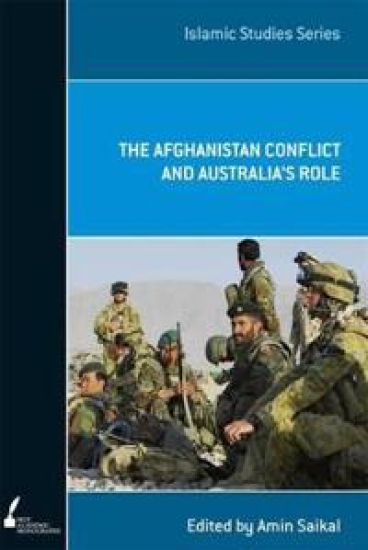
The Afghanistan Conflict and Australia's Role

The Afghanistan Conflict and Australia's Role

Amin Saikal

MELBOURNE UNIVERSITY PRESS
2011
nidottu
A decade after the US-led invasion of Afghanistan in October 2001, the country continues to face a growing insurgency and crises of governance. The Afghanistan Conflict and Australia's Role tackles a number of critical dimensions-politics, society, military, and reconstruction-of this conflict from a range of perspectives. This book unpacks the nature and complexity of the conflict at national and international levels. It makes a critical assessment of the performance of President Hamid Karzai and his government, and the efforts made by the international community, the US and its NATO and non-NATO allies in particular, to stabilise, rebuild and secure Afghanistan as a viable state. In addition, it examines critically the role played by Australia in the conflict. The conclusions are far-reaching, with relevance to anyone interested in the interconnectedness of many contemporary issues-governance, democratisation, development, the role of the media, and counterinsurgency.
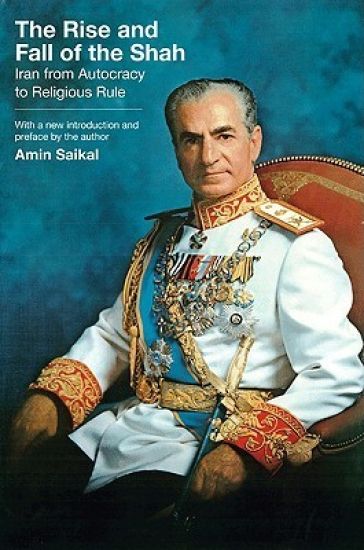
The Rise and Fall of the Shah

The Rise and Fall of the Shah

Amin Saikal

Princeton University Press
2009
pokkari
On November 4, 1979, when students occupied the American Embassy in Tehran and subsequently demanded that the United States return the Shah in exchange for hostages, the deposed Iranian ruler's regime became the focus of worldwide scrutiny and controversy. But, as Amin Saikal shows, this was far from the beginning of Iran's troubles. Saikal examines the rule of Mohammad Reza Shah Pahlavi, especially from 1953 to 1979, in the context of his regime's dependence on the United States and his dreams of transforming Iran into a world power. Saikal argues that, despite the Shah's early achievements, his goals and policies were full of inherent contradictions and weaknesses and ultimately failed to achieve their objectives. Based on government documents, published and unpublished literature, and interviews with officials in Iran, Britain, and the United States, The Rise and Fall of the Shah critically reviews the domestic and foreign policy objectives--as well as the behavior--of the Shah to explain not only what happened, but how and why. In a new introduction, Saikal reflects on what has happened in Iran since the fall of the Shah and relates Iran's past to its political present and future.