

Kirjailija
Amit Yadav
Kirjat ja teokset yhdessä paikassa: 19 kirjaa, julkaisuja vuosilta 2012–2026, suosituimpiin kuuluu Behind the Locked Door. Vertaile teosten hintoja ja tarkista saatavuus suomalaisista kirjakaupoista.
19 kirjaa
Kirjojen julkaisuvuodet: 2012–2026.






Tervetuloa Pohjoismaiden suurimpaan verkkokirjakauppaan! Adlibris kannattaa sananvapautta, ja haluamme edistää kirjallisuuden ja tiedon saatavuutta.

Darkest Female Secrets that NO Woman Wants You to Know
Amit Yadav
Independently Published
2025
pokkari
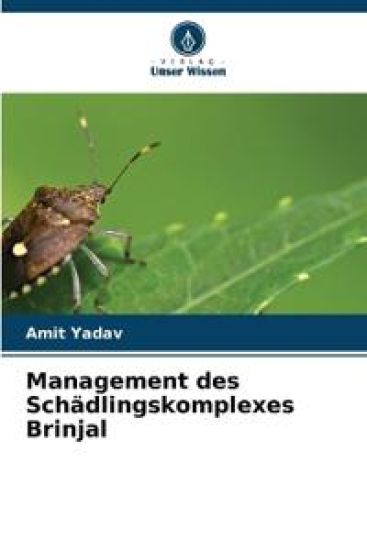
Brinjal ist anf llig f r ung nstige Umweltbedingungen wie strengen Frost sowie eine lange und warme Wachstumsperiode. Durch die Entwicklung neuerer Sorten und Anbautechnologien ist es jedoch m glich geworden, die Pflanze das ganze Jahr ber anzubauen. Weltweit steht China an erster Stelle bei der Produktion von Brinjal (56 % der Weltproduktion). Indien steht an zweiter Stelle und tr gt mit 10378 (in 000 MT) zur Weltproduktion bei. In Indien wird diese Pflanze auf einer Fl che von 6 Lakh Hektar angebaut, mit einer j hrlichen Produktion von 10378 (in 000 MT) und einer Produktivit t von 17,2 MT pro Hektar. In Uttar Pradesh betr gt die Anbaufl che von Brinjal 2900 ha mit einer Produktion von 22.000 MT und einer Produktivit t von 7,58 MT/ha (NHB, Datenbank, 2008-09). Diese wichtige Kulturpflanze wird w hrend der gesamten Wachstumsperiode von zahlreichen Schadinsekten befallen, die den rentablen Anbau einschr nken. Die wichtigsten Schadinsekten sind der Trieb- und Fruchtbohrer (Leucinodes orbonalis Guenee), die Florfliege (Urentius sentis Distant), der Hadda-K fer (Epilachna vigintioctopunctata Fabricius), die Jassid (Amarasca biguttula biguttula Ishida), der St ngelbohrer (Euzophera perticella Rag.), die Wei e Fliege (Bemisia tabaci (Genn.)) und als kleinere Sch dlinge die Blattlaus.
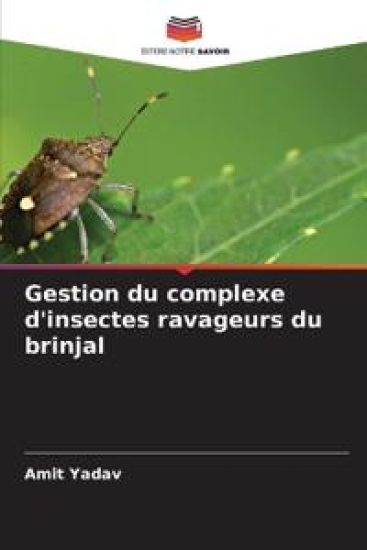
Le brinjal est sensible aux conditions environnementales d favorables telles que les fortes gel es, ainsi qu' une saison de croissance longue et chaude. Toutefois, le d veloppement de nouvelles vari t s et de nouvelles technologies de production a permis de cultiver le brinjal tout au long de l'ann e. Au niveau mondial, la Chine occupe la premi re place dans la production de brinjal (56 % de la production mondiale). L'Inde occupe la deuxi me place, avec une contribution de 10378 (en milliers de tonnes) la production mondiale. En Inde, cette culture occupe une superficie de 6 lakh hectares, avec une production annuelle de 10378 (en milliers de tonnes) et une productivit de 17,2 tonnes par hectare. Dans l'Uttar Pradesh, la superficie cultiv e en brinjal est de 2900 ha produisant 22 000 tonnes et la productivit est de 7,58 tonnes par hectare (NHB, Database, 2008-09). Cette culture importante est soumise aux attaques de nombreux insectes ravageurs tout au long de sa p riode de croissance, ce qui constitue un facteur limitant pour une culture rentable. Les principaux insectes nuisibles sont le foreur des pousses et des fruits (Leucinodes orbonalis Guenee), la punaise de la dentelle (Urentius sentis Distant), le scarab e hadda (Epilachna vigintioctopunctata Fabricius), le jasside (Amarasca biguttula biguttula Ishida), le foreur de la tige du brinjal (Euzophera perticella Rag.), la mouche blanche, Bemisia tabaci (Genn.), tandis que les ravageurs mineurs sont le puceron.
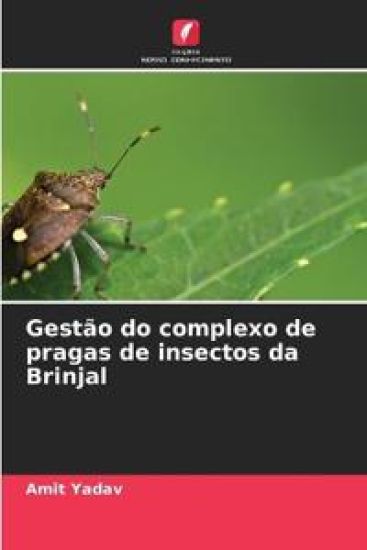
Gestão do complexo de pragas de insectos da Brinjal
Amit Yadav
Edicoes Nosso Conhecimento
2024
pokkari
A couve-brinjal suscet vel a condi es ambientais adversas, como geadas severas, bem como a um per odo de crescimento longo e quente. No entanto, o desenvolvimento de novas variedades e de tecnologias de produ o vegetal tornou poss vel a sua produ o durante todo o ano. A n vel mundial, a China ocupa o primeiro lugar na produ o de brinjal (56% da produ o mundial). A ndia ocupa o segundo lugar, contribuindo com 10378 (em milhares de toneladas) para a produ o mundial. Na ndia, esta cultura ocupa uma rea de 6 lakh hectares, com uma produ o anual de 10378 (em 000 TM) e uma produtividade de 17,2 TM por hectare. Em Uttar Pradesh, a rea cultivada de brinjal de 2900 ha, produzindo 22 000 TM e a produtividade de 7,58 TM/ha (NHB, base de dados, 2008-09). Esta importante cultura est sujeita ao ataque de muitas pragas de insectos ao longo do seu per odo de crescimento, o que constitui um fator limitativo do seu cultivo rent vel. As pragas de insectos importantes s o a broca do rebento e do fruto (Leucinodes orbonalis Guenee), o percevejo (Urentius sentis Distant), o escaravelho (Epilachna vigintioctopunctata Fabricius), o jass deo (Amarasca biguttula biguttula Ishida), a broca do caule da brinjal (Euzophera perticella Rag.), a mosca branca, Bemisia tabaci (Genn.), enquanto as pragas menores incluem o af deo.
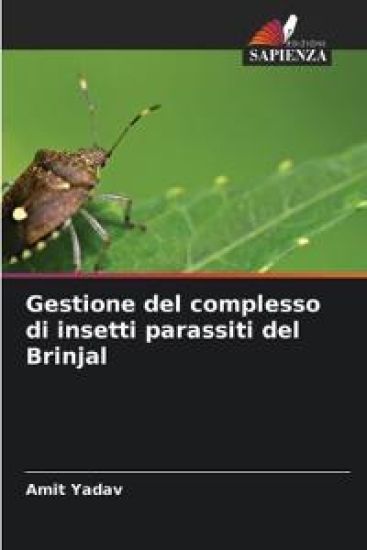
Il Brinjal sensibile a condizioni ambientali avverse, come forti gelate e stagioni di crescita lunghe e calde. Tuttavia, lo sviluppo di nuove variet e di tecnologie di produzione ha reso possibile la coltivazione della pianta durante tutto l'anno. A livello mondiale, la Cina al primo posto nella produzione di brinjal (56% della produzione mondiale). L'India al secondo posto, con un contributo di 10378 (in 000 MT) alla produzione mondiale. In India, questa coltura occupa una superficie di 6.000 ettari, con una produzione annuale di 10378 (in 000 MT) e una produttivit di 17,2 MT per ettaro. Nell'Uttar Pradesh, l'area coltivata a brinjal di 2900 ettari con una produzione di 22.000 MT e una produttivit di 7,58 MT/ha (NHB, Database, 2008-09). Questa importante coltura soggetta all'attacco di numerosi insetti parassiti durante tutto il periodo di crescita, che agiscono come fattore limitante per una coltivazione redditizia. Gli insetti pi importanti sono la piralide dei germogli e dei frutti (Leucinodes orbonalis Guenee), la cimice delle ali (Urentius sentis Distant), il coleottero hadda (Epilachna vigintioctopunctata Fabricius), il jassid (Amarasca biguttula biguttula Ishida), la piralide del gambo del brinjal (Euzophera perticella Rag.), la mosca bianca, Bemisia tabaci (Genn.), mentre i parassiti minori includono gli afidi.
Intellectual property. Analysis of the general concept and roots of its rights in Indians systems
Amit Yadav
GRIN Verlag
2020
nidottu
Ordinance Making Powers in Indian constitution
Vijaylaxmi Sharma; Amit Yadav
Lap Lambert Academic Publishing
2020
nidottu
Study of Repetitive Corrugation and Straightening Process
Sandeep Kumar; Amit Yadav
Scholars' Press
2019
pokkari
Repetitive Corrugation and Straightening (RCS) process is one of the Severe Plastic Deformation (SPD) techniques which introduces a large amount of plastic deformation in a sheet workpiece without significantly changing its cross-sectional geometry. In present work experimentation and Finite Element (FE) study of Repetitive Corrugation and Straightening (RCS) process is being attempted. The work is done in two parts i.e. Finite Element Study and Experimentation work. In the Finite Element study, the effect of triangular and circular teeth effect has been studied and an intermediate teeth design is used. The teeth are of triangular in shape with a rounded top. Experimentation of RCS process is attempted with a 100mm x 100mm x 1 mm of Al6061 sheet. Experimentation was performed for three cycles of RCS process giving 90 Clockwise rotation along the perpendicular axis to the surface after each pass. Three mechanical tests were performed viz. Micro Hardness test, Tensile test and Stiffness test. To study the effect of the process these tests were performed on processed as well as unprocessed sheet sample. The hardness test shows an increase in hardness after every pass.
Design and Analysis of Intelligent Fire Detection System for Aircraft
Amit Yadav; Abhijeet Agarwal
SCHOLARS' PRESS
2018
nidottu
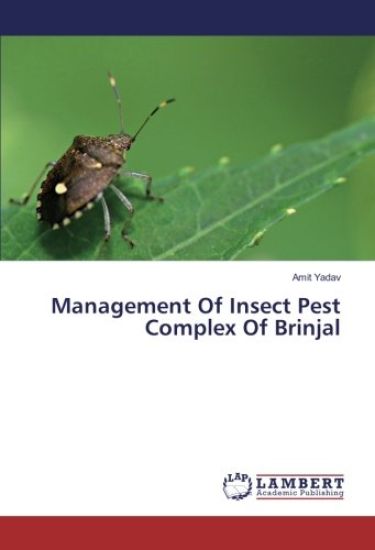
Management Of Insect Pest Complex Of Brinjal
Amit Yadav
Lap Lambert Academic Publishing
2017
nidottu

Performance Evaluation of Common Water Purifiers
Amit Yadav; Aparna Shukla
Lap Lambert Academic Publishing
2012
nidottu
Sustainable Energy Production from Jatropha Bio-Diesel
Amit Yadav
LAP Lambert Academic Publishing
2012
pokkari