Kirjojen hintavertailu – 12 903 725 kirjaa ja 27 kauppaa

Kirjailija

Amrita Pande

Kirjat ja teokset yhdessä paikassa: 5 kirjaa, julkaisuja vuosilta 2014–2023, suosituimpiin kuuluu Wombs in Labor. Vertaile teosten hintoja ja tarkista saatavuus suomalaisista kirjakaupoista.

5 kirjaa

Kirjojen julkaisuvuodet: 2014–2023.

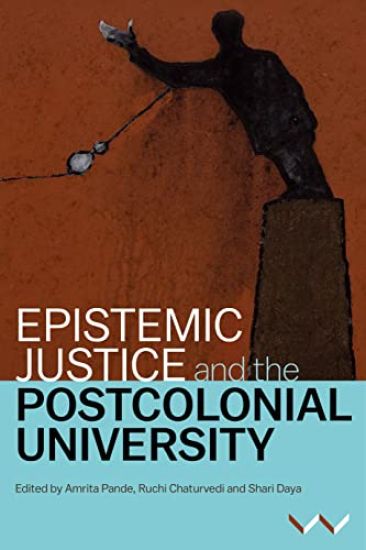
Epistemic Justice and the Postcolonial University

Epistemic Justice and the Postcolonial University

Amrita Pande; Ruchi Chaturvedi; Shari Daya; Sepideh Azari; Koni Benson; Hal Cooper; Kerusha Govender; Shose Kessi; Nomusa Makhubu; Athambile Masola; Lungisile Ntsebeza; Jameelah Omar; Kealeboga Ramaru; Ari Sitas; Rike Sitas

WITS UNIVERSITY PRESS
2023
pokkari
This book addresses urgent current debates on decolonisation by offering reimagined teaching and learning interventions for obtaining greater epistemic justice in the contemporary postcolonial university. At a time when debates on decolonisation have gained urgency in academic, civic and public spaces, this interdisciplinary collection by authors based at the University of Cape Town, South Africa, serves as a valuable archive documenting and reflecting on a turbulent period in South African higher education. It is an important resource for academics looking to grasp debates on decoloniality both in South Africa, and in university and teaching spaces further afield. Calling for concerted and collaborative work towards greater epistemic justice across diverse disciplines, the book puts forward a new vision of the postcolonial university as one that enables excellent teaching and learning, undertaken in a spirit of critical consciousness and reciprocity.
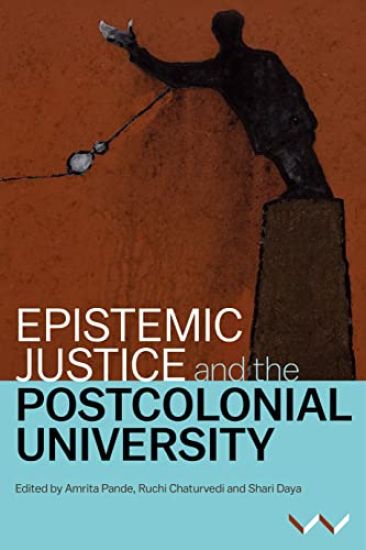
Epistemic Justice and the Postcolonial University

Epistemic Justice and the Postcolonial University

Amrita Pande; Ruchi Chaturvedi; Shari Daya; Sepideh Azari; Koni Benson; Hal Cooper; Kerusha Govender; Shose Kessi; Nomusa Makhubu; Athambile Masola; Lungisile Ntsebeza; Jameelah Omar; Kealeboga Ramaru; Ari Sitas; Rike Sitas

WITS UNIVERSITY PRESS
2023
sidottu
This book addresses urgent current debates on decolonisation by offering reimagined teaching and learning interventions for obtaining greater epistemic justice in the contemporary postcolonial university. At a time when debates on decolonisation have gained urgency in academic, civic and public spaces, this interdisciplinary collection by authors based at the University of Cape Town, South Africa, serves as a valuable archive documenting and reflecting on a turbulent period in South African higher education. It is an important resource for academics looking to grasp debates on decoloniality both in South Africa, and in university and teaching spaces further afield. Calling for concerted and collaborative work towards greater epistemic justice across diverse disciplines, the book puts forward a new vision of the postcolonial university as one that enables excellent teaching and learning, undertaken in a spirit of critical consciousness and reciprocity.

Scripting Defiance – Four Sociological Vignettes

Scripting Defiance – Four Sociological Vignettes

Ari Sitas; Sumangala Damodaran; Amrita Pande; Wiebke Keim; Nicos Trimikliniotis

Tulika Books
2022
sidottu
This is the second volume from the authors (along with several others) of Gauging and Engaging Deviance, which is positioned between the ideas of deviance and defiance and attempts to uncover scripts through which notions of deviance as well as acts of defiance unravel. It argues that instead of the monologue about the binary of European modernity and its traditional backwoods, the contours are to be found in another archive, one that is made up of significant scripts or narratives of defiance that endure through subaltern people's cultural formations despite and in response to dominant ideas and ideologies. Such scripts within this archive will help sociology reconstitute itself away from its original mandate: to be part of the fixers, to help the maintenance of social order, to predict and control aberrant behaviour and to create functional individuals and ensembles. The chapters look at specific figures of discontent: the worker, the woman, the student, the artist, the migrant and refugee, the prisoner, and, as a counter-voice, the movements of reaction to their discontent, the movements of authoritative restoration.
Wombs in Labor

Wombs in Labor

Amrita Pande

Columbia University Press
2014
sidottu
Surrogacy is India's new form of outsourcing, as couples from all over the world hire Indian women to bear their children for a fraction of the cost of surrogacy elsewhere with little to no government oversight or regulation. In the first detailed ethnography of India's surrogacy industry, Amrita Pande visits clinics and hostels and speaks with surrogates and their families, clients, doctors, brokers, and hostel matrons in order to shed light on this burgeoning business and the experiences of the laborers within it. From recruitment to training to delivery, Pande's research focuses on how reproduction meets production in surrogacy and how this reflects characteristics of India's larger labor system. Pande's interviews prove surrogates are more than victims of disciplinary power, and she examines the strategies they deploy to retain control over their bodies and reproductive futures. While some women are coerced into the business by their families, others negotiate with clients and their clinics to gain access to technologies and networks otherwise closed to them. As surrogates, the women Pande meets get to know and make the most of advanced medical discoveries. They traverse borders and straddle relationships that test the boundaries of race, class, religion, and nationality. Those who focus on the inherent inequalities of India's surrogacy industry believe the practice should be either banned or strictly regulated. Pande instead advocates for a better understanding of this complex labor market, envisioning an international model of fair-trade surrogacy founded on openness and transparency in all business, medical, and emotional exchanges.
Wombs in Labor

Wombs in Labor

Amrita Pande

Columbia University Press
2014
pokkari
Surrogacy is India's new form of outsourcing, as couples from all over the world hire Indian women to bear their children for a fraction of the cost of surrogacy elsewhere with little to no government oversight or regulation. In the first detailed ethnography of India's surrogacy industry, Amrita Pande visits clinics and hostels and speaks with surrogates and their families, clients, doctors, brokers, and hostel matrons in order to shed light on this burgeoning business and the experiences of the laborers within it. From recruitment to training to delivery, Pande's research focuses on how reproduction meets production in surrogacy and how this reflects characteristics of India's larger labor system. Pande's interviews prove surrogates are more than victims of disciplinary power, and she examines the strategies they deploy to retain control over their bodies and reproductive futures. While some women are coerced into the business by their families, others negotiate with clients and their clinics to gain access to technologies and networks otherwise closed to them. As surrogates, the women Pande meets get to know and make the most of advanced medical discoveries. They traverse borders and straddle relationships that test the boundaries of race, class, religion, and nationality. Those who focus on the inherent inequalities of India's surrogacy industry believe the practice should be either banned or strictly regulated. Pande instead advocates for a better understanding of this complex labor market, envisioning an international model of fair-trade surrogacy founded on openness and transparency in all business, medical, and emotional exchanges.