Kirjojen hintavertailu – 12 875 186 kirjaa ja 26 kauppaa

Kirjailija

Amy Finkelstein

Kirjat ja teokset yhdessä paikassa: 3 kirjaa, julkaisuja vuosilta 2014–2023, suosituimpiin kuuluu Moral Hazard in Health Insurance. Vertaile teosten hintoja ja tarkista saatavuus suomalaisista kirjakaupoista.

3 kirjaa

Kirjojen julkaisuvuodet: 2014–2023.

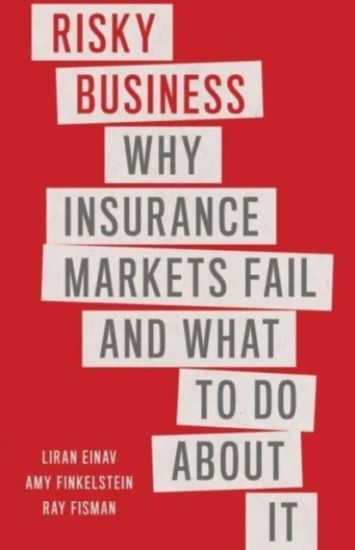
Risky Business

Risky Business

Liran Einav; Amy Finkelstein; Ray Fisman

YALE UNIVERSITY PRESS
2023
pokkari
An engaging and accessible examination of what ails insurance markets—and what to do about it—by three leading economists “The authors . . . do a masterful job of explaining the intractable complexities created by this socially vital activity.”—Martin Wolf, Financial Times, “Best Books of 2022: Economics” Why is dental insurance so crummy? Why is pet insurance so expensive? Why does your auto insurer ask for your credit score? The answer to these questions lies in understanding how insurance works. Unlike the market for other goods and services—for instance, a grocer who doesn’t care who buys the store’s broccoli or carrots—insurance providers are more careful in choosing their customers, because some are more expensive than others. Unraveling the mysteries of insurance markets, Liran Einav, Amy Finkelstein, and Ray Fisman explore such issues as why insurers want to know so much about us and whether we should let them obtain this information; why insurance entrepreneurs often fail (and some tricks that may help them succeed); and whether we’d be better off with government-mandated health insurance instead of letting businesses, customers, and markets decide who gets coverage and at what price. With insurance at the center of divisive debates about privacy, equity, and the appropriate role of government, this book offers clear explanations for some of the critical business and policy issues you’ve often wondered about, as well as for others you haven’t yet considered.
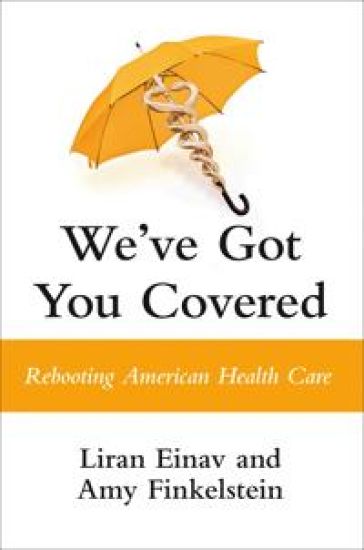
We've Got You Covered

We've Got You Covered

Liran Einav; Amy Finkelstein

Penguin Putnam Inc
2023
sidottu
From a MacArthur Genius ​MIT economist and pre-eminent Stanford economist comes a lively and provocative proposal for American health insurance reform Few of us need convincing that the American health insurance system needs reform. But many of the existing proposals focus on expanding one relatively successful piece of the system or building in piecemeal additions. These proposals miss the point. As the Stanford health economist Liran Einav and the MIT economist and MacArthur Genius Amy Finkelstein argue, our health care system was never deliberately designed, but rather pieced together to deal with issues as they became politically relevant. The result is a sprawling yet arbitrary and inadequate mess. It has left 30 million Americans without formal insurance. Many of the rest live in constant danger of losing their coverage if they lose their job, give birth, get older, get healthier, get richer, or move. It's time to tear it all down and rebuild, sensibly and deliberately. Marshaling original research, striking insights from American history, and comparative analysis of what works and what doesn't from systems around the world, Einav and Finkelstein argue for automatic, basic, and free universal coverage for everyone, along with the option to buy additional, supplemental coverage. Their wholly original argument and comprehensive blueprint for an American universal health insurance system will surprise and provoke. We've Got You Covered is an erudite yet lively and accessible prescription we cannot afford to ignore.
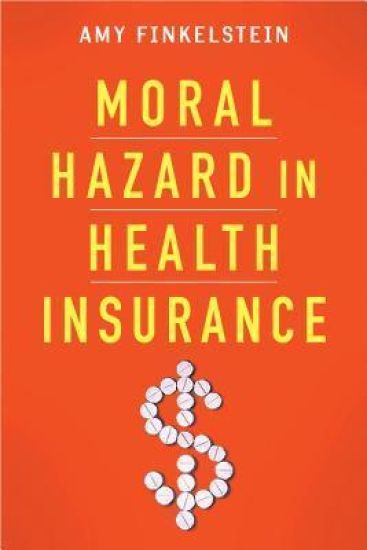
Moral Hazard in Health Insurance

Moral Hazard in Health Insurance

Amy Finkelstein

Columbia University Press
2014
sidottu

Halvin toimitettuna 26,20 €

Moral hazard-the tendency to change behavior when the cost of that behavior will be borne by others-is a particularly tricky question when considering health care. Kenneth J. Arrow's seminal 1963 paper on this topic (included in this volume) was one of the first to explore the implication of moral hazard for health care, and Amy Finkelstein-recognized as one of the world's foremost experts on the topic-here examines this issue in the context of contemporary American health care policy. Drawing on research from both the original RAND Health Insurance Experiment and her own research, including a 2008 Health Insurance Experiment in Oregon, Finkelstein presents compelling evidence that health insurance does indeed affect medical spending and encourages policy solutions that acknowledge and account for this. The volume also features commentaries and insights from other renowned economists, including an introduction by Joseph P. Newhouse that provides context for the discussion, a commentary from Jonathan Gruber that considers provider-side moral hazard, and reflections from Joseph E. Stiglitz and Kenneth J. Arrow.