
Kirjojen hintavertailu – 12 859 828 kirjaa ja 27 kauppaa

Kirjailija

Ana Maria Martins

Kirjat ja teokset yhdessä paikassa: 2 kirjaa, julkaisuja vuosilta 2023–2025, suosituimpiin kuuluu The Syntax of Portuguese. Vertaile teosten hintoja ja tarkista saatavuus suomalaisista kirjakaupoista.

2 kirjaa

Kirjojen julkaisuvuodet: 2023–2025.

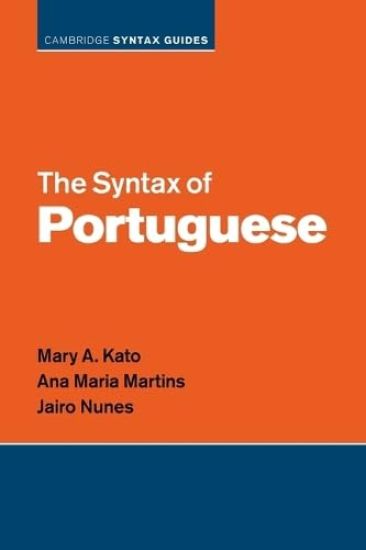
The Syntax of Portuguese

The Syntax of Portuguese

Mary A. Kato; Ana Maria Martins; Jairo Nunes

Cambridge University Press
2025
pokkari
Portuguese is the second most spoken Romance language in the world, and due to recent interest in comparative syntax, the literature on its syntax has increased exponentially, resulting in exciting discoveries of a range of aspects that have hitherto been overlooked. This book provides a theoretically grounded overview of the major syntactic properties of Portuguese, focusing on the differences between European and Brazilian Portuguese. It shows from a theoretical point of view how different syntactic properties are interconnected by comparing and contrasting the variances between pronominal and agreement systems, null subjects, null complements, and word order. It also highlights how small differences in the specification of syntactic properties may yield quite different dialects. It introduces key theoretical points without technical jargon, making the content accessible to specialist and non-specialists alike. It is essential reading for both academic researchers and students of Portuguese language, comparative syntax, Romance linguistics, and theoretical syntax.
The Syntax of Portuguese

The Syntax of Portuguese

Mary A. Kato; Ana Maria Martins; Jairo Nunes

Cambridge University Press
2023
sidottu
Portuguese is the second most spoken Romance language in the world, and due to recent interest in comparative syntax, the literature on its syntax has increased exponentially, resulting in exciting discoveries of a range of aspects that have hitherto been overlooked. This book provides a theoretically grounded overview of the major syntactic properties of Portuguese, focusing on the differences between European and Brazilian Portuguese. It shows from a theoretical point of view how different syntactic properties are interconnected by comparing and contrasting the variances between pronominal and agreement systems, null subjects, null complements, and word order. It also highlights how small differences in the specification of syntactic properties may yield quite different dialects. It introduces key theoretical points without technical jargon, making the content accessible to specialist and non-specialists alike. It is essential reading for both academic researchers and students of Portuguese language, comparative syntax, Romance linguistics, and theoretical syntax.