Kirjojen hintavertailu – 12 903 724 kirjaa ja 27 kauppaa

Kirjailija

Anahi Morales Hudon

Kirjat ja teokset yhdessä paikassa: 3 kirjaa, julkaisuja vuosilta 2016–2025, suosituimpiin kuuluu Indigenous Women’s Movements in Latin America. Vertaile teosten hintoja ja tarkista saatavuus suomalaisista kirjakaupoista.

3 kirjaa

Kirjojen julkaisuvuodet: 2016–2025.

Social Innovation for Real-World Transformation

Social Innovation for Real-World Transformation

Julie Chateauvert; Philippe Dufort; Jonathan Durand Folco; Christopher Gunter; Krys Maki; Anahi Morales Hudon; Philippe Néméh-Nombré; Julie Paquette; Jamel Stambouli; Simon Tremblay-Pepin; Amanda Wilson

Bristol University Press
2025
nidottu

Halvin toimitettuna 29,80 €

Available open access digitally under CC-BY-NC-ND licence. In an era where ‘social innovation’ is often used as a buzzword, this book challenges readers to rethink its true potential for addressing the systemic roots of our most pressing social and environmental crises. The authors present a practical and visionary approach to social innovation and provide a comprehensive set of tools and strategies for transformative change, rooted in a critical and emancipatory perspective. By balancing rigorous theoretical insights with actionable strategies, the book empowers and inspires readers in their efforts to confront social and environmental injustices and build the skills needed to drive meaningful and effective social change. This is a call to action for anyone seeking to challenge the status quo and push the boundaries of what is possible in creating a just and sustainable world.
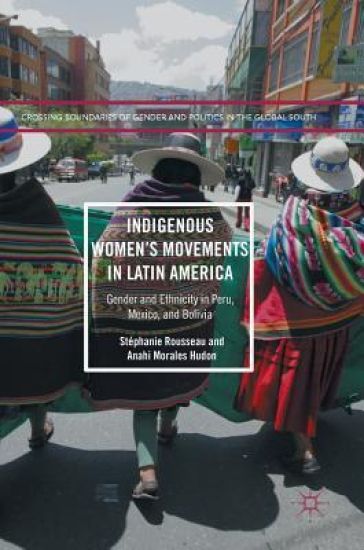
Indigenous Women’s Movements in Latin America

Indigenous Women’s Movements in Latin America

Stéphanie Rousseau; Anahi Morales Hudon

Palgrave Macmillan
2018
nidottu
This book presents a comparative analysis of the organizing trajectories of indigenous women’s movements in Peru, Mexico, and Bolivia. The authors’ innovative research reveals how the articulation of gender and ethnicity is central to shape indigenous women’s discourses. It explores the political contexts and internal dynamics of indigenous movements, to show that they created different opportunities for women to organize and voice specific demands. This, in turn, led to various forms of organizational autonomy for women involved in indigenous movements. The trajectories vary from the creation of autonomous spaces within mixed-gender organizations to the creation of independent organizations. Another pattern is that of women’s organizations maintaining an affiliation to a male-dominated mixed-gender organization, or what the authors call “gender parallelism”. This book illustrates how, in the last two decades, indigenous women have challenged various forms of exclusion through different strategies, transforming indigenous movements’ organizations and collective identities.
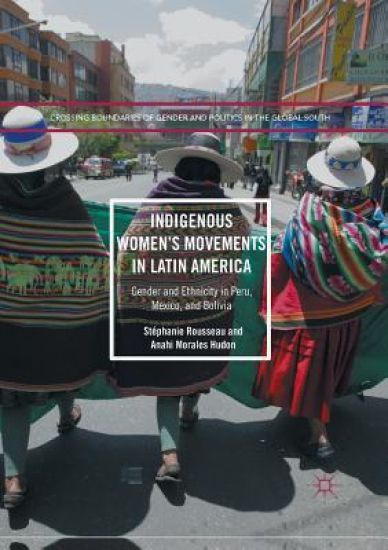
Indigenous Women’s Movements in Latin America

Indigenous Women’s Movements in Latin America

Stéphanie Rousseau; Anahi Morales Hudon

Palgrave Macmillan
2016
sidottu
This book presents a comparative analysis of the organizing trajectories of indigenous women’s movements in Peru, Mexico, and Bolivia. The authors’ innovative research reveals how the articulation of gender and ethnicity is central to shape indigenous women’s discourses. It explores the political contexts and internal dynamics of indigenous movements, to show that they created different opportunities for women to organize and voice specific demands. This, in turn, led to various forms of organizational autonomy for women involved in indigenous movements. The trajectories vary from the creation of autonomous spaces within mixed-gender organizations to the creation of independent organizations. Another pattern is that of women’s organizations maintaining an affiliation to a male-dominated mixed-gender organization, or what the authors call “gender parallelism”. This book illustrates how, in the last two decades, indigenous women have challenged various forms of exclusion through different strategies, transforming indigenous movements’ organizations and collective identities.