
Kirjailija
Ananda K. Coomaraswamy
Kirjat ja teokset yhdessä paikassa: 71 kirjaa, julkaisuja vuosilta 1998–2026, suosituimpiin kuuluu Hinduism and Buddhism. Vertaile teosten hintoja ja tarkista saatavuus suomalaisista kirjakaupoista.
Nimi esiintyy myös muodoissa: Ananda K Coomaraswamy
71 kirjaa
Kirjojen julkaisuvuodet: 1998–2026.
Selected Papers of Coomaraswamy, Volume 2
Ananda K. Coomaraswamy
PRINCETON UNIVERSITY PRESS
2026
pokkari
A collection of important essays by a pioneering interpreter of Indian art, philosophy, and mythology “Brilliant.”—Joseph Campbell, author of The Hero with a Thousand Faces Ananda K. Coomaraswamy (1877–1947) was a pioneer in the study of Indian art, philosophy, and mythology—and in the cultural meeting of East and West. A scholar in the tradition of the great Indian grammarians and philosophers, an art historian convinced that the ultimate value of art transcends history, and a social thinker influenced by William Morris, Coomaraswamy was a unique figure whose works provide virtually a complete education in themselves. Finding a universal tradition in past cultures ranging from the Hellenic and Christian to the Indian, Islamic, and Chinese, he presented his ideas about the symbols of ancient wisdom in numerous essays. This volume includes a selection of his essays on metaphysics that were written in the 1930s and 1940s, when he was at the height of his powers.
Selected Papers of Coomaraswamy, Volume 2
Ananda K. Coomaraswamy
PRINCETON UNIVERSITY PRESS
2026
sidottu
A collection of important essays by a pioneering interpreter of Indian art, philosophy, and mythology “Brilliant.”—Joseph Campbell, author of The Hero with a Thousand Faces Ananda K. Coomaraswamy (1877–1947) was a pioneer in the study of Indian art, philosophy, and mythology—and in the cultural meeting of East and West. A scholar in the tradition of the great Indian grammarians and philosophers, an art historian convinced that the ultimate value of art transcends history, and a social thinker influenced by William Morris, Coomaraswamy was a unique figure whose works provide virtually a complete education in themselves. Finding a universal tradition in past cultures ranging from the Hellenic and Christian to the Indian, Islamic, and Chinese, he presented his ideas about the symbols of ancient wisdom in numerous essays. This volume includes a selection of his essays on metaphysics that were written in the 1930s and 1940s, when he was at the height of his powers.
Selected Papers of Coomaraswamy, Volume 1
Ananda K. Coomaraswamy
PRINCETON UNIVERSITY PRESS
2026
pokkari
A collection of important essays by a pioneering interpreter of Indian art, philosophy, and mythology “Brilliant.”—Joseph Campbell, author of The Hero with a Thousand Faces “Varied, imaginative, incredibly learned. . . . Fascinating.”—John Kenneth Galbraith, New York Times Book Review Ananda K. Coomaraswamy (1877–1947) was a pioneer in the study of Indian art, philosophy, and mythology—and in the cultural meeting of East and West. A scholar in the tradition of the great Indian grammarians and philosophers, an art historian convinced that the ultimate value of art transcends history, and a social thinker influenced by William Morris, Coomaraswamy was a unique figure whose works provide virtually a complete education in themselves. Finding a universal tradition in past cultures ranging from the Hellenic and Christian to the Indian, Islamic, and Chinese, he presented his ideas in numerous essays. This volume includes a selection of his essays on art and symbolism that were written in the 1930s and 1940s, when he was at the height of his powers.
Selected Papers of Coomaraswamy, Volume 1
Ananda K. Coomaraswamy
PRINCETON UNIVERSITY PRESS
2026
sidottu
A collection of important essays by a pioneering interpreter of Indian art, philosophy, and mythology “Brilliant.”—Joseph Campbell, author of The Hero with a Thousand Faces “Varied, imaginative, incredibly learned. . . . Fascinating.”—John Kenneth Galbraith, New York Times Book Review Ananda K. Coomaraswamy (1877–1947) was a pioneer in the study of Indian art, philosophy, and mythology—and in the cultural meeting of East and West. A scholar in the tradition of the great Indian grammarians and philosophers, an art historian convinced that the ultimate value of art transcends history, and a social thinker influenced by William Morris, Coomaraswamy was a unique figure whose works provide virtually a complete education in themselves. Finding a universal tradition in past cultures ranging from the Hellenic and Christian to the Indian, Islamic, and Chinese, he presented his ideas in numerous essays. This volume includes a selection of his essays on art and symbolism that were written in the 1930s and 1940s, when he was at the height of his powers.
Myths of the Hindus and Buddhists
Ananda K. Coomaraswamy
HarperCollins Publishers India
2025
nidottu
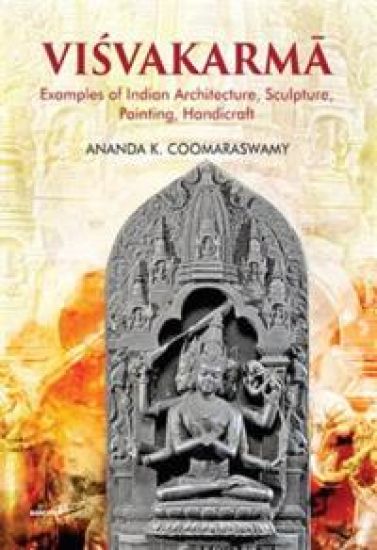
Visvakarma is a collection of select writings by the famous art historian Coomaraswamy on Indian sculptural art. This volume contains plates depicting Buddhist, Jaina, and Brahmanical forms of sculptural art. The book begins with a depiction of forms of Buddha and bodhisattvas (Avalokiteshvara, Tara [Ushnisha], Manjushri, Prajnaparamita, etc.), Shiva (Bhairava, Gangadhara, Nataraja, etc.), Devi (Durga, etc.), Vishnu (Balakrishna, Narasimha, etc.), and depiction of Jaina Tirthankaras, Trimurti, and Brahma. Also, we find the depiction of nagas, yakshas, apsaras, and masculine and feminine figures, including the description of the famous historical personalities like Krishnadeva Raya, Manikkavacagar, etc. The conclusive part of this book contains the animal figures including the animal incarnations of Buddha and Brahmanical deities. These art collection pictures were obtained from various Indian and international museums like the Archaeological Survey of India, Victoria and Albert Museum, etc., and from private collections of individuals.
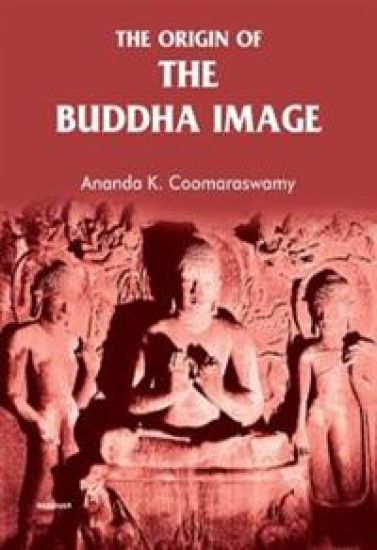
The Origin of the Buddha Image
Ananda K. Coomaraswamy
MANOHAR PUBLISHERS AND DISTRIBUTORS
2023
sidottu
The image of Buddha in Gandhara style depicted in the padmasana pose, is one of the most popular images of the world. This image is connected with the symbol of Buddhism apart from the Ashoka Chakra. Throughout ancient India, Buddha’s image gained popularity in the formation of Mahayana Buddhism. The major question that comes forth is how this art came into being during ancient times. This small volume on Buddhist art by Coomaraswamy challenges the notion that Buddha’s image did not emerge from the Indo-Greek and other non-Indian art styles like Kushana or Bactrian. He asserts that Buddha’s icon and its representation in various forms, found in monuments, sculptures, and other archaeological structures, was prevalent in the pre-existing Indian art forms. The book discusses the symbolisms, necessity of Buddha’s image, and anthropomorphic iconography in the creation of Buddha’s icons available in early India, and talks about the differences in Indian and historicity of Gandhara and Mathura art.
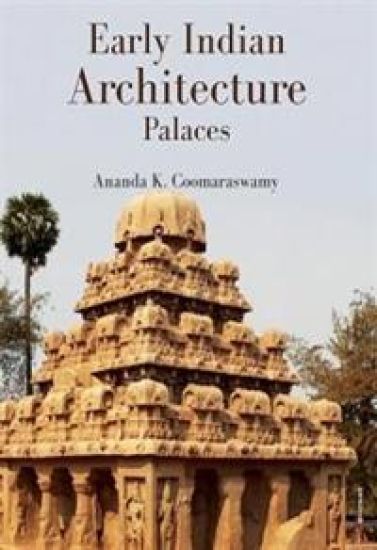
Traditionally, Indian architecture is divided into sacred and royal structures. Palaces in the Indian subcontinent are the most important landmarks associated with Indian heritage. This slim volume focuses on the architectural features associated with prasada, or palace structures constructed during the ancient and medieval times. Coomaraswamy examines the features associated with palace structures such as pillars, walls, apartments, streets, gateways, quarters of the royal members, windows, arches, facades, etc., and the materials which were use for its construction. The author looks at both literary and archaeological evidences. The book also uses photographs and sketches of various palace structures located in Bharhut, Sanchi, Amravati, Mammallapuram, Bengal, and other parts of India to explain the features associated with Indian styles of palace construction. This book is highly recommended for students, archaeologists, and researchers interested in ancient and medieval Indian art and architecture. About the Author Ananda K. Coomaraswamy (22 August 1877–9 September 1947) is a Ceylon-based metaphysician, historian, theorist, and philosopher of Indian art. He brought the Indian tradition of art into the western world. He was also seen as the bridge-maker between western and Indian art and philosophy, as he was much inspired by Hindu and Greco-Roman traditions.
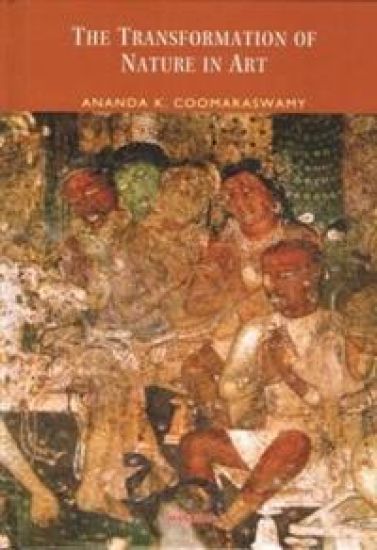
The Transformation of Nature in Art
Ananda K. Coomaraswamy
MANOHAR PUBLISHERS AND DISTRIBUTORS
2023
sidottu
The history of art in the Indian subcontinent, indeed, is highly rich in its content, aesthetical value, and ornated in nature. The study of art is one of the most popular themes developed in the scholastic world in the twentieth century. But how the nature of art is studied is something unique in its approach. Coomaraswamy writes in this volume which covers the study of art and how its reconstruction was assessed in Indian contexts. Beginning with the history of art in the theoretical sense, it covers the art forms practiced in Asia such as Hindu, Buddhist, Chinese, Islamic, and others forms in the initial part of the volume. Interestingly, he also discusses the famous medieval German Catholic theologian Meister Eckhart (c.1328) in terms of art in a theoretical sense. This volume covers the perspective of Indian arts, the concept of paroksha, which is an important term applied in Buddhism, and abhasa, or appearance, which is used in Hindu philosophy.
Indian architecture is diverse and rich in its nature. This volume by Coomaraswamy centres around Buddhist architecture in ancient India. Buddhist architecture was one of the remarkable features, which gave rise to the sacred architecture in India, as it developed during the Mauryan Empire, and subsequently went to other parts of East, Central, and South East Asia. This volume discusses the importance of city and city gates from the perspective of Buddhist architecture. The work is divided into two parts: Part I deals with cities and city gates, etc. while Part II is on the Bodhi-gharas, i.e. representations of the Bodhi tree with or without a temple structure. The book looks at the Pali literature, which includes tales from Jatakas depicted in stupas located at Bharhut, Sanchi, and Amravati.
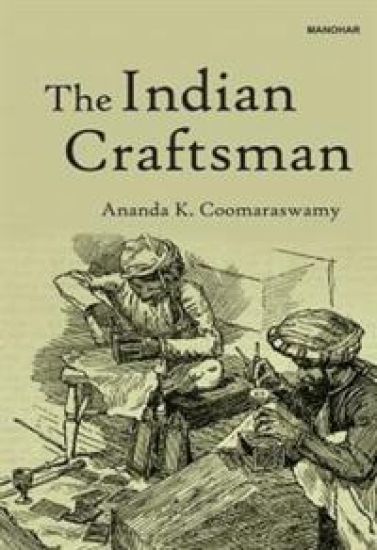
The role of a craftsman in India from times memorial was significant to display the grandeur and patronage shown by the feudal masters. This concise volume by Coomaraswamy describes the socio-economic, metaphysical, and supernatural aspects of the Indian guild community from the antiquity period. The present work discusses the three categories of craftsmen – countryside, town, and palace-cum-temple to describe the activities and conditions of Indian guilds. He covers the post-Vedic and Epic era from the time of sage Manu, the author of Manusmriti and classical Hindu epics like Ramayana, and mentions the presence of guild communities and craftsmanship from the Jatakas, and also in Abul Fazl's Ain-i-Akbari. The present work reflects the issues of casteism, religion, and quality standards practiced by guild communities and how guilds were organized as per the societal norms in the past.
The Vedas, over the centuries, were interpreted in different forms by different sampradayas, mystics, legalists and religious reformers. It has been subjected to interpretation and re-interpretation by Vedic scholars such as Adi Shankaracharya, Sayanacharya, Mahidhara, Dayananda Saraswati and so forth. This small volume by Coomaraswamy is a comparative study of the Vedas with other traditions, such as Christianity, Gnosticism, Sumerian, Sufi and other religious traditions, which is a modern approach adopted for understanding relationships of non-Indian and Indian values. The text follows a pattern comprising verses and the commentaries made by the author. The book contains the selected verses taken from the Rigveda, Brhadaranayaka and the Maitri Upanishads, written on issues, such as cosmogony, ontology and teleology.
Christian and Oriental Philosophy of Art
Ananda K Coomaraswamy
MANOHAR PUBLISHERS AND DISTRIBUTORS
2023
sidottu
Formerly known as ‘Why Exhibit Works of Art?’, this book is a study of Christian and Eastern arts. The book is a collection of articles written by Coomaraswamy, which were published in reputed art journals and pamphlets, and notes of reviews of different artists published in New York, Boston, Paris, Calcutta, and London. This nine-essay volume looks upon certain aspects of the philosophy of art in both worlds, as there are various issues and subjects such as its usage, aesthetics, nature of medieval art, application of mathematics and its beauty in art, and perception of folklore and popular art.
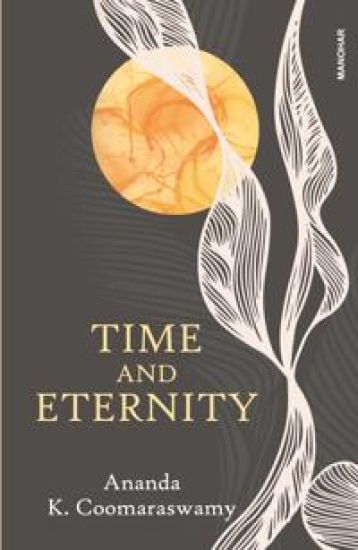
The issue of time and infinity or eternity has been studied across every civilization since antiquity, and nearly by all religions. This volume covers the concepts of time and eternity from Hindu, Buddhist, Islamic, Christian, and modern-day spiritual movements. It covers passages collected from the Vedas, Upanishads and other Hindu sacred scriptures, Buddhist sangha literature, Sufi kalams, Biblical literatures, and the commentaries and treatises written by the Christian ascetics, monks, and theologians. Coomaraswamy, in his book, adopts a comparative approach in describing all these traditions.
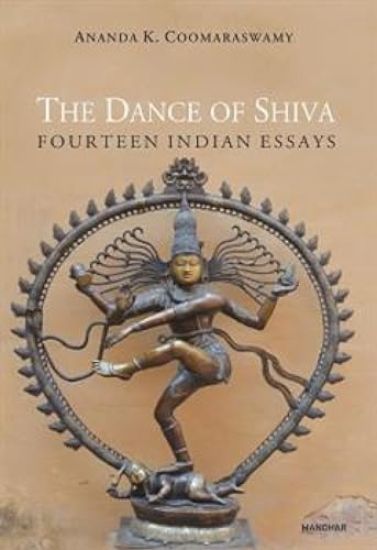
The Dance of Shiva by Coomaraswamy explores the metaphysical part of India. It explains India’s contribution to the entire humanity. This book addresses the Indian ethos in a more detailed manner since Indian philosophy is often misinterpreted by the Westerners. Topics associated with fine arts, philosophy, and music are covered in this book; these include the Hindu and Buddhist perception of art from the aesthetical and historical points of view. Popular sculptures such as Nataraja, another incarnation of Shiva, represented as the God of dance, and multiple-armed images in Indian art are studied extensively. There is also a section on Indian music, which is also studied in great detail. Besides, this volume also covers the issue of the status of Indian women, Sahaja philosophy, the intellectual community, Indian youth, and individualism. About the Author Ananda K. Coomaraswamy (22 August 1877–9 September 1947) is a Ceylon-based metaphysician, historian, theorist, and philosopher of Indian art. He brought the Indian tradition of art into the western world. He was also seen as the bridge-maker between western and Indian art and philosophy, as he was much inspired by Hindu and Greco-Roman traditions. His works were influenced by the Traditionalist and Perennial Schools of Philosophy.
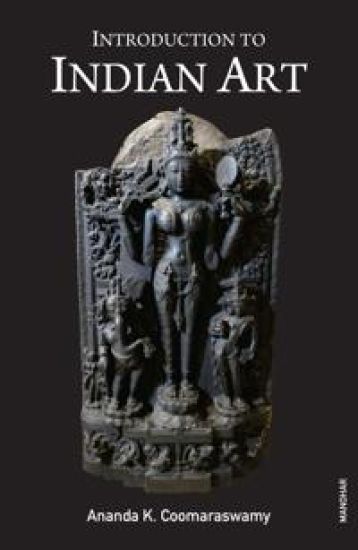
Presents a preliminary glimpse into the world of Indian art during pre-modern times. This volume presents how 'art in India' and 'art in the western world' are different entities. It explains how art in the Indian context has been passed over to different generations and describes how the issues concerning mediocracy and peculiarity of artists, changes in art form owing to theological understanding, were espressed. Divided into 18 chapters, Coomaraswamy covers the history of India from the time of the Indus Valley Civilization. This book touches upon the arts based on different religions and kingdoms that ruled over the Indian subcontinent in ancient and medieval India. These include Aryan, Dravidian, Vedic, pre-Mauryan, Mauryan, Buddhist, post-Mauryan, Puranic Hinduism, Kushanas, Andhra, Gupta, Jaina, Rajputana, Indonesian, and other medieval era influences from both northern and southern parts of India. This volume will be of great interest to the scholars, researchers, and professors in Indian art, aesthetics, and history, as it is a prelude to the scholarly writing made in the Indian art tradition.
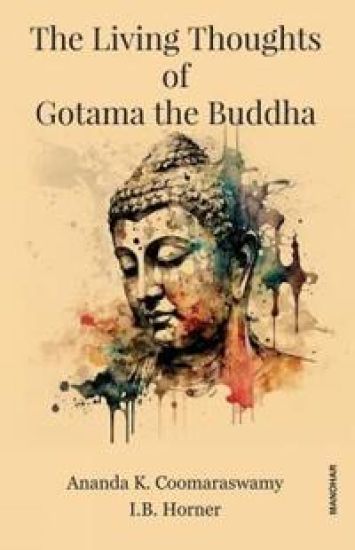
The Living Thoughts of Gotama the Buddha
Ananda K. Coomaraswamy; I.B. Horner
MANOHAR PUBLISHERS AND DISTRIBUTORS
2023
sidottu
This volume by Coomaraswamy and Horner is dedicated to the greatest teacher in the entire history of humankind, Gotama, famously known as Buddha. It commences with the life sketch of the greatest sage who formed the fourth largest religion in the world, i.e. Buddhism. The volume covers the hagiography of Buddha – his birth, attainment of enlightenment, ministry, and death. Buddha’s sermons, initiation into discipleship and training, rules and regulations, moralism, and faith are all covered in this edition. Major teachings, philosophies, and metaphysical knowledge associated with Buddhism such as causality, the issue of dhamma, the meaning and the philosophy of life and death, and awareness of the inner self are discussed in this volume.