Kirjojen hintavertailu – 12 859 819 kirjaa ja 27 kauppaa

Kirjailija

Anatol Lieven

Kirjat ja teokset yhdessä paikassa: 13 kirjaa, julkaisuja vuosilta 1994–2021, suosituimpiin kuuluu Om den amerikanska idén. Vertaile teosten hintoja ja tarkista saatavuus suomalaisista kirjakaupoista.

13 kirjaa

Kirjojen julkaisuvuodet: 1994–2021.

Om den amerikanska idén

Om den amerikanska idén

Peter Baldwin; Peter Beinart; Kathleenn Burk; James Carroll; David Ellwood; Godfrey Hodgson; Daniel Walker Howe; Oliver Kamm; Deepak Lal; Anatol Lieven; Edward Luce; Pauline Maier; Douglas Murray; Jong-Yil Ra; David Reynolds; Philippe Roger; Göran Rosenberg; robert J Shapiro; Anders Stephanson; Reinhold Wagnleitner; Alan Wolfe

Bokförlaget Atlantis
2010
sidottu
Hur uppstod idén om Amerika, hur har den omformats genom historien, vart är den på väg? Kring dessa och liknande frågor kretsade Engelsbergsseminariet 2009. Vilka är komponenterna i den amerikanska idén? Hur förvaltas de i dagens USA? Hur reagerar resten av världen på dem? Sker idag en övergång till en post-amerikansk värld? Vem kommer i så fall att ta över USA:s ledande ställning? Indien? Kina? Och vad skulle det innebära? Vilka tankefigurer skulle då komma att prägla världen? Eller har USA chansen att bli kvar som herre på täppan? Bevittnar vi början på slutet för idén om Amerika eller befinner vi oss bara i början av en amerikansk era? Bland bidragsgivarna märks Anatol Lieven, Deepak Lal, Jong-Yil Ra, Edward Luce och Alan Wolfe.

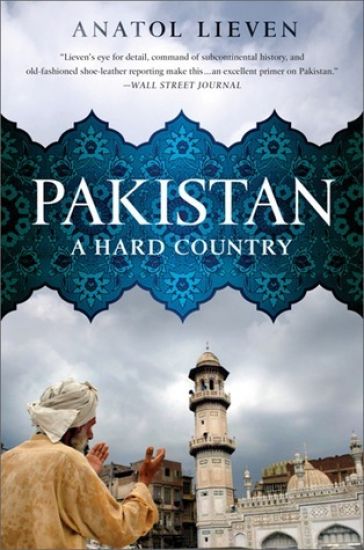
Pakistan: A Hard Country

Pakistan: A Hard Country

Anatol Lieven

Penguin Books Ltd
2012
pokkari
DAILY TELEGRAPH and INDEPENDENT BOOKS OF THE YEARLONGLISTED FOR THE ORWELL PRIZE 20122011 LOS ANGELES TIMES BOOK PRIZE FINALISTIn the wake of Pakistan's development of nuclear weapons, unpoliceable border areas, shelter of the Afghan Taliban and Bin Laden, and the spread of terrorist attacks by groups based in Pakistan to London, Bombay and New York, there is a clear need to look further than the simple image of a failed state so often portrayed in the media, and to see instead a country of immense complexity and importance. Lieven's profound and sophisticated analysis paves the way for clearer understanding of this remarkable and highly contradictory country.
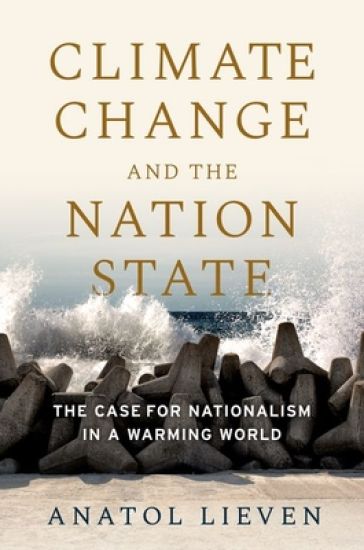
Climate Change and the Nation State: The Case for Nationalism in a Warming World

Climate Change and the Nation State: The Case for Nationalism in a Warming World

Anatol Lieven

Oxford University Press
2021
nidottu

Halvin toimitettuna 32,80 €

The first book to show how nationalism can help us to fight climate change. The climate emergency is intensifying, while international responses continue to falter. In Climate Change and the Nation State, Anatol Lieven outlines a revolutionary approach grounded in realist thinking: redefining climate change as an existential threat to nation states - which it undoubtedly is-and mobilizing both national security elites and mass nationalism. He reminds us that nationalism has proven to be the most powerful force in motivating people to care about the wellbeing of future generations. Throughout, Lieven draws on historical examples to show how earlier political movements marshaled nationalism to implement progressive social reform. In order to implement and maintain a policy revolution such as "Green New Deal," he argues, it will be necessary to create dominant national consensuses like those that enabled and sustained the original New Deal and the advanced welfare states in Europe. Now updated in paperback, Climate Change and the Nation State is an essential contribution to the debate on how to deal with a climatic crisis that-if left unchecked-threatens the survival of every nation.
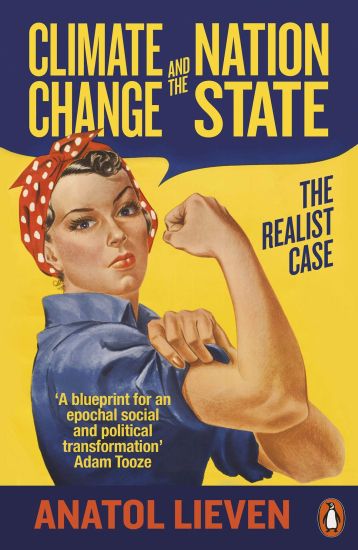
Climate Change and the Nation State

Climate Change and the Nation State

Anatol Lieven

Penguin Books Ltd
2021
pokkari

Halvin toimitettuna 16,20 €

'This is one of those rare books that have something really important to say. Anatol Lieven is telling his fellow realists that at this moment the world's great powers are far more threatened by climate change than they are by each other' Ivan Krastev, author of The Light That FailedIn the past two centuries we have experienced wave after wave of overwhelming change. Entire continents have been resettled; there are billions more of us; the jobs done by countless people would be unrecognizable to their predecessors; scientific change has transformed us all in confusing, terrible and miraculous ways. Anatol Lieven's major new book provides the frame that has long been needed to understand how we should react to climate change. This is a vast challenge, but we have often in the past had to deal with such challenges: the industrial revolution, major wars and mass migration have seen mobilizations of human energy on the greatest scale. Just as previous generations had to face the unwanted and unpalatable, so do we. In a series of incisive, compelling interventions, Lieven shows how in this emergency our crucial building block is the nation state. The drastic action required both to change our habits and protect ourselves can be carried out not through some vague globalism but through maintaining social cohesion and through our current governmental, fiscal and military structures. This is a book which will provoke innumerable discussions.
Climate Change and the Nation State: The Case for Nationalism in a Warming World
The first book to show how nationalism can help us to fight climate change. The climate emergency is intensifying, while international responses continue to falter. In Climate Change and the Nation State, Anatol Lieven outlines a revolutionary approach grounded in realist thinking: redefining climate change as an existential threat to nation states - which it undoubtedly is-and mobilizing both national security elites and mass nationalism. He reminds us that nationalism has proven to be the most powerful force in motivating people to care about the wellbeing of future generations. Throughout, Lieven draws on historical examples to show how earlier political movements marshaled nationalism to implement progressive social reform. In order to implement and maintain a policy revolution such as "Green New Deal," he argues, it will be necessary to create dominant national consensuses like those that enabled and sustained the original New Deal and the advanced welfare states in Europe. Now updated in paperback, Climate Change and the Nation State is an essential contribution to the debate on how to deal with a climatic crisis that-if left unchecked-threatens the survival of every nation.
America Right or Wrong

America Right or Wrong

Anatol Lieven

Oxford University Press
2012
nidottu
American policies, the American economy, and the health of the American political system are all of crucial importance to the world - and to other Western democracies in particular. Yet in recent years, the American political scene has become increasingly radicalized, embittered, and polarized - contributing to a near-paralysis of economic policy and intense partisanship concerning relations with the rest of the world. In this essential guide to the present state of US politics, renowned commentator Anatol Lieven pin-points American nationalism as the key to explaining the present troubles in America's body politic. Delving deep into the cultural and historical roots of the phenomenon, Lieven portrays American nationalism as a highly complex mixture of different elements which are sometimes opposed to each other, and sometimes intertwined. On the one hand, there is the core tradition of American civic nationalism based on the universalist 'American Creed' of almost religious reverence for American democratic institutions and the U. S. constitution. On the other, there exists a chauvinist nationalism which holds that these institutions are underpinned by cultural values which belong only to certain Americans, and which is strongly hostile both to foreigners and to minorities in America which are felt not to share those values. In this updated edition of his classic study, Anatol Lieven traces the re-emergence of radical strains of American nationalism in recent years, manifested in the rise of the Tea Party movement and the ongoing radicalization of the Republican Party. He attributes this to a combination of the effects of 9/11, the influence of the alliance with Israel, and above all, the long-term and increasing economic decline of large sections of the white middle classes. Deprived by nationalist ideology of the ability to explain what is happening to them in rational terms, many of these people are now turning to ideologies and demonologies that contribute greatly to the paralysis of effective government in what remains the world's most powerful and important country.
America Right or Wrong: An Anatomy of American Nationalism
Originally published over half a decade ago, Anatol Lieven's America Right or Wrong has become a classic analysis of the special character of American nationalism. As he demonstrated, America's foreign policy response to the 9/11 attacks flowed directly from a nationalistic tradition that was two centuries in the making. Within that nationalism, Lieven identified two strands. The first was the "American thesis," a civic nationalism based on the democratic values of what has been called the "American Creed." These values are held to be universal, and anyone can become an American by adopting them. The other tradition, the "American antithesis" is a populist and often chauvinist nationalism, which tends to see America as a closed national culture and civilization threatened by a hostile and barbarous outside world. Much has changed since 9/11. The American public has turned inward in the wake of the Great Recession, but interestingly, Lieven's fundamental analysis of American nationalism remains powerful and convincing. In this expanded new edition, he includes and in-depth analysis of the domestic component of both the American creed and the American antithesis. Barack Obama's improbable election to the presidency illustrates well the first strand. The rise of the Tea Party in response to both the financial crisis and the Obama administration's response is highly characteristic of the second strand. Lieven concentrates especially on the Tea Party's hard-edged American nationalism, which is evident in anti-immigration sentiment, hatred of Obama, and opposition to redistributive social programs that allegedly reward the unworthy. His account of Obama's election and the right-wing response to the economic collapse not only bring the story up to the present, but indicate the staying power of the book's hard-hitting thesis.
Pakistan: A Hard Country

Pakistan: A Hard Country

Anatol Lieven

PublicAffairs
2012
nidottu
In the past decade Pakistan has become a country of immense importance to its region, the United States, and the world. With almost 200 million people, a 500,000-man army, nuclear weapons, and a large diaspora in Britain and North America, Pakistan is central to the hopes of jihadis and the fears of their enemies. Yet the greatest short-term threat to Pakistan is not Islamist insurgency as such, but the actions of the United States, and the greatest long-term threat is ecological change. Anatol Lieven's book is a magisterial investigation of this highly complex and often poorly understood country: its regions, ethnicities, competing religious traditions, varied social landscapes, deep political tensions, and historical patterns of violence; but also its surprising underlying stability, rooted in kinship, patronage, and the power of entrenched local elites. Engagingly written, combining history and profound analysis with reportage from Lieven's extensive travels as a journalist and academic, Pakistan: A Hard Country is both utterly compelling and deeply revealing.
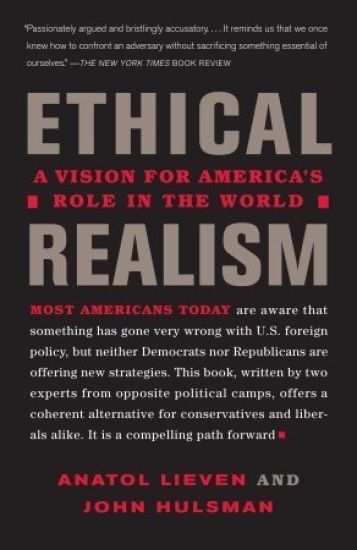
Ethical Realism: A Vision for America's Role in the New World

Ethical Realism: A Vision for America's Role in the New World

Anatol Lieven; John Hulsman

Knopf Doubleday Publishing Group
2007
nidottu
America today faces a world more complicated than ever before, but our politicians have failed to envision a foreign policy that addresses our greatest threats. Ethical Realism shows how the United States can successfully combine genuine morality with tough and practical common sense. By outlining core principles and a set of concrete proposals for tackling the terrorist threat and contend with Iran, Russia, the Middle East, and China, Anatol Lieven and John Hulsman show us how to strengthen our security, pursue our national interests, and restore American leadership in the world.
Russia™s Restless Frontier

Russia™s Restless Frontier

Dmitri Trenin; Alesksei Malashenko; Anatol Lieven

Carnegie Endowment for International Peace
2004
nidottu
The conflict in Chechnya, going through its low- and high-intensity phases, has been doggedly accompanying Russia's development. In the last decade, the Chechen war was widely covered, both in Russia and in the West. While most books look at the causes of the war, explain its zigzag course, and condemn the brutalities and crimes associated with it, this book is different. Its focus lies beyond the Caucasus battlefield. In Russia's Restless Frontier, Dmitri Trenin and Aleksei Malashenko examine the implications of the war with Chechnya for Russia's post-Soviet evolution. Considering Chechnya's impact on Russia's military, domestic politics, foreign policy, and ethnic relations, the authors contend that the Chechen factor must be addressed before Russia can continue its development.
Ambivalent Neighbors

Ambivalent Neighbors

Anatol Lieven

Carnegie Endowment for International Peace
2002
nidottu
Almost fifteen years after the end of the Cold War, the process of creating a "Europe whole and free" is incomplete and likely to be so for the foreseeable future. In this volume, a group of highly distinguished contributors from both East and West examines the complicated and multi-faceted process of NATO and EU enlargement in the context of the changed global situation since the terrorist attacks of September 11, 2001. This book examines the enlargement processes not only from the perspective of the West and western institutions, but also from the point of view of the former communist countries. If an enlarged NATO and EU are to be stable and successful in the long run, they must take account of the wishes and interests of both their new, former-communist members and those European states that will not become members of either NATO or the EU in the foreseeable future. Contributors include Christopher Bobinski (Unia & Polska), Vladimir Baranovsky (Institute of the World Economy and International Relations), Heather Grabbe (Center for European Reform), Karl-Heinz Kamp (Konrad Adenauer Foundation), Charles King (Georgetown University), Alexander J. Motyl (Center for Global Change and Governance), Zaneta Ozolina (University of Latvia), Alexander Sergounin (Nizhny Novgorod Linguistic University), William Wallace (London School of Economics), and Leonid Zaiko (Strategy Center).
The Baltic Revolution

The Baltic Revolution

Anatol Lieven

Yale University Press
1994
pokkari

Halvin toimitettuna 71,80 €

World attention has focused on the newly independent Baltic states of Latvia, Estonia, and Lithuania, as they struggle to become politically and economically viable. In this timely book, Anatol Lieven presents an intimate and engaging portrait of the history and culture of the Baltic states from their ancient origins to their contemporary status. He explores the culture and personality of the Baltic peoples, their religious and racial differences, their relations with Russia and with the West, and their prospects for the future. Lieven begins by describing the ancient Baltic peoples, their conquest by the Christians, the evolution of the Lithuanian empire and their union with Poland, and the experience of the Baltic provinces under the Russian Empire. He then looks at the countries' first struggle for independence in 1918, the failure of democracy and the establishment of authoritarian regimes, and the Soviet annexation of the Baltic in 1940. Lieven discusses the class structure of the Baltics and the ethnic tensions that have existed between the Germans, Jews, Poles, and Russians who live there. Drawing on a wide range of sources including interviews, newspaper accounts, and his own observations, he describes and analyzes the rise of national movements in each of the three countries after Glastnost. He concludes by discussing the new constitutions and the elections of 1992, the current forces of order, the demolition of the Soviet economies, and the possibilities for democracy and Europeanization or for ethnic conflict and nationalist dictatorship.