
Kirjailija
Ander Monson
Kirjat ja teokset yhdessä paikassa: 9 kirjaa, julkaisuja vuosilta 2005–2026, suosituimpiin kuuluu Hit Repeat Until I Hate Music. Vertaile teosten hintoja ja tarkista saatavuus suomalaisista kirjakaupoista.
9 kirjaa
Kirjojen julkaisuvuodet: 2005–2026.
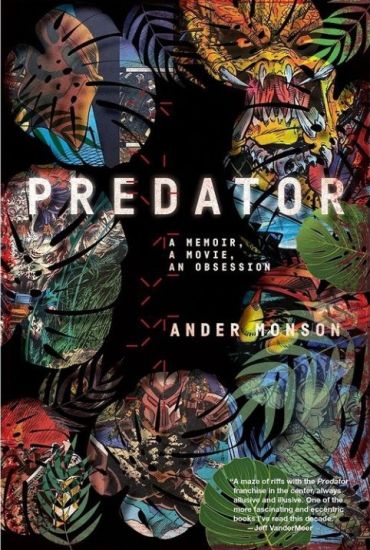
A searching memoir of a life lived in the flicker of an action film, by the author of I Will Take the Answer In his first memoir, Ander Monson guides readers through a scene-by-scene exploration of the 1987 film Predator, which he has watched 146 times. Some fighters might not have time to bleed, but Monson has the patience to consider their adventure, one frame at a time. He turns his obsession into a lens through which he poignantly examines his own life, formed by mainstream, white, male American culture. Between scenes, Monson delves deeply into his adolescence in Michigan's Upper Peninsula and Riyadh, his role as a father and the loss of his own mother, and his friendships with men bound by the troubled camaraderie depicted in action and sci-fi blockbusters. Along with excursions into the conflicted pleasures of cosplay and first-person shooters, he imagines himself beside the poet and memoirist Paul Monette, who wrote the novelization of the movie while his partner was dying of AIDS. A sincere and playful book that lovingly dissects the film, Predator also offers questions and critiques of masculinity, fandom, and their interrelation with acts of mass violence. In a stirring reversal, one chapter exposes Monson through the Predator's heat-seeking vision, asking him, "What do you know about the workings of the hidden world?" As Monson brings us into the brilliant depths of the film and its universe, the hunt begins.
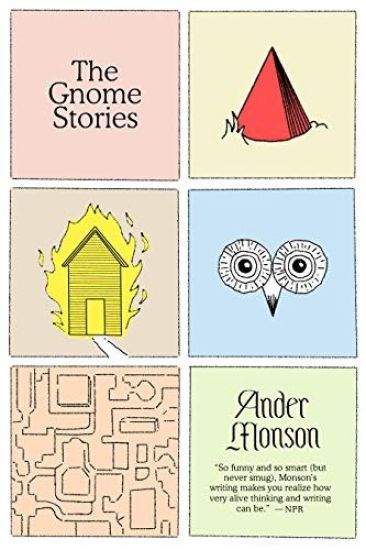
An unsettling, wildly imaginative collection of stories The Gnome Stories focuses on characters who are loners in the truest sense; who are in the process of recovering from mental, physical, or emotional trauma; and who find solace--or at least a sense of purpose--in peculiar jobs and pursuits. A man whose wife has left him is robbed, so he decides to start doing his own breaking and entering, into his neighbors' homes. When another man's girlfriend is cryogenically frozen by her family after a car accident, he becomes a maintenance worker at the cryogenic facility, eavesdropping on visitors as they whisper secrets to their frozen loved ones. A woman serves as an assistant to the Starvationist, whose methods to help clients lose large amounts of weight are unorthodox, sadistic--and utterly failproof. Another woman and her robot assistant have been hired to tinker with the troubling memories inside a celebrity's brain. With The Gnome Stories, Ander Monson presents eleven unforgettable stories about oddly American situations: as surreal as an urban legend and at the same time perfectly mundane.
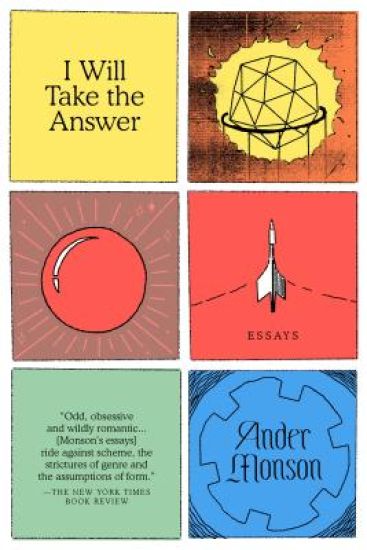
A moving and wide-ranging collection of essays by the author of Letter to a Future Lover The idea of connection permeates I Will Take the Answer, Ander Monson's fourth book of utterly original and intelligent essays. How is our present connected to our past and future? How do neural connections form memories, and why do we recall them when we do? And how do we connect with one another in meaningful ways across time and space? In the opening essay, which extends across the book in brief subsequent pieces, a trip through a storm sewer in Tucson inspires Monson to trace the city's relationship to Jared Lee Loughner, the gunman who shot Gabrielle Giffords and killed six bystanders, along with how violence is produced and how we grieve and honor the dead. With the formally inventive "I in River," he ruminates on water in a waterless city and the structures we use to attempt to contain and control it. Monson also visits the exuberantly nerdy kingdom of a Renaissance Faire, and elaborates on the enduring appeal of sad songs through the lens of March Sadness, an online competition that he cofounded, an engaging riff on the NCAA basketball tournament brackets in which sad songs replace teams. As personal and idiosyncratic as the best mixtape, I Will Take the Answer showcases Monson's deep thinking and broad-ranging interests, his sly wit, his soft spot for heavy metal, and his ability to tunnel deeply into the odd and revealing, sometimes subterranean, worlds of American life.
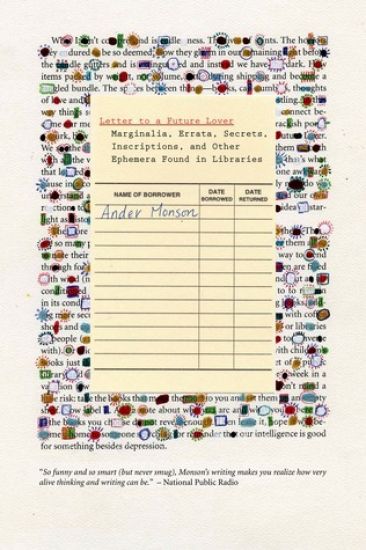
Ander Monson is well regarded within the field of Creative Non Fiction. He is both a writer and critic of long form journalism, personal essays, and memoir novellas. Here he turns his astute critical eye for innovations in literary form on to the printed book itself. LETTER TO A FUTURE LOVER collects several dozen brief pieces written by Monson in response to library ephemera. He analyses the meaning behind hastily scrawled-in margins, the aesthetic of date labels and the cultural weight born by publishers pagers.
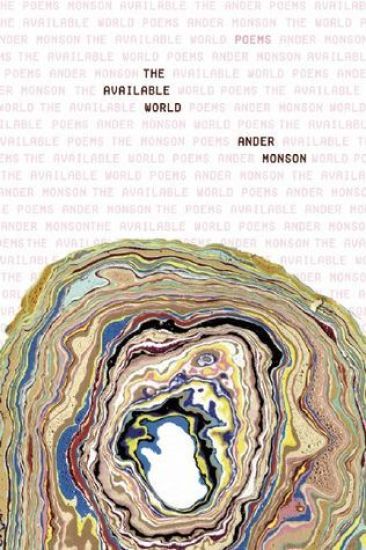
“[Ander Monson’s] poems celebrate defiant excess. In this land of scarcity, right-living involves using up what you have, where you have it; otherwise someone might wreck, steal, or use it and you might not get any. A carpe diem for obscure, doomed youth.”—Stephen Burt Inspired by the cult Japanese video game Katamari Damacy, these poems increase in size and momentum, rolling more and more into their orbits as they go. Formally inventive and fun, The Available World examines the beauty and terror of excess. Ander Monson lives in Tucson, Arizona.
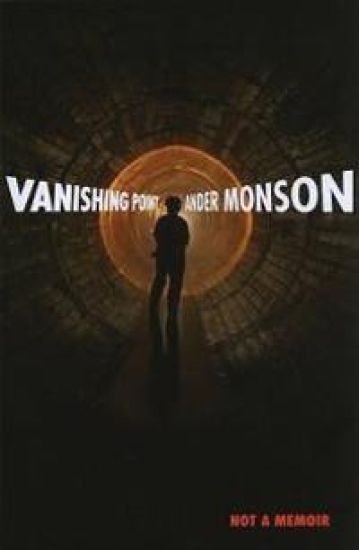
An adventurous exploration of the "I" in American culture, by the author of "Neck Deep and Other Predicaments" "" "Me. Me. Me. Me. Me. Me. Me. Me. Me. Me. Me. Me. Me. Me. Me. " In contemporary America, land of tell-all memoirs and endless reality television, what kind of person denies the opportunity to present himself in his own voice, to lead with "I"? How many layers of a life can be peeled back before the self vanishes? In this provocative, witty series of meditations, Ander Monson faces down the idea of memoir, grappling with the lure of selfinterest and self-presentation. While setting out to describe the experience of serving as head juror at the trial of Michael Antwone Jordan, he can't help veering off into an examination of his own transgressions, inadvertent and otherwise. He scrutinizes his private experience of the public funeral ceremony for Gerald R. Ford. He considers his addiction to chemically concocted Doritos and disappointment in the plain, natural corn chip, and finds that the manufactured, considered form, at least in snacks, is ultimately a more rewarding experience than the "truth." So why is America so crazy about accurately confessional memoirs? With "Vanishing Point," Monson delivers on the promise shown in "Neck Deep," which introduced his winning voice and ability to redefine the essay and "puts most memoirs to shame" ("Time Out Chicago").
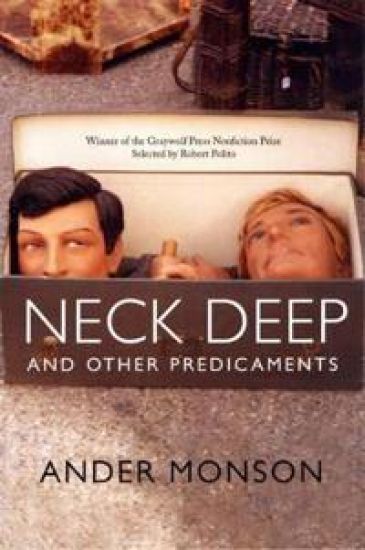
In an ecclectic compilation of essays, the author of Other Electricities utilizes unexpectedly nonliterary forms to explore such diverse topics as the history of mining in northern Michigan, disc golf, topology, car washes, snow, and more. Original.
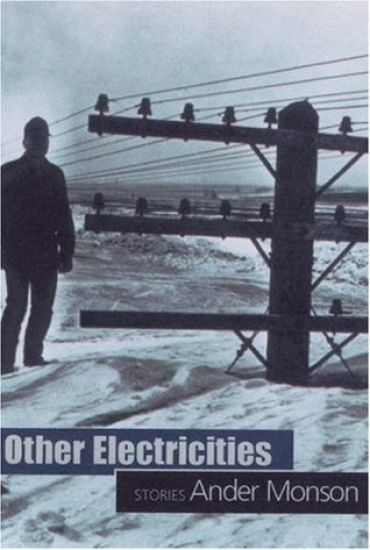
Uncompromising, hypnotic and darkly humorous, Other Electricities charts a new and strange direction in American fiction. “Like Franklin’s discovery of the electricity we do know, Monson’s luminous, galvanized book represents a paradigm shift. The frequencies of the novel have been scrambled and redefined by this elegant experiment. Other Electricities is a new physics of prose, a lyric string theory of charged and sparkling sentences. What a kite! What a key!”—Michael Martone “Monson is tuned in to our crackling, chaotic, juiced-up times like no other young writer I know. Other Electricities is necessary reading.”—Robert Olen Butler Meet “Yr Protagonist”: radio amateur, sometime vandal and “at times, perhaps the author” of Monson’s category-defying collection: I know about phones. While our dad was upstairs broadcasting something to the world, and we were listening in, or trying to find his frequency and listen to his voice . . . we would give up and go out in the snow with a phone rigged with alligator clips so we could listen in on others’ conversations. There’s something nearly sexual about this, hearing what other people are saying to their lovers, children, cousins, psychics, pastors. . . . The cumulative effect of this stunningly original collection seems to work on the reader in the same way—we follow glimpses of dispossessed lives in the snow-buried reaches of Michigan’s Keweenaw Peninsula, where nearly everyone seems to be slipping away under the ice to disappear forever. Through an unsettling, almost crazed gestalt of sketches, short stories, lists, indices and radio schematics, Monson presents a world where weather, landscape, radio waves and electricity are characters in themselves, affecting a community held together by the memories of those they have lost. Ander Monson is the editor of DIAGRAM and the New Michigan Press. He teaches at Grand Valley State University and lives in Michigan. Tupelo Press recently published his poetry collection, Elegies for Descent and Dreams of Weather.