Kirjojen hintavertailu – 12 859 828 kirjaa ja 27 kauppaa

Kirjailija

Anders Åslund

Kirjat ja teokset yhdessä paikassa: 22 kirjaa, julkaisuja vuosilta 1995–2025, suosituimpiin kuuluu Sovjet som det verkligen var. Vertaile teosten hintoja ja tarkista saatavuus suomalaisista kirjakaupoista.

Nimi esiintyy myös muodoissa: Anders Aslund

22 kirjaa

Kirjojen julkaisuvuodet: 1995–2025.

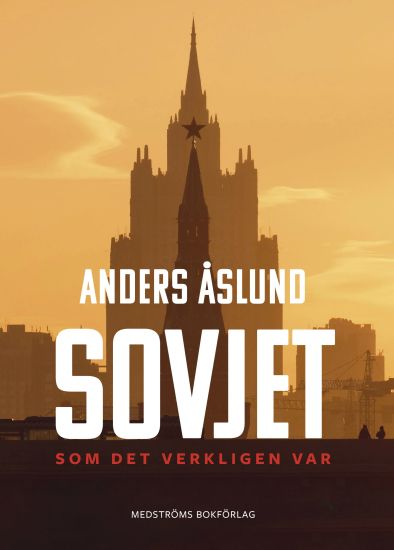
Sovjet som det verkligen var

Sovjet som det verkligen var

Anders Åslund

Medströms Bokförlag
2025
sidottu
Anders Åslund blev något så märkligt som ekonomisk rådgivare till den ryska regeringen när Sovjetunionen föll samman 1991. Landet tänktes då gå från kommunistisk planekonomi till västlig marknadsekonomi. Men det var svårt. Ryssland blev en marknadsekonomi men ingen demokrati eller rättsstat. Med en bakgrund som ryskspråkig från Försvarets tolkskola i Sverige och med uppdrag som diplomat vid svenska ambassaden i Moskva på 1980-talet, hade Anders Åslund en unikt bred erfarenhet av Sovjetunionen och ett utomordentligt kontaktnät bland Rysslands främsta ekonomer. Slutsatserna från de många resor Åslund gjorde i Sovjetunionen utgör kärnan i den här boken, samtidigt som hans rapporter är en fantastisk vittnesbörd om en svunnen tid. Huvuddelen består av de skrivelser som Åslund skickade till Utrikesdepartementet i Stockholm. De påverkade i hög grad den svenska bedömningen av utvecklingen i Sovjetunionen. Som ung svensk diplomat tillhörde Anders Åslund dem som verkligen såg Sovjetunionen och alla dess brutala misslyckanden från insidan. Som ekonom fick han mer rätt än CIA i sina bedömningar av den sovjetiska ekonomin. Hans nära observationer av verkligheten i landet ledde till att KGB såg till att få honom att lämna. Carl Bildt
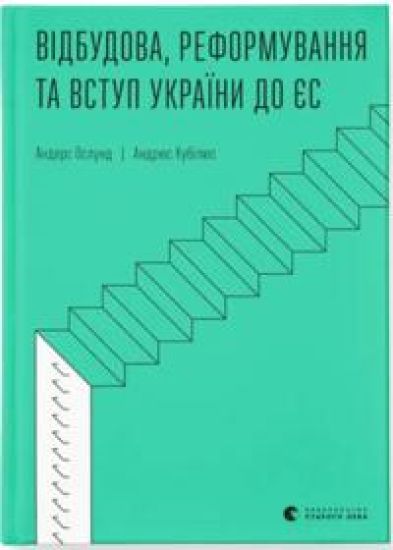
Vidbudova, reformuvannja ta vstup Ukrajini do JeS

Vidbudova, reformuvannja ta vstup Ukrajini do JeS

Anders Åslund; Andrius Kubilius

Vydavnytstvo Staroho Leva
2024
sidottu
Kurs na jevrointegratsiju Ukrajina aktivno pochala viborjuvati pid chas Revoljutsiji Gidnosti. Odnim iz naslidkiv tsogo je 10-litnja vijna, z rozvitkom povnomasshtabnogo zbrojnogo konfliktu Rosijskoji Federatsiji proti Ukrajini. Prote tse ne zmenshuje shansiv Ukrajini stati povnotsinnim chlenom Jevropejskogo Sojuzu. Anders Oslund ta Andrjus Kubilius analizujut mozhlivosti vstupu Ukrajini do JeS ta zaznachajut umovi, jaki derzhava maje vikonati dlja tsogo. Tak, povnomasshtabna vijna vid 24 ljutogo 2022 roku uskladnjuje protses zmin ta zavdaje nepopravnikh zbitkiv Ukrajinskij derzhavi. Odnak navit popri tse shans na prijednannja do Jevropi politichno zalishajetsja i tsilkom mozhe buti vtilenim.
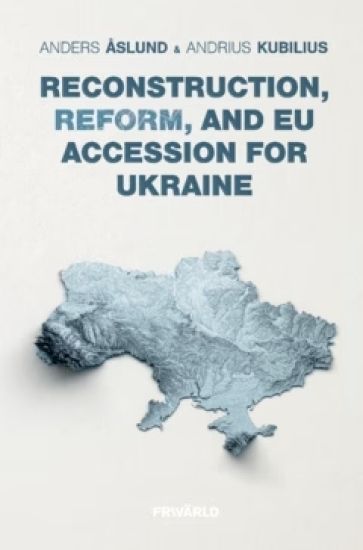
Reconstruction, reform, and EU Accession for Ukraine

Reconstruction, reform, and EU Accession for Ukraine

Andrius Kubilius; Anders Åslund; Gunnar Hökmark

Frivärld - Stockholm Free World Forum
2023
nidottu
The reconstruction, reform, and EU accession of Ukraine will be the most important EU projects of the 2020s. This brief book aims to assist and guide this process. Our fundamental idea is that Ukraine’s reconstruction, reform, and EU accession need to be combined into one process. It is our hope that it will engage all members of the collective West. Ukraine’s EU accession is crucial for Europe’s security, Ukraine’s reforms, and EU revitalization. Dr. Anders Åslund is a senior fellow at the Stockholm Free World Forum and an Adjunct Professor at Georgetown University. He is a leading specialist on economic policy in Russia, Ukraine and Eastern Europe. Dr. Åslund has served as an economic adviser to several governments, notably the governments of Russia and Ukraine. He has published widely and is the author of 15 books. Andrius Kubilius is a Member of the European Parliament (MEP) and former Prime Minister of Lithuania. He is the Chair of the Delegation to the Euronest Parliamentary Assembly and member of the Committee on Foreign Affairs.
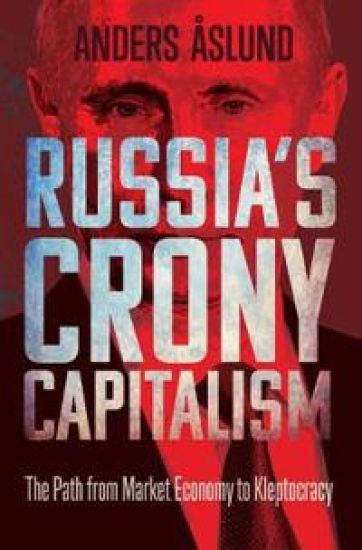
Russia's Crony Capitalism

Russia's Crony Capitalism

Anders Aslund

Yale University Press
2019
sidottu

Halvin toimitettuna 35,50 €

A penetrating look into the extreme plutocracy Vladimir Putin has created and its implications for Russia’s future “Full of insight and informed judgment, former diplomat Anders Åslund takes aim at the ‘authoritarian kleptocracy’ and the inner circles of power.”—John Lloyd, Financial Times This insightful study explores how the economic system Vladimir Putin has developed in Russia works to consolidate control over the country. By appointing his close associates as heads of state enterprises and by giving control of the FSB and the judiciary to his friends from the KGB, he has enriched his business friends from Saint Petersburg with preferential government deals. Thus, Putin has created a super wealthy and loyal plutocracy that owes its existence to authoritarianism. Much of this wealth has been hidden in offshore havens in the United States and the United Kingdom, where companies with anonymous owners and black money transfers are allowed to thrive. Though beneficial to a select few, this system has left Russia’s economy in untenable stagnation, which Putin has tried to mask through military might.
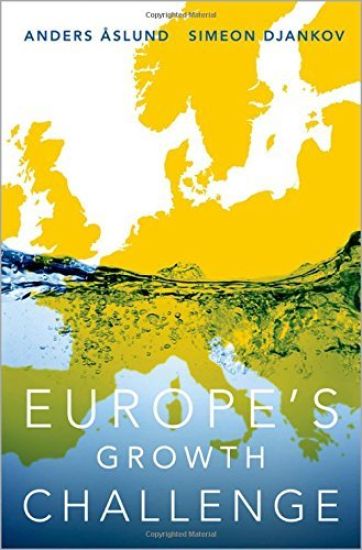
Europe's Growth Challenge

Europe's Growth Challenge

Anders Aslund; Simeon Djankov

Oxford University Press Inc
2017
sidottu
In the wake of the Great Recession, Europe's economy has stagnated to a considerable degree-greater even than that of the United States. Forecasts suggest an abysmal annual growth rate of about one percent over the next five years, and it now appears that Europe's enviable structural features, that is, their superior social safety net, leading educational facilities, and outstanding infrastructure will be in jeopardy if higher levels of growth cannot be achieved in the mid- to long-term. Several European countries have sought to stimulate growth through monetary or fiscal means, but in the view of some economists, this focus on the demand side ignores the need to address supply issues. In Europe's Growth Challenge, Anders Aslund and Simeon Djankov show how countries in Central and Eastern Europe have recently adopted economic policies that could prove useful in expanding business and economic activity in Western and Southern Europe. These include reducing the financial role of the state, adjusting tax systems, improving the environment for startups, and easing controls over labor markets and migration policies. The Netherlands, they note, has already introduced humane pension reforms that could be adopted more broadly on the continent. The authors also outline how sectoral changes in the service market, high-tech development, and energy markets, more successfully pursued in the U. S., could profit many European countries. Authors Anders Aslund and Simeon Djankov conclude with a call for crucial continental institutional reforms at the European Commission of the European Union, the European Parliament, and the European Council of Ministers. If enacted, this bold program may be just what is needed to reinvigorate the slumping European economy.
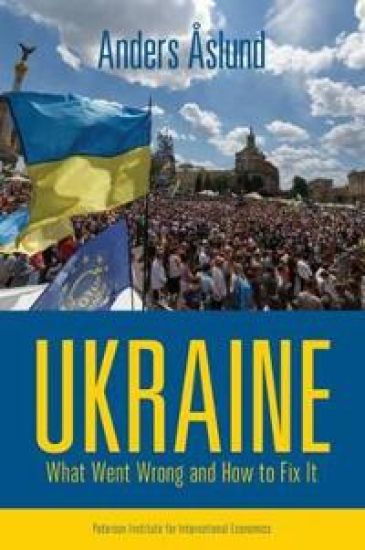
Ukraine – What Went Wrong and How to Fix It

Ukraine – What Went Wrong and How to Fix It

Anders Åslund

The Peterson Institute for International Economics
2015
nidottu
Ukraine suffered unprecedented political, economic, and military turmoil following Russia's annexation of Crimea in early 2014. Russian military aggression in the east and a legacy of destructive policies and corruption have created an imminent existential crisis for this young democracy. Yet Ukraine also has a great opportunity to break out of economic underperformance. In this study, Anders Aslund, one of the world's leading experts on Ukraine, traces Ukraine's evolution as a market economy starting with the fall of communism and examines the economic impact of its recent difficulties. Aslund argues that Ukraine must undertake sweeping political, economic, social, and government reforms to achieve prosperity and independence. For its part, the West must abandon its hesitant approach and provide broad economic assistance to help Ukraine transform itself.
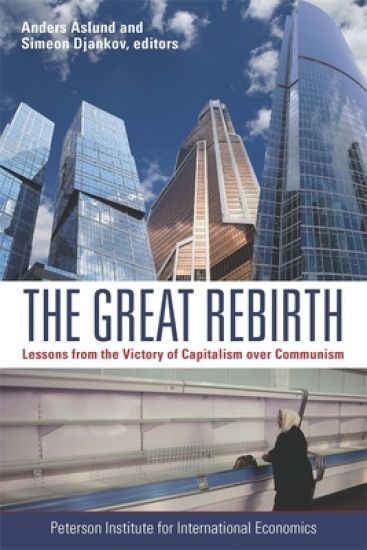
The Great Rebirth – Lessons from the Victory of Capitalism over Communism

The Great Rebirth – Lessons from the Victory of Capitalism over Communism

Anders Åslund; Simeon Djankov

The Peterson Institute for International Economics
2014
nidottu
The fall of communism transformed the political and economic landscape in more than two dozen countries across Europe and Asia. In this volume published on the 25th anniversary of the fall, political leaders, scholars, and policymakers assess the lessons learned from the "great rebirth" of capitalism and highlight the policies that were most successful in helping countries make the transition to stable and prosperous market economies. Also discussed in this book are examples of countries reverting to political and economic authoritarianism. The authors of these essays conclude that the best outcomes resulted from visionary leadership, a willingness to take bold steps, privatization of state-owned enterprises, and deregulation. Recent backsliding in Russia and Hungary has cast a shadow over the legacy of the transition a quarter century ago, however. This volume grew out of a two-day symposium of experts and practitioners reflecting on the past, present, and future of reform, held in Budapest, Hungary, on May 6-7, 2014.
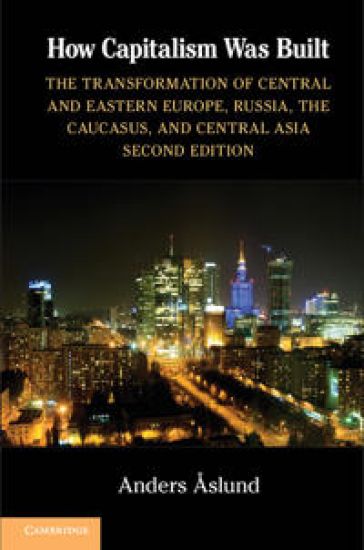
How Capitalism Was Built

How Capitalism Was Built

Anders Aslund

Cambridge University Press
2012
sidottu
Anders Aslund is known to make bold predictions that initially arouse controversy but soon become common wisdom. In Gorbachev's Struggle for Economic Reform (1989), he foresaw the collapse of the Soviet political and economic system. After Russia's financial crisis of 1998, observers declared the market economic experiment a failure, Aslund foresaw market economic success (Building Capitalism, 2002). In How Capitalism Was Built, 2nd Edition, he asks - and answers for the twenty-one countries he investigates: • Why did communism collapse? • Why did Russia not choose gradual reforms like China did? • Wherein lies the relative success of postcommunist transformation? • How did the oligarchs arise and decline vis-à-vis authoritarian leaders? Anyone who wants to understand the often confusing postcommunist dramas and obtain an early insight into the future will find this intellectually stimulating book useful. This edition includes updates to each chapter and new chapters on the impact of the global financial crisis and the European Union.
How Capitalism Was Built

How Capitalism Was Built

Anders Aslund

Cambridge University Press
2012
pokkari
Anders Aslund is known to make bold predictions that initially arouse controversy but soon become common wisdom. In Gorbachev's Struggle for Economic Reform (1989), he foresaw the collapse of the Soviet political and economic system. After Russia's financial crisis of 1998, observers declared the market economic experiment a failure, Aslund foresaw market economic success (Building Capitalism, 2002). In How Capitalism Was Built, 2nd Edition, he asks - and answers for the twenty-one countries he investigates: • Why did communism collapse? • Why did Russia not choose gradual reforms like China did? • Wherein lies the relative success of postcommunist transformation? • How did the oligarchs arise and decline vis-à-vis authoritarian leaders? Anyone who wants to understand the often confusing postcommunist dramas and obtain an early insight into the future will find this intellectually stimulating book useful. This edition includes updates to each chapter and new chapters on the impact of the global financial crisis and the European Union.
The United States Should Establish Permanent Normal Trade Relations with Russia

The United States Should Establish Permanent Normal Trade Relations with Russia

Anders Åslund; Gary Clyde Hufbauer

The Peterson Institute for International Economics
2011
nidottu
In the coming year, Congress is likely to face a critical vote on granting Permanent Normal Trade Relations (PNTR) to Russia in connection with its impending membership to the World Trade Organization (WTO). A "yes" on PNTR for Russia could set the tone for economic relations between the United States and Russia for the next decade, and would give the global agenda of trade and investment liberalization a fresh boost, as Russia is the last major economy to join the WTO. Congressional failure to permanently normalize trade relations would likely have broad consequences, since it would send a clear message of US skepticism that the WTO is a suitable forum for handling commercial relations between major powers. This study presents an analysis of the current US-Russia economic relations, provides estimates on the potential increase in US exports to Russia, and potential growth of two-way trade within the WTO framework. Drawing on conclusions from this analysis, and from previous work conducted by the Institute on US-Russia relations, this monograph summarizes the implications of PNTR for US producers, Russian economic growth, and bilateral commercial relations.
How Latvia Came Through the Financial Crisis

How Latvia Came Through the Financial Crisis

Anders Åslund; Valdis Dombrovskis

The Peterson Institute for International Economics
2011
nidottu
Latvia stands out as the East European country hardest hit by the global financial crisis; it lost approximately 25 percent of its GDP between 2008 and 2010. It was also the most overheated economy before the crisis. But in the second half of 2010, Latvia returned to economic growth. How did this happen so quickly? Current Latvian Prime Minister Valdis Dombrovskis, who shepherded Latvia through the crisis, and renowned author Anders Aslund discuss why the Latvian economy became so overheated; why an IMF and European Union stabilization program was needed; what the Latvian government did to resolve the financial crisis and why it made these choices; and what the outcome has been. This book offers a rare insider's look at how a national government responded to a global financial crisis, made tough choices, and led the country back to economic growth.
The Last Shall Be the First – The East European Financial Crisis

The Last Shall Be the First – The East European Financial Crisis

Anders Åslund

The Peterson Institute for International Economics
2010
nidottu
This book deals with the financial crisis in Eastern Europe that erupted in the fall of 2008 and abated in the spring of 2010. It concentrates on the ten new eastern members of the European Union. The causes of the crisis posed no mysteries. This was a typical credit-driven boom-and-bust cycle that led to excessive current account deficits. When global liquidity dried up, the overheated East European economies faced a sudden stop of financial inflows. What is remarkable is how well these countries have steered out of the crisis. The worst hit countries-Latvia, Lithuania, and Estonia-refused to devalue their currencies and instead pursued internal devaluations, successfully cutting public wages and expenditures. They swiftly turned large current account deficits into substantial surpluses and minimized their inflation. The political economy of crisis resolution has been equally striking. The public accepted significant hardship with minimal protests. Eastern Europe's fragmented proportional parliaments made it possible to quickly change governments when the incumbents fall short. Unstable coalition governments proved eminently able to pursued resolute anticrisis policies. They carried out impressive fiscal retrenchment without any public reaction against capitalism or globalization. The East European economies have come out leaner and more efficient. The International Monetary Fund stands out as the great victor on the international stage, having revived the old Washington consensus of a few rudimentary financial conditions, such as tenable exchange rate policy and reasonable fiscal and monetary policy, while it allowed well-governed countries larger public deficits during the crisis and offered much more financing. The European Commission entered into a successful partnership with the IMF, allowing the IMF to take the lead, while providing substantial financing. The great disappointment in the East European financial crisis has been the European Central Bank, which needs to reconsider its policies outside the eurozone to become more proactive.
Russia After the Global Economic Crisis

Russia After the Global Economic Crisis

Anders Åslund; Sergei Guriev; Andrew Kuchins

The Peterson Institute for International Economics
2010
nidottu
Russia after the Global Economic Crisis examines this important country after the financial crisis of 2007-09. The second book from The Russia Balance Sheet Project, a collaboration of two of the world's preeminent research institutions, the Peterson Institute for International Economics and the Center for Strategic and International Studies (CSIS), not only assesses Russia's international and domestic policy challenges but also provides an all-encompassing review of this important country's foreign and domestic issues. The authors consider foreign policy, Russia and its neighbors, climate change, Russia's role in the world, domestic politics, and corruption.
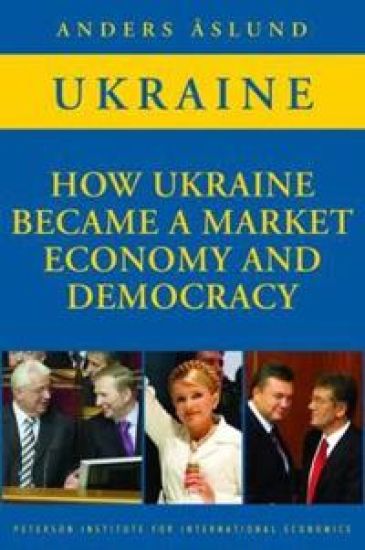
How Ukraine Became a Market Economy and Democracy

How Ukraine Became a Market Economy and Democracy

Anders Åslund

The Peterson Institute for International Economics
2009
nidottu
One of Europe's old nations steeped in history, Ukraine is today an undisputed independent state. It is a democracy and has transformed into a market economy with predominant private ownership. Ukraine's postcommunist transition has been one of the most protracted and socially costly, but it has taken the country to a desirable destination. Aslund's vivid account of Ukraine's journey begins with a brief background, where he discusses the implications of Ukraine's history, the awakening of society because of Mikhail Gorbachev's reforms, the early democratization, and the impact of the ill-fated Soviet economic reforms. He then turns to the reign of President Leonid Kravchuk from 1991 to 1994, the only salient achievement of which was nation-building, while the economy collapsed in the midst of hyperinflation. The first two years of Leonid Kuchma's presidency, from 1994 to 1996, were characterized by substantial achievements, notably financial stabilization and mass privatization. The period 1996-99 was a miserable period of policy stagnation, rent seeking, and continued economic decline. In 2000 hope returned to Ukraine. Viktor Yushchenko became prime minister and launched vigorous reforms to cleanse the economy from corruption, and economic growth returned. The ensuing period, 2001-04, amounted to a competitive oligarchy. It was quite pluralist, although repression increased. Economic growth was high. The year 2004 witnessed the most joyful period in Ukraine, the Orange Revolution, which represented Ukraine's democratic breakthrough, with Yushchenko as its hero. The postrevolution period, however, has been characterized by great domestic political instability; a renewed, explicit Russian threat to Ukraine's sovereignty; and a severe financial crisis. The answers to these challenges lie in how soon the European Union fully recognizes Ukraine's long-expressed identity as a European state, how swiftly Ukraine improves its malfunctioning constitutional order, and how promptly it addresses corruption.
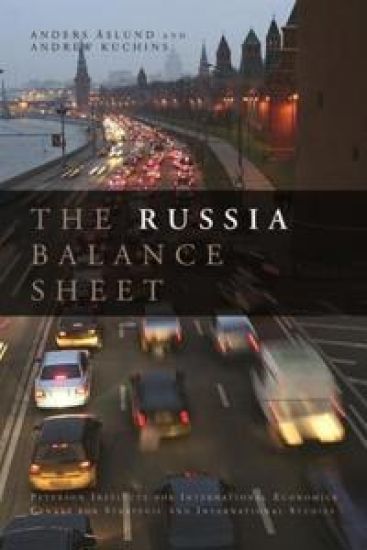
The Russia Balance Sheet

The Russia Balance Sheet

Anders Åslund; Andrew Kuchins

The Peterson Institute for International Economics
2009
nidottu
Russia has been on a wild roller-coaster ride for the past three decades with no end in sight. Just in the past year as the global financial crisis deepened, the conventional perception of Russia has changed from a "safe haven" from the economic tsunami to one of the hardest hit larger markets in the world. The Russia Balance Sheet provides comprehensive, balanced, and accurate information on all key aspects of Russia's developments and their implications for the United States and other nations. The book argues that, after the strained Bush-Putin years, the Obama administration must seize the initiative to define both its policy toward Russia and the agenda for the many multilateral meetings already planned. The book offers policy prescriptions for both the United States and Russia. It is imperative that the Obama administration establish an explicit Russia policy rather than subordinating it to other issues in order to enable the administration to make necessary tradeoffs and follow up on promises. An interagency group for Russia has been created under the leadership of the National Security Council's senior director for Russia; this group should determine the Russia policy and issue an NSC directive. As a new Russia policy is crafted and an NSC directive on Russia adopted, President Obama should make a public statement on his Russia policy. Ideally, President Obama would declare his determination to finally persuade the US Congress to graduate Russia from the Jackson-Vanik Amendment to the Trade Act of 1974. As for Russia, it should accede to the World Trade Organization (WTO) to secure its successful international integration and an improvement of its legal standards. The Kremlin needs to introduce transparent procurement procedures for major investments to relieve infrastructure bottlenecks. Property rights must be reinforced and renationalization stopped to ease the problems in banking and energy production. Finally, with the first full-scale summit between Presidents Obama and Medvedev to take place in Italy in July 2009, the authors argue that the two presidents should recommit to fulfilling the April 2008 Sochi Declaration and to reestablishing a broader organized cooperation mechanism between the two countries, like that of the Gore-Chernomyrdin Commission, to promote action and accountability.
The Challenges of Globalization – Imbalances and Growth

The Challenges of Globalization – Imbalances and Growth

Anders Åslund; Marek Dabrowski

The Peterson Institute for International Economics
2008
nidottu
With high growth rates in Asia, most notably in China, India, and Southeast and Central Asia, Eurasia's economic center of gravity is rapidly shifting to the East. At the same time, most of Europe faces serious barriers to growth in the long term. The volume examines the causes and consequences of this major shift in economic power and considers the options available to policymakers in various parts of Europe and Asia. The ten chapters in this book focus on long-term challenges of globalization rather than short-term problems of individual countries and explore two themes: global macroeconomic imbalances and growth. This work is based on a CASE-Center for Social and Economic Research and CASE-Ukraine conference.
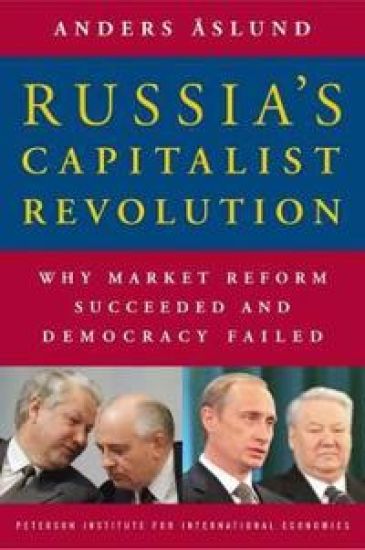
Russia`s Capitalist Revolution – Why Market Reform Succeeded and Democracy Failed

Russia`s Capitalist Revolution – Why Market Reform Succeeded and Democracy Failed

Anders Åslund

The Peterson Institute for International Economics
2007
nidottu
The Russian revolution, collapse of the Soviet Union, and Russia's ensuing transformation belong to the greatest dramas of our time. Revolutions are usually messy and emotional affairs, challenging much of the conventional wisdom, and Russia's experience is no exception. This book focuses on the transformation from Soviet Russia to Russia as a market economy, and explores why the country has failed to transform into a democracy. It examines the period from 1985, when Mikhail Gorbachev became the Soviet Union's Secretary General of the Communist Party, to the present Russia of Vladimir Putin. slund provides a broad overview of Russia's economic change, highlighting the most important issues and their subsequent resolutions, including Russia's inability to sort out the ruble zone during its revolution, several failed coups, and the financial crash of August 1998.
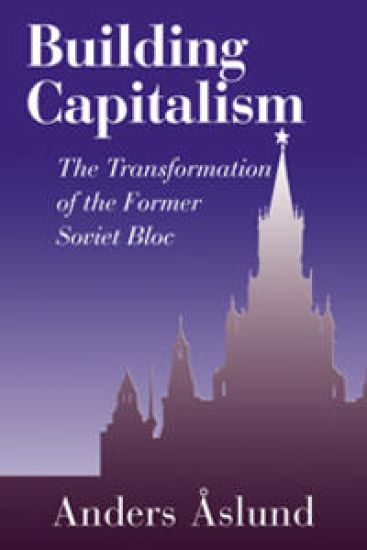
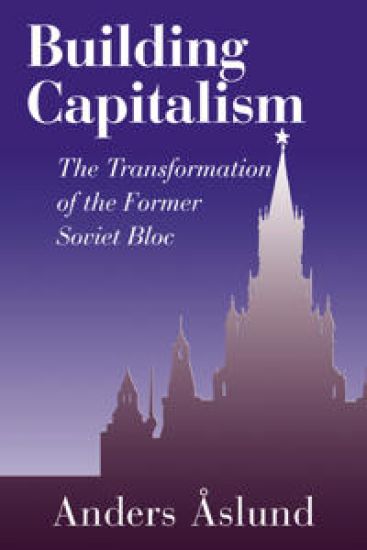
Building Capitalism

Building Capitalism

Anders Aslund

Cambridge University Press
2001
sidottu
This is the most comprehensive empirical analysis of the economic transformation of the former Soviet bloc during the first decade after communism. It debunks many myths, seeing transition as a struggle between radical reformers and those thriving on rent seeking. People have gained from fast and comprehensive reforms, but several countries have gotten stuck in corruption. Economic decline and social hazards have been greatly exaggerated, since people have forgotten how awful communism was. Swift liberalization of prices and foreign trade, as well as rapid and profound fiscal adjustment, have been vital for growth, institutional reforms, legality and greater equity. Privatization has been beneficial, and its effects will grow over time. The main problem has been the continuation of unregulated and ubiquitous state apparatuses living on corruption, while no country has suffered from too radical reforms. Where malpractices of the elite can be checked, market reforms and democracy have proceeded together.