Kirjojen hintavertailu – 12 859 828 kirjaa ja 27 kauppaa

Kirjailija

Anders Jägerskog

Kirjat ja teokset yhdessä paikassa: 4 kirjaa, julkaisuja vuosilta 2015–2016, suosituimpiin kuuluu Transboundary Water Management and the Climate Change Debate. Vertaile teosten hintoja ja tarkista saatavuus suomalaisista kirjakaupoista.

4 kirjaa

Kirjojen julkaisuvuodet: 2015–2016.

Emerging Security Threats in the Middle East

Emerging Security Threats in the Middle East

Ashok Swain; Anders Jägerskog

Rowman Littlefield
2016
sidottu
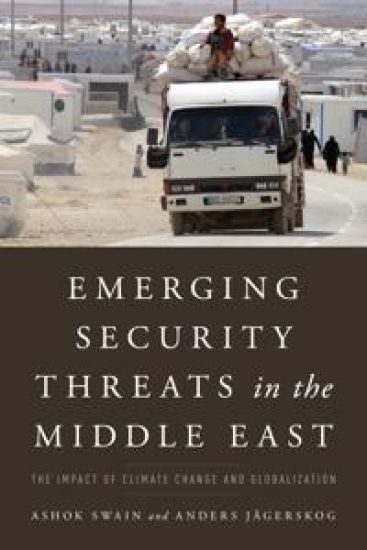
Increasingly the Middle East and its growing population face a highly complex and fragile security system. The rich deposits of natural resources, such as oil and gas, suffer from a strained renewable resource base that includes water and arable land. This leads to water scarcity, desertification, and land degradation. Increasing population, industrialization, and urbanization put more and more demand on the food supply. Energy insecurity may not be generally associated with the Middle East, but the countries in the eastern Mediterranean part have been traditionally vulnerable to it as their fossil fuel endowments have been low. Another issue is the large-scale temporary labor migration and the large number of forced migrants, refugees, and internally displaced persons. The book analyzes these emerging security challenges in a comprehensive and systematic manner. It draws national and regional security issues into both the global security and human security perspectives.
Emerging Security Threats in the Middle East

Emerging Security Threats in the Middle East

Ashok Swain; Anders Jägerskog

Rowman Littlefield
2016
nidottu
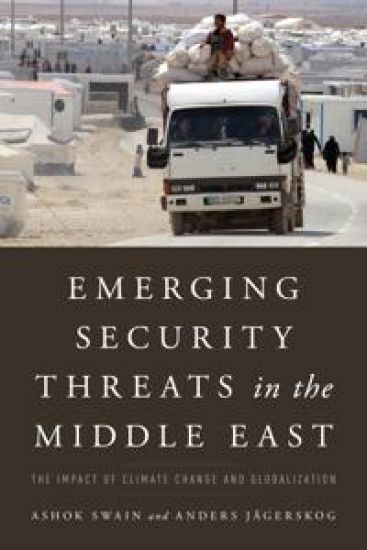
Increasingly the Middle East and its growing population face a highly complex and fragile security system. The rich deposits of natural resources, such as oil and gas, suffer from a strained renewable resource base that includes water and arable land. This leads to water scarcity, desertification, and land degradation. Increasing population, industrialization, and urbanization put more and more demand on the food supply. Energy insecurity may not be generally associated with the Middle East, but the countries in the eastern Mediterranean part have been traditionally vulnerable to it as their fossil fuel endowments have been low. Another issue is the large-scale temporary labor migration and the large number of forced migrants, refugees, and internally displaced persons. The book analyzes these emerging security challenges in a comprehensive and systematic manner. It draws national and regional security issues into both the global security and human security perspectives.
Transboundary Water Management and the Climate Change Debate

Transboundary Water Management and the Climate Change Debate

Anton Earle; Ana Elisa Cascao; Stina Hansson; Anders Jägerskog; Ashok Swain; Joakim Öjendal

Routledge
2015
sidottu
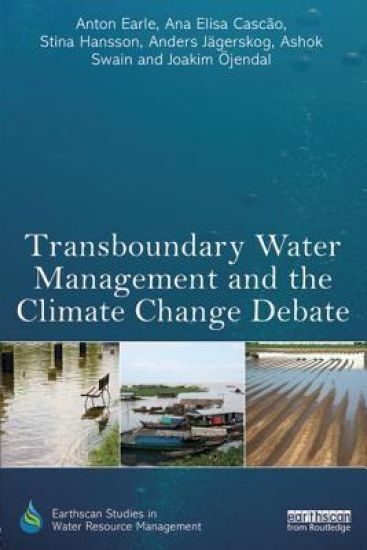
Climate change has an impact on the ability of transboundary water management institutions to deliver on their respective mandates. The starting point for this book is that actors within transboundary water management institutions develop responses to the climate change debate, as distinct from the physical phenomenon of climate change. Actors respond to this debate broadly in three distinct ways – adapt, resist (as in avoiding the issue) and subvert (as in using the debate to fulfil their own agenda). The book charts approaches which have been taken over the past two decades to promote more effective water management institutions, covering issues of conflict, cooperation, power and law. A new framework for a better understanding of the interaction between transboundary water management institutional resilience and global change is developed through analysis of the way these institutions respond to the climate change debate. This framework is applied to six river case studies from Africa, Asia and the Middle East (Ganges-Brahmaputra, Jordan, Mekong, Niger, Nile, Orange-Senqu) from which learning conclusions and policy recommendations are developed.
Transboundary Water Management and the Climate Change Debate

Transboundary Water Management and the Climate Change Debate

Anton Earle; Ana Elisa Cascao; Stina Hansson; Anders Jägerskog; Ashok Swain; Joakim Öjendal

Routledge
2015
nidottu
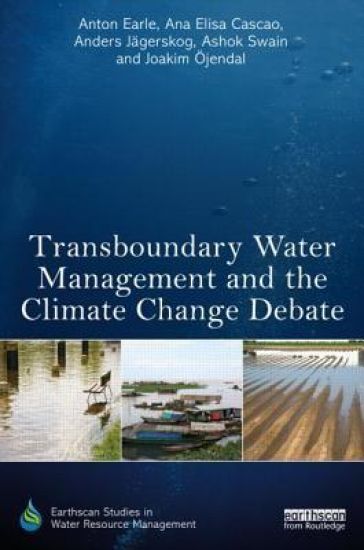
Climate change has an impact on the ability of transboundary water management institutions to deliver on their respective mandates. The starting point for this book is that actors within transboundary water management institutions develop responses to the climate change debate, as distinct from the physical phenomenon of climate change. Actors respond to this debate broadly in three distinct ways – adapt, resist (as in avoiding the issue) and subvert (as in using the debate to fulfil their own agenda). The book charts approaches which have been taken over the past two decades to promote more effective water management institutions, covering issues of conflict, cooperation, power and law. A new framework for a better understanding of the interaction between transboundary water management institutional resilience and global change is developed through analysis of the way these institutions respond to the climate change debate. This framework is applied to six river case studies from Africa, Asia and the Middle East (Ganges-Brahmaputra, Jordan, Mekong, Niger, Nile, Orange-Senqu) from which learning conclusions and policy recommendations are developed.