Kirjojen hintavertailu – 12 903 725 kirjaa ja 27 kauppaa

Kirjailija

András Körösényi

Kirjat ja teokset yhdessä paikassa: 7 kirjaa, julkaisuja vuosilta 1998–2023, suosituimpiin kuuluu Government and Politics in Hungary. Vertaile teosten hintoja ja tarkista saatavuus suomalaisista kirjakaupoista.

7 kirjaa

Kirjojen julkaisuvuodet: 1998–2023.

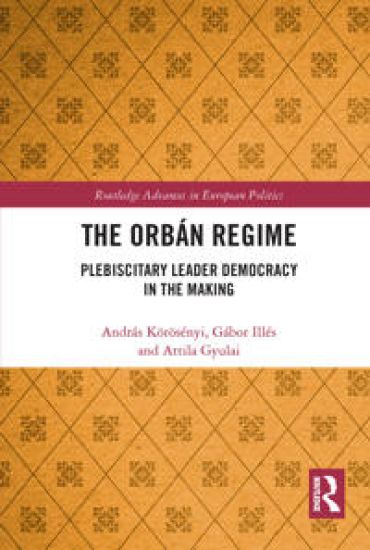
The Orbán Regime

The Orbán Regime

András Körösényi; Gábor Illés; Attila Gyulai

TAYLOR FRANCIS LTD
2023
nidottu
This book gives the first comprehensive and theoretically substantiated political science account of the Orbán regime in English. It argues that Viktor Orbán’s regime-building and reconstructive leadership is more than just an example of hybridisation, a successful populist appeal or a backlash against the earlier neoliberal hegemony in Central Europe. It unfolds the major traits of the Orbán regime and argues that it provides a paradigmatic case of the Weberian model of plebiscitary leader democracy (PLD). Beyond explaining the backslide of liberal democracy in Hungary, the book aims at two additional contributions of wider significance. First, by applying the concept of PLD to the Hungarian case, it reveals that the authoritarian elements are products of an endogenous drive of modern mass democracy. Second, through the glass of PLD, the Orbán regime can be seen as an experimental lab of global trends like mediatisation and personalisation of politics, populist style, the deconsolidation of liberal democratic order, and what is often labelled as "post-truth politics". This book will be of key interest both to scholars and students of Hungary, Post-communist and Central and East European politics and to those interested in populism, democratisation and democratic deconsolidation as a broader trend in a variety of countries.
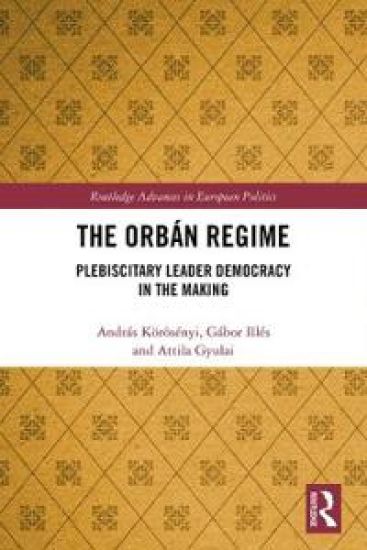
The Orbán Regime

The Orbán Regime

András Körösényi; Gábor Illés; Attila Gyulai

Routledge
2020
sidottu
This book gives the first comprehensive and theoretically substantiated political science account of the Orbán regime in English. It argues that Viktor Orbán’s regime-building and reconstructive leadership is more than just an example of hybridisation, a successful populist appeal or a backlash against the earlier neoliberal hegemony in Central Europe. It unfolds the major traits of the Orbán regime and argues that it provides a paradigmatic case of the Weberian model of plebiscitary leader democracy (PLD). Beyond explaining the backslide of liberal democracy in Hungary, the book aims at two additional contributions of wider significance. First, by applying the concept of PLD to the Hungarian case, it reveals that the authoritarian elements are products of an endogenous drive of modern mass democracy. Second, through the glass of PLD, the Orbán regime can be seen as an experimental lab of global trends like mediatisation and personalisation of politics, populist style, the deconsolidation of liberal democratic order, and what is often labelled as "post-truth politics". This book will be of key interest both to scholars and students of Hungary, Post-communist and Central and East European politics and to those interested in populism, democratisation and democratic deconsolidation as a broader trend in a variety of countries.
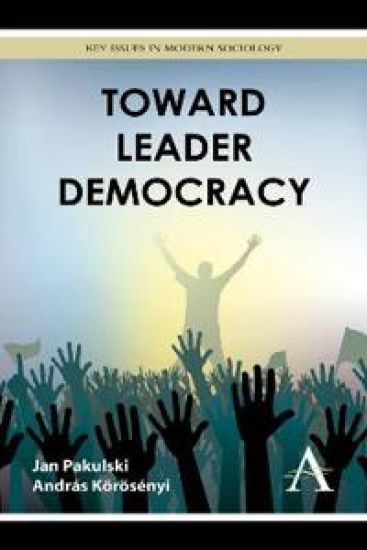
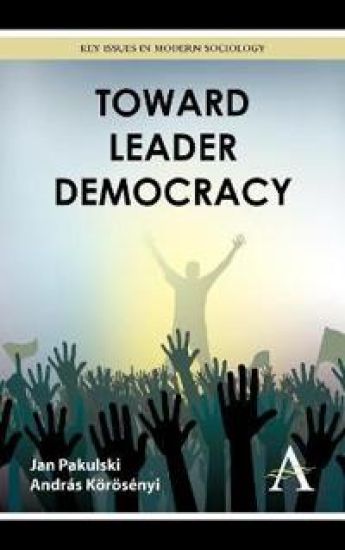
Toward Leader Democracy

Toward Leader Democracy

Jan Pakulski; András Körösényi

Anthem Press
2013
nidottu
In today’s liberal democracies, does the political process focus on the people, or on the political leaders representing them? Building upon the ideas of Joseph Schumpeter and Max Weber, ‘Toward Leader Democracy’ argues that we are currently seeing a movement toward an increasingly pronounced focus on political leaders – ‘leader democracy’. This form of democracy is fashioned by the political will, determination and commitment of top politicians, and is exercised through elite persuasion that actively shapes the preferences of voters so as to give meaning to political processes. As the text reveals, this marks a definite evolution within the world’s ‘advanced democracies’: democratic representation is today realised increasingly through active political leadership, as opposed to the former practices of statistically ‘mirroring’ constituencies, or the deliberative self-adjustment of the executive to match citizen preferences.
Toward Leader Democracy

Toward Leader Democracy

Jan Pakulski; András Körösényi

Anthem Press
2012
sidottu
In today’s liberal democracies, does the political process focus on the people, or on the political leaders representing them? Building upon the ideas of Joseph Schumpeter and Max Weber, ‘Toward Leader Democracy’ argues that we are currently seeing a movement toward an increasingly pronounced focus on political leaders – ‘leader democracy’. This form of democracy is fashioned by the political will, determination and commitment of top politicians, and is exercised through elite persuasion that actively shapes the preferences of voters so as to give meaning to political processes. As the text reveals, this marks a definite evolution within the world’s ‘advanced democracies’: democratic representation is today realised increasingly through active political leadership, as opposed to the former practices of statistically ‘mirroring’ constituencies, or the deliberative self-adjustment of the executive to match citizen preferences.
Government and Politics in Hungary

Government and Politics in Hungary

András Körösényi

Central European University Press
1999
sidottu
This text provides both a historical overview and an analysis of the main political actors, constitution, electoral system, parliament and political parties of Hungary. It contains data intended to serve two purposes. The first is to survey the most important institutions of the political and governmental systems and the cultural and behavioural characteristics of Hungarian politics. The second is to provide the reader with a clear understanding of the two-way relationship between cultural-behavioural and constitutional-institutional levels of politics in Hungary. The text challenges many stereotypes of post-communist political literature and reveals why Hungarian politics does not fit into many of the generalizations and "pigeon holes" of contemporary political science.
Government and Politics in Hungary

Government and Politics in Hungary

András Körösényi

CENTRAL EUROPEAN UNIVERSITY PRESS
1999
pokkari
The author provides a historical overview of Hungarian politics and analyses the main political actors, constitution, electoral system, parliament and political parties of Hungary. As such, the first objective is to survey the most important institutions of the political and governmental systems and the cultural and behavioural characteristics of Hungarian politics. The second is to provide the reader with a clear understanding of the two way relationship between cultural-behavioural and constitutional-institutional levels of politics in Hungary. From these two objectives, the book challenges many stereotypes of post-communist political literature and reveals why Hungarian politics does not fit into many of the generalisations of contemporary political science.
Intellectuals and Politics in Central Europe

Intellectuals and Politics in Central Europe

Nenad Dimitrijevic; Helena Flam; Ivan Bernik; József Böröcz; Alina Mungiu-Pippidi; András Körösényi; Aviezer Tucker

Central European University Press
1998
sidottu
Discussing the role of intellectuals in the political transition of the late 1980s and early 1990s and their participation in the political life of the new democracies of Central Europe, this book presents original essays from authors who discuss the eight countries in the region. In the Introduction, the editor gives a historical overview of the tradition of the political involvement of intellectuals in these countries, especially in the nineteenth century. The chapters which follow describe the typical political and social attitude of Central European intellectuals, including writers, poets, artists, and scientists. A unique feature of the book is that it deals not only with the role of intellectuals in the preparation of the peaceful revolutions in the individual countries, but also critically analyzes their role in the transition and their behavior in the emerging democracies. The most striking phenomenon, common to all the countries studied, is the disillusionment of intellectuals and their disappointment in the years following the transition, a period when the role of prophet should be replaced by that of politician for those who have chosen to stay in politics. This phenomenon has, in general, been much less subjected to systematic study than the role of intellectuals in the changes themselves.