Kirjojen hintavertailu – 12 903 725 kirjaa ja 27 kauppaa

Kirjailija

András Sóbester

Kirjat ja teokset yhdessä paikassa: 4 kirjaa, julkaisuja vuosilta 2008–2017, suosituimpiin kuuluu Small Unmanned Fixed-wing Aircraft Design. Vertaile teosten hintoja ja tarkista saatavuus suomalaisista kirjakaupoista.

Nimi esiintyy myös muodoissa: Andras Sóbester

4 kirjaa

Kirjojen julkaisuvuodet: 2008–2017.

Small Unmanned Fixed-wing Aircraft Design

Small Unmanned Fixed-wing Aircraft Design

Andrew J. Keane; András Sóbester; James P. Scanlan

Wiley-Blackwell
2017
sidottu
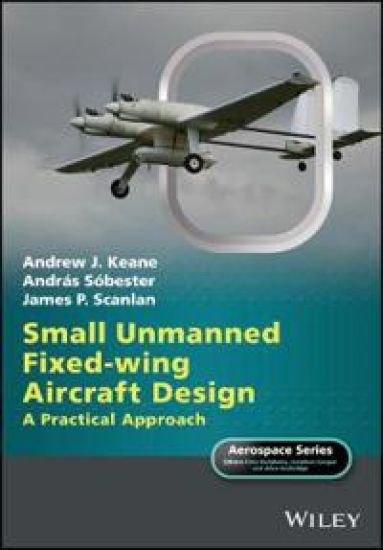
Small Unmanned Fixed-wing Aircraft Design is the essential guide to designing, building and testing fixed wing UAVs (or drones). It deals with aircraft from two to 150 kg in weight and is based on the first-hand experiences of the world renowned UAV team at the UK’s University of Southampton. The book covers both the practical aspects of designing, manufacturing and flight testing and outlines and the essential calculations needed to underpin successful designs. It describes the entire process of UAV design from requirements definition to configuration layout and sizing, through preliminary design and analysis using simple panel codes and spreadsheets to full CFD and FEA models and on to detailed design with parametric CAD tools. Its focus is on modest cost approaches that draw heavily on the latest digital design and manufacturing methods, including a strong emphasis on utilizing off-the-shelf components, low cost analysis, automated geometry modelling and 3D printing. It deliberately avoids a deep theoretical coverage of aerodynamics or structural mechanics; rather it provides a design team with sufficient insights and guidance to get the essentials undertaken more pragmatically. The book contains many all-colour illustrations of the dozens of aircraft built by the authors and their students over the last ten years giving much detailed information on what works best. It is predominantly aimed at under-graduate and MSc level student design and build projects, but will be of interest to anyone engaged in the practical problems of getting quite complex unmanned aircraft flying. It should also appeal to the more sophisticated aero-modeller and those engaged on research based around fixed wing UAVs.
Aircraft Aerodynamic Design

Aircraft Aerodynamic Design

András Sóbester; Alexander I. J. Forrester

John Wiley Sons Inc
2014
sidottu
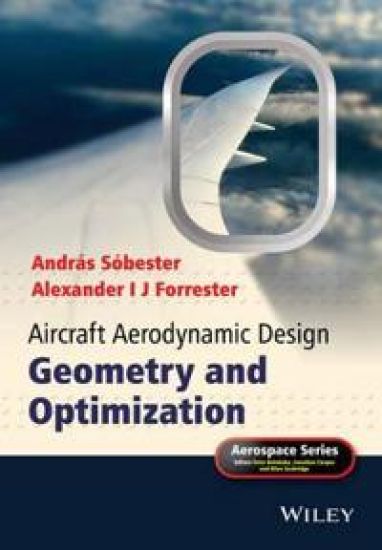
Optimal aircraft design is impossible without a parametric representation of the geometry of the airframe. We need a mathematical model equipped with a set of controls, or design variables, which generates different candidate airframe shapes in response to changes in the values of these variables. This model's objectives are to be flexible and concise, and capable of yielding a wide range of shapes with a minimum number of design variables. Moreover, the process of converting these variables into aircraft geometries must be robust. Alas, flexibility, conciseness and robustness can seldom be achieved simultaneously. Aircraft Aerodynamic Design: Geometry and Optimization addresses this problem by navigating the subtle trade-offs between the competing objectives of geometry parameterization. It beginswith the fundamentals of geometry-centred aircraft design, followed by a review of the building blocks of computational geometries, the curve and surface formulations at the heart of aircraft geometry. The authors then cover a range of legacy formulations in the build-up towards a discussion of the most flexible shape models used in aerodynamic design (with a focus on lift generating surfaces). The book takes a practical approach and includes MATLAB®, Python and Rhinoceros® code, as well as ‘real-life’ example case studies. Key features: Covers effective geometry parameterization within the context of design optimizationDemonstrates how geometry parameterization is an important element of modern aircraft designIncludes code and case studies which enable the reader to apply each theoretical concept either as an aid to understanding or as a building block of their own geometry modelAccompanied by a website hosting codes Aircraft Aerodynamic Design: Geometry and Optimization is a practical guide for researchers and practitioners in the aerospace industry, and a reference for graduate and undergraduate students in aircraft design and multidisciplinary design optimization.
Stratospheric Flight

Stratospheric Flight

Andras Sóbester

Praxis
2011
nidottu
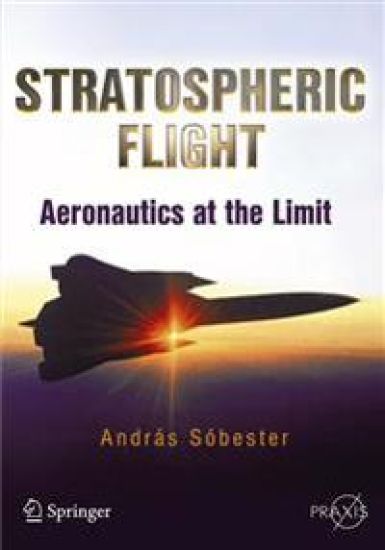
In this book, Dr. Andras Sobester reviews the science behind high altitude flight. He takes the reader on a journey that begins with the complex physiological questions involved in taking humans into the "death zone." How does the body react to falling ambient pressure? Why is hypoxia (oxygen deficiency associated with low air pressure) so dangerous and why is it so difficult to 'design out' of aircraft, why does it still cause fatalities in the 21st century? What cabin pressures are air passengers and military pilots exposed to and why is the choice of an appropriate range of values such a difficult problem? How do high altitude life support systems work and what happens if they fail? What happens if cabin pressure is lost suddenly or, even worse, slowly and unnoticed? The second part of the book tackles the aeronautical problems of flying in the upper atmosphere. What loads does stratospheric flight place on pressurized cabins at high altitude and why are these difficult to predict? What determines the maximum altitude an aircraft can climb to? What is the 'coffin corner' and how can it be avoided? The history of aviation has seen a handful of airplanes reach altitudes in excess of 70,000 feet - what are the extreme engineering challenges of climbing into the upper stratosphere? Flying high makes very high speeds possible -- what are the practical limits? The key advantage of stratospheric flight is that the aircraft will be 'above the weather' - but is this always the case? Part three of the book investigates the extreme atmospheric conditions that may be encountered in the upper atmosphere. How high can a storm cell reach and what is it like to fly into one? How frequent is high altitude 'clear air' turbulence, what causes it and what are its effects on aircraft? The stratosphere can be extremely cold - how cold does it have to be before flight becomes unsafe? What happens when an aircraft encounters volcanic ash at high altitude? Very highwinds can be encountered at the lower boundary of the stratosphere - what effect do they have on aviation? Finally, part four looks at the extreme limits of stratospheric flight. How high will a winged aircraft will ever be able to fly? What are the ultimate altitude limits of ballooning? What is the greatest altitude that you could still bail out from? And finally, what are the challenges of exploring the stratospheres of other planets and moons? The author discusses these and many other questions, the known knowns, the known unkonwns and the potential unknown unknowns of stratospheric flight through a series of notable moments of the recent history of mankind's forays into the upper atmospheres, each of these incidents, accidents or great triumphs illustrating a key aspect of what makes stratospheric flight aviation at the limit.
Engineering Design via Surrogate Modelling

Engineering Design via Surrogate Modelling

Alexander Forrester; András Sóbester; Andy Keane

John Wiley Sons Inc
2008
sidottu
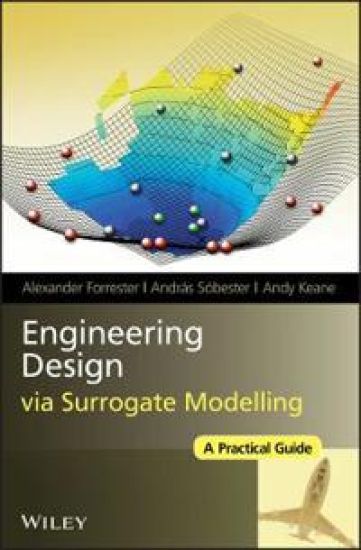
Surrogate models expedite the search for promising designs by standing in for expensive design evaluations or simulations. They provide a global model of some metric of a design (such as weight, aerodynamic drag, cost, etc.), which can then be optimized efficiently. Engineering Design via Surrogate Modelling is a self-contained guide to surrogate models and their use in engineering design. The fundamentals of building, selecting, validating, searching and refining a surrogate are presented in a manner accessible to novices in the field. Figures are used liberally to explain the key concepts and clearly show the differences between the various techniques, as well as to emphasize the intuitive nature of the conceptual and mathematical reasoning behind them. More advanced and recent concepts are each presented in stand-alone chapters, allowing the reader to concentrate on material pertinent to their current design problem, and concepts are clearly demonstrated using simple design problems. This collection of advanced concepts (visualization, constraint handling, coping with noisy data, gradient-enhanced modelling, multi-fidelity analysis and multiple objectives) represents an invaluable reference manual for engineers and researchers active in the area. Engineering Design via Surrogate Modelling is complemented by a suite of Matlab codes, allowing the reader to apply all the techniques presented to their own design problems. By applying statistical modelling to engineering design, this book bridges the wide gap between the engineering and statistics communities. It will appeal to postgraduates and researchers across the academic engineering design community as well as practising design engineers. Provides an inclusive and practical guide to using surrogates in engineering design. Presents the fundamentals of building, selecting, validating, searching and refining a surrogate model. Guides the reader through the practical implementation of a surrogate-based design process using a set of case studies from real engineering design challenges. Accompanied by a companion website featuring Matlab software at http://www.wiley.com/go/forrester