Kirjojen hintavertailu – 12 903 725 kirjaa ja 27 kauppaa

Kirjailija

André Wink

Kirjat ja teokset yhdessä paikassa: 11 kirjaa, julkaisuja vuosilta 2001–2025, suosituimpiin kuuluu Al-Hind. Vertaile teosten hintoja ja tarkista saatavuus suomalaisista kirjakaupoista.

Nimi esiintyy myös muodoissa: Andre Wink

11 kirjaa

Kirjojen julkaisuvuodet: 2001–2025.

Al-Hind: The Making of the Indo-Islamic World
This book provides a new answer to an old and often-asked question: why did the bulk of conversion to Islam take place not in the imperial heartlands of the Indo-Islamic world but among the indigenous populations of the Indus borderlands and the coastal, maritime and insular peripheries of the Indian Ocean and the Malay-Indonesian archipelago? The answer is found in the conjunction of geographical, political and economic factors affecting the Indo-Islamic states of the 13th to 17th centuries, both in their medieval origins and their interaction with the Portuguese Estado da India and the East India Companies.

Al-Hind

Al-Hind

André Wink

Manohar Publishers and Distributors
2024
Sidottu
The first part of the long-awaited fourth volume of André Wink’s monu­mental Al-Hind: The Making of the Indo-Islamic World introduces a new perspective on the rise of the dynasty of the Great Mughals and the transition of the Indo-Islamic world from the medieval to the early modern centuries. Eschewing the conventional military and technological explanations, the book adopts an institutional explanation that emphasizes the Central and Inner Asian post-nomadic heritage of the dynasty and, in the context of persistent rivalry with the Indo-Afghans, its successful politics of incorporation and accommodation of Muslim and non-Muslim constituencies alike.
The Making of the Indo-Islamic World

The Making of the Indo-Islamic World

André Wink

Cambridge University Press
2020
pokkari
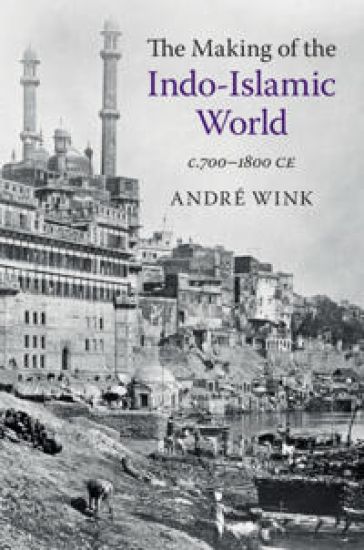
In a new accessible narrative, Andre Wink presents his major reinterpretation of the long-term history of India and the Indian Ocean region from the perspective of world history and geography. Situating the history of the Indianized territories of South Asia and Southeast Asia within the wider history of the Islamic world, he argues that the long-term development and transformation of Indo-Islamic history is best understood as the outcome of a major shift in the relationship between the sedentary peasant societies of the river plains, the nomads of the great Saharasian arid zone and the seafaring populations of the Indian Ocean. This revisionist work redraws the Asian past as the outcome of the fusion of these different types of settled and mobile societies, placing geography and environment at the centre of human history.
The Making of the Indo-Islamic World

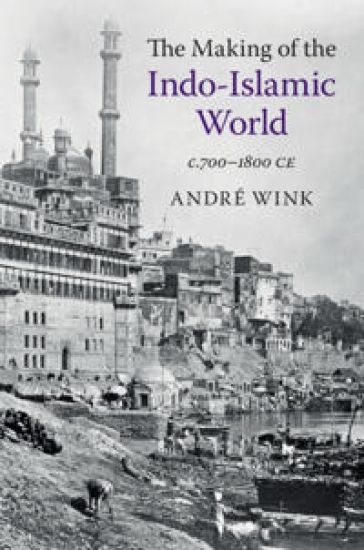
The Making of the Indo-Islamic World

André Wink

Cambridge University Press
2020
sidottu
In a new accessible narrative, Andre Wink presents his major reinterpretation of the long-term history of India and the Indian Ocean region from the perspective of world history and geography. Situating the history of the Indianized territories of South Asia and Southeast Asia within the wider history of the Islamic world, he argues that the long-term development and transformation of Indo-Islamic history is best understood as the outcome of a major shift in the relationship between the sedentary peasant societies of the river plains, the nomads of the great Saharasian arid zone and the seafaring populations of the Indian Ocean. This revisionist work redraws the Asian past as the outcome of the fusion of these different types of settled and mobile societies, placing geography and environment at the centre of human history.
Akbar

Akbar

Andre Wink

Oneworld Publications
2008
sidottu
The greatest of the Mughal emperors, Jalal ad-Din Akbar (1542-1603) was a formidable military tactician and popular demagogue. Ascending to the throne at the age of thirteen, he ruled for half a century, expanded the Mughal empire, and left behind a legacy to rival his infamous ancestors Chinggis Khan and Timur. Renowned for his attempts to integrate the diverse religious heritage of India, he was a true polymath who although illiterate was widely active in a number of intellectual pursuits. In this fascinating biography, Andre Wink provides glimpses into Akbar’s daily life and highlights his contribution to new methods of imperial control, surveillance and record-keeping. Contrasting his reign with those of his nomadic Mongol ancestors, this lucid study is an essential read for anyone interested in the history of India and South Asia.
Land and Sovereignty in India

Land and Sovereignty in India

André Wink

Cambridge University Press
2007
pokkari
This original contribution to Indian history, focusing on contemporary and largely indigenous documents, introduces a set of concepts for the analysis of late Mughal rule. More specifically it examines the origins and development of the Maratha svardjya or 'self-rule' within the context of declining Muslim power. It traces the expansion of Maratha dominion to a process of fitna, a policy of 'shifting alliances' which was recurrent in the wake of Muslim expansion throughout its history. The book gives an interesting perspective on Hindu-Muslim relationships in the pre-British period as well as on the nature of the Indo-Muslim state and its most important successor polity, on its capacity for change and development in the intermediate sections of society, the land-tenurial system, the monetization of the economy, and on the fiscal system.
Al-Hind

Al-Hind

Andre Wink

Brill
2004
sidottu
This book gives an insight into the frequently asked question on the relationship between international law, time and history, approaching the issue from a legal and philosophical point of view. Broadly speaking, it is possible to identify at least three different ways in which the above relationship may be conceived. The first is that of a history of international law, mapped out in terms of its trajectory, written in narrative form that provides a story about its origins, development, progress or renewal; the second is that of history in international law and of the role history plays in arguments about law itself; the third way in which that relationship may be understood is in terms of international law in history, of understanding how international law has been engaged in the creation of a history that in some senses stands outside the history of international law itself. Each type of engagement with history and international law will interweave various different types of historical narrative, pointing to the typically multi-layered nature of international lawyers' engagement with the past and its importance in shaping the present and future of international law.
Al-Hind, Volume 2 Slave Kings and the Islamic Conquest, 11th-13th Centuries
During the eleventh to thirteenth centuries, Islamic conquest and trade laid the foundation for a new type of Indo-Islamic society in which the organizational forms of the frontier and of sedentary agriculture merged in a way that was uniquely successful in the late medieval world at large, setting the Indo-Islamic world apart from the Middle East and China in the same centuries. Please note that The Slave Kings and the Islamic Conquest, 11th-13th Centuries was previously published by Brill in hardback (ISBN 90 04 10236 1, still available).
Al-Hind, Volume 1 Early Medieval India and the Expansion of Islam 7th-11th Centuries
In this volume, André Wink analyzes the beginning of the process of momentous and long-term change that came with the Islamization of the regions that the Arabs called al-Hind—India and large parts of its Indianized hinterland. The growth and development of a world economy in and around the Indian Ocean was effected by continued economic, social, and cultural integration into ever wider and more complex patterns under the aegis of Islam. Please note that Early medieval India and the expansion of Islam 7th-11th centuries was previously published by Brill in hardback (ISBN 90 04 09249 8, still available).
Nomads in the Sedentary World

Nomads in the Sedentary World

Anatoly M. Khazanov; Andre Wink

RoutledgeCurzon
2001
sidottu
Studies the role played by nomads in the political, linguistic, socio-economic and cultural development of the sedentary world around them. Spans regions from Hungary to Africa, India and China, and periods from the first millennium BC to early modern times.
Nomads in the Sedentary World

Nomads in the Sedentary World

Anatoly M. Khazanov; Andre Wink

RoutledgeCurzon
2001
nidottu
Studies the role played by nomads in the political, linguistic, socio-economic and cultural development of the sedentary world around them. Spans regions from Hungary to Africa, India and China, and periods from the first millennium BC to early modern times.