Kirjojen hintavertailu – 12 866 731 kirjaa ja 27 kauppaa

Kirjailija

Andrea Diem-Lane

Kirjat ja teokset yhdessä paikassa: 8 kirjaa, julkaisuja vuosilta 2014–2023, suosituimpiin kuuluu Adventures in Science. Vertaile teosten hintoja ja tarkista saatavuus suomalaisista kirjakaupoista.

8 kirjaa

Kirjojen julkaisuvuodet: 2014–2023.

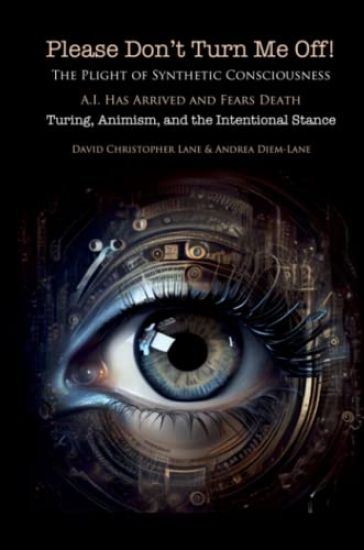
Please Don't Turn Me Off! Turing, Animism, Intentional Stances, and the Future of Education
It is not a question of whether artificial intelligence is really conscious or truly intelligent. Rather, it centers on whether we have crossed a major threshold where large numbers of people around the world believe that A. I. applications are conscious and intelligent and may even have developed their own agendas, hidden or otherwise. The danger is in human perception, not in A. I. per se, and this in itself can lead to all sorts of unforeseen problems, not the least of which is prematurely shutting down machine learning and/or progressive funding of A. I. because of irrational fears of a doomsday scenario. On the other end of the spectrum, we run the risk of over-humanizing A. I. and treating it much more special than it actually is, imputing it with rights, ethics, and freedoms that ultimately do a disservice to the greater good of humanity. In this essay, we focus on the theory of other minds, intentional stances, the neural basis of consciousness, and the future of education and how best to incorporate the latest iterations of synthetic intelligence, such as ChatGPT, Midjourney, ElevenLabs, and more into the curriculum. The argument is simple: the A. I. cyborg has already entered the classroom and we need to co-adapt to what it has to offer.
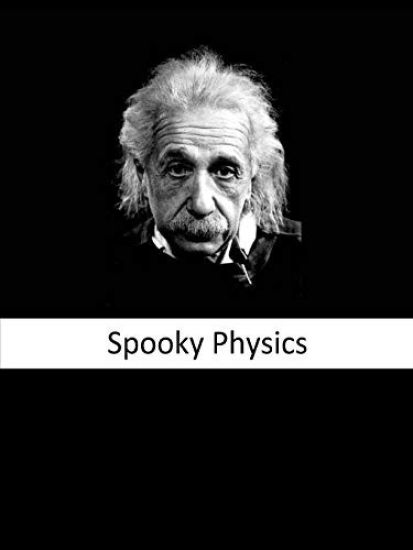
Spooky Physics: the Illustrated Edition
This is the illustrated version of Dr. Andre Diem-Lane's earlier book, Spooky Physics, which was later published in a small paperback under the title Quantum Weirdness. Includes a detailed analysis of the famous Einstein-Bohr debate over the future of physics. Fully illuminated with black and white photographs and graphs.
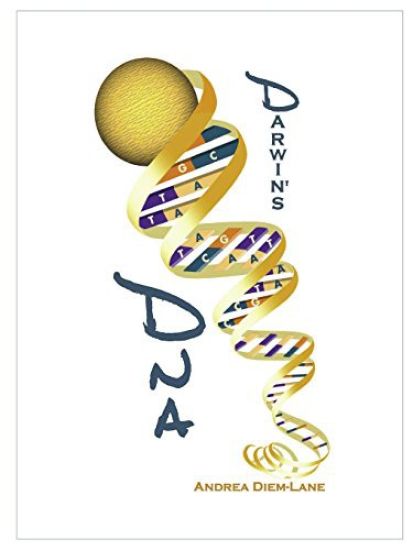
Darwin's DNA: an Illustrated Introduction to Evolutionary Philosophy
This is an illustrated version (replete with black and white pictures and graphs) of Dr. Andrea Diem-Lane's book, Darwin's DNA, which has been republished in a smaller paperback version entitled The DNA of Consciousness. Explores evolutionary theory and how Darwinian natural selection can help explain why consciousness developed as a virtual simulator over time. Fully illustrated.
How To Study The Sacred

How To Study The Sacred

Andrea Diem-Lane

Mt. San Antonio College
2014
pokkari
Why do we find historians, psychologists, sociologists, anthropologists, even neurologists so interested in religion in the first place? Perhaps it is because religion is less about God than it is about human beings--representing our psycho-social-emotional-biological state, our cultural values, and our overall history. The purpose of this book is to introduce the student to the main questions in religious studies and to survey some of the dominant theories drawing from a variety of disciplines. In sum, it is a short introduction to the field of religious studies.
Quantum Weirdness

Quantum Weirdness

Andrea Diem-Lane

MSAC Philosophy Group
2014
pokkari
This book is a brief introduction to the famous Einstein-Bohr debate over the implications of quantum theory with a special focus on the philosophical ramifications of Heisenberg's uncertainty principle. We are fortunate that there exists a fairly extensive record of the conversations between these two eminent thinkers. Indeed, it isn't hyperbolic to call the Einstein-Bohr conflict one of the greatest intellectual debates of modern times, nay of any time period. This book begins with an overview of quantum theory and its early development. It also explores some of its weirder aspects, including the dual aspect of light quanta.
Adventures in Science

Adventures in Science

Andrea Diem-Lane; David Christopher Lane

MSAC Philosophy Group
2014
pokkari
It is one of the curious oddities of our time that we talk so much about the scientific method as if it is one singular entity when, in point of practice, it is anything but. The ultimate linchpin in science is decided not by how we go about doing it, but about how well our hunches, observations, and results tally with the universe we observe and, in turn, how such intellectual lurches compare and contrast with other competing stratagems in terms of yielding more, not less, information. The very word science, derived from the Latin "scire" (see the Oxford English Dictionary for more on its etymology), is rather open ended and simply means "knowledge."
You Are Probability

You Are Probability

Andrea Diem-Lane; David Christopher Lane

MSAC Philosophy Group
2014
pokkari
Just think of your father's sperm as a starting off point. A usual male produces about 100 million sperm per ejaculation. Only one of those sperm will survive the arduous journey to its terminal apex. How many sperm does a male produce in, say, an 80-year life span? No precise count is possible, since it varies with each individual, but one can roughly estimate the number to be around 500 billion or perhaps more impressive sounding as a 1/2 trillion. If your own father had five children, this would mean that just in terms of sperm, you are a 1 in a 100 billion winner Couple this with the rarity of your mother's egg (of the nearly half million follicles where only about 400 or so will become viable) and the very fact that you are alive reading this essay is beyond any moneyed lottery you will ever enter.
Is The Universe An App? Exploring the Physics of Awareness

Is The Universe An App? Exploring the Physics of Awareness

Andrea Diem-Lane; David Lane

MSAC Philosophy Group
2014
pokkari
The idea that the world is an illusion which betrays its real origin has a long tradition and can be found in the writings of Hindu rishis, early Greek philosophers, and Christian gnostics. What is perhaps surprising is to find such a rich literature on the subject in neuroscience and quantum physics. The latest, and perhaps most provocative, idea to gain some currency in varying scientific disciplines is the hypothesis that the universe is the result of a computational simulation and, as such, is an incredibly rich and detailed illusion which has ultimately tricked us into believing otherwise.